
The route that gives Ghana its full argument: two days in Accra for the National Museum and the Kwame Nkrumah Memorial Park and the specific Accra evening at the Labadi Beach where the highlife music and the jollof rice and the specific West African city celebration visible from the beach bar are the correct introduction to the country that the continent calls the “Gateway to Africa”, two days at Cape Coast for the Cape Coast Castle and the Elmina Castle (the specific coastal slave forts that give Ghana its most significant historical weight — the dungeons where 30,000 enslaved Africans per year were held before the Middle Passage), and three days in the Ashanti Region for the Kumasi and the Kente weaving villages and the Kakum National Park canopy walkway at 40 metres above the rainforest floor where the colobus monkey and the hornbill are visible at eye level.
Reading time: 10 minutes | Last updated: 2026
Ghana is the West Africa country that the diaspora returns to — the Black Star of David (the star that Kwame Nkrumah chose for the Ghanaian flag, the star of African liberation), the first sub-Saharan African country to achieve independence (1957), and the country that launched the “Year of Return” in 2019 (marking 400 years since the beginning of the transatlantic slave trade, inviting the African diaspora to visit and reconnect). The Year of Return made Ghana globally visible. The destination has continued growing since.
Before You Leave
The visa: UK citizens require a Ghana visa. Apply at ghanaimmigration.gov.gh — USD 80-150 / £63-118 depending on the processing speed and the visa type. Apply 3-4 weeks ahead.
The currency: Ghanaian Cedi (GHS). ATMs widely available in Accra and Kumasi; carry cash for Cape Coast and the rural areas.
The Route
Accra (2 nights) → Cape Coast (2 nights, 3-hour drive west) → Kumasi and the Ashanti Region (3 nights, 3-hour drive north)
DAYS 1-2 — Accra
Day 1: The Kwame Nkrumah Memorial and the National Museum
The Kwame Nkrumah Memorial Park:
The Nkrumah Memorial Park (the mausoleum and museum of Ghana’s founding president — the black star fountain, the museum covering Nkrumah’s life and the African independence movement, the specific Ghana that the independence generation built):
The specific Nkrumah instruction: the independence speech (“Ghana, your beloved country, is free forever” — March 6, 1957) is played at the museum. The audio recording of Nkrumah’s voice giving the speech in the context of the museum that covers his imprisonment by the British, his exile, and his death is the specific Ghana political history at its most direct. Entry: GHS 10 / £0.56.
The National Museum of Ghana:
The Accra National Museum (the collection of Ghanaian and West African art and archaeology — the Asante gold work (the akrafena swords, the kuduo brass vessels), the traditional textiles (the kente cloth, the adinkra cloth), and the pottery):
Entry: GHS 15 / £0.84.
Day 2: Labadi Beach and the Accra Food Scene
The Labadi Beach:
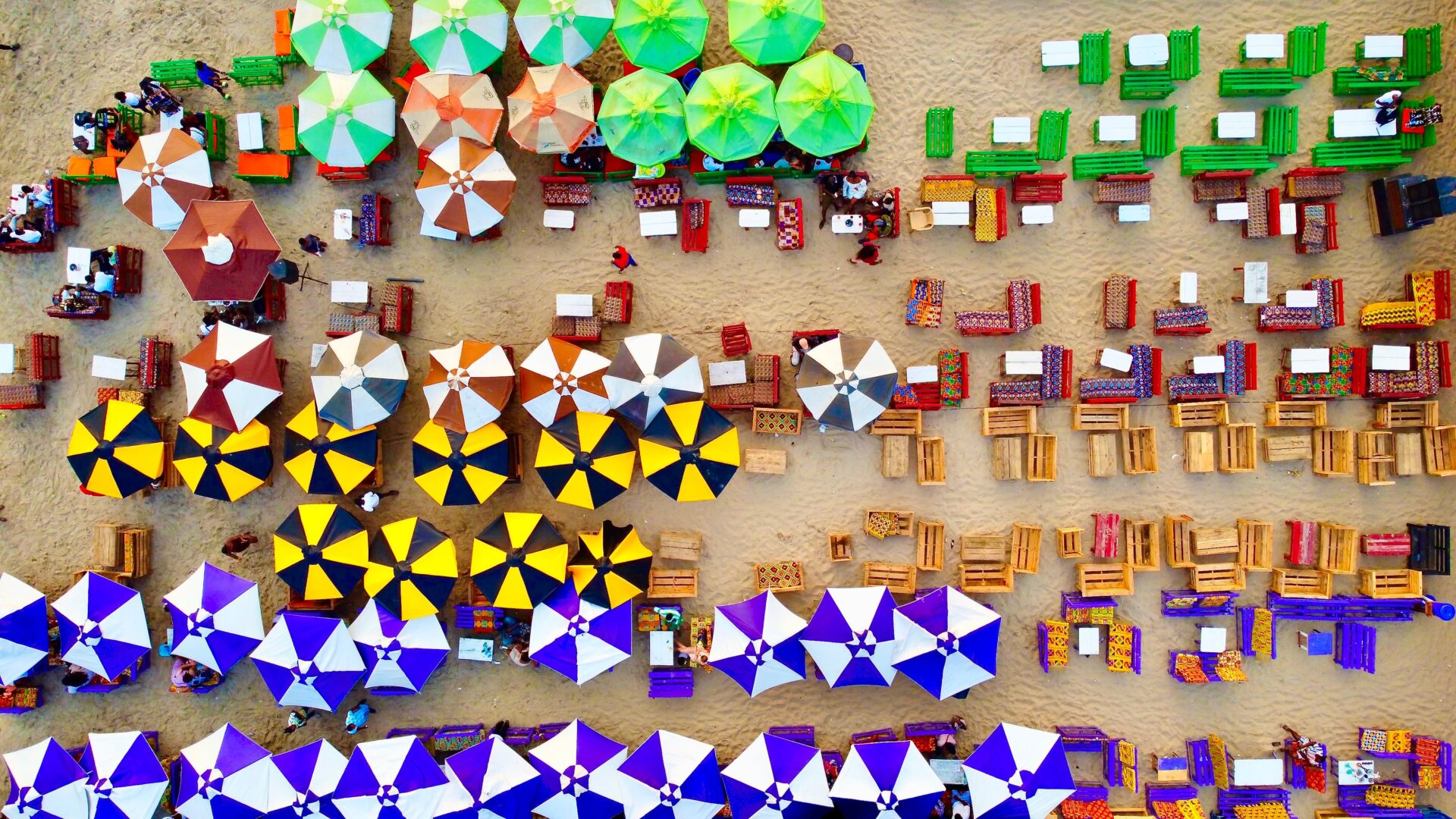
The La-Pleasure Beach (Labadi — the main Accra public beach, the highlife music visible from the entrance, the beach football, the beach restaurant giving the fresh grilled tilapia and the jollof rice at the beachside table):
The jollof rice (the West African rice dish — the Ghanaian jollof (the tomato-based rice with the seasoning, the party jollof cooked over the wood fire giving the specific smoky bottom layer that the stovetop version does not produce) visible at every Accra event and beach restaurant): GHS 25-50 / £1.40-2.80.
The kelewele (the spiced fried plantain — the ripe plantain cut and fried with the ginger, the cayenne, the clove, the anise): GHS 5-10 / £0.28-0.56 per portion from the street vendor.
DAYS 3-4 — Cape Coast
The Cape Coast Castle:
The Cape Coast Castle (the UNESCO World Heritage Site — the white-washed British slave fort on the Cape Coast headland, the dungeons beneath the castle where the enslaved were held before the Middle Passage, the Door of No Return at the dungeon’s ocean-facing wall):
The guided tour (the tour guide takes the group through the male dungeon, the female dungeon, the condemned cell, and the Door of No Return): GHS 80 / £4.48.
The specific Cape Coast Castle instruction: the dungeons were designed to hold 1,000 people in a space that holds 200 comfortably. The dungeons are unlit during the tour to give the sensory approximation of the actual condition. The guide’s oral history (the testimony of the enslaved, the specific mechanics of the trade visible in the architecture) gives the castle its specific moral weight.
The Elmina Castle:
The Elmina Castle (the 1482 Portuguese fort 15km west of Cape Coast — the oldest European building in sub-Saharan Africa, the castle that processed the majority of the West African enslaved before the Cape Coast Castle was built):
The specific Elmina instruction: the Elmina was a Portuguese trade fort before it was a slave fort — the original purpose (the gold trade) visible in the courtyard design that the slave trade subsequently converted. The conversion of the gold trade infrastructure into the slave trade infrastructure is the specific architectural history of colonialism visible in a single building.
Entry: GHS 80 / £4.48.
The Kakum National Park:
The Kakum National Park (the tropical rainforest 30km north of Cape Coast — the 260 square kilometre protected forest, the canopy walkway (the 330-metre suspended walkway at 40 metres above the forest floor linking 7 platforms in the rainforest canopy):
The canopy walkway at 8am (before the school groups arrive at 10am): the colobus monkey visible in the canopy, the African grey hornbill, the forest kingfisher. Entry and walkway: GHS 150 / £8.40.
DAYS 5-7 — Kumasi and the Ashanti Region
The Kumasi Kejetia Market:
The Kejetia Market (the largest market in West Africa by vendor count — the 12,000+ vendors, the 40 distinct sections (the fabric, the food, the craft, the electronics)):
At 7am: the fabric section (the kente cloth — the hand-woven silk and cotton cloth of the Ashanti, the specific pattern woven on the narrow-band loom, the cloth with the gold thread visible in the premium pieces).
The Bonwire Kente Village:
The Bonwire village (the birthplace of kente weaving, 20km from Kumasi — the weavers visible at the looms in the village compounds, the narrow-band loom producing the kente strip (4 inches wide, the strips sewn together to make the full cloth)):
The kente purchase at the source price (the village price at 30-50% of the Kumasi market price): GHS 200-800 / £11.20-44.80 for the full cloth strip depending on the complexity.
The Manhyia Palace Museum:
The Manhyia Palace Museum (the museum in the former Asantehene palace — the Asantehene is the Ashanti king, the current occupant of the Golden Stool, the specific Ashanti traditional authority that the British attempted to destroy and that continues): entry GHS 50 / £2.80.
What It Costs
| Category | Budget | Mid-Range |
|---|---|---|
| Return flights (UK-Accra) | £300-600 | £500-900 |
| Ghana visa | £63-118 | £63-118 |
| 7 nights accommodation | £70-210 | £210-490 |
| Food (7 days) | £20-55 | £55-130 |
| Castle entries and activities | £30-60 | £40-80 |
| Transport | £70-150 | £110-230 |
| Total | £553-1,193 | £978-1,948 |