
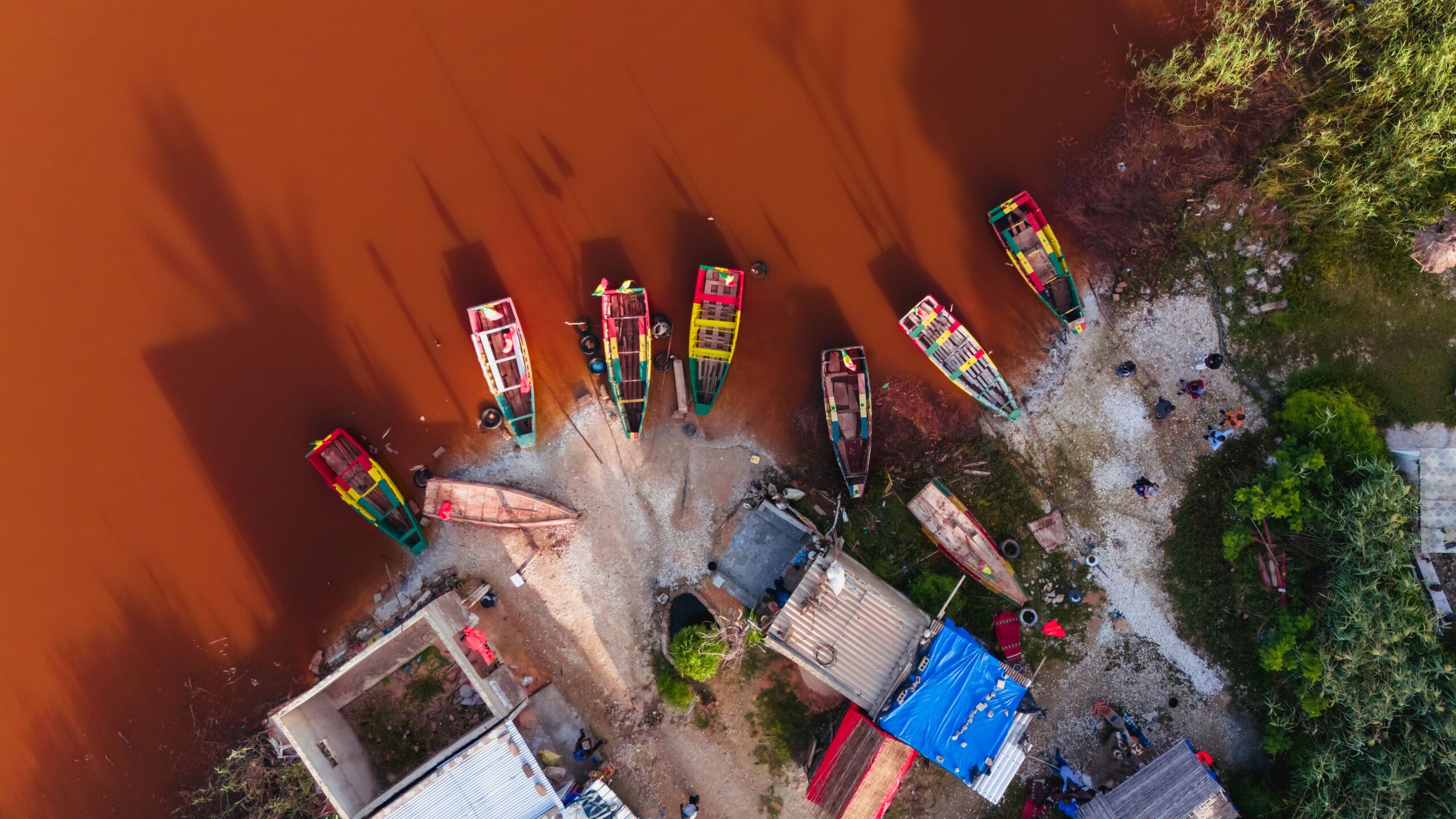
The route that gives Senegal its full argument: two days in Dakar for the Gorée Island ferry and the House of Slaves and the IFAN Museum of West African Art and the thiéboudienne at the port restaurant where the rice is cooked in the fish broth and served on the communal platter at noon, two days in Saint-Louis for the Langue de Barbarie national park where the Pelicans nest on the sand spit between the Senegal River and the Atlantic and where the colonial French island city gives the specific architecture that neither France nor Africa alone produced, and three days in the Saloum Delta for the mangrove pirogue at 6am and the baobab forest and the specific Senegalese wild camping that the tented lodge on the delta island gives at the price that makes every East Africa price look reconsidered.
Reading time: 10 minutes | Last updated: 2026
Senegal is West Africa’s most accessible entry point for the UK traveller — the 5.5-hour direct flight from Heathrow (Air Sénégal and Air France operate this route), the French language infrastructure that gives the Francophone traveller complete access and the non-French-speaker workable access in the tourist areas, and the specific Senegalese teranga (the Wolof word for hospitality — the cultural value that the Senegalese hold as a national identity rather than a tourist industry policy).
Before You Leave
The visa: UK citizens enter Senegal visa-free for 90 days.
The currency: West African CFA Franc (XOF). 1 GBP ≈ 750 XOF at 2025 rates. The CFA is pegged to the Euro — exchange GBP to Euros first, then to CFA, or withdraw directly from ATMs in Dakar (Ecobank and SGBS have the most reliable ATMs for foreign cards).
The health: Yellow fever vaccination certificate required. Malaria prophylaxis recommended for the Saloum Delta and Saint-Louis regions — consult the GP 4-6 weeks before departure.
The Route
Dakar (2 nights) → Saint-Louis (2 nights, 3-hour drive north) → Saloum Delta (3 nights, 5-hour drive south of Dakar)
DAYS 1-2 — Dakar
Day 1: Gorée Island
The Gorée Island ferry:
The Île de Gorée (the UNESCO World Heritage island 3km offshore from Dakar — the 900-metre-long, 300-metre-wide island that served as the primary West African slave trading post from the 15th to the 19th century, the specific Atlantic departure point for the estimated 10-20 million Africans transported into the slave trade):
The ferry from the Port de Dakar (the public ferry, 20 minutes, XOF 5,200 / £6.93 return).
The House of Slaves (Maison des Esclaves):
The Maison des Esclaves (the 18th-century slave holding house — the Door of No Return (the porte du voyage sans retour — the doorway opening directly onto the Atlantic Ocean, the specific architectural moment through which the enslaved were loaded onto the ships): the most morally significant single door in the history of the Atlantic trade.
The historiography note: the Gorée Island’s specific role in the slave trade is debated among historians — the estimates of the numbers passing through Gorée vary significantly, and some historians argue the island’s significance has been amplified for memorial purposes. The memorial function (the physical site of remembrance, visited by Nelson Mandela, Bill Clinton, and Pope John Paul II) is real regardless of the numerical debate.
Entry: XOF 5,500 / £7.33. Guided tour (the guide provides the full historical context that the exhibits alone do not): XOF 10,000-15,000 / £13.33-20.00.
Day 2: The IFAN Museum and Sandaga Market
The IFAN Museum:
The Institut Fondamental d’Afrique Noire Museum (the Museum of West African Art — the collection of traditional masks, statuary, textiles, and musical instruments from across West Africa, the finest single collection of West African material culture accessible to the visitor):
Entry: XOF 3,000 / £4.00.
The thiéboudienne:
The thiéboudienne (ceebu jën in Wolof — the “rice with fish”, Senegal’s national dish): the broken rice cooked in the tomato-based fish stock with the vegetables (the cassava, the sweet potato, the carrot, the aubergine), the whole grilled fish on top, the dish served on the shared platter at the communal table:
At the Marché Sandaga area restaurants (the working Dakar lunch): XOF 2,000-3,500 / £2.67-4.67 per portion.
The Lac Rose (Pink Lake):
The Lac Retba (35km northeast of Dakar — the pink salt lake, the salt concentration at 40% giving the specific pink-red colour from the Dunaliella salina algae, the salt harvesters visible working in the lake at 10am):
The salt harvesting instruction: the workers are covered in shea butter to protect the skin from the salt — the specific West Africa labour scene visible from the lake edge. Entrance via the local village cooperative: XOF 2,000 / £2.67.
DAYS 3-4 — Saint-Louis
The Saint-Louis island:
Saint-Louis (the UNESCO colonial city on the island in the Senegal River — the French colonial capital from 1659 until 1902, the iron Faidherbe Bridge (the 1897 bridge designed in the same workshop as the Eiffel Tower’s iron components, the replica of the Eiffel workshop technology visible in the structure)):
The specific Saint-Louis architecture: the colonial buildings on the island give the specific West African French colonial aesthetic — the wooden balconies (the balcons en bois), the ochre and terracotta facades, the courtyards. The city was the French colonial capital — the sophistication of the architecture reflects the specific administrative ambition that Dakar replaced.
The Langue de Barbarie:
The Langue de Barbarie National Park (the sand spit separating the Senegal River from the Atlantic — the white pelican (Pelecanus onocrotalus) colony, the 10,000+ birds nesting on the spit visible from the pirogue that accesses the sand spit from the Saint-Louis bridge):
The pirogue circuit (the traditional dug-out canoe, the 2-hour morning circuit — the pelicans at the colony, the terns, the flamingo visible in the brackish lagoon): XOF 10,000-15,000 / £13.33-20.00 per boat.
DAYS 5-7 — Saloum Delta
The drive from Dakar:
The Route de la Corniche south from Dakar (the coastal road through Thiès to the Saloum Delta — 5 hours, the baobab trees visible from the road after Thiès):
The Saloum Delta:
The Sine Saloum Delta (the UNESCO World Heritage Site — the 180,000 hectare mangrove delta where the Saloum, the Bandiala, and the Diomboss rivers meet the Atlantic, the 200 bird species, the Atlantic hump-backed dolphin (Sousa teuszii — the dolphin species endemic to the West African Atlantic coast), and the 218 burial mounds (tumuli) of the pre-Islamic West African kingdoms):
The morning pirogue:
The mangrove pirogue at 6am (the electric pirogue through the mangrove channels — the dolphin visible in the outer channels in the morning, the pelican roosting in the mangrove visible from the boat at eye level, the specific Saloum delta dawn visible from the water):
XOF 15,000-25,000 / £20.00-33.33 per boat for the 2-hour circuit.
The baobab forest:
The baobab (Adansonia digitata — the “upside-down tree”, the tree that can live 1,000+ years and store 100,000 litres of water in the trunk, the tree that gives the Saloum Delta its specific dry season silhouette): the baobab forest at Toubacouta (the largest concentration of ancient baobabs in the Saloum — the trunks at 8-12 metres diameter, the specific West Africa landscape):
Free.
Where to stay: The Lodge de la Forêt (the ecolodge in the baobab forest: XOF 30,000-50,000 / £40.00-66.67/night), the Keur Saloum (the delta island lodge: XOF 40,000-70,000 / £53.33-93.33/night).
What It Costs
| Category | Budget | Mid-Range |
|---|---|---|
| Return flights (UK-Dakar) | £250-500 | £400-750 |
| 7 nights accommodation | £70-210 | £210-490 |
| Food (7 days) | £25-60 | £60-140 |
| Gorée Island ferry + entry | £14 | £14 |
| Pirogues and activities | £40-100 | £80-180 |
| Transport (hire car or driver) | £80-180 | £120-280 |
| Total | £479-1,064 | £884-1,854 |