
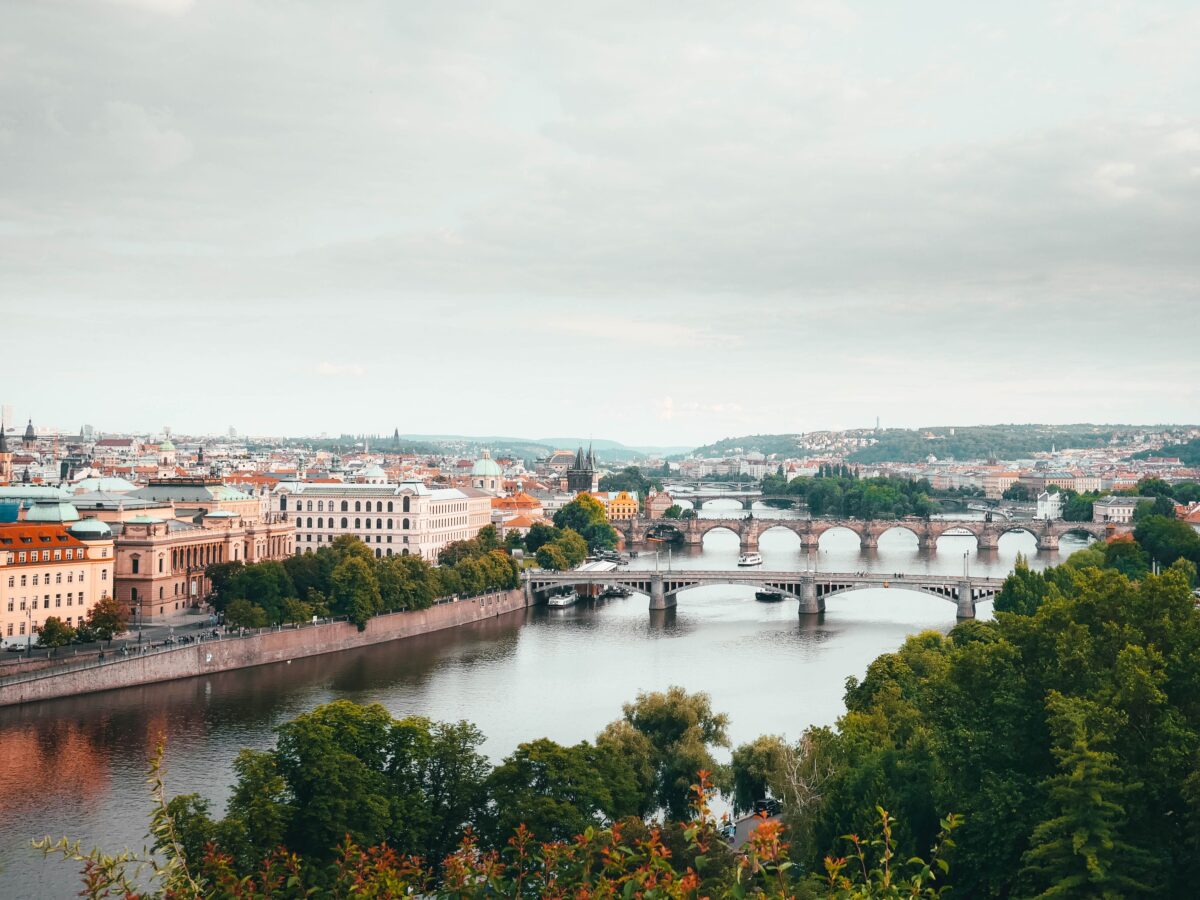
The route that gives Prague the treatment it deserves beyond the Charles Bridge selfie: two days in the Old Town and Josefov for the Astronomical Clock at 6am (the only correct hour — the hourly mechanical show has 200 people at 11am and zero at 6am, and the tower is the same tower at both hours) and the Old Jewish Cemetery (the 12,000 headstones in 12 layers, the most concentrated burial site in Europe, the 14th-century gravestones pressing against the 18th-century ones because the expanding community had nowhere else to go) and the Kampa Island (the Venice of Prague — the Čertovka channel, the mill wheels, the specific Prague waterside that the tourist walks away from the Old Town and onto by accident), two days in Malá Strana and the Castle District for the Prague Castle at 7am and the Lobkowicz Palace (the palace within the castle complex that the Lobkowicz family — the Czech aristocracy who reclaimed their property from the Communist state in 1992 — runs as the private museum with the original Beethoven and Mozart scores in their hands (the Beethoven 5th Symphony manuscript is in the Lobkowicz collection), and three days in Vinohrady, Žižkov, and the specific Prague that the stag party circuit hasn’t indexed yet.
Reading time: 10 minutes | Last updated: 2026
Prague receives 8 million international visitors per year to a city of 1.3 million — the highest visitor-to-resident ratio of any Central European capital. The specific Prague challenge: the tourist infrastructure is exceptional; the tourist infrastructure is everywhere; and the city beneath the tourist infrastructure (the Vinohrady art nouveau apartment street, the Žižkov television tower with the crawling babies, the Nusle Valley below the communist motorway viaduct) is the Prague that the visitor who stays 7 days finds and the visitor who stays 48 hours misses entirely.
Before You Leave
Getting there: Fly London-Prague (Ryanair, easyJet, Wizz Air, British Airways — 2 hours, from £20 one way). Prague is Schengen — UK citizens visa-free 90 days.
Currency: Czech Koruna (CZK). 1 GBP ≈ 30 CZK (2025). ATMs everywhere; always withdraw in CZK, never in GBP (the “dynamic currency conversion” always costs 3-5% extra).
The beer: Czech beer is the best-value single consumer good in the Czech Republic. The Pilsner Urquell or the Kozel or the Smíchov at the local pub (hospoda): CZK 40-55 / £1.33-1.83 per 0.5 litre. The same beer in the Old Town square: CZK 120-180 / £4-6. This price differential is the specific practical argument for 7 days over 2.
The Route
Old Town and Josefov (2 nights) → Malá Strana and Castle (2 nights) → Vinohrady and Žižkov (3 nights)
DAYS 1-2 — Old Town and Josefov
Day 1: 6am at the Astronomical Clock
6am — The Orloj:
The Prague Astronomical Clock (the 1410 medieval clock on the Old Town Hall — the astronomical dial showing the position of the sun, moon, and planets; the calendar dial below; the mechanical procession of the Twelve Apostles at the hour):
At 6am: the clock in the first light, the Old Town Square empty except for the delivery vehicles, the Apostles appearing for the 6am chime with zero other visitors watching.
At 11am: 200 people watching the same Apostles at the same speed.
Both are the same Apostles. Only one experience is the specific Prague the city was before the tourist economy.
10am — Josefov:
The Jewish Quarter (the 6 surviving synagogues and the Old Jewish Cemetery — the combined ticket (CZK 500 / £16.67) covering the Maisel Synagogue, the Spanish Synagogue, the Pinkas Synagogue (the walls bearing the names of 77,297 Czech Jewish Holocaust victims in alphabetical order, the specific memorial that the Communist state bricked over in 1968 and that was restored in 1993), the Ceremonial Hall, the Klaus Synagogue, and the Old Cemetery):
The Old Jewish Cemetery: the 12,000 visible headstones in the compressed burial ground (the 12 layers of burial — Jewish law prohibiting the removal of graves, the 14th-century stones pressing against the 18th-century stones as the expanding community ran out of space). Franz Kafka is not buried here (he is at the New Jewish Cemetery in Žižkov).
Day 2: The Kampa and the Museum of Communism
The Kampa Island:
The Kampa (the island in the Malá Strana formed by the Čertovka millstream — the specific Prague waterside visible from the Charles Bridge but accessed by the stairs beneath the bridge’s Malá Strana end):
The Kampa at 7am: the museum garden (the Kampa Museum of Modern Art garden), the mill wheels, the John Lennon Wall (the wall covered in Beatles-era and post-1989 graffiti — the specific Prague political art visible since 1980 when the first Lennon portrait appeared).
The Museum of Communism:
The Museum of Communism (Na Příkopě 10 — the museum covering the 1948-1989 Czechoslovak Communist period, the specific exhibits (the interrogation room reconstruction, the propaganda posters, the tractor production statistics) at the level of the 41 years of Communist rule visible in the everyday):
Entry: CZK 280 / £9.33.
DAYS 3-4 — Malá Strana and the Castle
Day 3: Prague Castle at 7am
7am — The Prague Castle:
The Prague Castle (the 70,000 square metre fortress complex — the largest ancient castle complex in the world, the St Vitus Cathedral at the centre, the Golden Lane (the 16th-century street of goldsmiths converted to the row of tiny houses that Kafka lived in briefly in 1916-1917)):
At 7am: the castle grounds open at 6am, the cathedral from 7am — the Wenceslas Chapel interior (the St Wenceslas statue, the walls covered in semi-precious stones, the specific Czech Romanesque visible before the tour group arrives at 9:30am).
The Lobkowicz Palace (within the castle complex — the private museum operated by the Lobkowicz family, the original music manuscripts (the Beethoven 5th Symphony autograph score, the handwritten corrections visible in the margins), the Pieter Brueghel the Elder paintings (the Haymaking, from the same series as the KHM’s Hunters in the Snow)):
Entry: CZK 295 / £9.83.
Day 4: The Strahov Monastery and Petřín Hill
The Strahov Monastery:
The Strahov Monastery (the Premonstratensian monastery founded 1143 — the Theological Hall and the Philosophical Hall (the two baroque library rooms visible through the glass barrier, the globes, the frescoes, the book collection visible from the doorway — photography from the doorway permitted, entry to the library not)):
Entry: CZK 150 / £5.
The Petřín Hill:
The Petřín Hill (the park hill above Malá Strana — the funicular (CZK 30 / £1, the standard tram ticket), the Petřín Tower (the miniature Eiffel Tower, 1891, 63.5 metres, the Prague visible from the top), the Mirror Maze, and the specific Prague view from the Petřín Observatory):
Tower entry: CZK 150 / £5.
DAYS 5-7 — The Real Prague
Day 5: Vinohrady
The Vinohrady neighbourhood:
The Vinohrady (the late 19th-century residential neighbourhood southeast of Wenceslas Square — the Art Nouveau apartment buildings, the Peace Square (Náměstí Míru) with the St Ludmila Church, the specific Prague neighbourhood where the professional class lives and where the restaurant is the local restaurant rather than the tourist restaurant):
The Vinohrady wine bar (the vinárna — the Czech natural wine bar, the Moravian Welschriesling and the Pálava grape visible on the list at CZK 60-90 / £2-3 per glass): specifically Eska (Pernerova 49, Karlín — the Czech restaurant and wine bar that is the specific Prague food evolution in one address).
Day 6: Žižkov and the Television Tower
The Žižkov Television Tower:
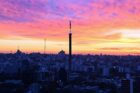
The Žižkov Television Tower (the 216-metre Communist-era television tower completed in 1992 — the 10 giant crawling babies (Miminka, the David Černý sculpture added in 2000, the babies without faces, the specific Czech black humour visible in the official public art)):
Entry to the observation deck: CZK 350 / £11.67.
The Franz Kafka grave:
The New Jewish Cemetery in Žižkov (the cemetery where Kafka is buried — the grave at Row 21, Sector 3, the headstone simple, the pilgrimage notes and pebbles left by visitors):
Cemetery entry: free.
Day 7: The Pilsner Urquell Brewery Day Trip
The Plzeň (Pilsen) brewery: the original Pilsner Urquell brewery (the birthplace of the pilsner lager in 1842), the unfiltered tank pivo available only at the brewery. 90-minute bus or train from Prague. Full detail: Beer Tourism Guide.
What It Costs
| Category | Budget | Mid-Range |
|---|---|---|
| Return flights (UK-Prague) | £20-80 | £40-150 |
| 7 nights accommodation | £105-280 | £280-630 |
| Food and beer (7 days) | £35-90 | £90-220 |
| Josefov ticket | £17 | £17 |
| Castle + Lobkowicz | £15 | £15 |
| Museum of Communism | £9 | £9 |
| Total | £201-491 | £476-1,041 |