


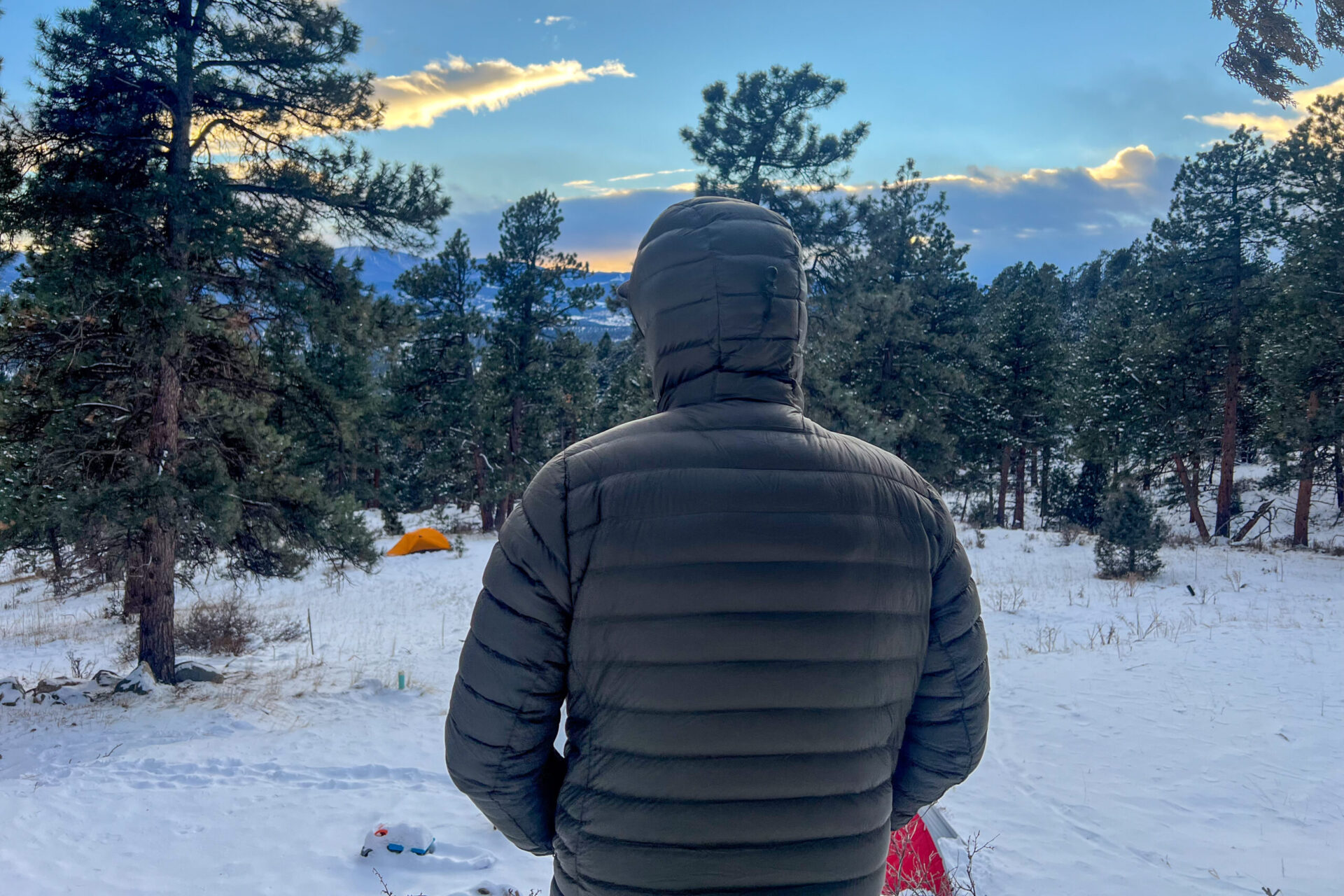
The packable down jacket review for the traveller who is in Bali on Tuesday and Kathmandu on Thursday and needs the single layer that covers both: the jacket that compresses into its own pocket to the size of a grapefruit (450g, packs to 20cm × 15cm × 10cm) and that gives the 700-fill-power down insulation sufficient for the Poon Hill summit at 3,193 metres at 4°C with the wind, the layer that earns its place in the carry-on precisely because it earns its place at both ends of the temperature range. The three jackets that the trail running and the mountaineering and the city-break community have all converged on.
Reading time: 6 minutes | Last updated: 2026
The Fill Power Explained
Fill power (the measure of down quality — the number of cubic inches that one ounce of down occupies, the higher the number the better the insulation-to-weight ratio):
600-650 fill: The budget packable down — adequate insulation for 5-10°C, the pack size larger, the weight heavier. Correct for the city break autumn.
700-750 fill: The standard travel packable down — the correct insulation for 0-10°C, the pack size compact. The range this guide covers.
800+ fill: The expedition down — the significant cost premium, the marginal performance improvement over 750-fill in the 0-10°C range. Correct for the Everest Base Camp; unnecessary for the Poon Hill.
The Three Jackets
1. Patagonia Down Sweater — The Reference
What it is: The 800-fill-power goose down, the recycled ripstop nylon shell (the water-resistant DWR treatment), the stuffing into the chest pocket (the jacket becoming its own stuff sack): 340g, compresses to approximately 18cm × 12cm × 10cm.
The specific Patagonia advantage: The 800-fill power gives the warmth-to-weight ratio that most packable jackets achieve only at the 300g+ weight. The Down Sweater achieves it at 340g — the correct jacket for the traveller who is managing total pack weight.
The Bluesign certification (the environmental certification of the manufacturing process) and the Patagonia Fair Trade Factory designation give the purchase the specific ethical framework for the traveller who applies this to gear decisions.
Price: £220-260.
BGGD verdict: The correct packable down for the traveller who uses it at altitude (the Nepal trek, the Patagonia days, the Andean circuit) and who wants the 800-fill warmth at the lowest possible weight.
2. Uniqlo Ultra Light Down — The Value Case
What it is: The 700-fill-power duck down, the tight-weave nylon shell, the inner pocket stuffing: 250-280g (lighter than the Patagonia), compresses to 14cm × 10cm × 8cm (smaller than the Patagonia), costs £50-70 (significantly less than the Patagonia).
The honest Uniqlo assessment: The Ultra Light Down is the most remarkable value proposition in outdoor gear. At £50-70, it gives 700-fill-power down insulation in a jacket that compresses to the size of a small water bottle. It does not match the Patagonia’s 800-fill-power performance at the extreme cold (the 0°C threshold where the 100-fill-power difference becomes noticeable) but for the 3-15°C range that most travel packable down use cases fall within, the difference is academic and the £170-190 saving is not.
The limitation: the Uniqlo DWR is less robust than the Patagonia — the Uniqlo in sustained rain for 20+ minutes will wet through. The Patagonia lasts longer before wetting. For the urban use (the layering piece under a waterproof), the Uniqlo is correct. For the mountain use in uncertain weather, the Patagonia.
Price: £50-70.
BGGD verdict: The correct packable down for the traveller who uses it primarily as the city cold-weather layer and who is managing the overall trip budget. The correct first packable down jacket.
3. Arc’teryx Cerium Hoody — The Technical Option
What it is: The 850-fill-power goose down, the Arato 10 shell (the lightest shell in the premium packable down category — the 10-denier ripstop, the waterproof-breathable membrane), the hood: 290g, compresses to 16cm × 11cm × 9cm.
The specific Arc’teryx advantage: The Arato 10 shell’s waterproof-breathable membrane gives the packable down the moisture protection that the Patagonia’s DWR and the Uniqlo’s light nylon do not — the Cerium is the packable down that performs in wet conditions where the other two require the waterproof outer layer.
The correct use case: The traveller who is in genuinely wet mountain conditions (the Scotland Highlands, the New Zealand Fiordland, the Patagonia circuit) where the packable down is the mid-layer under the waterproof shell but where the waterproof shell venting produces moisture that needs the breathable membrane on the insulation layer.
Price: £350-400.
BGGD verdict: The correct packable down for the technical mountain traveller. Excessive for the urban and casual mountain use.