

The comparison that the first-time North Africa visitor eventually reaches: Morocco or Egypt? The honest answer: Morocco gives the living culture — the medinas that are still functioning cities rather than museums, the mountain villages that the Imazighen have been farming since before the Pharaohs, and the specific Morocco that the camel trek and the riad and the hammam give at the 3.5-hour flight from Heathrow. Egypt gives the monuments — the Pyramids of Giza and the Valley of the Kings and the Karnak Temple complex that make every other ancient monument in the Mediterranean feel considered by comparison, and the specific Egypt that is the source of the civilisational vocabulary (the alphabet, the calendar, the concept of the monumental state) that the Western world inherited from Greece, which inherited it from here. Both are correct. Neither is the substitute for the other.
Reading time: 7 minutes | Last updated: 2026
The Core Distinction
Morocco is the living North Africa — the Fez medina is the world’s largest functioning medieval city (the 9th-century street plan unchanged, the craftsmen in the same souks they occupied in the 10th century, the leather tanneries visible from the terrace using the same natural dyes). The Morocco that the visitor encounters is the Morocco that the Moroccan population inhabits.
Egypt is the monument North Africa — the Pyramids of Giza are 4,500 years old and are as astonishing in person as in the photograph. The Egyptian Museum holds 120,000 objects. The Valley of the Kings gives the specific royal burial tradition that shaped the Mediterranean world’s relationship with death and the afterlife. The Egypt that the visitor encounters is the Egypt that time left behind and that the tourist industry built its entire model around.
Category by Category
The Monuments
Egypt wins completely:
The Giza Pyramids, the Valley of the Kings, the Karnak Temple, the Abu Simbel — Egypt’s UNESCO monument list gives the most concentrated ancient heritage accessible from the UK. The specific Egypt quality: the scale. The Great Pyramid of Khufu at 146 metres is physically larger than any building in Morocco.
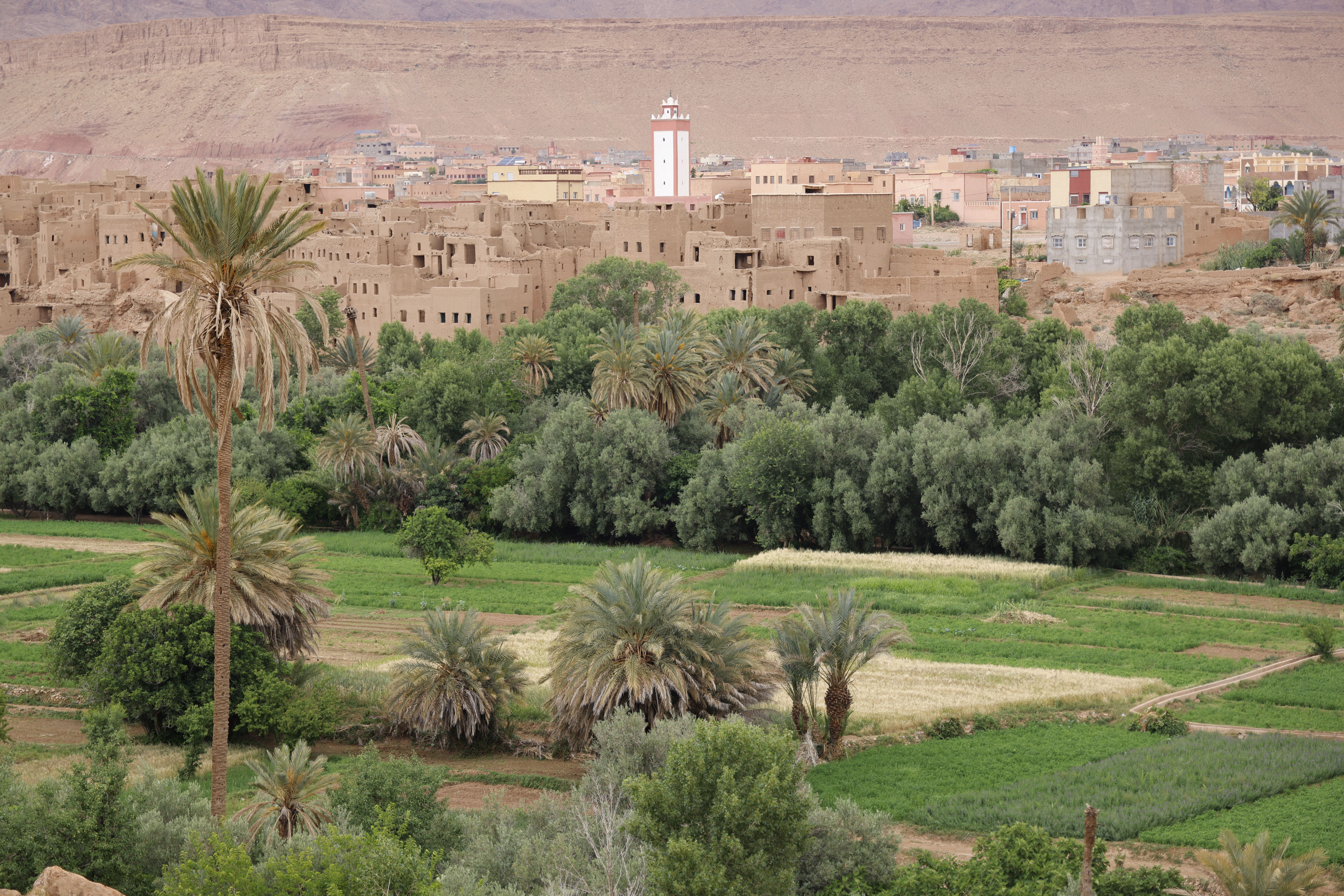
Morocco has: The Volubilis Roman site (the most significant Roman ruins in Morocco, the UNESCO listing — smaller and less complete than the Tunisia Roman sites), the Koutoubia Mosque (the 12th-century Almohad minaret, the architectural reference for the Giralda in Seville), and the Ait Benhaddou (the UNESCO mud-brick kasbah, the Game of Thrones filming location). All excellent; categorically different from the Pyramids.
Verdict: Egypt for the ancient monument. Not close.
The Living Culture
Morocco wins clearly:
The Fez medina, the Marrakech souk, the Chefchaouen blue city, the Essaouira Atlantic port — Morocco’s cultural landscape is the most accessible and most immersive in North Africa for the UK visitor. The specific Morocco quality: the specificity. The craft tradition visible in production (the zellige tile cutter in the Fez medina, the argan oil cooperative in the Souss-Massa, the carpet weaver in the Atlas village) gives the Morocco visit the cultural depth that the Egypt monument visit does not.
Egypt has: The Khan el-Khalili bazaar in Cairo (the living Islamic city, the copper work, the textile market, the specific Cairo souk culture). Genuine and significant. Less immediately accessible than the Fez medina for the non-Arabic-speaking visitor.
Verdict: Morocco for the living culture.
The Practical Comparison
| Factor | Morocco | Egypt |
|---|---|---|
| Flight time | 3.5 hours | 5 hours |
| Visa | Visa-free 90 days | e-Visa USD 25 |
| Daily budget | £60-100/day | £50-90/day |
| English spoken | Reasonably widely | Widely in tourist areas |
| Best season | March-May, Sept-Nov | Oct-April |
| Harassment level (honest) | Moderate | Variable by site |
The BGGD Verdict
Choose Morocco if: The living culture (the medina, the souk, the hammam, the trekking), the riad stay, the 3.5-hour flight, and the specific Morocco that is the most accessible North African cultural immersion are the motivation.
Choose Egypt if: The ancient monuments (the Pyramids, the Valley of the Kings, the Karnak), the Nile, and the specific Egypt that is the source of the civilisational vocabulary are the motivation.
The combined circuit (2 weeks): 2 Weeks in the Middle East covers Jordan and Egypt — the specific combination of the Nabataean (Petra) and the Egyptian (Luxor) gives the ancient Near East in two weeks. The Morocco and Egypt combination (fly to Casablanca, Morocco circuit, fly Marrakech-Cairo, Egypt circuit) is a 2-week circuit that gives the living and the ancient simultaneously.