
The complete guide for UK travellers: the Machu Picchu booking system explained properly, altitude acclimatisation done right, the Inca Trail vs the alternatives, the Sacred Valley beyond the postcard, Lake Titicaca at dawn, and what Peru actually costs — because it’s not as expensive as people assume.
Reading time: 19 minutes | Last updated: 2026
Peru is the trip that makes every other trip feel like a warm-up.
I don’t say that lightly. I’ve been to a lot of countries and I’m generally suspicious of the kind of travel superlatives that make everywhere sound like the finest place on Earth. But Peru is different in a specific way that’s hard to pin down until you’ve been there and then you understand it immediately.
It’s the scale. Not just Machu Picchu — though Machu Picchu is genuinely extraordinary — but the scale of what the Inca Empire built across a landscape that is itself extraordinary. The road system that connected a territory larger than the Roman Empire, built without wheels or iron tools. The agricultural terracing that transformed near-vertical mountain slopes into farmland. The stonework — massive granite blocks fitted together with a precision that doesn’t require mortar, hasn’t shifted in 500 years, and that modern engineering can’t adequately explain.
And then, an hour’s flight away: the Amazon basin, the most biodiverse ecosystem on Earth. And further south: Colca Canyon, twice the depth of the Grand Canyon, where condors the size of small aircraft rise on morning thermals above you. And Lake Titicaca, the world’s highest navigable lake, where people have built floating islands from totora reeds and lived on them continuously for centuries.
Peru is not one trip. It’s four. Most visitors get two of them in a fortnight and come home already planning to return for the others.
This guide is for the first trip — done properly, with the altitude respected, the Machu Picchu booking system navigated correctly, and the parts beyond the Inca trail that most guides underserve given enough space.
Quick Navigation
- The Case for Peru — Four Countries in One
- The Altitude — The Non-Negotiable Preparation
- When to Go — Dry Season, Wet Season, and the Inca Trail Window
- Lima — More Than a Transit City
- Cusco — The Inca Capital
- The Sacred Valley — Beyond the Day Trip
- Machu Picchu — The Booking System Explained
- The Inca Trail vs the Alternatives
- Rainbow Mountain — The Honest Assessment
- Lake Titicaca — The Floating Islands and Beyond
- Arequipa and Colca Canyon
- The Amazon — Iquitos and Puerto Maldonado
- Huacachina — The Desert Oasis
- What It Costs — Real Numbers
- Eating in Peru — The Food That Changed Fine Dining
- Practical Notes
- The 14-Day Itinerary
The Case for Peru — Four Countries in One
The standard Peru trip covers: Lima (1 night, transit), Cusco (2–3 nights, acclimatisation), the Sacred Valley (1 day), Machu Picchu (1 day), and home. This is fine and it is also the equivalent of visiting Japan and only seeing Tokyo.
The fuller picture:
Inca Peru — Cusco, the Sacred Valley, Machu Picchu, the Inca Trail. The archaeological density of this region is staggering. Within a 2-hour radius of Cusco: Sacsayhuamán (a fortress with stones weighing up to 200 tonnes), Ollantaytambo (the best-preserved Inca town in existence, still inhabited), Chinchero (a market town at 3,800m that retained its Inca street grid), Pisac (terracing so extensive the Incas cultivated over 3,000 varieties of potato here). Most visitors see Machu Picchu. The context around it is where understanding comes from.
Colonial Peru — Arequipa, built in white volcanic sillar stone, with a historic centre that’s one of the finest colonial urban landscapes in South America. Lima’s Miraflores and Barranco neighbourhoods, where the Pacific cliffs and the restaurant scene combine to make the city significantly more interesting than its reputation as a transit hub suggests.
Lake and Highland Peru — Puno and Lake Titicaca, the highest navigable lake in the world, where the Uros people live on floating reed islands and the sunrise over the water at 3,800m looks like something from a different planet.
Jungle and Desert Peru — the Amazon basin (accessible from Iquitos or Puerto Maldonado), the Colca Canyon (twice the depth of the Grand Canyon, condors), and the Huacachina oasis — a natural lagoon surrounded by 100-metre sand dunes in the middle of the Pacific coastal desert.
Most first visits cover two of these four zones. This guide gives all four the space they deserve, so you can choose which two to prioritise and understand what you’re saving for next time.
The Altitude — The Non-Negotiable Preparation
This is the section most Peru guides include politely and most travellers don’t take seriously enough. Altitude sickness is the primary reason Peru trips go wrong. Not crime, not food safety, not logistics — altitude.
Cusco sits at 3,399m above sea level. The Sacred Valley is at 2,800m. Machu Picchu is at 2,430m (lower than Cusco, which is part of why the hike out feels easier than the hike in). Rainbow Mountain is at 5,200m. Puno is at 3,827m.
At these altitudes, the air contains 30–40% less oxygen than at sea level. The human body adapts — over days, not hours. Pushing too hard too fast produces altitude sickness (soroche): headache, nausea, fatigue, dizziness, and in severe cases, high-altitude pulmonary or cerebral oedema, which are medical emergencies.
What actually works:
Acclimatise in Cusco for a minimum of two full days before any strenuous activity. This means: arrive, check in, take it extremely easy. Short walks, no hiking, no alcohol for the first 24 hours, drink significant quantities of water. Let the body adjust.
Coca tea (mate de coca) works. The coca leaf is legal in Peru and Bolivia and has been used at altitude for thousands of years. The tea reduces symptoms noticeably. It’s available everywhere in Cusco — in your hotel, in every café, from street vendors. Drink it constantly for the first two days.
Diamox (acetazolamide) is medically supported. A prescription medication that accelerates the acclimatisation process. Consult your GP before travelling — it’s widely prescribed for altitude travel and reduces symptoms significantly. Take it for 24–48 hours before arriving at altitude.
The descent is not automatic relief. If you develop moderate or severe symptoms (not just a headache, but confusion, inability to walk straight, or difficulty breathing), the correct response is to descend immediately. Machu Picchu, at 2,430m, is lower than Cusco — many people feel better there than in the city. If you’re going up to Rainbow Mountain at 5,200m, the descent back to the trailhead at 4,300m typically resolves most acute symptoms.
Flying from Lima directly to Cusco is the standard routing but it’s harsh. Lima is at sea level; Cusco is at 3,399m. Some travellers stop in Arequipa (2,335m) first to partially acclimatise before ascending to Cusco. This adds time but reduces the shock.
The travellers who ignore this section spend their first two days in Cusco in bed with a headache. The ones who follow it spend those days exploring one of the finest cities in South America.
When to Go — Dry Season, Wet Season, and the Inca Trail Window
May to October — Dry Season
The main travel season. Clear skies, minimal rain, all trails and roads accessible. June through August is peak — the Machu Picchu entry tickets sell out months ahead, the Inca Trail permits for peak months sell out the day they open (January, for the following year’s entire permit allocation). The Sacred Valley is at its most vivid green; the highland landscapes are photogenic year-round but particularly so in this window.
The trade-off: peak season prices, crowds at major sites, and the Inca Trail permits requiring military-level advance planning.
November to April — Wet Season
Rain falls daily, particularly in the afternoons. The Inca Trail closes entirely in February (maintenance month). But: the landscapes are lush and green, the waterfalls at maximum volume, the tourist numbers down by 40–60% at most sites, accommodation prices significantly lower, and Machu Picchu entry tickets available without months of advance planning.
Wet season in Peru doesn’t mean continuous rain. It typically means clear mornings and afternoon showers — plan accordingly, hike early, rest in the afternoon.
The BGGD recommendation: May or September. Dry season without peak-season intensity. May has the landscape freshest from the wet season rains. September is the quietest month of the dry season with accommodation negotiable and sites relatively uncrowded.
Lima — More Than a Transit City
Lima has a reputation as a city most people pass through on the way to Cusco and it’s undeserved. Two full days in Lima — in the right neighbourhoods, eating at the right places — constitutes one of the finest short-break experiences in South America.
Miraflores and Barranco
The two coastal neighbourhoods that define modern Lima. Miraflores: clifftop parks overlooking the Pacific, good restaurants, the Larcomar shopping mall built into the cliff face (worth visiting for the architecture and the Pacific view, skip the shops), and the Parque Kennedy — the cat park, where dozens of well-fed local cats gather in the evenings and the neighbourhood comes out to sit on benches and watch them.
Barranco: 10 minutes south of Miraflores by taxi (£2.50). The bohemian neighbourhood — murals, independent bookshops, bars, and the highest concentration of good restaurants per square kilometre in Lima. The Bridge of Sighs (Puente de los Suspiros), a small wooden footbridge over a ravine leading to the clifftop — not grand, but photogenic and quiet. Walk from Miraflores to Barranco along the coastal path (Malecón de la Reserva, Malecón Cisneros): 45 minutes, the Pacific below, paragliders launching from the cliffs above Miraflores.
The Food (see dedicated section below — it warrants one)
Lima is consistently ranked among the top 5 restaurant cities in the world. The combination of Pacific seafood, Andean ingredients, and the influence of Japanese, Chinese, Italian, and Spanish immigration has produced a cuisine that international chefs travel specifically to study. The restaurants below are mentioned in the food section — prioritise at least one properly good meal in Lima.
Larco Museum (Museo Larco)
The finest pre-Columbian gold and ceramic collection in Peru, housed in an 18th-century mansion in the Pueblo Libre neighbourhood (20 minutes from Miraflores by taxi). The collection covers 4,000 years of Andean civilisation — the ceramics are extraordinary as both art and archaeology, the gold pieces are among the finest metalwork in the Americas. Entry: £12. Budget 2 hours. The garden café for lunch after.
The Historic Centre (Centro Histórico)
Lima’s historic centre — Plaza Mayor, the Cathedral, the Palacio de Gobierno, the Convent of San Francisco — is grand, UNESCO-listed, and somewhat battered by urban entropy. Worth 2 hours on a weekday when it’s less crowded; less compelling as a reason to visit Lima in itself. The Plaza Mayor at night, when it’s lit and the governmental buildings glow, is better than the daylight version.
Cusco — The Inca Capital
Cusco was the capital of Tawantinsuyu — the Inca Empire — from the 13th century until the Spanish conquest in 1532. The Spanish systematically built their colonial city on top of the Inca one, using Inca stones as foundations for their churches and palaces. The result is a city where Spanish baroque facades sit on Inca stone walls with a precision that 500 years hasn’t shifted.
The Plaza de Armas
The main square. At dusk, when the Cathedral and the Church of La Compañía de Jesús are lit and the mountains visible above the roofline catch the last light, it’s one of the great urban views in South America. The square itself is functional — markets, shoeshine boys, women in traditional dress with llamas who will charge you for photos (they will, so decide before you stand next to one).
Sacsayhuamán
The fortress complex above the city. Walk up from the Plaza de Armas through the San Blas neighbourhood (steep, 30 minutes) or take a taxi (£3). The walls — three zigzag terraces of massive limestone blocks, the largest weighing over 200 tonnes — are the finest example of Inca military architecture in existence. The stones fit together without mortar with tolerances of less than a millimetre. The mechanism by which they were transported from quarries 20km away and raised into position remains partially unresolved by modern engineering. Entry included in the Boleto Turístico (tourist ticket).
The Boleto Turístico
The regional tourist ticket covers 16 sites in and around Cusco and the Sacred Valley. Two versions: the full Boleto Turístico (£30, valid 10 days, covers all 16 sites) and three partial circuits (£16 each, valid 1 day, covering subsets of the sites). Buy at the Cusco Tourism Office or at the first site you visit. Machu Picchu requires a separate ticket and is not included.
San Blas
The artisans’ neighbourhood above the Plaza de Armas — narrow cobbled lanes, carved wooden balconies, ceramic workshops, and the San Blas church with the finest pulpit in colonial South America (carved from a single tree trunk). The neighbourhood above San Blas has the best views over the city from a series of viewpoints reachable on foot. Walk up in the morning before the heat builds.
The Markets
Mercado San Pedro (below the Plaza de Armas): the working market of Cusco — produce, hot food, juice stalls, artisanal goods. Eat breakfast here — the market stalls serving api (a warm maize drink), tamales, and empanadas from 6am are cheap, good, and exactly where locals start their day.
Pisac Market (Sacred Valley, Sunday, and to a lesser extent Tuesday and Thursday): artisanal textiles, ceramics, and jewellery from the surrounding communities. The best textile market in the region. Budget 2 hours.
The Sacred Valley — Beyond the Day Trip
The Sacred Valley (Valle Sagrado) runs northwest from Cusco toward Machu Picchu along the Urubamba River. It’s the agricultural heartland of the Inca Empire — the valley floor was warmer than Cusco, allowing different crops, and the Incas terraced every available slope to maximise production.
Most visitors do a day trip from Cusco covering the valley’s highlights. This is fine and it misses the point. The Sacred Valley is better understood by staying in it — either in Pisac, Ollantaytambo, or one of the smaller villages — and moving slowly through it.
Ollantaytambo
The finest Inca town in existence. Remarkable not just for the Temple of the Sun (the terraced ruins above the town, accessed via steep Inca staircases) but for the town itself — the Spanish colonial overlay here is thinner than in Cusco, and the water channels, orthogonal street grid, and compound structure of the town survive from the Inca period. People live in houses built on Inca foundations with Inca walls.
The train to Machu Picchu departs from Ollantaytambo, which makes it a natural base for the night before. Stay here rather than Aguas Calientes if the timing allows — the town is more interesting, the restaurants are better, and it acclimatises you to a lower altitude (2,792m) before the site itself.
Pisac
A market town at the northern end of the Sacred Valley, with a substantial archaeological site above it — terracing, temples, storehouses, and a cemetery (the largest pre-Hispanic cemetery in the Americas, the cliff face honeycombed with ancient tomb alcoves). The Sunday market is the best in the region. The ruins, reached by a 45-minute hike from the town or by taxi to the top entrance, are significant and almost always quiet.
Chinchero
A village at 3,762m between Cusco and the Sacred Valley — on the high plain rather than in the valley itself. Colonial church built directly on Inca foundations (the Inca walls are visible in the church structure), traditional textile demonstrations in the cooperative workshops, and the market (Tuesday, Thursday, Sunday). The weaving technique used here — natural dyes extracted from plants and insects, woven on backstrap looms — is a direct continuation of a technique thousands of years old.
Moray and Maras
Two sites 10km from Chinchero usually visited together. Moray: concentric Inca terraces descending into a natural depression, creating a series of microclimates — probably used as an agricultural research station to test different crops at different temperatures. The image from above (the terraces in concentric rings, the green valley below) is one of the most striking geometric forms in the Inca world. Entry included in Boleto Turístico.
Maras: salt mines in continuous operation since pre-Inca times — a hillside covered in hundreds of small salt pans fed by a natural salt spring, the salt harvested by hand by local families. Entry: £4, not included in Boleto Turístico. The view from the edge is extraordinary.
Machu Picchu — The Booking System Explained
Machu Picchu has a daily entry cap, a circuit system, and a booking requirement that confuses most first-time visitors. Here is the system, explained clearly.
Daily capacity: The Peruvian government limits daily visitors to approximately 4,500 per day in two time slots. In peak season (June–August), the allocation for popular time slots sells out months in advance. In shoulder season, tickets are available with 2–4 weeks’ notice. In wet season, they’re often available with less notice.
The circuits: The site has four designated walking circuits (Circuit 1, 2, 3, 4), each covering different sections of the citadel. Circuit 1 is the most comprehensive — it’s the one most visitors want, covering the agricultural terraces, the Intihuatana stone, the Temple of the Sun, and the most photographed viewpoints. Circuit 2 covers the upper sections. Choose your circuit when booking.
Time slots: Morning entry (6am–12pm) gives the best light and the best chance of mist clearing over the mountains. Afternoon entry (12pm–5:30pm) has lower crowds and lower temperatures. The mist tends to clear by 10–11am on clear days.
How to book: The official booking site is machupicchu.gob.pe. Do not use third-party resellers for the entry ticket itself — the government site is the only legitimate source and third-party sellers charge premiums for something you can book directly.
How far ahead: Peak season (June–August): book 3–6 months ahead. Shoulder season (April–May, September–October): 4–8 weeks. Wet season (November–March, excluding February when Inca Trail is closed): 1–3 weeks often sufficient.
The Inca Trail permits: If you’re hiking the Inca Trail to Machu Picchu rather than taking the train, the permits are separate from the site entry ticket and significantly more competitive. The government releases Inca Trail permits once a year — typically in January for the entire following year. They sell out within hours. This is not an exaggeration. If the Inca Trail is on your list, plan 11–14 months ahead and be ready on the day permits open.
Visiting Machu Picchu — What to Know
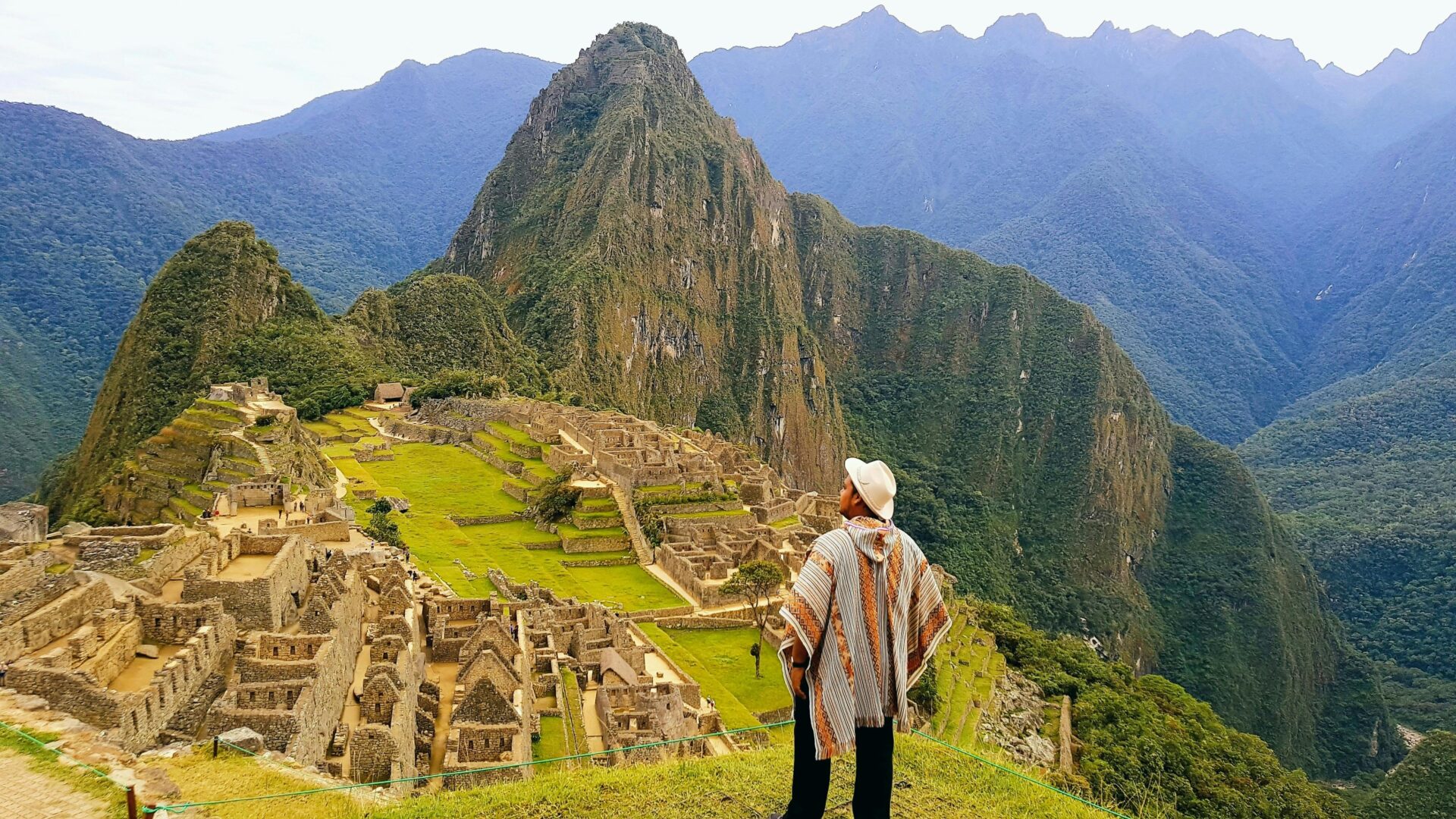
The first bus from Aguas Calientes: Buses start at 5:30am and run every 5–10 minutes until the site closes. Take the first or second bus. The citadel at 6:15am, before the day-trip groups arrive, with morning mist moving between the terraces and the Sun Gate occasionally visible in the distance, is the experience the photographs don’t capture.
The Sun Gate (Inti Punku): A 2-hour round hike from the main citadel along the original Inca Trail approach. The Sun Gate is where Inca Trail hikers first see Machu Picchu below them — the citadel revealed through a stone doorway, the valley below, the mountains behind. Worth doing even without hiking the full Inca Trail. Included in Circuit 1 entry.
Huayna Picchu mountain: The dramatic peak visible behind most Machu Picchu photographs. Climbable (45–60 minutes up, steep, rope-assisted sections) with a separate permit (approximately £15, extremely limited allocation, booked through the main ticket site). The view from the top is extraordinary. The permit sells out with the main entry tickets.
Machu Picchu Mountain: The higher alternative to Huayna Picchu — longer hike (90 minutes each way), higher altitude, and the view includes both the citadel and Huayna Picchu. Also requires a separate permit (similar cost to Huayna Picchu). Less famous, which means permits are slightly easier to obtain.
What to bring: Water (buy in Aguas Calientes — no food or drink stalls inside the site), sunscreen (the altitude intensifies UV radiation significantly), layers (mornings are cool, midday can be hot). The site is not strenuous — it’s walkable in comfortable shoes, no hiking boots required unless you’re doing the Sun Gate or mountain hikes.
Aguas Calientes: The town at the base of the mountain from which buses depart. It exists entirely to serve Machu Picchu tourism. One night is plenty — enough to catch the first bus and see the site at its best. Beyond that, the town has little to offer. The hot springs (aguas calientes means “hot waters”) are functional but not remarkable.
The Inca Trail vs the Alternatives
The Classic Inca Trail (4 days, 43km)
The most famous trek in South America. Four days from Km 82 (a point on the train line northwest of Ollantaytambo) through cloud forest, past Inca ruins at Phuyupatamarca and Wiñay Wayna, to the Sun Gate and the first view of Machu Picchu at dawn on Day 4. The highest pass is at 4,215m (Dead Woman’s Pass — not for the reasons you’re imagining, but for its shape from certain angles).
The Inca Trail requires: a licensed operator (independent trekking is not permitted), a permit (see booking section above), a minimum level of fitness (not technical, but the altitude and daily distances require preparation), and sensible gear (sleeping bag rated to -5°C, trekking poles, rain gear).
The experience of arriving at the Sun Gate at dawn is what most people describe when they try to explain why they’re glad they did it rather than taking the train.
Salkantay Trek (5 days, 74km)
The most popular alternative to the Inca Trail. Passes through more dramatic high-mountain scenery (including the Salkantay glacier at 6,271m, visible from the trail) and ends at Aguas Calientes for the Machu Picchu entry. Does not require an advance permit — book a licensed operator 2–6 weeks ahead. Harder than the Inca Trail (longer days, higher altitude at the Salkantay Pass at 4,630m), but with more spectacular scenery and significantly easier logistics.
Lares Trek (3 days)
A cultural trek through Andean villages and weavers’ communities, ending at Ollantaytambo for the train to Machu Picchu. Less famous, lower altitude (maximum 4,400m), and more intimate with living Quechua communities. The best option if community interaction is the priority.
The Train (PeruRail or Inca Rail)
The comfortable option — and perfectly valid. The PeruRail Vistadome from Ollantaytambo to Aguas Calientes takes 1h 45m through increasingly dramatic cloud forest as the tracks descend toward the valley. The observation windows in the Vistadome cars give the landscape properly. Book 2–4 weeks ahead in peak season. Budget: £30–65 one way depending on class. The return train after a day at Machu Picchu is exhausted, satisfied, and exactly as rewarding as the version where you walked.
Rainbow Mountain — The Honest Assessment
Vinicunca — Rainbow Mountain — is one of the most photographed landscapes in Peru and worth a frank assessment.
The multicoloured stripes (red from iron oxide, yellow from sulphur, green from copper oxide, white from calcium) are real and genuinely extraordinary. The mountain at 5,200m above sea level is also genuinely high — higher than most peaks in the Alps, and harder than many people are prepared for. The standard tour from Cusco involves: a 3am departure, a 2-hour minibus drive, and a 7km hike (3 hours up, 1.5 hours down) that gains 500m of altitude at a starting point already above 4,700m.
At that altitude, the hike is genuinely hard regardless of fitness. Every step requires more focus than at sea level. The air is thin in a way that makes the legs heavy regardless of physical condition.
What makes it worth it: The landscape at the summit is extraordinary — not just the rainbow mountain but the entire high Andean panorama, with Ausangate (6,384m, the sacred Apu — mountain deity — of the Cusco region) visible on clear days and the sense of being above most of the weather that occurs below.
What the photos don’t show: The crowds in peak season. The trail is popular and the summit area fills quickly. The early departure is designed to beat other tour groups — 3am is correct, not excessive.
The prerequisite: Acclimatise in Cusco for at least 3 days before attempting Rainbow Mountain. Do not do this on Day 2. Altitude sickness at 5,200m is serious. If you develop symptoms on the trail, turn back.
The horse option: Horses are available for hire at the trailhead for the ascent (£15–20, negotiate at the start). Using one for the ascent and hiking down is a legitimate strategy if you’re concerned about fitness at altitude.
Lake Titicaca — The Floating Islands and Beyond
Lake Titicaca sits at 3,827m above sea level on the border between Peru and Bolivia. It’s the world’s highest navigable lake, covering an area the size of Cyprus, with depths reaching 280m. The water reflects the sky in a way that makes the horizon difficult to find on clear days.
The lake is reached from Puno (6 hours from Cusco by tourist bus, or overnight train — the Belmond Andean Explorer train is one of the finest rail journeys in South America, though at £300+ per person it’s a splurge). Puno itself is a functional town rather than an attractive one — it’s the gateway, not the destination.
The Uros Floating Islands
The Uros people have lived on man-made floating islands constructed from totora reeds since the pre-Columbian period. The islands float on the lake surface, anchored by ropes to the lakebed. Each island supports several families; the islands are renewed continuously as the base reeds decay. The experience of standing on an island that bends slightly underfoot, 3,800m above sea level, on a lake the size of a small country, is unlike anything else.
The most-visited islands near Puno have become quite tourist-oriented — the demonstrations of reed-boat construction and the solar-panel-powered craft shops are genuine but compressed for visitors. The outer islands, reached by a longer boat journey, are less visited and more representative of actual daily life.
The overnight homestay on the islands (or on Taquile Island, below) is the version worth doing — the lake at night, the stars at altitude, the sound of water against the reeds below you. Book through operators in Puno; £25–40/person including meals.
Taquile Island
A real island (rock and soil, not floating reeds) 45km from Puno. The Taquile people are renowned for their textile work — the men knit continuously while walking, talking, and working in the fields, and the UNESCO-listed textiles from Taquile are the finest in the lake region. The island has been managing its own tourism cooperatively since the 1970s, directing visitor fees back into the community.
The sunrise from the island’s highest point, looking over the lake as the light comes up and Bolivian peaks appear in the distance, is one of the finest high-altitude dawn views in South America. Stay overnight; the day-trip version doesn’t give you the morning.
Arequipa and Colca Canyon
Arequipa is Peru’s second city and one of the finest colonial cities in South America — the entire historic centre was built in white sillar (volcanic stone) and has a coherence and scale that Cusco’s Inca-Spanish overlay doesn’t quite achieve. UNESCO listed it in 2000.
The Monastery of Santa Catalina is the centrepiece: a self-contained city within the city, founded in 1579, continuously inhabited by Dominican nuns, opened to the public in 1970. The colour: deep red and terracotta, repainted periodically in the same pigments used for centuries. The scale: 20,000 square metres, with streets, plazas, a laundry, a kitchen, a cemetery. Entry: £10. One of the finest colonial interiors in Peru.
Colca Canyon
100km north of Arequipa. The canyon drops to 3,270m below the rim — twice the depth of the Grand Canyon. The condors (Andean Condor, wingspan up to 3.3m, one of the heaviest flying birds on Earth) rise on thermals from the canyon walls at the Cruz del Condor viewpoint at approximately 9am daily.
The condor is not guaranteed — it’s a wild animal rising on thermal currents, not a timed performance. On most clear mornings, particularly in the drier months, multiple condors appear. On overcast or still mornings, fewer or none. The viewpoint at Cruz del Condor is the highest probability location in South America for a reliable condor sighting.
Getting to Colca: tourist bus from Arequipa to Chivay (4 hours, £8), then 45 minutes to the canyon rim. Stay 2 nights in Chivay to give yourself two condor mornings. The canyon bottom (reachable by a long descent from the rim — 3–4 hours down, longer back up) has hot springs at Sangalle — reach by trekking guide, stay overnight.
The Amazon — Iquitos and Puerto Maldonado
Peru contains 60% of the Amazon basin, making it one of the best access points for jungle travel on the continent.
Puerto Maldonado — accessible by flight from Cusco (1 hour, from £50) or Lima (1.5 hours). The starting point for lodges in the Tambopata National Reserve. Manu Biosphere Reserve access (more remote, more biodiverse, more expensive) is also available from Cusco by road. Budget jungle lodges from £35/night; premium lodges with guided activities from £150/night. A 3-night stay gives: canopy walks, guided wildlife hikes (giant river otter, spectacled caiman, hundreds of bird species), and the specific experience of a jungle night — the sound of it, the heat of it, the knowledge of what’s moving in the dark around you.
Iquitos — the largest city in the world inaccessible by road, on the Amazon River in the far northeast of Peru. Reached only by air (from Lima, 2 hours) or by river from Brazil (several days). The starting point for Amazon River boat journeys, deeper jungle lodges, and the pink river dolphin (boto) — the only freshwater dolphin species adapted to flooded forest and a genuinely extraordinary animal to encounter. For travellers who want the Amazon in its most genuine form, Iquitos and the surrounding region is significantly more remote and more biodiverse than the lodges near Puerto Maldonado.
Both are worth a dedicated 3–5 day addition to any Peru itinerary. The Amazon doesn’t make sense as a half-day excursion — it requires time to understand and experience.
Huacachina — The Desert Oasis
On the Pacific coastal desert, 5 hours south of Lima and 5 hours north of Arequipa: a natural lagoon surrounded by sand dunes up to 100m high, with a cluster of small hotels and hostels on its shore.
The dunes are accessible by buggy (£12–18/person for a 2-hour tour that includes sandboarding) or on foot. The view from the dune top at sunset — the oasis below, the desert extending in every direction, the Pacific invisible but close — is one of the genuinely unreal images available in Peru.
Huacachina works well as a night stop between Lima and Cusco (fly Lima → Ica, or bus, then continue by bus to Cusco via Nazca). It also rewards a full day and night — watching the dune light change through the afternoon, the quiet after the buggy tours return at dusk, the stars.
The Nazca Lines — 30 minutes north of Ica by road. The famous geoglyphs (spider, hummingbird, condor, monkey, various geometric figures) etched into the desert plateau and only recognisable from the air — overflight tours run from Ica airport, from £50/person for a 35-minute flight. The lines themselves are genuinely mysterious and the aerial view is extraordinary. Motion sickness medication recommended for smaller aircraft.
What It Costs — Real Numbers
Peru is not as expensive as its reputation sometimes suggests. The flights are the main cost. On the ground, outside the tourist-facing establishments in major cities and the premium lodges, Peru is excellent value.
Daily Budgets
Budget (£25–40/day on the ground)
- Accommodation: hostel dorm or budget guesthouse (£10–18/night)
- Food: markets, menú del día, local restaurants (£6–10/day)
- Transport: local buses, tourist buses between cities
Mid-range (£50–75/day on the ground)
- Accommodation: private room, mid-range guesthouse (£25–45/night)
- Food: mix of local and good restaurants (£15–25/day)
- Transport: tourist buses, occasional domestic flight
- Activities: guided tours, site entries
Comfortable (£100–150/day on the ground)
- Accommodation: boutique hotel (£50–90/night in Cusco)
- Food: quality restaurants, food experiences (£30–50/day)
- Activities: premium guided experiences, private transfers
What 14 Days in Peru Actually Costs from the UK
| Category | Budget | Mid-Range |
|---|---|---|
| Return flights (Lima return, 3 months ahead) | £650–850 | £750–950 |
| Machu Picchu entry + circuits | £35 | £35 |
| Inca Trail permit (if hiking) | £200–250 | £250–350 |
| OR Train to Aguas Calientes (if not hiking) | £35–65 | £65–100 |
| Domestic flights (Lima → Cusco, Cusco → Lima) | £80–140 | £100–160 |
| 14 nights accommodation | £175–280 | £400–650 |
| Food (14 days) | £100–160 | £230–380 |
| Local transport, site entries, Boleto Turístico | £80–120 | £120–180 |
| Total | £1,355–1,865 | £1,950–2,805 |
The Inca Trail adds £200–350 to the budget but replaces the train cost. The net difference is £150–250 more than the train option — usually worth it if you can get the permits.
Eating in Peru — The Food That Changed Fine Dining
Peruvian cuisine has had a disproportionate influence on global fine dining over the past twenty years. The techniques and ingredients that emerged from Lima’s restaurant scene in the 2000s — ceviche at its highest expression, the Nikkei fusion of Japanese and Peruvian cooking, the use of highland Andean ingredients in contemporary contexts — have been cited by chefs across the world as fundamentally influential.
This is the context. Now the practical guide.
Ceviche
Peru’s national dish. Raw fish (traditionally corvina, or white sea bass) cured in citrus juice (leche de tigre — tiger’s milk), served with sliced onion, ají amarillo chilli, and choclo (large-kernelled Andean corn). The curing process is chemical, not heat-based — the acid denatures the proteins in the fish, changing the texture and the colour.
The difference between good ceviche and excellent ceviche is almost entirely about the freshness of the fish. The lima cevicherías that are good are good because the fish came in that morning. Eat ceviche for lunch, never dinner — the best fish markets operate in the morning, and the best cevicherías close by 4pm because they don’t serve last night’s fish.
In Lima: La Mar (Miraflores) — expensive but the reference standard. Chez Wong (La Victoria neighbourhood, not Miraflores — the chef’s real restaurant, cash only, set menu, book weeks ahead) — extraordinary. For a more accessible entry point: El Mercado, Peschiera, any of the small cevicherías in Surquillo market.
Lomo Saltado
A stir-fry dish that captures the chifa (Chinese-Peruvian) culinary fusion: strips of beef, tomatoes, onion, and ají amarillo chilli, wok-cooked at high heat with soy sauce, served with rice and chips simultaneously. A dish that looks like it shouldn’t work and works completely. Available everywhere; quality varies. The version at a roadside huarique (a very small, often unlicensed local restaurant) is usually the best.
Causa
Cold potato terrine — pureed yellow potato flavoured with ají amarillo and lime, formed into layers with fillings of tuna, chicken, or avocado. One of the most distinctly Peruvian preparations in the repertoire. Available at most sit-down restaurants as a starter. Underrated by visitors who focus on the ceviche and the lomo.
Anticuchos
Grilled beef heart skewers, marinated in ají panca chilli paste, vinegar, and spices. Sold from street carts in Lima (particularly in Barranco and Miraflores in the evening), available in traditional restaurants throughout the country. One of those preparations that requires overcoming the instinctive response to the ingredient and is immediately worthwhile when you do.
The Altitude Food Rule
At altitude — in Cusco, the Sacred Valley, and particularly on the Inca Trail — eat light, particularly in the first 48 hours. The digestive system works less efficiently at altitude and heavy meals compound the symptoms of altitude sickness. Soups, fresh bread, and simple protein are better than the full Andean feast until your body has acclimatised. Alpaca steak (mild, lean, similar to venison) is the right choice at altitude — light protein without the heaviness of beef.
Lima Fine Dining — For the Serious Traveller
Lima is home to several restaurants that consistently appear in the World’s 50 Best lists. If the food experience is a priority:
- Central (Chef Virgilio Martínez) — the most famous, a tasting menu structured around altitude and ecosystem. Book 3–6 months ahead. £100–140/person.
- Maido (Chef Mitsuharu Tsumura) — the finest Nikkei (Japanese-Peruvian) restaurant in the world. Book 4–8 weeks ahead. £80–120/person.
- La Mar (Chef Gastón Acurio) — more accessible, the definitive Lima cevichería at mid-range luxury level. No reservations for lunch; arrive at opening.
Practical Notes
Visa: UK passport holders receive a 90-day tourist visa on arrival. No advance application required. Ensure your passport is valid for at least 6 months beyond your travel dates.
Getting there: No direct flights from the UK to Lima. Main routing: London → Lima via Madrid (Iberia, 14–15 hours total), via Miami on American or British Airways, or via connecting hubs on LATAM. Return flights: £650–950 booked 2–4 months ahead. Lima’s Jorge Chávez airport is the main international hub; some visitors fly directly to Cusco via Lima, though the altitude jump is significant.
Currency: Peruvian Sol (PEN). £1 ≈ 4.70 PEN at time of writing — verify before travel. ATMs widely available in Lima, Cusco, Arequipa, and Puno; less reliable in smaller towns. Carry cash for markets, smaller restaurants, and rural areas. USD widely accepted (particularly in tourism-facing businesses) at a roughly equivalent rate.
Getting around Peru: Domestic flights (LATAM Peru, Sky Airline, Star Peru) are the most efficient option for the Lima–Cusco route (1h 20m vs 22 hours by bus). For the Cusco–Puno and Puno–Arequipa routes, tourist buses (Cruz del Sur, Oltursa, PeruHop) are comfortable, safe, and cover the distance in 6–7 hours with spectacular scenery. The train between Cusco and Puno (Belmond Andean Explorer, occasionally other operators) is the most scenic option.
Getting a SIM: Claro and Movistar both have tourist SIMs at Lima airport. A 30-day SIM with data costs £8–12. Coverage is good in cities and major tourist areas; limited in rural highlands and jungle regions. Airalo eSIMs work on Peruvian networks.
Travel insurance: Non-optional at altitude. Medical evacuation from Cusco (if needed for severe altitude sickness or injury on the Inca Trail) is expensive. Ensure your policy specifically covers high-altitude trekking (confirm the altitude limit — some policies cap at 4,000m, which excludes Rainbow Mountain and the Inca Trail’s highest passes).
The 14-Day Itinerary
This itinerary covers the essential Peru — Lima, Cusco, the Sacred Valley, Machu Picchu, and one additional region — without rushing any part of it. The second region can be Lake Titicaca (Puno), Arequipa and Colca Canyon, or Huacachina/Nazca Lines depending on priority.
Days 1–2: Lima
Day 1: Land. Miraflores. Walk the Malecón coastal path. Dinner in Barranco (book La Mar for lunch on Day 2 if you want the ceviche experience).
Day 2: Larco Museum (morning). San Isidro or Miraflores for lunch. Barranco afternoon. Fly Lima → Cusco on the late afternoon or early evening flight.
Days 3–4: Cusco — Acclimatisation
Days 3–4: Slow. Coca tea constantly. Plaza de Armas and San Blas in the morning on Day 3. Rest afternoon. Day 4: Mercado San Pedro for breakfast. Sacsayhuamán (above the city). Easy half-day. Do not rush. Do not hike anything serious. The altitude is serious.
Days 5–6: Sacred Valley
Day 5: Day in Ollantaytambo. The Temple of the Sun, the town itself, lunch in the main square.
Day 6: Pisac market (if Tuesday, Thursday, or Sunday). Chinchero. Moray and Maras salt mines.
Days 7–9: Inca Trail or Train to Machu Picchu
Inca Trail option: Days 7–10 (4 days). Depart Km 82, hike to campsite 1. Day 8: climb to Dead Woman’s Pass (4,215m), descend to camp 2. Day 9: Phuyupatamarca ruins, Wiñay Wayna. Day 10: early departure for the Sun Gate at dawn, Machu Picchu.
Train option: Day 7: train Ollantaytambo → Aguas Calientes (1h 45m). Check in. Day 8: first bus up at 5:30am. Circuit 1 at Machu Picchu (4–5 hours), Sun Gate hike (add 2 hours). Train back to Cusco in the evening. Day 9: free day in Cusco.
Days 10–12: Secondary Region
Lake Titicaca option: Tourist bus Cusco → Puno (7 hours, £10). Day 11: Uros floating islands and Taquile Island, with overnight homestay. Day 12: return to Puno, afternoon bus or flight.
Arequipa + Colca option: Fly Cusco → Arequipa (1 hour, £40). Day 11: Arequipa historic centre, Santa Catalina Monastery. Day 12: early bus to Chivay, Cruz del Condor viewpoint at 9am, return to Arequipa.
Huacachina option: Fly Cusco → Lima, bus to Ica (4 hours). Day 11: Huacachina. Day 12: Nazca Lines overflight, return to Lima.
Days 13–14: Lima Return
Day 13: Arrive Lima. Rest, or one final good restaurant (book ahead). Day 14: flight home.
Final Thought
I was at the Sun Gate at 5:45am on the fourth day of the Inca Trail. I’d been walking for three days through cloud forest and over the highest pass I’d ever stood on. My legs were done. My porter had been carrying most of my weight and deserved significantly more credit than the certificate at the end.
And then Machu Picchu appeared in the gap in the mountains. Still in mist. Partially visible. Revealed in sections as the clouds moved.
This is the thing about imperfect conditions: they make the moments. Clear skies would have given me a postcard. The mist gave me something that took twenty minutes to fully reveal itself, and I stood there for all twenty of them.
Peru is the trip that makes every other trip feel like a warm-up. I stand by it.
Question about Peru this guide doesn’t cover? Drop it in the comments.