
Cape Town’s genuine appeal, Table Mountain, wine country, coastal drives, has made it South Africa’s default safari-adjacent city break, but this popularity has driven accommodation costs upward, particularly in peak season. Namibia, just across the border, offers genuinely dramatic desert landscapes and wildlife road-tripping at a fraction of the crowd density.
Quick answer: swap Cape Town for Windhoek and Sossusvlei if the priority is a genuine self-drive desert adventure with dramatic dune landscapes and wildlife, rather than a city-and-wine-country break. Keep Cape Town on the itinerary if its specific combination of city culture, Table Mountain, and coastal wine regions is the non-negotiable draw, since Namibia’s road trip model doesn’t replicate that particular city-break convenience.
Cape Town vs Windhoek & Sossusvlei: Head-to-Head
| Factor | Cape Town | Windhoek & Sossusvlei |
|---|---|---|
| Trip structure | City base with day trips | Self-drive road trip across vast distances |
| Accommodation (mid-range, per night) | ZAR 1,500-3,000 (£64-£128) | NAD 1,200-2,500 (£53-£111) |
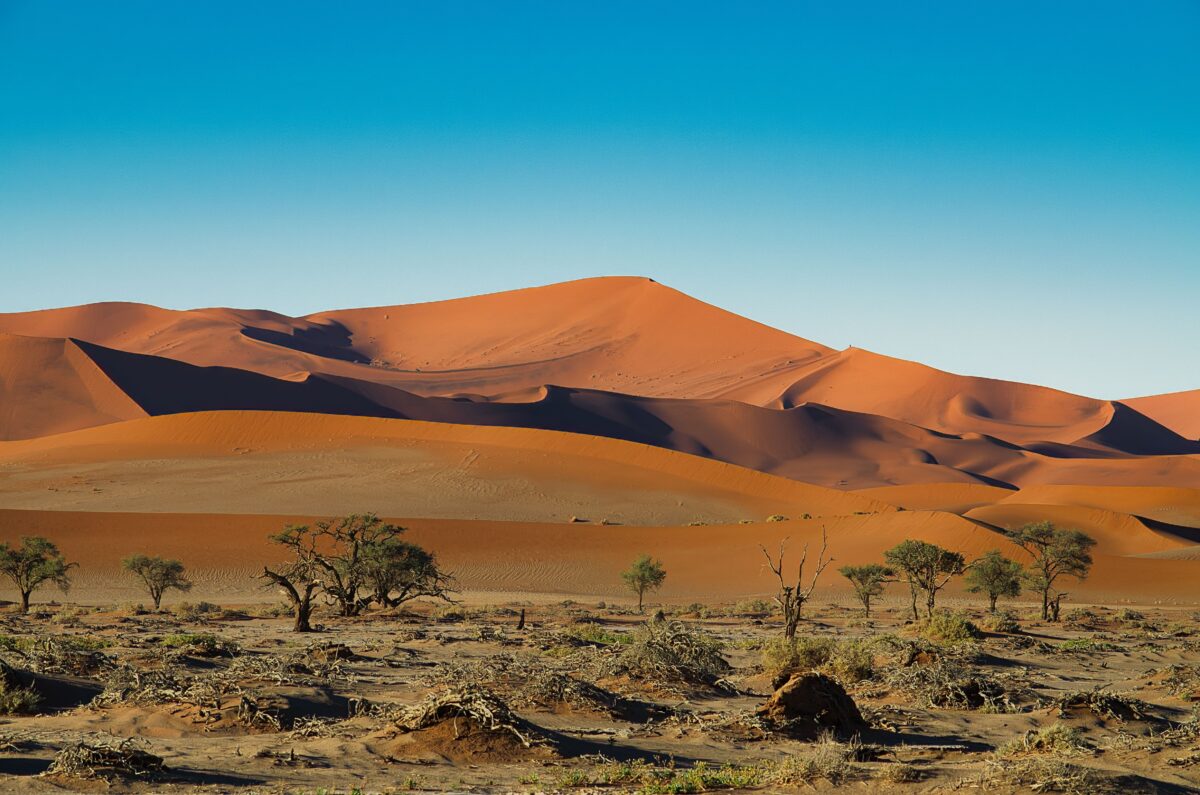
| Signature landscape | Table Mountain, wine country | Sossusvlei’s massive red dunes |
| Wildlife access | Requires travel to game reserves | Genuine desert-adapted wildlife along the route |
| Crowd density | Significant, particularly December-January | Considerably lower given the vast, sparse terrain |
What Windhoek & Sossusvlei Actually Offer
Namibia’s defining feature is genuine, vast emptiness, some of the lowest population density of any country on earth, translating into a road trip experience where dramatic desert landscapes go largely uninterrupted by other visitors.
- Sossusvlei’s red dunes: among the tallest sand dunes in the world, genuinely striking at sunrise when the light creates dramatic shadow patterns across the dune faces, a landscape with no direct equivalent near Cape Town
- Deadvlei: a stark white clay pan dotted with centuries-old dead camel thorn trees against the red dunes, one of the most photographed landscapes in Southern Africa, genuinely otherworldly in person
- Desert-adapted wildlife: Namibia’s arid regions host genuinely unique wildlife adaptations, including desert elephants and oryx, viewable during the self-drive route itself rather than requiring a separate dedicated safari
- Windhoek: a genuinely relaxed, German-colonial-influenced capital city, offering a comfortable start and end point for the wider desert road trip
Why Cape Town Still Wins for Specific Things
Cape Town’s specific combination of Table Mountain, established wine country (Stellenbosch, Franschhoek), and genuine city culture with strong dining and museums represents a combination Namibia’s road-trip-focused model doesn’t replicate. For travellers specifically wanting that city-and-wine-country convenience, that requires Cape Town itself.
The honest verdict: if Cape Town’s specific city culture and wine country access are the trip’s purpose, that requires accepting its city-break structure. For travellers wanting a genuine self-drive desert adventure with dramatic, uncrowded landscapes, Namibia delivers something Cape Town’s more conventional city break cannot.
What a Week Actually Costs
| Category | Cape Town (per person) | Windhoek & Sossusvlei (per person) |
|---|---|---|
| Accommodation (6 nights, split two ways) | £192-£384 | £159-£333 |
| Food | £120-£190 | £110-£170 |
| Car hire (self-drive, 4×4 recommended) | £150-£280 | £180-£320 |
| Total (excluding flights) | £462-£854 | £449-£823 |
While overall costs run broadly comparable, Namibia’s car hire cost runs somewhat higher given the genuine 4×4 requirement for much of the Sossusvlei route, offset by generally lower accommodation and food costs across the wider trip.
Step-by-Step: Planning a Namibia Road Trip
- Fly into Windhoek, with UK connections typically routing through Frankfurt or Johannesburg, given Namibia’s historical ties to Germany and regional Southern Africa flight networks.
- Rent a proper 4×4 for the full trip, since Namibia’s road conditions, particularly the final stretch into Sossusvlei, genuinely require appropriate ground clearance.
- Arrive at Sossusvlei before sunrise, since the park’s gates open specifically to allow visitors to catch the dunes’ most dramatic early morning light.
- Plan fuel stops carefully, since Namibia’s vast distances between towns mean running low on fuel carries genuine risk, unlike Cape Town’s more compact, well-serviced road network.
- Book accommodation well in advance for the Sossusvlei area specifically, since the limited lodges near the park entrance see genuine demand relative to their modest capacity.
Frequently Asked Questions
Do UK citizens need a visa for Namibia?
No, UK passport holders can enter Namibia visa-free for tourist stays of up to 90 days.
Is a 4×4 genuinely necessary for this Namibia route?
Yes, for the final stretch into Sossusvlei specifically, which crosses genuine soft sand terrain; a standard car cannot safely complete this portion of the route.
Is Namibia safe for a self-drive road trip?
Yes, generally considered one of the safer African countries for independent travel, with well-maintained main roads, though the sheer distances and remoteness demand genuine preparation, fuel planning, and awareness rather than complacency.
What is the best time of year for a Namibia desert road trip?
May through October (the dry season) offers the most reliable driving conditions and comfortable temperatures, avoiding the wetter summer months when some roads can become genuinely difficult to navigate.
Swakopmund: A Coastal Break Worth Adding
For travellers extending beyond the core Windhoek-Sossusvlei route, Swakopmund offers a genuinely striking coastal town where the Namib Desert’s dunes meet the cold Atlantic, a distinctive German colonial architectural character adding a further layer of interest. The town also serves as a base for genuine adventure activities including sandboarding and quad biking on the surrounding dunes, worth building into a longer itinerary beyond the Sossusvlei-focused core route.
The Genuine Solitude Factor
Namibia’s population density, among the lowest in the world, means long stretches of the Sossusvlei route genuinely deliver hours without encountering another vehicle, a stark contrast to Cape Town’s more compact, populated Western Cape region. This isn’t simply marketing language but a genuine, verifiable characteristic of the country, worth factoring into expectations for travellers specifically seeking a wilderness experience free from crowds.
The Bottom Line
Windhoek and Sossusvlei deliver a genuinely dramatic self-drive desert adventure, towering red dunes, desert-adapted wildlife, and vast, uncrowded landscapes, at a broadly comparable cost to Cape Town but with an entirely different trip structure and character. The trade-off is losing Cape Town’s specific city culture, Table Mountain, and established wine country convenience, all genuinely valuable for travellers whose trip centres on that particular city-break model.