



Two of Europe’s most substantial breakfast traditions, the Full English and the Turkish kahvaltı, both deliver genuinely exceptional value for around £8, but they represent fundamentally different philosophies: one built around cooked protein, the other around spread-out variety.
Quick answer: both breakfasts genuinely deliver strong value at roughly £8, with the Full English offering a single substantial cooked plate and the Turkish kahvaltı offering a wider spread of smaller items across cheese, olives, honey, and bread. Neither is objectively better, the choice comes down to preferring one hearty cooked plate versus a genuinely varied grazing-style spread.
Full English vs Turkish Kahvaltı: Head-to-Head
| Factor | Full English | Turkish Kahvaltı |
|---|---|---|
| Typical cost (café, UK/Turkey) | £7-£9 | 150-220 TRY (£3.75-£5.50), or £8-£12 at a UK Turkish restaurant |
| Format | Single hot plate | Spread of multiple small dishes |
| Core components | Eggs, bacon, sausage, beans, toast, tomato | Cheese varieties, olives, honey, jam, eggs, bread, tomato, cucumber |
| Protein source | Meat-forward (bacon, sausage) | Egg and cheese-forward, often less meat |
| Best for | A single substantial meal before a long day | Leisurely, social, grazing-style eating |
What a Full English Actually Delivers for £8
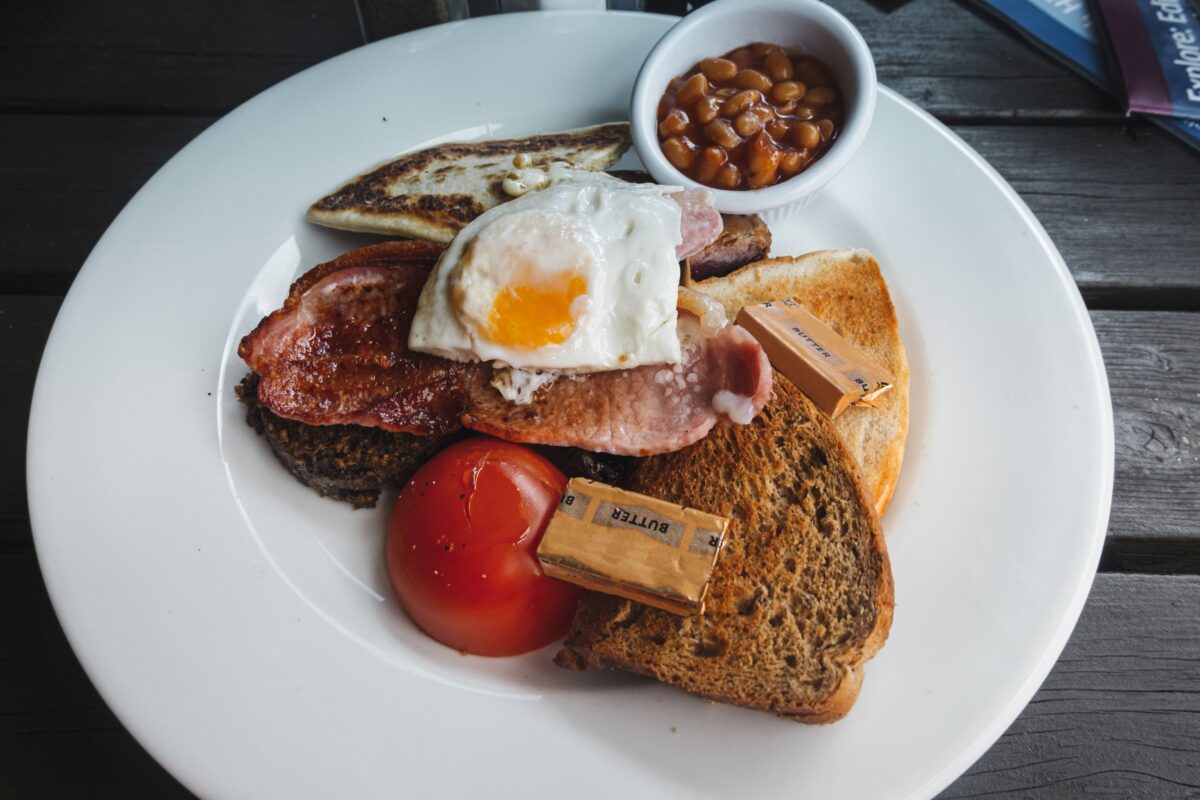
The Full English’s core components are genuinely standardised across most UK cafés, making quality comparison largely about ingredient sourcing and cooking technique rather than dramatic variation in what’s included.
- The essentials: two eggs (fried or scrambled), two rashers of bacon, one or two sausages, baked beans, grilled tomato, toast, and often a hash brown
- Where the £8 price point genuinely delivers: independent cafés and “greasy spoon” establishments, rather than chain restaurants, typically offer the strongest value-to-quality ratio at this price
- What separates a good one from a mediocre one: properly grilled (not boiled) tomatoes, real butcher’s sausages rather than the cheapest bulk-bought variety, and eggs cooked to order rather than pre-prepared in batches
What a Turkish Kahvaltı Actually Delivers
A proper Turkish breakfast spread genuinely rewards a slower, more social approach, traditionally eaten over an extended period rather than the more efficient, single-plate consumption pattern of a Full English.
- The essentials: multiple cheese varieties (beyaz peynir, a white brined cheese, and kaşar, a firmer yellow cheese, at minimum), olives (both green and black), honey with kaymak (clotted cream), various jams, sliced tomatoes and cucumbers, and fresh bread (typically simit, a sesame-crusted ring bread, alongside standard loaves)
- Menemen: a Turkish-style scrambled egg dish with tomatoes and peppers, often served as the “hot” component of an otherwise room-temperature spread
- Çay (Turkish tea): served throughout the meal in small tulip-shaped glasses, genuinely integral to the experience rather than an optional add-on
Why the Comparison Isn’t Really About Which Is “Better”
The two breakfasts serve genuinely different purposes and eating philosophies. A Full English is designed to be efficient and substantial, fuel before a demanding day, historically rooted in working-class British food culture. A Turkish kahvaltı is designed to be leisurely and social, a genuine occasion in itself rather than merely a precursor to the day’s activities.
The honest verdict: choose the Full English if the priority is a quick, substantial, protein-forward meal before getting on with the day. Choose the Turkish kahvaltı if breakfast itself is meant to be the leisurely centrepiece of the morning, ideally with time to linger over multiple glasses of çay.
What £8 Actually Buys at Each
| Category | Full English | Turkish Kahvaltı |
|---|---|---|
| Total calories (approximate) | 800-1,100 | 700-1,000 (spread over a longer eating period) |
| Number of distinct food items | 5-7 | 10-15+ |
| Typical eating duration | 15-25 minutes | 45-90 minutes |
| Coffee/tea included | Often extra (£2-£3) | Çay typically included or very cheap to add |
Step-by-Step: Getting the Best Version of Either
- For a Full English, seek out independent cafés over chains, since the £8 price point genuinely rewards smaller establishments sourcing better ingredients rather than optimising for volume.
- For a Turkish kahvaltı, allow genuine time, since rushing through what’s designed as a leisurely spread undermines much of the format’s actual appeal.
- Ask what’s included before ordering a Full English, since some cafés’ base price excludes hash browns, black pudding, or a second sausage, worth confirming to avoid a smaller-than-expected plate.
- For Turkish breakfast, don’t skip the simit, since this sesame-crusted bread ring is genuinely central to the experience and often overlooked by visitors defaulting to standard sliced bread instead.
- Pair each with its traditional drink, builder’s tea or filter coffee for the Full English, çay specifically for the Turkish spread, rather than defaulting to whatever’s most familiar.
Frequently Asked Questions
Which breakfast is more filling?
Both are genuinely substantial, though the Full English’s concentrated protein and fat content tends to deliver a more immediately filling effect, while the Turkish kahvaltı’s spread-out format can result in comparable or greater total consumption over its longer eating duration.
Is it possible to find a genuine Turkish kahvaltı outside Turkey?
Yes, most UK cities with a significant Turkish community offer genuine kahvaltı at Turkish restaurants and cafés, typically running £8-£14 depending on the specific spread and location.
Which breakfast is better value for money?
Both deliver strong value at their respective £8 price points, though the Turkish kahvaltı’s larger number of distinct items can feel like the more expansive experience for the same cost, while the Full English’s cooked, protein-forward format suits those prioritising a single hearty plate.
Is a vegetarian version available for both breakfasts?
Yes, both traditions accommodate vegetarian versions reasonably well, a vegetarian Full English typically swaps bacon and sausage for extra beans, mushrooms, or a vegetarian sausage alternative, while a Turkish kahvaltı is naturally vegetarian-friendly given its cheese, egg, and produce-forward format already.
What About the Coffee or Tea Side of Each Tradition?
The Full English is traditionally paired with builder’s tea, strong, milky, and served in a large mug, though filter coffee has become an equally common accompaniment in most modern cafés. Turkish kahvaltı’s çay is more central to the actual experience than tea is to a Full English, served continuously throughout the meal in small glasses rather than a single mug, with Turkish coffee typically reserved for after the meal rather than during it, a distinction worth knowing before ordering.
Regional Variations Worth Knowing
The Full English varies meaningfully across the UK itself, the Scottish version often adds tattie scones and a slice of square sausage, while some regions include black pudding as a genuine standard component rather than an optional extra. Similarly, Turkish kahvaltı varies by region, with the Aegean coast leaning more heavily on fresh vegetables and olive oil-based dishes, while inland Anatolian versions often include heartier, meat-forward additions, worth knowing that neither breakfast tradition is quite as fixed and uniform as a simplified comparison might suggest.
The Bottom Line
Both the Full English and Turkish kahvaltı deliver genuinely exceptional breakfast value around the £8 mark, representing two fundamentally different but equally valid philosophies, efficient and substantial versus leisurely and varied. Neither is objectively superior, and the honest recommendation is trying both on their own terms rather than expecting one to replicate the other’s specific strengths.