
The route that gives South Korea its full range: three days in Seoul for the Gyeongbokgung Palace at 9am and the Bukchon Hanok Village and the Han River at sunset and the Korean BBQ at midnight in Mapo, one day at the DMZ for the Joint Security Area and the Third Infiltration Tunnel and the specific Cold War geography that is the most confronting single day trip from any capital in the world, and three days on the southern coast — the Tongyeong canal city that the Korean art world calls the Naples of Korea and the Hallyeohaesang National Park boat circuit and the Jeonju overnight for the bibimbap that comes from here and nowhere else — and why South Korea, at 70% of Japan’s daily cost and 11.5 hours from London, gives the East Asia trip that the Japan-first traveller returns from saying they should have done South Korea first.
Reading time: 11 minutes | Last updated: 2026
South Korea is the country that went from a per capita GDP lower than Ghana in 1960 to membership of the OECD by 1996. The specific physical evidence of this transformation is visible in Seoul — the Han River, dredged and banked and bordered by expressways in the 1960s-70s, the apartment towers of the Gangnam and the Bundang and the Mapo built in the specific decades visible in their architecture, and the hanok villages (the preserved traditional Korean courtyard houses) maintained in pockets of the city specifically because the modernisation would otherwise have erased them entirely.
The DMZ (the Demilitarised Zone separating North and South Korea — the 4km-wide buffer zone along the 38th parallel that has been the most heavily militarised border on Earth since 1953) is not a tourist attraction in the conventional sense. It is the physical manifestation of the division that the Korean War produced and that has not been resolved in 70 years. Visiting it requires the understanding that you are standing on the world’s most dangerous border, that the soldiers on both sides of the yellow line in the Joint Security Area are not decorative, and that the situation visible from the Dora Observatory changes every month.
Before You Leave
The visa: UK citizens enter South Korea visa-free for 90 days. K-ETA (Korea Electronic Travel Authorisation) may be required depending on the current bilateral agreement — check at k-eta.go.kr before departure.
The T-money card: The Korean transit card (available at any convenience store or airport kiosk, KRW 3,000 / £1.72 card fee) covers the Seoul Metro, the bus, and the taxi surcharge — the essential Korean transit tool.
The DMZ tour: The Joint Security Area and the Third Tunnel are not independently accessible — they require the authorised tour operator. USO tours (usokorea.org) and Panmunjom Travel Center are the two main operators. Book at least 72 hours ahead; bring your passport.
The Route
Seoul (3 nights) → DMZ day trip → Train to Jeonju (1 night) → Train to Tongyeong (2 nights) → Return Seoul, fly home
The 7 Days
DAYS 1-3 — Seoul
Day 1: The Palace Circuit and Bukchon
8:30am — Gyeongbokgung Palace:
The Gyeongbokgung Palace (the main royal palace of the Joseon dynasty, built 1395 — the largest of the five Seoul palaces, the Gwanghwamun Gate visible from the Sejong-daero boulevard, the Throne Hall (Geunjeongjeon) the ceremonial centrepiece): at 9am opening, the palace in the morning light before the 11am crowd.
The changing of the guard (the Sumunjang ceremony — performed at the Heungnyemun Gate at 10am and 2pm on most days, the Joseon royal guard in the full ceremonial dress, the drumming audible from the palace approach): free with palace entry (KRW 3,000 / £1.72 adult).
Bukchon Hanok Village:
The Bukchon Hanok Village (the residential neighbourhood of traditional Korean courtyard houses — the hanok — on the hill between the Gyeongbokgung and the Changdeokgung palaces): the Gahoe-dong road (the most photographed street in Bukchon, the stone-tiled roof visible at the road’s bend, the specific Seoul urban texture that the apartment city surrounds):
The Bukchon at 8am (the village before the photography tour groups): the alley cats on the roof tiles, the smell of the morning cooking from the occupied hanok, the specific Korean domestic morning visible through the wooden gates.
Day 2: The DMZ
Full description below (Day 4).
Day 3: The Han River and Mapo
The Han River at sunrise:
The Yeouido Hangang Park (the riverbank park on the Han River island — the bicycle hire from the park entrance (KRW 3,000-6,000 / £1.72-3.44 per hour), the 5km cycle path visible in both directions, the sunrise over the Mapo Bridge visible from the east end of the island):
The chimaek tradition (the Korean portmanteau of chicken and maekju/beer — the specific Korean cultural institution of the fried chicken and the beer, the riverbank picnic in the evening, the delivery app (Coupang Eats or Baemin) from which you order the chicken to the GPS coordinates of your river blanket spot): the most specifically Korean single social activity available to the visitor.
Hongdae and Mapo:
The Hongdae neighbourhood (the university arts district west of the city — the independent record shops, the street performers at the Hongik University entrance plaza on weekends, the tattoo studios and the vintage clothing and the 24-hour Korean BBQ):
The Korean BBQ in Mapo (the Mapo-gu galbi restaurants — the charcoal-grill pork belly (samgyeopsal), the thinly sliced beef rib (galbi), the lettuce wrap (ssam) with the fermented soybean paste (doenjang), the garlic sliced thin and placed directly on the coals, the banchan (the 6-12 side dishes that accompany every Korean table)):
The specific Korean BBQ instruction: the samgyeopsal goes on the grill fat-side-down first (to render the fat, which then baste the meat as it cooks). The galbi is placed presentation-side-up. The sesame oil with the salt (the chamgireum) is for dipping the cooked meat — not a condiment but a preparation that finishes the cooking. Cost: KRW 15,000-25,000 / £8.62-14.35 per person.
The Noryangjin Fish Market:
The Noryangjin Fish Market (the wholesale fish market under the bridge on the south bank of the Han River — the 24-hour market, the largest fish market in South Korea, the live crab and the live octopus and the halibut in the tanks accessible to the public buyer at 6am): the purchase at the market level, the preparation at the restaurant on the floor above (the market stall vendors partner with the restaurants on the upper level — buy the fish at the stall, take the receipt to the restaurant upstairs, the fish prepared to order).
Where to stay in Seoul: The Four Seasons Seoul (KRW 400,000-800,000 / £229.58-458.84/night), the Ryse Hotel Autograph (the Mapo boutique: KRW 150,000-300,000 / £86.08-172.14/night), the Kimchee Guesthouse Jongno (KRW 30,000-60,000 / £17.22-34.43/night for the private room).
DAY 4 — The DMZ
The Joint Security Area (JSA):
The bus departs Seoul from the Gwanghwamun area at 7:30am (the USO tour) or 8am (the Panmunjom Travel Center). The drive north: 55km through the Uijeongbu corridor, the landscape becoming sparser as the DMZ approach road narrows.
The Joint Security Area (Panmunjom — the village within the DMZ where the armistice was signed in 1953, the blue UNC huts straddling the Military Demarcation Line visible from the briefing room): the tour of the MAC (Military Armistice Commission) building (the soldier who steps inside the blue building at the Military Demarcation Line is technically standing in North Korea — the MDL runs through the conference table), the North Korean guard visible in the distance from the JSA, and the specific silence of the most guarded 4km on Earth.
The Third Infiltration Tunnel (the tunnel discovered in 1978, one of four tunnels the North Korean military dug under the DMZ toward Seoul — the tunnel wide enough for 30,000 soldiers per hour to march through, the descent 73 metres below ground at 11° gradient, the MDL visible as the concrete barrier across the tunnel): hard hat and headlamp provided.
The Dora Observatory (the southernmost public viewpoint in South Korea — the North Korean city of Kaesong visible through binoculars on clear days, the Kijong-dong village (called “Propaganda Village” by the South Korean military — the buildings visible from the observatory appear inhabited from a distance but the South Korean military analysis suggests they may be facades)):
The specific DMZ instruction: the JSA is a military zone under UN Command authority, not a tourist attraction. The photography restrictions (no photography above the waist-height line in the JSA unless the guard specifies), the movement restrictions (stay within the marked areas, do not approach the MDL without instruction), and the dress code (no jeans, no shorts, no sandals — the UNC enforces a smart-casual dress code as a condition of access) are enforced by the military police.
DAY 5 — Jeonju
Train from Seoul to Jeonju (KTX from Seoul Station to Jeonju, 2 hours, KRW 25,000-35,000 / £14.35-20.09):
Jeonju Hanok Village:
The Jeonju Hanok Village (the largest preserved hanok village in South Korea — 700+ traditional Korean courtyard houses, the village visible from the Omokdae pavilion above): the most intact urban hanok streetscape in Korea, the village used as a film location for numerous Korean historical dramas (sageuk) and visible as such.
The Jeonju bibimbap:
The bibimbap (bibim = mixed, bap = rice) in Jeonju (the dish that the city claims as its origin — the mixed rice with the assorted vegetables, the gochujang (fermented chilli paste), the sesame oil, and the egg):
The Jeonju bibimbap is served in the stone pot (dolsot bibimbap) that has been heated until the bottom rice layer crisps — the nurungji (the crispy rice, deliberately produced by the stone pot technique, the textural contrast between the soft mixed rice and the crispy base) is the specific Jeonju contribution to the dish. KRW 12,000-18,000 / £6.88-10.33.
DAYS 6-7 — Tongyeong
Train/bus from Jeonju to Tongyeong (3 hours via the Jinju express bus):
Tongyeong:
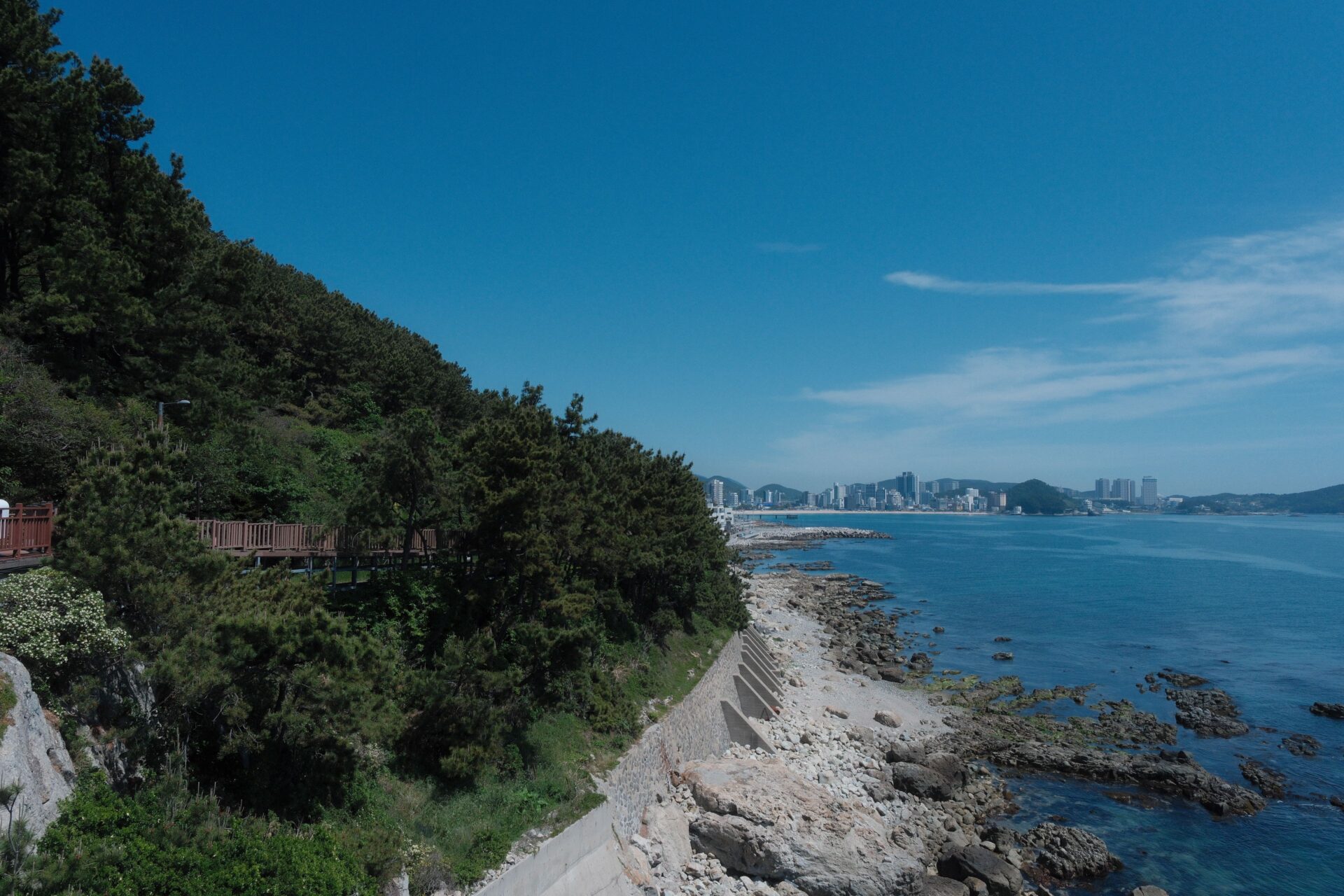
Tongyeong (the canal city on the south coast — the city built on the peninsula and the surrounding islands at the entrance to the Hallyeohaesang National Park, the Korean composer Yun Isang’s birthplace, the city that the Korean arts community calls the Seoul of the south for the density of its cultural infrastructure relative to its population of 130,000):
The Hallyeohaesang National Park boat circuit:
The island-hopping ferry from the Tongyeong ferry terminal (the dolseom — the “stone island” circuit, the boat circuit connecting the Bijindo Island (the Ssangmyo Lagoon — the lagoon visible only at low tide, the water draining to reveal the sandbar connecting the two islands), the Somaemuldo Island (the walking trail along the ridge with the Tongyeong sea visible in every direction), and the Yeonhwado Island):
The park circuit (the boat ticket for the islands + the access fee): KRW 15,000-25,000 / £8.62-14.35 per person for the full circuit.
The Tongyeong cable car:
The Hallyeondo Cable Car (the gondola from the Donam-dong terminal to the Mireuksan mountain summit at 461 metres — the Hallyeohaesang National Park visible from above, the Geoje Island across the channel, the specific southern Korean coast quality visible in the distance): KRW 13,500 / £7.75 return.
What It Costs
| Category | Budget | Mid-Range |
|---|---|---|
| Return flights (UK-Seoul) | £400-700 | £600-1,000 |
| 7 nights accommodation | £120-350 | £350-700 |
| DMZ tour | £40-80 | £40-80 |
| Food (7 days) | £80-160 | £160-320 |
| Transport (KTX, metro, ferries) | £60-120 | £80-150 |
| Activities | £30-60 | £60-120 |
| Total | £730-1,470 | £1,290-2,370 |