
The Djemaa el-Fna at 9pm produces the finest open-air eating experience in North Africa. The specific order matters. Here it is.
1. Urojo (Marrakech Mix Soup)
The most specifically Marrakchi dish and the least known outside the city — a broth of coconut milk, lime, tamarind, and turmeric with potato cubes, fried lentil fritters (bhajia), cassava crisps, boiled egg, and a choice of protein (usually lamb or chicken). The combination is simultaneously light and complex, the tamarind sourness cutting the coconut richness, the textures ranging from the soft boiled egg to the crisp bhajia.
Where: The stalls in the northeast quadrant of the Djemaa el-Fna — the urojo vendors are identifiable by the large pot and the array of component dishes arranged beside it. Ask the vendor to construct the bowl in front of you.
When: Evening from 6pm. The urojo is a dinner dish; the morning market serves harira and msemen.
Cost: 25-40 MAD / £2-3.20.
2. Harira with Chebakia
The soup that breaks the Ramadan fast at sunset and is available throughout the day at the Djemaa el-Fna market stalls and in the Medina cafés. Harira is the definitive Moroccan soup — a thick base of tomato, lentils, and chickpeas with lamb, fresh coriander, celery, and vermicelli, the soup thickened with a flour-and-water paste (the tedouira) added at the end to give it the specific body that separates harira from any other bean soup.
Chebakia: The honey-soaked sesame pastry served alongside harira — the dough fried in oil then immediately soaked in honey and coated in sesame seeds, the result simultaneously crisp and sticky. The traditional pairing of the savoury soup and the sweet pastry is a Moroccan combination that sounds improbable and tastes correct.
Where: The café row on the north side of the Djemaa el-Fna for the sit-down version (with the rooftop view over the square). The market stalls in the square itself for the standing version. The Café de France terrace for the view while eating.
Cost: Harira 15-25 MAD / £1.20-2. Chebakia 5 MAD / £0.40 each.
3. Pastilla (Bastilla)
The most technically demanding dish in the Moroccan culinary tradition — a pie of paper-thin warka pastry (similar to filo but made differently — the dough applied to a hot pan in overlapping circles, the transparency achieved by the thinness of each layer) filled with pigeon (the traditional version) or chicken, onions, saffron, cinnamon, eggs, and toasted almonds. The filling is simultaneously savoury and sweet — the cinnamon and icing sugar dusted over the top of the golden pastry giving the combination of sweet spice and savoury meat that is the specific Moroccan signature.
Where: Not at the Djemaa el-Fna stalls (the quality varies dramatically). At the Dar Moha restaurant (for the refined version, £12-18 per person) or at any traditional Marrakchi restaurant in the Medina that makes it fresh (ask if it’s made daily — the warka pastry deteriorates within hours).
The pigeon vs chicken question: The pigeon is the original and the superior version — the dark meat of the squab giving more flavour than the chicken alternative. Both are correct; the pigeon is the authentic choice.
Cost: Restaurant: 80-140 MAD / £6.40-11.20 per portion.
4. Mechoui (Whole Roasted Lamb)
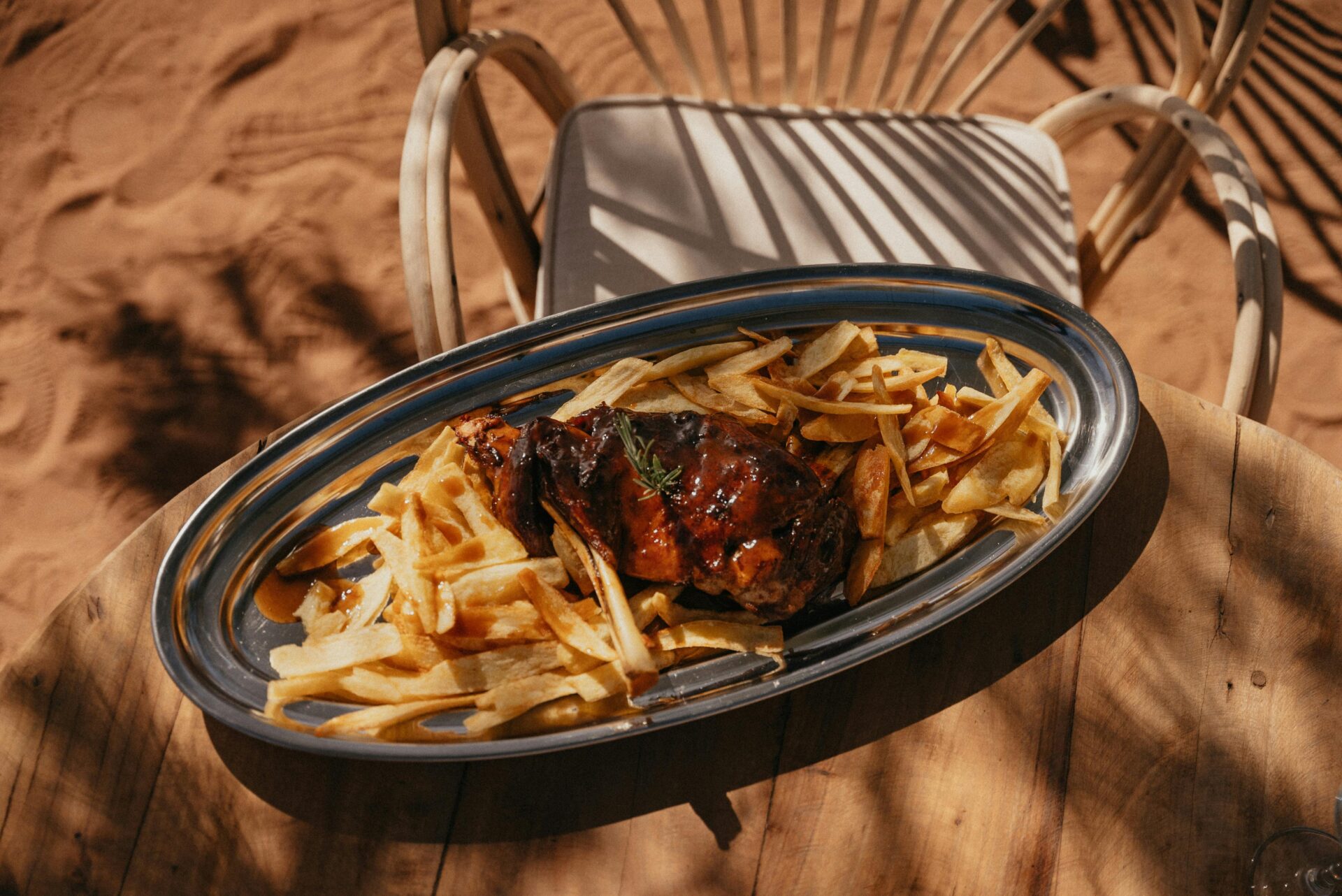
The mechoui is the lamb slow-roasted in a sealed underground oven (the clay oven, the tannour) for 4-5 hours until the meat pulls from the bone without resistance, the skin lacquered and crisp. In Marrakech, the mechoui quarter is near the Djemaa el-Fna — the specific vendors who specialise in this single preparation, selling it by weight at counters where the lamb is visible and the meat is hacked from the carcass to order.
Where: The Mechoui Alley (Souk Ahl Fès, behind the Djemaa el-Fna, the small lane identifiable by the lamb carcasses hanging at the stall entrances). Open from 11am; sells out by 2-3pm on most days.
The ordering: Point at the section you want. The vendor weighs it in front of you. Salt and cumin served alongside — the only condiment the meat needs. The khoubz (Moroccan round bread) from the adjacent bread stall to scoop the meat.
Cost: 120-160 MAD / £9.60-12.80 per kilo. One kilo feeds two people generously.
5. B’steeya au Lait (Milk Pastilla)
The dessert version of the pastilla — the warka pastry filled with a cream of milk, orange blossom water, and almonds, dusted with cinnamon and icing sugar. A specific Marrakchi dessert tradition distinct from the savoury pastilla, served cold.
Where: The Café Arabe (6 Rue Mouassine, the rooftop café in the Medina, the orange blossom milk pastilla on the menu throughout the day). Also at Café Kif Kif and any Medina café that lists it.
Cost: 35-55 MAD / £2.80-4.40.
6. Tangia
The Marrakchi bachelor dish — a clay urn filled with lamb shank (or occasionally beef), preserved lemons, argan oil, saffron, cumin, and garlic, the urn sealed and slow-cooked for 6-8 hours in the ash of the hammam furnace (the traditional cooking method — the hammam attendant places the urns in the ash at dawn and retrieves them at lunch). The result: the meat entirely soft, the preserved lemon giving the sauce its specific bitter-aromatic character.
Where: Souk Ahl Fès (the same area as the mechoui, the tangia vendors identifiable by the clay urns displayed at the stall front). The Chez Lamine restaurant near the Bab Doukkala (the most recommended tangia specialist in the Medina). Open for lunch only — the cooking process doesn’t permit dinner service.
Cost: 80-120 MAD / £6.40-9.60 per serving.
7. Amlou with Msemen
The Moroccan breakfast combination that most tourists miss entirely — amlou (the thick paste of toasted almonds, argan oil, and honey, the colour of peanut butter but the flavour specific to argan) spread on msemen (the layered, pan-fried flatbread of Moroccan bread tradition — the dough folded multiple times to create the characteristic flaky layers, cooked on an ungreased iron tawa).
The amlou is the argan oil equivalent of peanut butter — the toasted almond giving the texture, the argan giving the distinctive walnut-like flavour, the honey the sweetness that makes it work for breakfast. It is one of the most specifically Moroccan flavour combinations available and is almost impossible to find in the tourist-facing restaurants of the Djemaa el-Fna.
Where: The Medina neighbourhood cafés (the small cafés serving the local population, not the tourist-facing restaurants on the Djemaa el-Fna edge). Ask for amlou and msemen — any local café that serves breakfast will have them.
Cost: 20-35 MAD / £1.60-2.80 for both.
The Djemaa el-Fna Order
The correct Djemaa el-Fna evening food circuit:
7pm: walk the full row of stalls before selecting (the circuit takes 10 minutes and shows the full range). Identify the stalls with the highest proportion of local customers.
7:30pm: urojo from the northeast stalls.
8pm: grilled kefta (the lamb and beef mince formed on a flat skewer, the specific Moroccan spice blend of cumin, paprika, coriander, and parsley, grilled over charcoal) from the central grill stalls.
9pm: return for the orange juice (the freshly-squeezed orange juice from the juice vendors, 4 MAD / £0.32 per glass, the finest street drink in Africa) and the chebakia.
Total cost: 100-160 MAD / £8-12.80 per person for a complete evening of eating.