
The route that gives Nepal in the width it rewards: two days in Kathmandu for the Pashupatinath at dawn and the Boudhanath stupa at circumambulation time and the specific Kathmandu old city that the 2015 earthquake damaged and that the Newari community is rebuilding in the specific way that the original was built, three days in the Annapurna foothills on the Ghorepani-Poon Hill circuit that earns the Himalaya view at 3,193 metres without the altitude risk of the Everest Base Camp route, and two days in the Chitwan National Park for the greater one-horned rhinoceros at the bank of the Rapti River and the gharial crocodile sunning on the sand and the specific Nepal biodiversity that the mountain image erases from the visitor’s expectation.
Reading time: 11 minutes | Last updated: 2026
Nepal is two countries in one — the Himalayan country (the mountains, the trekking, the Sherpa culture, the world’s highest peaks) and the Terai country (the southern lowland, the subtropical forest, the rhinoceros and the Bengal tiger and the gharial, the river plain that connects Nepal to the Gangetic ecosystem of India). Most Nepal itineraries spend all 7 days in the mountains. This guide spends 3 days in the Annapurna foothills, 2 in the Terai, and 2 in Kathmandu — the complete Nepal.
Before You Leave
The visa: Nepal tourist visa on arrival at Tribhuvan International Airport. Cost: USD 25 / £19.69 for 15 days, USD 40 / £31.50 for 30 days, USD 100 / £78.74 for 90 days. Cash (USD) required at the visa counter.
The altitude: The Ghorepani-Poon Hill circuit reaches 3,193 metres — within the moderate altitude range where the acclimatisation is advisable but the AMS risk is lower than the Everest Base Camp or the Annapurna Circuit. Ascend no more than 300-500 metres per day above 3,000 metres; rest if headache develops.
The trek permits: The Annapurna Conservation Area Project (ACAP) permit (NPR 3,000 / £17.40) and the TIMS (Trekkers’ Information Management System) card (NPR 2,000 / £11.60) are required for the Ghorepani circuit. Both available at the Nepal Tourism Board office in Kathmandu or at the trailhead.
The Route
Kathmandu (2 nights) → Pokhara (1 night, fly or bus) → Ghorepani-Poon Hill trek (3 nights on trail) → Return Pokhara, fly to Bharatpur → Chitwan National Park (2 nights) → fly Bharatpur-Kathmandu, fly home
The 7 Days
DAYS 1-2 — Kathmandu
Day 1: Pashupatinath and Boudhanath
5:30am — Pashupatinath:
The Pashupatinath Temple (the UNESCO World Heritage Site on the Bagmati River — the most sacred Hindu temple in Nepal, the cremation ghats on the river bank visible to non-Hindu visitors from the eastern bank opposite the main temple): at 5:30am, the first cremation of the day beginning, the flame visible from the bridge, the specific ritual visible in its daily occurrence rather than its ceremonial staging.
The specific Pashupatinath instruction: the cremation is not a spectacle — it is the daily practice of a city that places its dead to the flame on the river bank as it has for 1,500 years. The observer who stands at the bridge and watches in silence, without the camera raised, is present at the ceremony in the correct way. The observer who photographs the deceased and the mourning family is present incorrectly.
The sadhus (the Hindu holy men — the ash-covered, the trident-carrying, the eye-catching figures at the temple entrance who offer the blessing and expect the donation): the correct interaction (a few rupees for the blessing and the photograph if the sadhu agrees) versus the incorrect interaction (the photograph without the donation or the agreement).
Boudhanath:
The Boudhanath Stupa (the largest Buddhist stupa in Nepal — the white dome, the all-seeing eyes of the Buddha painted on the harmika, the prayer flags extending from the apex): the circumambulation (kora) at 8am when the Tibetan Buddhist community does the morning circuit (the prayer wheel spinning, the beads in the left hand, the clockwise movement around the stupa base, the specific Kathmandu Buddhist morning visible as a daily practice):
The specific Boudhanath instruction: walk the circumambulation in the same direction as the other walkers (clockwise). The prayer wheels on the stupa base are spun with the right hand as you pass. The circuit takes approximately 15 minutes.
Day 2: The Kathmandu Durbar Square
The Kathmandu Durbar Square (the historic royal square — the Kumari Ghar (the living goddess temple, the young girl selected as the Kumari visible at the window at specific times of day), the Kasthamandap (the 12th-century pavilion, the structure that gave Kathmandu its name, damaged in 2015 and rebuilt by the Newar craftspeople), and the Taleju Temple (the tallest structure in the old city, visible above the square):
Entry: NPR 1,000 / £5.80 for foreign visitors.
The Thamel neighbourhood (the traveller district — the trekking equipment shops, the monastery butter lamps, the specific Kathmandu smell of the incense and the cooking and the diesel that the old city produces at every hour):
DAYS 3-5 — The Ghorepani-Poon Hill Trek
Fly or bus to Pokhara (the 25-minute flight from Kathmandu on Buddha Air or Tara Air, NPR 5,000-9,000 / £29.02-52.24 one way; or the 6-hour tourist bus, NPR 600-1,200 / £3.48-6.97).
The Ghorepani-Poon Hill circuit (3 days):
Day 3 (Nayapul to Tikhedhunga, 12km, 4-5 hours): The trail from the Nayapul trailhead (the jeep from Pokhara to Nayapul, 1.5 hours, NPR 300-500 / £1.74-2.90 per person in the shared jeep): the trail through the Modi Khola valley, the stone steps of the Ulleri ascent (the 3,400-step climb from the riverbank to the village of Ulleri, the most physically demanding single section of the circuit), the teahouse accommodation at Tikhedhunga (NPR 300-600 / £1.74-3.48 per night).
Day 4 (Tikhedhunga to Ghorepani, 8km, 4-5 hours): The rhododendron forest (the Annapurna rhododendron — the largest rhododendron species in the world, visible in bloom from February-April, the trunks reaching 10 metres, the trail through the forest at 2,800-3,100 metres): the Ghorepani teahouse at 2,860 metres.
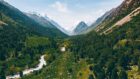
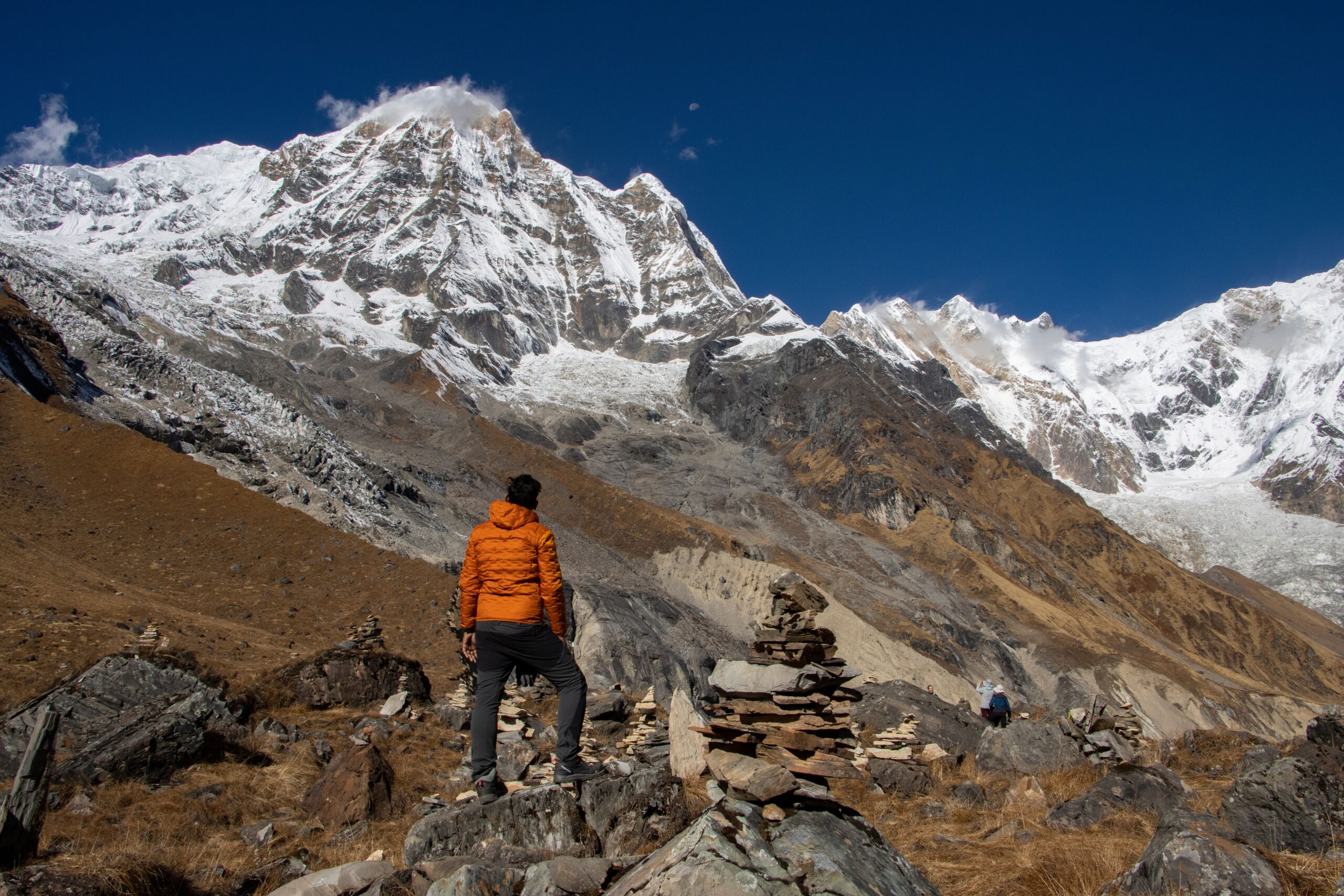
Day 5 (The Poon Hill summit dawn, return to Pokhara): The 4:30am departure from Ghorepani (the 45-minute climb to the Poon Hill viewpoint at 3,193 metres — arriving before the dawn for the Himalayan sunrise): the Dhaulagiri (8,167 metres), the Annapurna South (7,219 metres), the Machapuchare (the Fishtail peak, 6,993 metres — the unclimbed sacred mountain, the specific Nepalese peak whose summit has never been permitted by the government): the Himalayan panorama at first light, the cloud sea below the peaks in the valley, the specific Nepal view that the Poon Hill gives and that every other Himalayan viewpoint claims but does not equal at this accessible altitude.
Entry fee for Poon Hill: NPR 100 / £0.58.
Return to Pokhara by jeep from Nayapul, fly to Bharatpur (the Chitwan airport), 35 minutes.
DAYS 6-7 — Chitwan National Park
The rhinoceros:
The greater one-horned rhinoceros (Rhinoceros unicornis — the single-horned species found only in the grasslands of the Nepal Terai and the Assam state of India, the species rescued from near-extinction by the Chitwan National Park protection: 752 individuals in Nepal as of the 2021 census, 500+ in the Chitwan zone): the morning canoe safari on the Rapti River (the traditional dugout canoe, the rhinoceros visible from the water at the riverbank, the specific Chitwan morning approach that gives the rhinoceros at the water’s edge at arm’s length):
NPR 1,000-2,000 / £5.80-11.61 per person for the guided canoe safari with the park entry.
The gharial:
The gharial (Gavialis gangeticus — the narrow-snouted crocodilian, the fish-eating crocodile, the critically endangered species visible at the Narayani River bank in the Chitwan): the specific river bank viewing (the gharial sunning on the sand bar visible from the canoe, the elongated snout visible at the water’s edge):
The Chitwan gharial population is among the most significant remaining wild populations of the critically endangered species — the specific conservation instruction for the Chitwan visitor is that the gharial is more endangered than the tiger and is visible to the canoe visitor who chooses the Narayani River circuit over the Rapti.
The jungle walk:
The guided jungle walk (the 3-hour walk through the sal forest with the armed Nepali Army escort — the armed escort is mandatory for the jungle walk, the rhino charge that the escort can manage the alternative to the self-guided approach): NPR 1,500-3,000 / £8.70-17.41 per person.
Where to stay: The Barahi Jungle Lodge (the most atmospherically positioned lodge on the Chitwan buffer zone: £80-160/night), the Kasara Resort (the luxury option: £120-250/night), the family-run guesthouses in Sauraha village (NPR 800-2,000 / £4.64-11.61/night).
What It Costs
| Category | Budget | Mid-Range |
|---|---|---|
| Return flights (UK-Kathmandu) | £380-650 | £500-850 |
| Internal flights (Kathmandu-Pokhara, Bharatpur-Kathmandu) | £40-100 | £60-140 |
| 7 nights accommodation | £35-120 | £120-350 |
| Trek permits | £29 | £29 |
| Food (7 days, teahouse included on trek) | £30-80 | £70-160 |
| Chitwan activities and park fees | £20-50 | £50-100 |
| Total | £534-1,029 | £829-1,629 |