
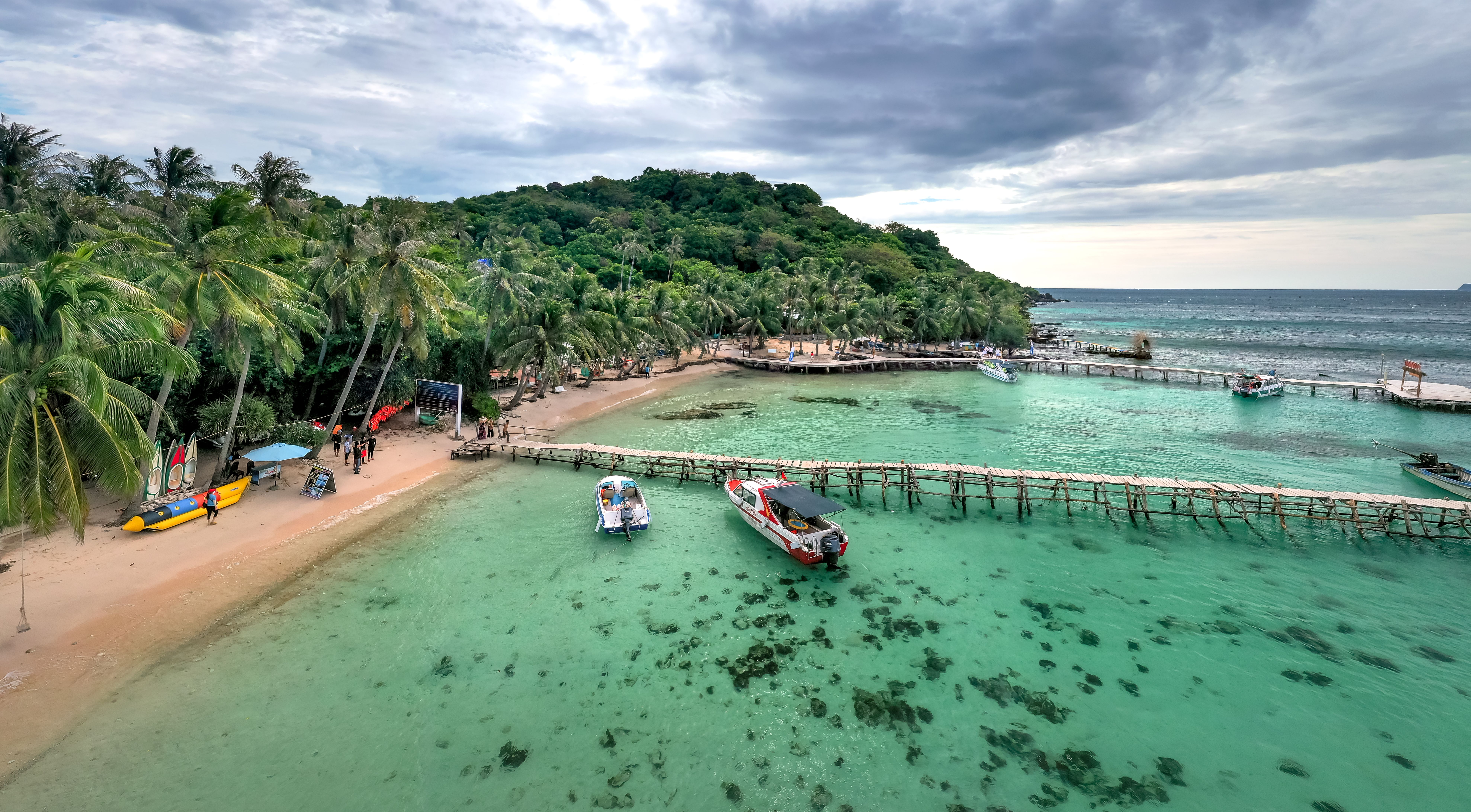
The southern Vietnam circuit that gives the country’s second half: two days in Ho Chi Minh City for the War Remnants Museum and the Bến Thành Market at 6am and the cơm tấm (the broken rice plate) at the neighbourhood restaurant that the hotel didn’t tell you about, one day on the Mekong Delta for the floating market at 6am and the coconut candy factory and the boat through the mangrove channels, and four days on Phú Quốc Island for the beach that is correct and the pepper plantation that gives the specific Vietnamese island agriculture and the fish sauce factory tour that you will describe to everyone you know because the scale of the production is the specific Vietnam that the beach does not show.
Reading time: 11 minutes | Last updated: 2026
The southern Vietnam circuit completes the country argument that the northern Vietnam guide begins — the Ho Chi Minh City that is the Hanoi’s counterpart (same country, entirely different pace, different food, different architecture, different relationship with the war), the Mekong Delta that gives the agricultural foundation of the Vietnamese rice economy, and the Phú Quốc Island that gives the Vietnam beach in its specific form.
Before You Leave
The e-Visa: Full detail in 7 Days in Vietnam. The 90-day e-Visa (USD 25 / £19.69) applied for at evisa.xuatnhapcanh.gov.vn.
The open-jaw: Fly into Ho Chi Minh City (Tan Son Nhat International, SGN), fly home from Phú Quốc (Phu Quoc International, PQC — the airport opened in 2012, the direct flights from Hanoi and HCMC by Vietnam Airlines and Bamboo Airways, 50 minutes from HCMC).
The Route
Ho Chi Minh City (2 nights) → Mekong Delta day trip → fly HCMC-Phú Quốc (50 minutes) → Phú Quốc Island (4 nights)
The 7 Days
DAYS 1-2 — Ho Chi Minh City
Day 1: The War Remnants Museum and the City
The War Remnants Museum:
The Bảo tàng Chứng tích Chiến tranh (28 Võ Văn Tần, District 3 — the museum covering the American War in Vietnam from the Vietnamese perspective): the most visited single museum in Vietnam and the most necessary context for any HCMC visit.
The specific museum instruction: the museum’s title in Vietnamese translates as “Exhibition House for Crimes of War and Aggression” — the original name was changed in 1995 when diplomatic relations between the US and Vietnam normalised. The collection (the defoliant drum of Agent Orange, the tiger cage replica, the photographs from the My Lai massacre published in the American press in 1969, and the photographs of the war’s physical aftermath) presents the specific Vietnamese perspective on the conflict that American war museums present from the opposing direction.
The Agent Orange exhibition (the photographs of the effects on the Vietnamese civilian population and their descendants, the medical documentation of the multi-generational health consequences of the herbicide programme) is the most affecting single exhibition room in HCMC. Entry: VND 40,000 / £1.26.
The Bến Thành Market:
The Bến Thành Market (the 1914 covered market in the District 1 — the tourist market by day (the souvenirs, the lacquerware, the silk), the night market by the surrounding streets from 6pm (the street food stalls visible from the market’s southern entrance, the bánh tráng nướng (the grilled rice paper with the egg and the spring onion, the specific Vietnamese street snack), the bánh mì at the corner cart)):
The 6am Bến Thành interior: the food vendors at the northern hall, the pork seller receiving the morning delivery, the fresh herbs visible in the first light from the skylight.
The Cơm Tấm:
The cơm tấm (the broken rice — the restaurant plate of the cracked rice (the smaller rice grains from the harvest that broke during milling, traditionally the cheapest grade, now the specific HCMC grain), the grilled pork chop (sườn bì), the shredded pork skin (bì), the steamed pork egg cake (chả trứng), the cucumber, the tomato, and the fish sauce):
At the neighbourhood restaurant (the quán cơm tấm on the side street — the plastic table, the plastic stool, the street-facing kitchen): VND 50,000-80,000 / £1.57-2.51. The most specifically HCMC single plate.
Day 2: The Cu Chi Tunnels and the Cao Đài Temple
The Cu Chi Tunnels:
The Cu Chi Tunnels (the tunnel network 40km northwest of HCMC — the 250km of tunnels dug by the Viet Cong under the American-held territories of the Cu Lao hamlet, the daily life of the tunnel during the war (the kitchen, the hospital, the meeting rooms, the weapons workshop) visible in the preserved sections): entry VND 110,000 / £3.46, the crawl through the tourist-widened section available (the original tunnel width: 80cm × 80cm — impassable for the average American soldier in full kit).
The Cao Đài Holy See (Tây Ninh, 100km from HCMC):
The Cao Đài Holy See (the temple of the Cao Đài religion — the Vietnamese syncretic faith that combines Buddhism, Taoism, Confucianism, and Christianity into the specific Vietnamese spiritual synthesis, founded 1926): the noon ceremony (the ceremony at noon daily, the white-robed congregation visible from the gallery above, the religious hierarchy visible in the colour-coded robes, the incense, the prayers, the specific Vietnamese spiritual architecture):
The Cao Đài temple exterior (the specific Vietnamese religious architecture — the dragon-wrapped columns, the divine eye (Thiên Nhãn) above the entrance, the Western clock tower at the temple’s side): free entry, the ceremony visible from the upper gallery.
DAY 3 — The Mekong Delta
The Cái Bè Floating Market:
The early departure from HCMC (the tour bus at 6:30am, the 2-hour drive to the My Tho pier): the boat departure at 8am for the Cái Bè floating market.
The Cái Bè floating market (the wholesale market on the Mekong — the boats selling vegetables, fruits, and produce by hanging the goods from the pole at the boat’s bow (the selling method that allows the buyer to identify the goods from a distance), the market operating from 4am-9am, the peak trading visible from 6am-8am):
The coconut candy factory (the home factory in the riverside village — the coconut candy (kẹo dừa) produced from the coconut milk, the sugar, and the pandan leaf, the specific Mekong candy visible in every tourist shop in HCMC produced at the riverside factory at VND 80,000-120,000 / £2.51-3.77 per kg (versus VND 150,000-250,000 / £4.71-7.85 at the HCMC tourist shop)):
The rowing boat through the mangrove channels (the xuồng ba lá — the traditional three-board Mekong boat, the narrow channel under the water coconut palm canopy, the specific Mekong ecosystem visible at water level):
Day trip from HCMC: USD 30-60 / £23.62-47.24 per person for the guided day trip with transport, boat, and lunch.
DAYS 4-7 — Phú Quốc Island
Fly HCMC-Phú Quốc (50 minutes):
Day 4: The Island Orientation
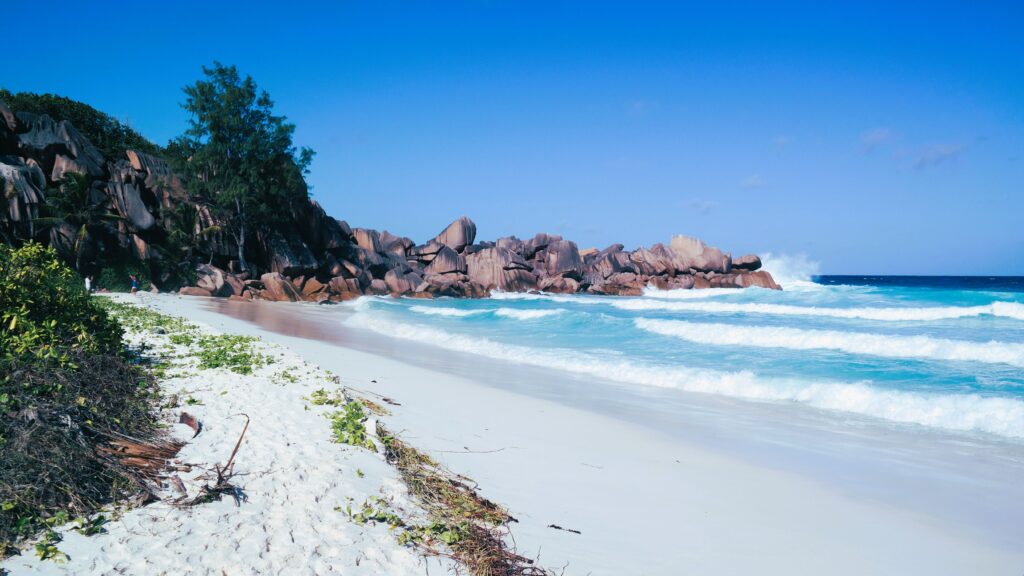
The Long Beach (the Bãi Trường — the 20km beach on Phú Quốc’s west coast, the sunset beach, the beach facing the Gulf of Thailand (west) that gives the Vietnam sunset from the beach):
The Phú Quốc sunset instruction: the west-facing Long Beach gives the sunset directly over the Gulf of Thailand. This is the correct Phú Quốc evening activity. Book the beachfront restaurant table for 5:30pm (the sunset at 6:10-6:20pm in December-March).
Day 5: The Pepper Plantation and the Fish Sauce Factory
The Phú Quốc pepper:
The Phú Quốc pepper (the hồ tiêu Phú Quốc — the black pepper grown on the island’s red laterite soil, the specific Phú Quốc terroir giving the pepper its specific aromatic profile that the Vietnamese spice market values as the highest quality Vietnamese pepper):
The plantation visit (the pepper vines growing on the wooden posts visible from the road in the Dương Tơ district — the plantation tour giving the vine-to-spice process, the green pepper clusters (the immature fruit), the red (the ripe fruit), and the dried black (the sun-dried ripe fruit)): typically free or VND 30,000-50,000 / £0.94-1.57 for the guided circuit.
The Phú Quốc fish sauce factory:
The Phú Quốc fish sauce (nước mắm Phú Quốc — the fish sauce produced from the anchovy (cá cơm) packed in salt and fermented in the wooden barrel for 12-18 months on the island, the UNESCO geographical indication protecting the Phú Quốc production method):
The factory tour (the Khải Hoàn Fish Sauce Factory — the largest on the island, the production at scale: the barrels visible in rows, each containing 8-13 tonnes of fish and salt, the fermentation visible at the open-top barrels, the specific smell of the liquid gold at the extraction tap): free entry, the fish sauce available at the factory price (VND 50,000-200,000 / £1.57-6.28 per litre depending on the grade, versus VND 80,000-350,000 / £2.51-10.99 per litre in the HCMC supermarket).
Days 6-7: The Island North and the Coral
The Phú Quốc National Park (north):
The national park covering the northern third of the island — the old-growth tropical forest, the trekking trails accessible from the Rạch Tràm village, and the specific Phú Quốc biodiversity (the island species of lizard, the Phú Quốc ridgeback dog — the dog breed that originated on this island, the specific spine-ridge pattern that gives the breed its name):
The Cửa Cạn River (the river on the island’s northwest coast, the mangrove kayak accessible from the Cửa Cạn village): VND 100,000-200,000 / £3.14-6.28 per person for the 2-hour kayak.
The Coral Reef (An Thới Archipelago):
The island chain south of Phú Quốc (the 15 small islands accessible by day boat from the An Thới pier — the snorkel at the coral reefs of the Thổ Châu and the Móng Tay islands, the water visibility at 15-20 metres in the dry season):
Day boat tour: VND 350,000-600,000 / £10.99-18.84 per person for the full circuit with lunch.
What It Costs
| Category | Budget | Mid-Range |
|---|---|---|
| Return flights (UK-HCMC, Phú Quốc-UK via HCMC) | £500-800 | £650-1,000 |
| Domestic flight (HCMC-Phú Quốc) | £15-40 | £20-60 |
| 7 nights accommodation | £50-180 | £180-490 |
| Food (7 days) | £35-80 | £80-180 |
| Mekong day trip | £24-47 | £40-70 |
| Activities (Cu Chi, Phú Quốc tours) | £30-80 | £60-130 |
| Total | £654-1,227 | £1,030-1,930 |