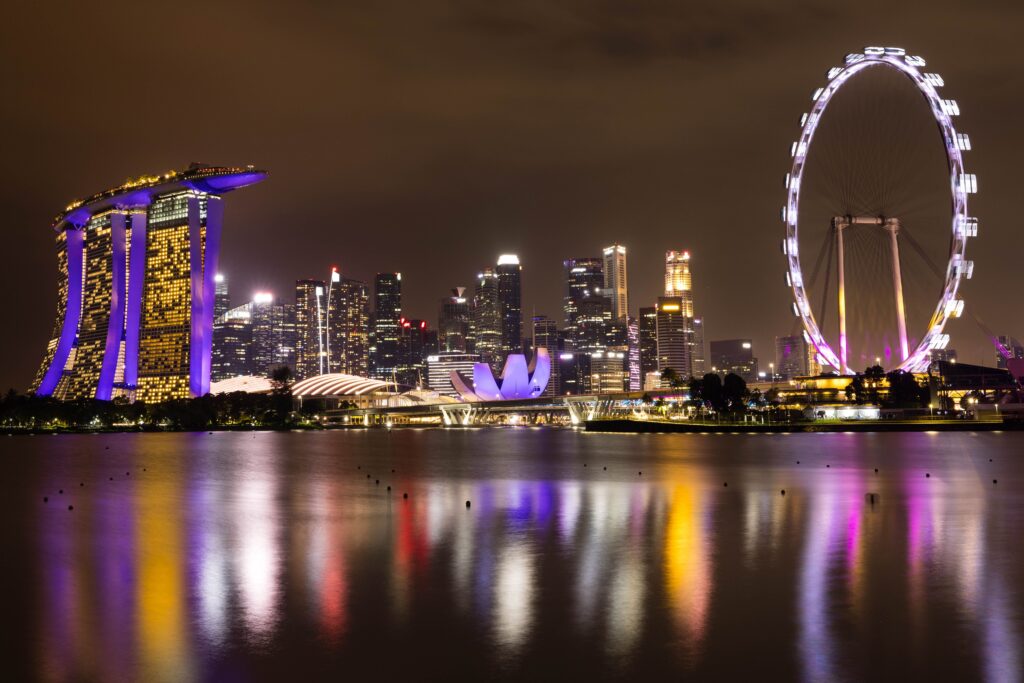




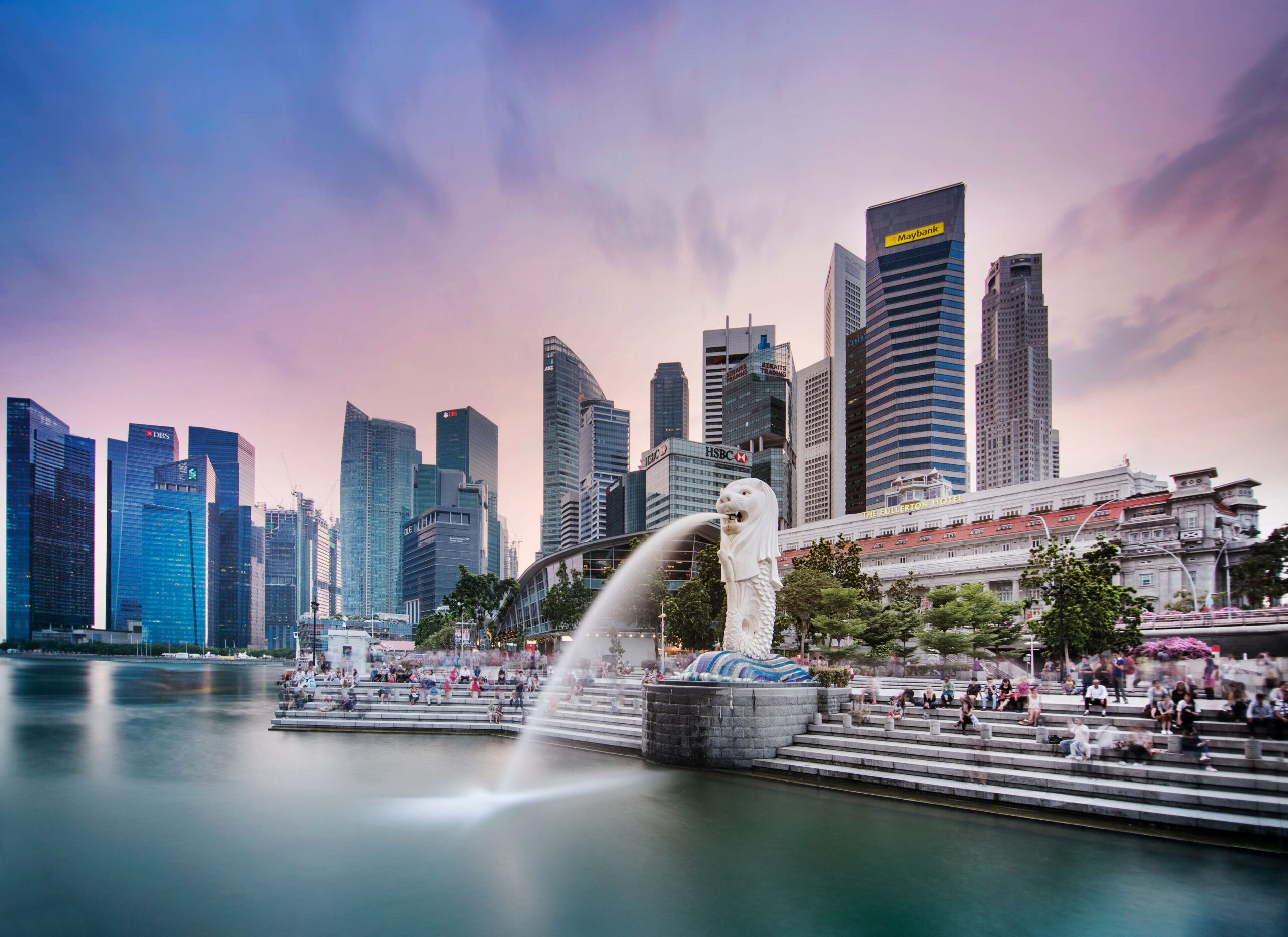
The honest Singapore nomad assessment: Singapore is the most expensive city in this guide — the 1-bedroom apartment at SGD 2,800-4,500 / £1,600-2,571/month, the coffee at SGD 6-8 / £3.43-4.57, the hawker centre meal at SGD 4-8 / £2.29-4.57 — and the city that the digital nomad community consistently returns to despite the cost because the specific Singapore advantages (the fastest internet in Southeast Asia, the English-first business environment, the zero income tax for the non-tax-resident, the easiest company registration in Asia, and the quality-of-life infrastructure that makes Zurich look casual) make the cost rational if the income is sufficient. The income threshold at which Singapore makes sense: £5,000+/month.
Reading time: 7 minutes | Last updated: 2026
The Singapore Nomad Case
Singapore is not the correct nomad city for the nomad earning £2,000-3,000/month — at that income level, the Chiang Mai or the Tbilisi or the Lisbon gives more for less. Singapore is the correct nomad city for the nomad earning £4,000+/month who values: the professional network (the Southeast Asia startup and investment community is headquartered in Singapore), the English-first business environment (the 73% of Singapore’s residents who speak English at home), the zero personal income tax for the non-tax-resident (the non-resident individual who does not earn Singapore-source income and who spends fewer than 183 days in Singapore per year has no Singapore income tax liability), and the specific quality of life that the city-state has engineered.
The Singapore Visa Reality
The tourist visa: UK citizens enter Singapore visa-free for 30 days (extendable to 90 days at the ICA (the Immigration & Checkpoints Authority) office — the extension is free but requires the application at the ICA building on Kallang Road).
The digital nomad visa: Singapore has no specific digital nomad visa as of 2025. The Entrepass (the Singapore entrepreneurial pass — for the nomad who is building a business in Singapore) and the Personalised Employment Pass (for the high-earning employed professional) exist but are not the casual nomad’s mechanism.
The practical Singapore nomad approach: The 90-day tourist visa extension gives the 3-month Singapore stay. Beyond 3 months, the Johor Bahru cross (the 45-minute bus to Johor Bahru, Malaysia, the immigration stamp, the immediate return to Singapore) resets the visa — the classic Singapore visa run, the JB visit that takes 3 hours and costs SGD 5-10 / £2.86-5.71 in bus fare.
The Nomad Infrastructure
The internet:
Singapore has the fastest average internet speed in Southeast Asia (and consistently ranks in the global top 3 by the Speedtest Global Index): the average fixed broadband speed at approximately 240 Mbps, the fibre coverage at 99% of residential addresses. The 4G/5G mobile coverage is complete within the city — no dead zones.
The co-working:
WeWork Singapore (multiple locations — the Capital Tower, the Suntec City, the Marina One): The SGD 600-1,200 / £342.86-685.71/month hot desk, the SGD 1,200-2,500 / £685.71-1,428.57/month private office. The WeWork gives the Southeast Asia headquarters of the majority of the major international tech companies — the networking opportunity is genuine.
The Great Room (multiple locations): The boutique Singapore co-working, the SGD 650-1,100 / £371.43-628.57/month hot desk, the aesthetic considerably above the WeWork generic. The Raffles Hotel location (the Great Room at One George Street) gives the co-working in the building that was Singapore’s pre-eminent colonial hotel.
Collision 8 (Telok Ayer): The startup-focused co-working in the Chinatown conservation area, the SGD 350-700 / £200.00-400.00/month hot desk.
The Singapore Monthly Budget
| Category | Budget | Mid-Range | Tech Professional |
|---|---|---|---|
| Accommodation (1-bed) | SGD 2,800-3,500 / £1,600-2,000 | SGD 3,500-4,500 / £2,000-2,571 | SGD 5,000-8,000 / £2,857-4,571 |
| Food (hawker + occasional restaurant) | SGD 500-800 / £286-457 | SGD 800-1,500 / £457-857 | SGD 1,500-3,000 / £857-1,714 |
| Transport (MRT + taxi) | SGD 150-250 / £86-143 | SGD 200-350 / £114-200 | SGD 300-600 / £171-343 |
| Co-working | SGD 350-650 / £200-371 | SGD 600-1,200 / £343-686 | SGD 1,200-2,500 / £686-1,429 |
| Social and leisure | SGD 300-500 / £171-286 | SGD 500-1,000 / £286-571 | SGD 1,000-3,000 / £571-1,714 |
| Monthly total | £1,343-1,657 | £1,200-2,885 | £3,142-9,771 |
The Singapore hawker centre strategy (the lunch and dinner at the hawker centre, the breakfast from the kopitiam (the traditional coffee shop) — the SGD 4-8 / £2.29-4.57 per meal strategy) reduces the food cost significantly below the restaurant equivalent.
The Specific Singapore Nomad Advantages
The professional network: The Southeast Asia VC and startup ecosystem is headquartered in Singapore. The nomad who spends 3 months in Singapore and uses the co-working spaces, the Founder’s Drinks events, and the Tech in Asia conference circuit makes professional connections that the Chiang Mai co-working does not give.
The MRT: The Singapore Mass Rapid Transit is the most reliable public transit system in Asia — the 99.9% on-time rate, the station announcement visible 3 stops ahead on the platform display, the air-conditioned carriage, and the 6-minute maximum service interval at peak hours. The nomad who lives within the MRT zone does not need the taxi.
The food at scale: The hawker centre gives Singapore the most affordable quality food at the lowest price of any developed city in the world — the Tian Tian chicken rice at SGD 6 / £3.43, the laksa at SGD 5-7 / £2.86-4.00, the char kway teow at SGD 5 / £2.86. The nomad who eats hawker centre for 2 meals per day spends approximately £150/month on food.