



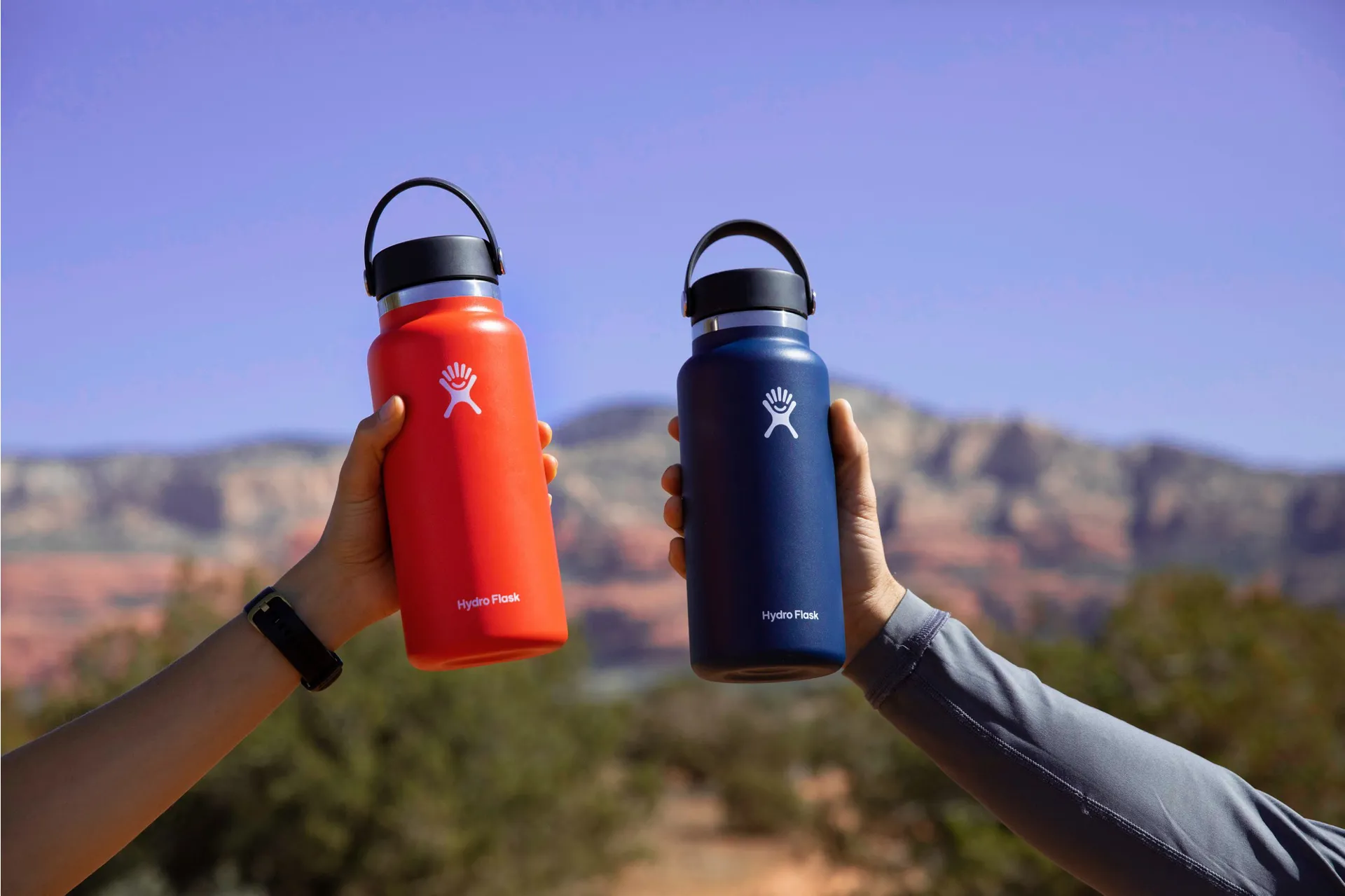
The travel water bottle question is the gear question with the most obvious answer that the most travellers get wrong: they pack the single-wall plastic bottle (the Evian-shaped vessel) that gives warm water from the Singapore humidity within 20 minutes, then spend the equivalent of three good bottles on bottled water over a 2-week trip. The correct travel water bottle gives the cold water cold for 24 hours and the hot coffee hot for 12, fits in the side pocket of the carry-on backpack without being extracted at airport security, and is made of the material that does not leach the specific chemical compounds that the single-wall plastic leaches when the ambient temperature reaches 38°C in Marrakech. This guide names three bottles and the specific use case for each.
Reading time: 6 minutes | Last updated: 2026
The Three Bottles
1. Hydro Flask 32oz Wide Mouth — The BGGD Recommendation
What it is: The double-wall vacuum-insulated stainless steel bottle (946ml, the wide-mouth opening, the TempShield insulation): the 24-hour cold retention (tested at ambient 25°C — the ice water cold at 24 hours, the ice partially remaining at 18 hours), the 12-hour hot retention, the 18/8 pro-grade stainless steel interior (no taste transfer, no BPA, no chemical leach at any temperature):
The travel-specific advantages:
The Flex Cap (the strap-equipped lid — the bottle carryable by the strap from the backpack loop, the hand freed for the boarding pass and the passport) gives the specific airport transit advantage.
The wide mouth (the 53mm opening) fits the ice from the hotel ice machine, the wide straw, and the cleaning brush — the narrow-mouth bottle that is not cleanable at 2 weeks of daily use is the specific travel hygiene problem.
The carry-on security note: The water bottle must be empty at the security checkpoint. The Hydro Flask passes through the X-ray as the opaque stainless steel — the security agents are accustomed to it. Fill from the water fountain past the checkpoint (every major international airport has the drinking water fountain or the bottle fill station past the security — check wateratairports.com for the specific airport).
The size: The 32oz (946ml) is the BGGD travel recommendation over the 40oz — the 32oz fits in the side pocket of the Osprey Farpoint 40 and the Tortuga Setout (the two most commonly recommended carry-on travel backpacks); the 40oz protrudes.
Price: £35-45.
2. Nalgene 32oz Wide Mouth — The Budget Option
What it is: The HDPE plastic bottle (946ml, the wide-mouth Nalgene, the bottle that the scientific expedition and the military field manual have used as the reference for 50 years): no insulation (the water temperature reaches ambient in 30-45 minutes), BPA-free, dishwasher safe, unbreakable under normal use.
The travel case for the Nalgene:
The cold water retention is absent — the Nalgene gives ambient water temperature within 30 minutes in the heat. The specific travel advantage is the transparency (the water level visible at any time without opening), the weight (lighter than the Hydro Flask by 200g), and the price (£10-15).
The Nalgene is the correct bottle for the cold climate trek (the Scottish Highlands, the Patagonia hike, the Nepal mountain trail) where the ambient temperature keeps the water cold regardless of insulation and where the bottle weight matters more than the thermal performance.
Price: £10-15.
3. Stanley IceFlow 30oz Flip Straw — The Commuter Option
What it is: The Stanley double-wall stainless steel bottle with the integrated flip straw — the straw accessible without opening the lid, the one-hand operation:
The travel case for the Stanley:
The flip straw (the straw mechanism that folds into the lid, the straw deployed with one hand while the other holds the passport, the boarding pass, or the phone) is the specific travel advantage — the hydration without the 2-handed lid removal. The airport transit, the game drive vehicle, and the aircraft all benefit from the one-hand operation.
The cold retention (the 2 days for ice, confirmed in the Stanley testing): slightly less than the Hydro Flask in the ambient 38°C heat but adequate for the typical travel day.
Price: £30-40.
The Refill Strategy
The travel water bottle’s ROI depends on the refill access:
Europe: Tap water drinkable throughout. The hotel tap, the public fountain, the restaurant on request give the free refill. The Refill app (refill.org.uk — the map of free water refill points in UK and European cities) gives the refill locations.
Southeast Asia: The tap water in Thailand, Vietnam, Bali, and most of Southeast Asia is not safe to drink. The filtered water from the hotel dispenser (the blue container, the large reservoir at the hotel reception — the hotel provides this for guest use at no charge at most mid-range and budget hotels) gives the safe free refill.
India: The hotel filtered water, the 20-litre water cooler in the lobby, or the sealed 1-litre water available for purchase (£0.09-0.18 per litre at the local shop, not the hotel markup price): the travel bottle refilled from the 20-litre cooler gives the water at the tap price rather than the tourist bottle price.
The saving: The traveller who refills the water bottle from the hotel dispenser rather than buying the 500ml tourist bottle saves approximately £1-3 per day. Over a 2-week trip in Southeast Asia: £14-42 saved on water — the Hydro Flask pays for itself in 3 weeks.