

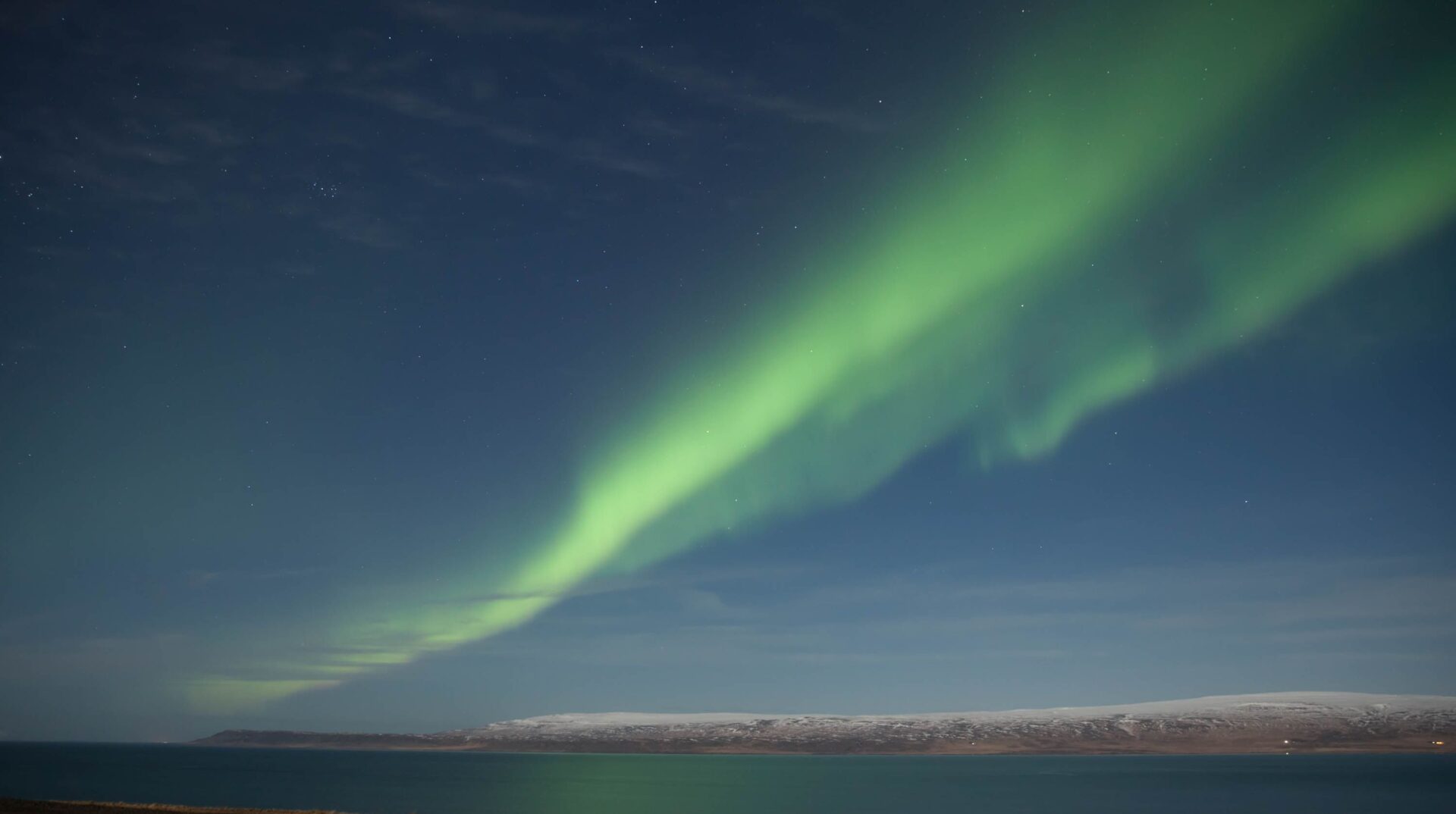
The comparison for the UK traveller who has decided the Northern wilderness is the next trip and is choosing between the two options: Iceland gives the volcanic landscape (the geysers, the lava fields, the geothermal pools, the active volcano that is visible from the capital), the Northern Lights (the same latitude as northern Norway, the viewing season October-March), and the specific Iceland quality of being able to drive the Ring Road without leaving the island — the self-contained wilderness circuit that Norway’s geography does not offer. Norway gives the fjords (the Sognefjord, the Nærøyfjord, the Geiranger — the landscape that the glacier carved and the sea filled, available in no other country at this scale), the mountain hiking infrastructure (the DNT hut network, the Jotunheimen, the Lofoten), and the specific Norwegian coastal culture (the Hurtigruten, the fish market, the brown cheese). Both are extraordinary. Both are expensive. They are not substitutes.
Reading time: 7 minutes | Last updated: 2026
The Core Distinction
Iceland is the volcanic country — the Mid-Atlantic Ridge runs through the island, the Eurasian and North American tectonic plates meeting and separating under the lava fields, the volcanic activity constant and visible (the Fagradalsfjall eruptions of 2021-2023 visible from Reykjavík on clear nights). The landscape is young — the geologically youngest country in Europe, the lava fields dated in decades and centuries rather than millennia.
Norway is the glacial country — the fjords are the product of the glacial erosion over hundreds of thousands of years, the carved valleys filled by the sea when the ice retreated 10,000 years ago. The landscape is the opposite of Iceland’s volcanic newness: the ancient, the carved, the slow.
Category by Category
The Landscape
Iceland wins for uniqueness:
Iceland’s volcanic landscape has no equivalent elsewhere in the world accessible to the casual visitor. The Þórsmörk highland (the lava desert between three glaciers), the Landmannalaugar (the rhyolite mountains in the highland interior — the pink and green and yellow volcanic mineral colours visible from the hiking trails), and the Snæfellsjökull glacier (the glacier at the tip of the Snæfellsnes Peninsula, the Jules Verne Journey to the Centre of the Earth beginning) give the landscape that no other country in this guide contains.
Norway wins for fjord drama:
The Nærøyfjord (the narrowest UNESCO fjord, the walls 1,400 metres above the water at the closest point, the boat visible at water level from the viewpoint above as a pinprick against the cliff): the most vertically dramatic landscape in Europe.
Verdict: Iceland for the volcanic uniqueness. Norway for the fjord drama.
The Wildlife
Norway wins:
The Arctic wildlife accessible from Norway (the walrus at Svalbard, the polar bear at Svalbard, the sperm whale off the Lofoten (the whale watching from Andenes and Henningsvær), the king crab at the Kirkenes Snowhotel, and the musk ox in the Dovrefjell) — the Norwegian wildlife circuit gives the most varied Arctic and sub-Arctic wildlife in Europe.
Iceland has: The puffin (the Westfjords in June-August, the Látrabjarg cliff where the puffin nests in the burrows visible at arm’s reach), the Arctic fox (the highland summer), and the whale watching (the Húsavík whale watching is consistently cited as the best in Iceland — the humpback, the minke, and occasionally the blue whale visible from May-October).
Verdict: Norway for the full Arctic wildlife circuit. Iceland for the puffin.
The Cost
Iceland is marginally more expensive:
The Iceland daily cost (the mid-range — the guesthouse, the supermarket self-catering for most meals, the petrol): £90-140/day.
The Norway daily cost (the comparable mid-range): £100-160/day.
Both are expensive. The difference is marginal and depends heavily on the accommodation choice (the Norwegian DNT cabin network gives the Norway trekker a cost-efficient mountain accommodation that Iceland’s camping infrastructure partially replicates but does not equal in the hut-to-hut trekking context).
The Aurora
Draw — same latitude, different conditions:
Iceland (Reykjavík at 64°N): the Northern Lights visible on clear nights October-March, the specific Iceland aurora quality (the aurora visible from the capital when the conditions are right — the Þingvellir National Park dark sky area 40km from Reykjavík).
Norway (Tromsø at 70°N): the aurora belt runs through Tromsø — the highest probability single city location for the Northern Lights in continental Europe. The Tromsø aurora season (September-March) gives a marginally higher probability of the specific green-white-pink aurora display than the Iceland equivalent because the latitude gives the full auroral oval passage.
Verdict: Norway (Tromsø specifically) for the highest aurora probability. Iceland for the aurora without the second flight.
The BGGD Verdict
Choose Iceland if: The volcanic landscape (the geysers, the lava fields, the geothermal pools), the self-drive Ring Road circuit, and the aurora from the capital are the motivation. Or if this is the first northern Europe wilderness visit and the flight complexity (1 flight from London) matters.
Choose Norway if: The fjords are the primary motivation, or the hiking infrastructure (the Jotunheimen, the Lofoten, the Hardangervidda) and the DNT hut network are the draw, or the Arctic wildlife (the walrus, the polar bear, the whale from the Lofoten) is the specific purpose.
The truth: Iceland in the summer (the midnight sun, the Landmannalaugar colour, the Ring Road) and Norway in the autumn (the fjord colours, the Lofoten aurora, the specific Norwegian autumn) are two of the finest travel experiences in Northern Europe. Do both when time allows.