

The complete guide for travellers: the Golden Triangle done in the right order with the right timing, Rajasthan beyond Jaipur, the south that most first-timers never reach, Kerala’s backwaters honestly assessed, the Himalayas from Shimla to Ladakh, the northeast that almost no international visitors find, what India actually costs, and the one piece of advice that changes every India trip: go slower than you planned.
Reading time: 18 minutes | Last updated: 2026
India is not a country. It is a subcontinent containing 28 states, 22 officially recognised languages, 6 major religious traditions, 4,500 years of recorded civilisation, and a range of landscapes from the Thar Desert to the Bengal delta to the Himalayan glacier fields that spans every climate zone on Earth.
This is the first thing to understand about planning an India trip: whatever you plan, you will see a fraction of it, and that fraction will be more than most destinations contain entirely.
The second thing: the fraction you choose matters enormously. India is simultaneously the most rewarding and most demanding country in this guide. The infrastructure varies from world-class to non-existent within the same state. The heat in May in Rajasthan is genuinely dangerous for travellers unacclimatised to 45°C. The crowds at Agra in peak season produce a Taj Mahal visit that many first-timers describe as disappointing — not because the Taj is disappointing but because the surrounding experience is overwhelming without preparation.
The third thing: go slower than you planned. The UK traveller’s instinct to optimise — to see the maximum number of places in the available time — produces the worst India trips. The traveller who spends 10 days in Rajasthan (rather than 5 days trying to also cover Kerala) comes home having understood something. The traveller who covers both comes home having photographed both.
This guide covers the circuits worth building a trip around, the specific timings that change everything, the honest costs, and the practical decisions that separate good India trips from great ones.
Quick Navigation
- The Case for India — And Choosing Your India
- When to Go — The Monsoon and the Regional Seasons
- Getting There — The Routing Options
- The Golden Triangle — Delhi, Agra, Jaipur
- Delhi — The Capital in Three Days
- Agra — The Taj and What’s Around It
- Rajasthan — Beyond Jaipur
- Kerala — The South Done Properly
- Mumbai — The Maximum City
- The Himalayas — Shimla, Manali, and Ladakh
- Varanasi — The Most Overwhelming City on Earth
- The Northeast — The India Nobody Visits
- Hidden India — The Places Most Guides Don’t Reach
- What It Costs — Real Numbers
- Eating in India — The Regional Diversity
- Practical Notes
- Three Itineraries — Golden Triangle, Rajasthan, and South India
The Case for India — And Choosing Your India
India rewards travellers who approach it with a specific interest rather than a general one. The traveller who comes to understand Mughal architecture (Delhi’s Humayun’s Tomb, Agra’s Taj Mahal and Agra Fort, Fatehpur Sikri, the tombs of the Agra road) comes away with a coherent narrative. The traveller who comes for the temples of Tamil Nadu (the Dravidian gopuram towers, the tank reflections, the sound of temple music at dawn) comes away with a coherent narrative. The traveller who tries to do both in three weeks comes away with fragments of both.
The circuits worth building around:
Golden Triangle (Delhi, Agra, Jaipur): The standard entry point for a reason — the three most historically significant cities of the Mughal and Rajput periods within a 250km triangle, connected by road and rail. Manageable for a first India trip of 10-14 days.
Rajasthan: The full circuit (Jaipur → Jodhpur → Jaisalmer → Udaipur → Pushkar → Ranthambore) is one of the finest overland circuits in Asia — the colour, the desert, the fort cities, the wildlife. 2-3 weeks minimum to do it justice.
South India: Kerala and Tamil Nadu — a completely different India from the north. Cleaner, greener, the food dramatically different (coconut, rice, fermented preparations instead of wheat and dairy), the temples Dravidian rather than Mughal. Best as a separate trip from the north.
The Himalayas: Ladakh, the Spiti Valley, Manali, Shimla — high-altitude landscape, Buddhist monasteries, the specific landscape of the rain shadow zone. Best June through September when the mountain passes are open.
Varanasi: The most spiritually and sensory overwhelming city in India — a separate experience from any other destination, best paired with the Golden Triangle or the northeast.
When to Go — The Monsoon and the Regional Seasons
India’s regional climate differences mean “when to go” has a different answer for each circuit:
October to March — North India (Golden Triangle, Rajasthan, Varanasi)
The correct window for the north. Comfortable temperatures (Delhi: 15-25°C, Jaipur: 15-28°C, Rajasthan desert: cool nights). The Pushkar Camel Fair falls in October-November (the largest camel trading fair in the world, genuinely extraordinary, book accommodation months ahead). December-January: cold mornings in Rajasthan (single figures overnight in Jaisalmer), warm afternoons. The Taj Mahal at dawn in the winter mist: the finest version of the site.
November to March — South India (Kerala, Tamil Nadu, Karnataka)
The southwest monsoon has ended; the northeast monsoon (affecting the Tamil Nadu coast) peaks October-November then clears. December-February: the finest season for Kerala and Tamil Nadu. March-April: the heat building, still manageable.
June to September — The Himalayas (Ladakh, Spiti, Manali)
The mountain passes open in June (Rohtang Pass, Baralacha La, Tanglang La). Ladakh’s high altitude (Leh at 3,500m) keeps temperatures manageable even in August when the Indian plains are at 40°C+. The monsoon barely affects Ladakh (it’s in the rain shadow of the Himalayas). The best months: July and August.
April to June — Avoid (Most of North India)
Pre-monsoon heat. Rajasthan and Delhi regularly hit 42-47°C in May. Not the season for the north.
July to September — The Monsoon (Avoid for Most Regions)
The southwest monsoon covers most of India from June through September. Kerala and the Western Ghats receive extraordinary rainfall. Rajasthan floods occasionally. The north Indian plains are hot and humid. The monsoon is not a reason never to go — it’s a reason to understand what it means for your specific circuit.
The BGGD recommendation: October-November for the north (the finest light, the Pushkar Fair, manageable heat). February-March for the south. July-August for Ladakh.
Getting There — The Routing Options
Into Delhi (DEL): British Airways, Virgin Atlantic, Air India, and IndiGo all fly direct London Heathrow to Delhi. Flight time: 9 hours. Return flights: £450-750 booked 8-12 weeks ahead. This is the most competitive India routing from the UK.
Into Mumbai (BOM): British Airways, Air India, direct from Heathrow. 9.5 hours. Return flights: £480-780. Mumbai is the correct entry point for a south India-first circuit.
Into Chennai (MAA) or Kochi (COK): Via Dubai (Emirates), Doha (Qatar Airways), or Abu Dhabi (Etihad). The south India airports have no direct UK service but are 13-15 hours total via Gulf hubs. Useful for a south India-only trip.
The open-jaw strategy:
Fly into Delhi, out of Mumbai (or Kochi for a south India circuit). Open-jaw tickets are the correct structure for India — the country is too large to efficiently return to your entry city.
Getting around India:
India’s domestic transport is extensive and the quality ranges dramatically.
Train: The Indian Railways network is one of the largest in the world. Book through the official IRCTC website (irctc.co.in) — create an account before arriving, as the registration process takes 2-3 days. Classes: 2AC (air-conditioned two-tier sleeper — the standard for foreign visitors) and 3AC (three-tier — slightly less comfortable, still good). Trains run between all major cities; the overnight journey from Delhi to Jaipur (6 hours), Delhi to Varanasi (12 hours), and Delhi to Agra (2 hours) are the most useful for the Golden Triangle.
Domestic flights: IndiGo, Air India, SpiceJet connect all major cities. Delhi to Leh (Ladakh): 1.5 hours (the alternative to the 2-day overland route). Delhi to Kochi: 3.5 hours. Book through Skyscanner or directly with IndiGo. Budget: £30-80 per domestic leg.
Car with driver: The most efficient way to navigate Rajasthan — hire a car and driver for the circuit (£35-55/day, negotiate for the full circuit in advance). The driver handles navigation, knows the best roadside dhabas (truck stop restaurants — consistently the finest cheap food in Rajasthan), and can adjust the itinerary in response to local conditions.
The Golden Triangle — Delhi, Agra, Jaipur
The Golden Triangle is the standard entry point for a first India trip — a manageable circuit connecting three cities with the most internationally significant historical monuments in India, within 250km of each other.
The correct order: Delhi → Agra → Jaipur → Delhi (or continue into Rajasthan from Jaipur).
The reasoning: see Delhi first (adjust to India in a city with the most infrastructure), Agra second (the Taj after the Humayun’s Tomb gives the Mughal architectural sequence context), Jaipur third (the Rajput contrast with the Mughal is clearest after the Agra experience).
Delhi — The Capital in Three Days
Delhi is one of the oldest continuously inhabited cities in the world — eight cities have been built on the same site since the 11th century, each predecessor visible in the landscape of the current one. It is also a city of 32 million people, extreme traffic, extreme heat for 6 months of the year, and one of the highest concentrations of UNESCO-listed and nationally significant monuments in Asia.
Humayun’s Tomb:
The precursor to the Taj Mahal — built in 1572 by the widow of the Mughal Emperor Humayun, designed by a Persian architect, it established the formal garden (charbagh — the four-part garden divided by water channels representing the four rivers of paradise) and double-dome structure that the Taj would perfect 80 years later. The UNESCO-listed complex is significantly less visited than the Taj and significantly easier to experience properly. Entry: £5. Go at 8am.
Qutub Minar:
A 73-metre minaret begun in 1193 — the tallest brick minaret in the world, built to celebrate the defeat of the last Hindu empire of Delhi. The surrounding complex (the Iron Pillar — a 7-metre iron column from the 4th century CE that has resisted corrosion for 1,600 years, the 12th-century mosque, the later Alai Minar that was never completed) gives the clearest sense of the transition from Hindu to Islamic rule in Delhi. Entry: £5.
Old Delhi — Chandni Chowk:
The Mughal old city — Shahjahanabad, built in the 1640s by the Emperor Shah Jahan (who also built the Taj Mahal). The Red Fort at one end (the imperial palace, UNESCO-listed, entry: £7), Jama Masjid (the largest mosque in India, built 1656, free entry for non-Muslims outside prayer times) adjacent, and Chandni Chowk (the main bazaar street, now a chaos of street food, textile shops, wedding goods, and traffic) connecting them.
The Chandni Chowk food walk at 7am: the parathas at Paranthe Wali Gali (an alley of paratha restaurants operating since the 18th century), the jalebis (deep-fried spirals of batter soaked in sugar syrup) at Old Famous Jalebi Wala (operating since 1884), the kulfi (dense ice cream) at Roshan Di Kulfi (since 1920). Old Delhi’s food culture is as historically layered as its architecture.
The India Gate and Lutyens’ Delhi:
The British colonial capital — Edwin Lutyens’ design of New Delhi (built 1911-1931), with the India Gate war memorial (a 42-metre arch commemorating the Indian soldiers who died in World War One) at the end of the ceremonial boulevard (Rajpath, now Kartavya Path), the Rashtrapati Bhavan (the President’s residence, the largest residence of any head of state in the world) at the other. The geometry of Lutyens’ Delhi — the grand colonial avenues, the circular Connaught Place at the centre — is best understood from the top of the India Gate steps at dawn.
Agra — The Taj and What’s Around It
Agra is a city of 1.8 million people surrounding the most famous building in the world. Outside the Taj Mahal, Agra Fort, and Fatehpur Sikri (40km away), the city has limited appeal for international visitors — it is a planned visit rather than a city you linger in.
The Taj Mahal:
Built between 1632 and 1653 by the Mughal Emperor Shah Jahan as a mausoleum for his third wife Mumtaz Mahal, who died in childbirth in 1631. The specific architectural achievement: a building that maintains perfect symmetry from every approach angle, using optical illusions (the minarets lean slightly outward to appear vertical when viewed from below, the calligraphic inscriptions on the arches increase in size toward the top to appear the same size from ground level) to correct for the distortions of perspective.
The dawn strategy:
The Taj Mahal opens at sunrise. The first hour — when the light changes from pre-dawn grey to gold on the white Makrana marble — is categorically different from the site at 10am when the tourist density has increased fivefold.
Pre-book tickets online at asi.payumoney.com. The east gate opens first — queue at the east gate by 5:30am. Inside by sunrise.
The specific view: from the end of the long reflecting pool, with the Taj centred in the frame and the pool reflection intact (the reflection is only visible in the morning before the wind disturbs the pool surface). The Taj in the first 20 minutes of the day, with mist from the Yamuna River behind it and the light from the east: the finest single sight available in India.
Entry: ₹1,100 / £10.50 for international visitors.
Agra Fort:
1km from the Taj — the original Mughal fortified palace (built 1565, 380 years before the Red Fort in Delhi took on a similar function). The red sandstone walls enclose the Jahangiri Mahal, the Khas Mahal, the Musamman Burj (the tower where Shah Jahan was imprisoned by his son Aurangzeb in 1658 and kept until his death — the tower faces the Taj, which Shah Jahan could see across the river from his captivity). The view of the Taj from the Musamman Burj at dawn, looking across the Yamuna: the context for the story of the building.
Entry: ₹650 / £6.20.
Fatehpur Sikri:
40km west of Agra — a complete Mughal city built by the Emperor Akbar between 1569 and 1585, abandoned after 14 years (probably due to water supply problems) and never fully reoccupied. The most complete surviving example of Mughal urban planning: the Diwan-i-Khas (hall of private audience), the Panch Mahal (five-storey pavilion), the Jama Masjid, and the Buland Darwaza (the Gate of Magnificence — a 54-metre triumphal arch, the largest gateway in the world). Entry: ₹610 / £5.85.
The specific quality of Fatehpur Sikri that the Taj doesn’t have: you’re walking through a city, not a monument. The scale of the imperial complex — the spaces designed for thousands of courtiers, the audience halls, the private quarters, the kitchens — gives a sense of the Mughal court as a functioning civilisation rather than a beautiful building.
Rajasthan — Beyond Jaipur
Jaipur (the Pink City, capital of Rajasthan — the walled old city painted terracotta pink by order of the Maharaja for Queen Victoria’s 1876 visit and maintained the same colour since) is the standard Rajasthan stop. The Amber Fort above the city (the finest fort in Rajasthan, the elephant ride now replaced by a jeep ride following animal welfare concerns — the jeep is fine), the Hawa Mahal (the Palace of Winds — the five-storey honeycomb facade of 953 jharokhas that allowed the royal women to observe street events while remaining unseen), the City Palace.
Beyond Jaipur: Rajasthan’s finest experiences are in the cities and landscapes further from the Golden Triangle.
Jodhpur — The Blue City:
The second city of Rajasthan — the old city painted indigo blue (traditionally the colour of Brahmin homes, later adopted throughout the neighbourhood for its heat-reflective properties). The Mehrangarh Fort above the city is the most dramatically sited fort in Rajasthan — the 125-metre sandstone cliff on which it sits makes the walls appear to grow directly from the rock. The museum within the fort contains the finest collection of Rajput royal artefacts in India.
The view from the Mehrangarh ramparts over the blue city below: one of the finest urban panoramas in Asia.
Jaisalmer — The Desert Fort City:
In the Thar Desert near the Pakistan border — a fort city of yellow sandstone that rises from the desert floor and appears to be made of the same material. The Jaisalmer Fort (one of the few living forts in the world — 3,000 people still live within the walls) contains carved havelis (merchant mansions) of extraordinary intricacy. The Sam Sand Dunes 40km outside the city: the genuine desert landscape, camel rides, overnight camps.
Udaipur — The Lake City:
On a lake in the Aravalli hills — the most romantic city in India, the Lake Palace (the luxury hotel on an island in the centre of Pichola Lake) the most photographed structure in Rajasthan after the Taj. The City Palace above the lake (the largest palace complex in Rajasthan, the view from the upper terraces over the lake and the Jag Mandir Island), the narrow lanes of the old city, the ghats at sunset.
Pushkar:
A holy city around a sacred lake — the only Brahma temple in India (Brahma, one of the three principal Hindu deities, has almost no dedicated temples due to a mythological curse). The lake ghats at dawn (the ritual bathing, the priests, the specific atmosphere of a pilgrimage city at its most active). The Pushkar Camel Fair (October-November): 50,000 camels, traders from across Rajasthan, one of the most extraordinary cultural events in Asia.
Ranthambore National Park:
The tiger reserve within driving distance of Jaipur — the most accessible national park in India for tiger sightings. The tigers of Ranthambore are the most habituated to human presence of any tiger population in India, making sighting probability significantly higher than most other reserves. Safari: morning and evening jeep safaris (₹2,500-4,000 / £24-38 per person including park entry). Book ahead in peak season (October-March).
Kerala — The South Done Properly
Kerala is the southernmost state of the Indian peninsula — a narrow coastal strip between the Western Ghats and the Arabian Sea, characterised by: coconut palms everywhere, backwater lagoon systems fed by 44 rivers, a literacy rate of 99% (the highest in India), the most developed human development indicators of any Indian state, and a food culture built on rice, coconut, seafood, and fermented preparations that is entirely distinct from the northern Indian food that most UK restaurants serve.
Fort Kochi:
The old colonial quarter of Kochi (Cochin) — a peninsula shaped by successive occupations: Jewish (the Paradesi Synagogue of 1568, the oldest active synagogue in the Commonwealth), Portuguese (the Church of St. Francis, 1503, where Vasco da Gama was originally buried before his body was repatriated to Lisbon), Dutch, and British. The Chinese fishing nets on the waterfront (cantilevered nets introduced by traders from the court of Kublai Khan in the 14th century, still used by fishermen) are the defining image of Fort Kochi.
The Kathakali performance (the classical dance-drama of Kerala — the elaborate face painting, the specific hand gestures that encode the Ramayana and Mahabharata stories): evening performances at Fort Kochi’s cultural centres, ₹300-500 / £2.90-4.80. Arrive early to watch the make-up process.
The Backwaters:
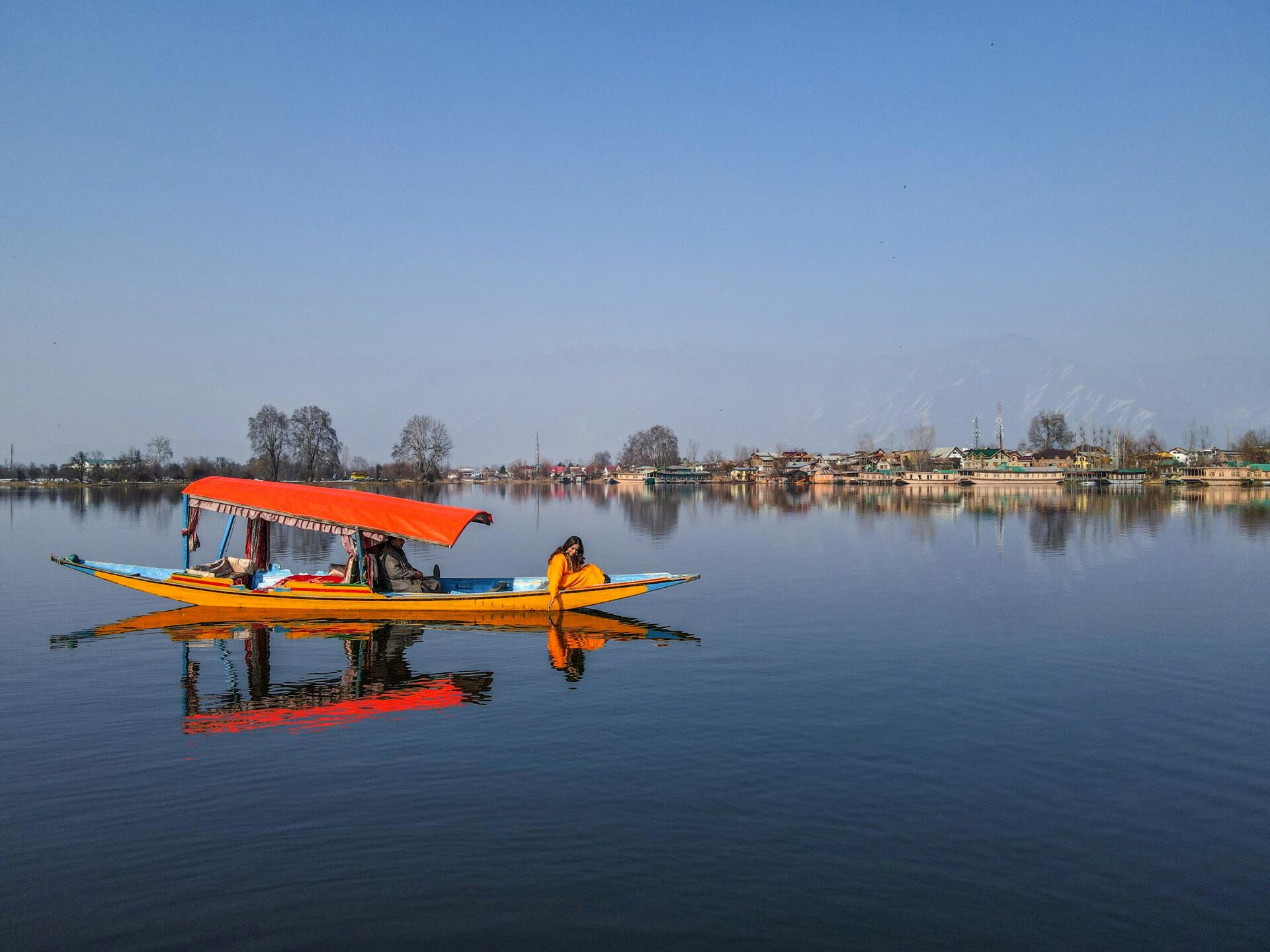
The network of lagoons, canals, and rivers running parallel to the Kerala coast between Kollam and Kottayam — the houseboat (kettuvallam, a traditional rice barge converted to accommodation) overnight cruise is the standard experience. The houseboat at sunset, the palm trees passing, the village life visible from the water, the cook preparing the Kerala dinner (fish curry, appam, rice, the specific spiced simplicity of a backwater kitchen): one of the finest travel experiences in South Asia.
The honest assessment: the most popular section (Alleppey to Kottayam) can feel crowded in peak season with houseboats queuing in the main channel. The Ashtamudi Lake at Kollam (the southern end of the backwaters, the least-visited section) gives the same landscape with a fraction of the boats.
Munnar:
In the Western Ghats, 1,600m above sea level — tea plantations covering every hillside, the cooler highland climate (20-25°C when the Kerala coast is 32°C), the Eravikulam National Park (home to the Nilgiri tahr — a mountain goat found only in the Western Ghats). The tea factory tours at the KDHP (Kannan Devan Hills Plantations) give the full production process — the withering, rolling, fermentation, and drying of Nilgiri tea.
Mumbai — The Maximum City
Mumbai is India’s financial capital and the centre of Bollywood — a city of 21 million people that operates at a velocity unlike any other in India. It is not the standard starting point for a first India trip (Delhi gives a better introduction to the Mughal and colonial history that structures most itineraries), but as an ending point for a south India circuit it works well.
The Gateway of India:
A 1924 basalt arch on the waterfront, built to commemorate the visit of King George V and Queen Mary in 1911 — the last British troops to leave India in 1948 marched out under the arch. The waterfront Taj Mahal Palace Hotel adjacent (opened 1903, the site of the 2008 Mumbai attacks that killed 166 people — the restored hotel is now a monument to the resilience that defines the city’s public character).
The Dharavi Slum:
The largest slum in Asia (population estimates range from 600,000 to 1 million, in a 2.1 square kilometre area between two railway lines) — a self-organising economic community with an annual economic output estimated at $650 million from: leather goods production, pottery, recycling, garment manufacture, food processing, and hundreds of other micro-industries.
The Dharavi tour question: the same ethical considerations as the Omo Valley in Ethiopia apply. The tours are organised with community consent and the income stays in the community. The framing should be economic and social rather than poverty tourism. Reality Tours and Travel (the pioneering operator) donates 80% of tour profits to the community. £10-15 for a guided walk.
The Elephanta Caves:
An hour by ferry from the Gateway of India — a UNESCO-listed cave complex of Hindu temple sculptures from the 5th-8th centuries CE. The main cave contains a 6-metre trimurti (three-faced sculpture of Shiva) that is one of the finest examples of Gupta-period sculpture in India. Entry: ₹600 / £5.75.
The Himalayas — Shimla, Manali, and Ladakh
Ladakh:
The high-altitude trans-Himalayan region at the northwestern tip of India — a Buddhist kingdom that maintained its independence until the 19th century, now the highest region accessible by public transport in India. Leh (3,500m) is the capital; the surrounding landscape of bare mountains, monasteries on clifftops, and the stark beauty of the rain shadow zone is unlike anything else in India.
The monasteries: Thiksey Gompa (a 15th-century monastery on a hill, the architectural composition similar to the Potala Palace in Lhasa, Tibet), Hemis Gompa (the largest and wealthiest monastery in Ladakh, the annual Hemis Festival in June-July is the most significant festival in the region), Diskit Gompa in the Nubra Valley (with a 32-metre Maitreya Buddha statue overlooking the Bactrian camel sand dunes of the valley floor).
Getting to Ladakh: fly from Delhi to Leh (1.5 hours, IndiGo or Air India, from £35-70 one way) or drive the Manali-Leh Highway (2 days, open June-October). The flight is the correct first approach — the altitude acclimatisation is more manageable when you arrive by air and rest for 48 hours before any activity.
The Spiti Valley:
A high-altitude desert valley in Himachal Pradesh — accessible by road from Shimla (2-3 days, the Hindustan-Tibet Highway) or from Manali (the Rohtang Pass route, 1 day when open). The Key Monastery (a 1,000-year-old Tibetan Buddhist monastery at 4,116m on a conical hill above the Spiti River), the Pin Valley National Park (snow leopard territory), and the specific emptiness of a valley that receives minimal rainfall and fewer visitors than Ladakh give Spiti the character of one of India’s best-kept secrets.
Varanasi — The Most Overwhelming City on Earth
Varanasi (also called Benares, also called Kashi) is the holiest city in Hinduism — the city of Shiva, on the banks of the Ganges, where Hindus come to die. The belief: to die in Varanasi is to achieve moksha (liberation from the cycle of rebirth). The consequence: a city where death is conducted publicly, the cremation ghats (Manikarnika and Harishchandra) burning continuously 24 hours a day, 365 days a year.
The Varanasi experience is not for every traveller. It requires an acceptance of sensory overwhelm — the specific combination of incense, marigolds, burning ghee, the Ganges (heavily polluted), the sound of temple bells and devotional music from dawn, the boat rides past the ghats where the rituals are conducted — that some travellers find profound and others find too intense.
If it sounds like the former: go. It is like nowhere else on Earth.
The dawn boat ride:
On the Ganges, watching the ghats wake up — the ritual bathers entering the river for the morning puja, the priests conducting ceremonies on the ghats, the flowers floated on the water, and the smoke from the cremation pyres visible at the far end of the ghat sequence. The specific quality of the Varanasi dawn — the light on the water, the sound of bells, the extraordinary human theatre of the most ancient religious practice still in continuous operation — is one of the most affecting experiences available in India.
Boat hire at the main ghats: ₹300-600 / £2.90-5.75 for a 90-minute dawn ride.
The cremation ghats:
The Manikarnika Ghat — the most sacred cremation site on the Ganges, burning continuously. No photography (this must be observed absolutely — the families are in mourning). The correct approach is to observe from a respectful distance or from the boat on the river. The sight of a public cremation is not tourism; it is participation in one of the oldest human rituals still practiced, conducted by people who believe they are providing the finest possible service to the dead.
The Northeast — The India Nobody Visits
The Seven Sister States (Assam, Meghalaya, Arunachal Pradesh, Nagaland, Manipur, Mizoram, Tripura) in northeastern India are among the most biodiverse and culturally distinct regions in the country. They are also the least visited by international tourists — partly due to the permit requirements for some states (Inner Line Permit required for Arunachal Pradesh, Nagaland, Manipur, Mizoram), partly due to the distance from the main tourist circuits.
Meghalaya:
The wettest state in India (Mawsynram receives the highest annual rainfall of any place on Earth — 11,871mm). The living root bridges of the Khasi hills — bridges formed by training the roots of Ficus elastica trees across rivers over decades, the roots eventually fusing into a natural bridge structure. The double-decker living root bridge at Nongriat (a 3km hike from the village of Tyrna) is the most extraordinary example: two bridges stacked vertically, 50 metres long, the roots still growing.
Accessible from Guwahati (Assam) by road: 4 hours. No permits required.
Nagaland:
The Hornbill Festival (first week of December) — a celebration of all 16 Naga tribes, their traditional dress, music, dance, and ceremonies, held at the Kisama Heritage Village near Kohima. The most accessible window into the extraordinary cultural diversity of the Naga people. Requires an Inner Line Permit (obtained at the Nagaland House in Delhi or at Dimapur airport).
Hidden India — The Places Most Guides Don’t Reach
Hampi:
A UNESCO-listed landscape in Karnataka — the ruins of Vijayanagara, the last great Hindu empire of south India (destroyed by the Deccan Sultanates in 1565). Boulders the size of houses balanced improbably on each other across the landscape, the Tungabhadra River running through the ruins, the Vittala Temple with its famous stone chariot (carved from a single rock, one of the finest pieces of Vijayanagara sculpture). 9 hours from Goa by bus, 8 hours from Bangalore. Receives a fraction of the visitors of Rajasthan’s fort cities despite equivalent historical significance.
Orchha:
A Mughal-era royal capital in Madhya Pradesh — the Jehangir Mahal (a palace built for the Mughal Emperor Jehangir’s single visit to the city), the Ram Raja Temple (the only temple in India where Rama is worshipped as a king rather than a deity — the idol dressed in royal robes and guarded by the Indian Police), and the cenotaphs (memorial structures) on the riverbank. 4 hours from Agra, rarely included in Golden Triangle itineraries despite being worth 2 days.
Chettinad:
In Tamil Nadu — the region of the Nattukotai Chettiar merchant community, whose 19th-century trading wealth produced some of the most extraordinary domestic architecture in Asia. The Chettiar mansions (clusters of up to 100 rooms around multiple courtyards, the interiors lined with Italian marble and Burmese teak) are largely abandoned or converted to heritage hotels. Chettinad cuisine (one of the most complex spice traditions in India) is the other reason to visit: the Chettinad chicken curry, the kavuni arisi (black sticky rice pudding), the idiyappam with coconut milk.
Majuli Island:
The world’s largest river island (in the Brahmaputra, Assam) — home to the sattra culture (Vaishnavite monasteries established in the 16th century by the saint Srimanta Shankardev, each maintaining its own tradition of dance, mask-making, and drama). The island is sinking (losing land to river erosion year by year) and the culture is therefore genuinely endangered. Accessible by ferry from Jorhat. Almost no international tourists.
What It Costs — Real Numbers
India’s cost range is wider than any other destination in this guide. The floor (guesthouses for £4/night, dal baati churma for £0.60, sleeper train for £3) and the ceiling (the Umaid Bhawan Palace in Jodhpur at £500/night) exist within the same country. The practical cost for a UK traveller using reasonably comfortable accommodation and eating freely:
Daily Budgets
Budget (£20-32/day)
- Accommodation: budget guesthouse, AC room (£8-15/night)
- Food: local restaurants, street food, dhabas (£5-9/day)
- Transport: trains, local buses, tuk-tuks
Mid-range (£45-65/day)
- Accommodation: mid-range hotel, clean and AC (£22-40/night)
- Food: restaurant meals, occasional splurge dinner (£12-18/day)
- Transport: car hire with driver for Rajasthan circuit, trains elsewhere
Comfortable (£85-130/day)
- Accommodation: heritage hotel or boutique property (£50-90/night)
- Food: quality restaurants (£22-35/day)
- Activities: private guides at major sites
Monument Entry Reality
The ASI (Archaeological Survey of India) charges significantly more for international visitors than domestic visitors at most UNESCO monuments. The major ones:
| Site | International Entry |
|---|---|
| Taj Mahal | ₹1,100 / £10.50 |
| Agra Fort | ₹650 / £6.20 |
| Fatehpur Sikri | ₹610 / £5.85 |
| Humayun’s Tomb | ₹600 / £5.75 |
| Qutub Minar | ₹600 / £5.75 |
| Red Fort, Delhi | ₹600 / £5.75 |
| Mehrangarh Fort | ₹600 / £5.75 |
Budget £30-40 for site entries across the Golden Triangle.
What 14 Days in India Costs from the UK
| Category | Budget | Mid-Range |
|---|---|---|
| Return flights (Delhi direct) | £450–700 | £550–800 |
| 14 nights accommodation | £140–240 | £380–620 |
| Food (14 days) | £85–145 | £175–280 |
| Monument entries (Golden Triangle) | £35–45 | £35–45 |
| Train (Delhi-Agra-Jaipur-Delhi) | £15–25 | £25–40 |
| Car with driver (Rajasthan, 5 days) | £175–250 | £200–280 |
| Domestic flights (if applicable) | £35–70 | £55–100 |
| Total | £935–1,475 | £1,420–2,165 |
Eating in India — The Regional Diversity
Indian cuisine is the most regionally diverse of any national food culture in the world — the food of Rajasthan, Kerala, Tamil Nadu, Bengal, and the Punjab are as distinct from each other as the food of France, Morocco, Japan, Mexico, and Ethiopia.
North India (Rajasthan, Delhi, Uttar Pradesh):
Dal Baati Churma: The Rajasthani trifecta — baked wheat balls (baati) dunked in clarified butter and served with a thick lentil dal (dal) and a sweet powdered wheat-and-jaggery mixture (churma). The definitive Rajasthani meal, available at any traditional dhaba. ₹80-150 / £0.75-1.45.
Butter Chicken (Murgh Makhani): Invented in Delhi in the 1950s at the Moti Mahal restaurant — tandoor-roasted chicken in a tomato, butter, and cream sauce. The original at Moti Mahal (Daryaganj, Old Delhi): ₹450-600 / £4.30-5.75. Available everywhere; the original context matters.
Dhabas: The roadside truck stop restaurants that line India’s highways. The dal (lentils), the roti (whole wheat flatbread from the tandoor), the subzi (vegetable curry) at a good dhaba — cooked in large quantities on wood fires, the flavour of sustained cooking that a restaurant kitchen rarely achieves. Cost: ₹80-150 / £0.75-1.45 for a full meal. The dhaba on the Agra-Jaipur highway at 8am is the finest cheap meal in Rajasthan.
South India (Kerala, Tamil Nadu):
Appam with Stew: A Kerala breakfast — lacy, fermented rice crepe (appam, the centre thick and spongy, the edges crisp) served with a coconut milk stew of chicken or vegetables, subtly spiced with ginger, green chilli, and black pepper. Available at any Kerala restaurant from 7am. ₹60-100 / £0.57-0.95.
Fish Moilee: A Kerala fish curry of unmatched delicacy — white fish in a sauce of coconut milk, turmeric, and green chilli. The coconut milk is added in stages to prevent splitting; the fish is poached in the sauce rather than fried first. The flavour is mild enough that the fish’s own character comes through. At a backwater restaurant, the fish caught that morning: ₹250-450 / £2.40-4.30.
Chettinad Curry: The most spiced cuisine in India — the Chettinad chicken curry uses 25+ spice varieties including kalpasi (stone flower — a lichen with a specific woody, mushroom-like flavour found in almost no other cuisine) and marathi mokku (dried flower pods). The heat is significant; the complexity is extraordinary.
Dosa: The fermented rice and lentil crepe — thin, crisp, served with sambar (a tamarind and lentil broth) and coconut chutney. The masala dosa (filled with spiced potato) is the standard version; the paper dosa (paper-thin, metre-long) is the theatrical version. At an Udupi restaurant in any south Indian city: ₹80-150 / £0.75-1.45.
Practical Notes
Visa: E-visa required for UK passport holders. Apply at indianvisaonline.gov.in at least 4 days before travel (the processing time is officially 72 hours but can take longer — apply 7+ days ahead). Cost: $25 (approximately £20) for a 30-day tourist e-visa; $40 for a 1-year multiple-entry e-visa. Print the e-visa approval; some airports ask to see it.
Getting there: British Airways and Air India fly direct London Heathrow to Delhi and Mumbai. Return flights: £450-800. Book 10-12 weeks ahead for the best prices.
Currency: Indian Rupee (INR). £1 ≈ 105 INR at time of writing. ATMs widely available in cities; less reliable in rural areas and small towns. The ₹500 and ₹2,000 notes are the most useful for larger transactions; ₹100 and ₹200 notes are essential for tuk-tuks, small restaurants, and temples. Carry cash — India remains significantly cash-dependent outside major cities and tourist hotels.
Health: The vaccinations recommended for India are more extensive than most destinations in this guide. Consult a travel clinic 6-8 weeks before departure. The standard recommendations: Hepatitis A, Typhoid, Tetanus/Diphtheria/Polio. Malaria prophylaxis is recommended for most of India (consult your travel clinic for the specific regions you’ll visit). Rabies vaccination is recommended for longer stays or travel in rural areas. Delhi belly is not a myth — carry oral rehydration salts.
Water: Bottled water throughout India. Do not drink tap water or drinks with ice from unknown sources. The sealed bottle from a major brand (Himalayan, Bisleri, Aquafina) is safe; refilled bottles are occasionally sold. Check the seal.
Tuk-tuks: Negotiate the price before getting in, or insist on the meter (which many drivers won’t use without negotiation). The Uber and Ola apps work in all major cities and eliminate the negotiation — strongly recommended for cities.
Safety: India is generally safe for UK tourists. The specific cautions: the tourist scam economy at major monuments (commission-based “guides,” fake ticket offices, redirects to shops) follows the same pattern as Morocco and Egypt — preparation and a clear refusal of unsolicited assistance is the solution. Women travelling solo or in small groups should be aware of harassment in some areas (particularly busy public spaces in Delhi and Agra) and plan accordingly — the specific advice of local women’s travel forums is more current and more useful than any guide.
Three Itineraries — Golden Triangle, Rajasthan, and South India
10 Days — The Golden Triangle
Days 1-3: Delhi Day 1: Land, rest. Day 2: Old Delhi (Chandni Chowk at 7am, Red Fort, Jama Masjid) and Qutub Minar. Day 3: Humayun’s Tomb, India Gate, Lodi Garden.
Days 4-5: Agra Train from Delhi (2 hours, Gatimaan Express departs 8:10am). Day 4: Taj Mahal at dawn, Agra Fort afternoon. Day 5: Fatehpur Sikri morning, return Agra, evening Mehtab Bagh (the garden across the river from the Taj — the finest view of the Taj at sunset). Overnight train to Jaipur.
Days 6-8: Jaipur Day 6: Amber Fort morning. City Palace and Jantar Mantar afternoon. Day 7: Hawa Mahal. Old City bazaars. Day 8: Day trip to Chand Baori (a 13th-century stepwell 100km from Jaipur, one of the most extraordinary geometric structures in India). Evening train or car back to Delhi.
Days 9-10: Delhi or Agra extension Day 9: National Museum Delhi (the finest collection of Indian art, covering 5,000 years). Day 10: Departure.
18 Days — Full Rajasthan Circuit
Days 1-3: Delhi (as above). Day 4-5: Agra + Fatehpur Sikri. Days 6-8: Jaipur. Days 9-10: Jodhpur (train or car). Days 11-13: Jaisalmer (overnight camel trek in the Sam Sand Dunes on Day 12). Days 14-15: Udaipur. Day 16: Pushkar (2 hours from Udaipur). Day 17: Ranthambore (tiger safari — 3 hours from Jaipur). Day 18: Return Delhi.
12 Days — South India
Day 1: Fly into Kochi. Days 2-3: Fort Kochi. Days 4-5: Kerala backwaters (Alleppey houseboat overnight). Days 6-7: Munnar highlands. Day 8: Fly Kochi to Chennai. Days 9-10: Mahabalipuram (UNESCO-listed rock-cut temples on the Tamil Nadu coast, 60km south of Chennai). Days 11-12: Pondicherry (the former French colonial city, the Sri Aurobindo Ashram, the Auroville experimental community, the finest French-Creole cuisine in India). Fly Pondicherry or Chennai back to UK.
Final Thought
I was at the Taj Mahal at 5:50am on a February morning. The sky was still partly dark. The mist from the Yamuna River was lying across the garden.
Then the light changed.
The white marble went from grey to gold to the specific blush that the low winter sun produces on Makrana marble at this latitude, in this season, at this time of the morning. The reflecting pool was still. The four minarets emerged from the mist.
I had seen the Taj Mahal in photographs thousands of times. I thought I knew what to expect. I did not know what to expect.
This is India’s specific quality — the country consistently delivers experiences that exceed the preparation. You cannot be fully ready for the Taj at dawn, or the cremation ghat at Varanasi, or the living root bridge in Meghalaya, or the tigers at Ranthambore, or the morning in Old Delhi when the parathas arrive in a newspaper wrap and the chai is in a clay cup and the city is waking up around you.
Go slower than you planned. The specific moments are in the pace, not the itinerary.
Question about India this guide doesn’t cover? Drop it in the comments.