
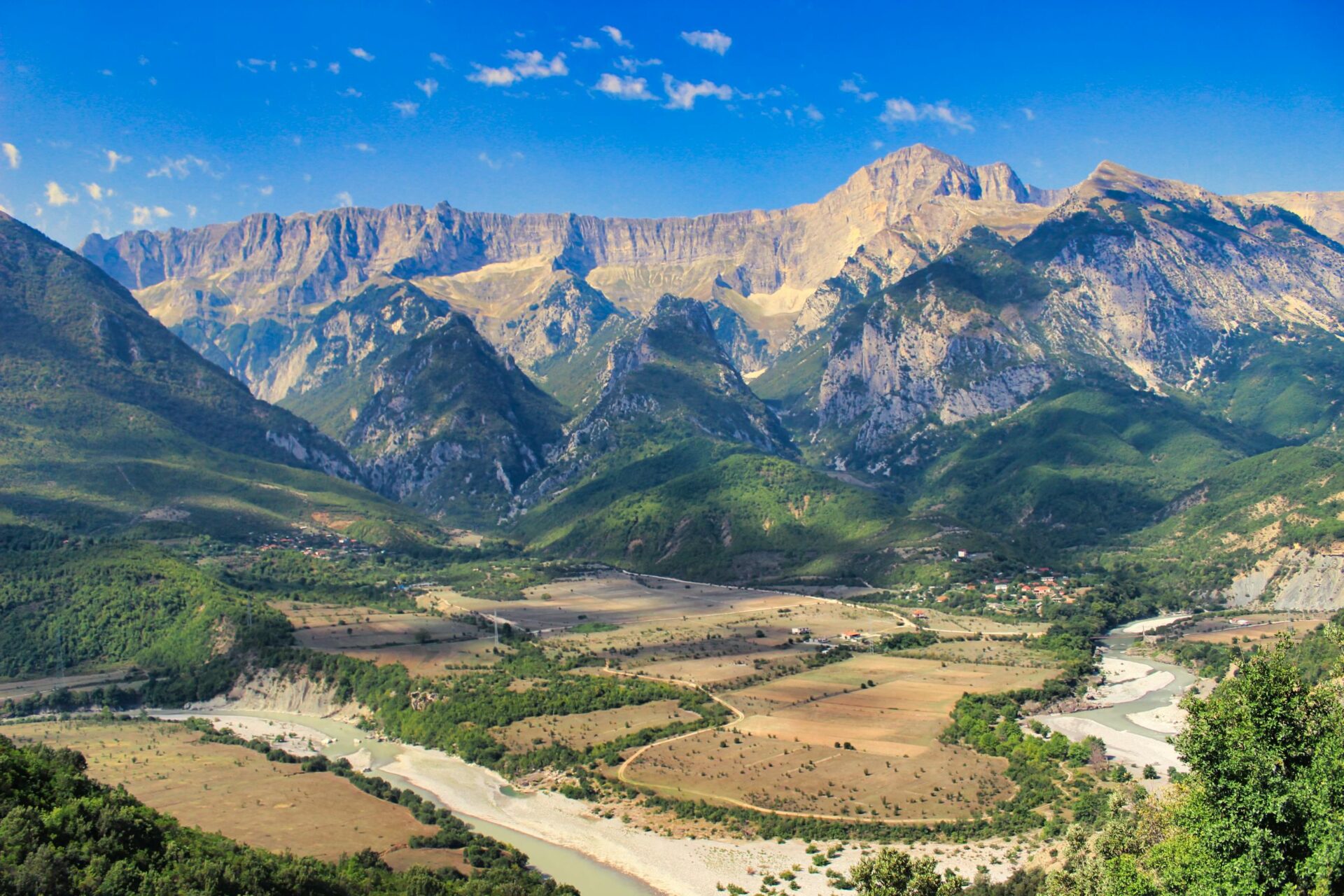
The complete guide for travellers: the Accursed Mountains that rival anything in the Alps, two UNESCO Ottoman cities most Balkan itineraries skip, a 2,500-year-old Greek city with almost no visitors, the last undeveloped stretch of Mediterranean coast, bunkers everywhere, and why Albania is the most underrated country in Europe — right now, before it isn’t.
Reading time: 14 minutes | Last updated: 2026
Albania has 173,000 concrete bunkers.
During the 45-year dictatorship of Enver Hoxha (1944-1985), the most isolated state in Cold War Europe built one bunker for every eight citizens — a paranoid infrastructure of mushroom-shaped concrete igloos scattered across every hillside, every beach, every field. Some are still there. Most are still there. On the road from Tirana to the coast you’ll pass 40 of them in an hour, gradually subsiding into the landscape, being painted as garden features, converted into cafes, occasionally used as small hotels.
They are the most visible single legacy of a government that closed the country’s borders in 1967, made atheism a constitutional requirement (the only country in history to do so), and reduced one of the most historically layered countries in Europe to a sealed box for half a century.
Albania opened to international visitors in 1990. The box has been open for 35 years and the contents are extraordinary.
The Accursed Mountains (Bjeshkët e Namuna) in the north — the southern end of the Dinaric Alps, the highest peaks above 2,700m, the Valbona and Theth valleys connected by a hiking trail that is the finest mountain walk in the Balkans. The UNESCO-listed cities of Berat and Gjirokastër — two Ottoman city-fortresses with intact castle complexes, historic neighbourhoods of whitewashed stone houses, and a combined visiting population that is a fraction of Dubrovnik on a Wednesday in August. Butrint — a 2,500-year-old Greek-Roman-Byzantine-Venetian city in a UNESCO-listed national park on a lagoon near the Greek border, with a site of comparable significance to Ephesus and visitor numbers comparable to a local museum. The Albanian Riviera — 120km of Ionian coastline between the Greek border and Vlorë, the last stretch of the eastern Mediterranean that hasn’t been fully commodified by resort development. Tirana — a capital city reinventing itself with the specific energy of a place that knows it has 35 years of catching up to do.
The flights cost what budget European flights cost (£40-80 return from London). The accommodation costs what accommodation costs in the Western Balkans rather than Western Europe. The food is excellent, the wine is underrated, and the people are the warmest in the Balkans — the last point is not a travel cliché but a consistent observation across travellers who have covered the full region.
The window between “underrated” and “discovered” is open now. It won’t be indefinitely.
Quick Navigation
- The Case for Albania — The Right Now Argument
- When to Go — Season by Region
- Getting There — The Routing Options
- Tirana — The Capital Reinventing Itself
- Berat — The City of a Thousand Windows
- Gjirokastër — The City of Stone
- Butrint — The Ancient City in the Lagoon
- The Albanian Riviera — The Last Undeveloped Coast
- The Accursed Mountains — Valbona and Theth
- The Valbona-Theth Trek
- Lake Koman — The Fjord Ferry
- The Bunkers — The Hoxha Legacy
- Hidden Albania — The Places Most Itineraries Skip
- What It Costs — Real Numbers
- Eating in Albania — The Balkan Kitchen Done Well
- Practical Notes
- Two Itineraries — South Circuit and Full Country
The Case for Albania — The Right Now Argument
The right now argument is specific.
Albania’s tourist numbers have been growing at 20-30% per year since 2019. The infrastructure — guesthouses, mountain huts, trail markers, organised boat trips — has been developing to match. What exists now is the sweet spot: enough infrastructure to make an independent trip comfortable, not enough to have changed the character of the destinations themselves.
The Valbona valley still has fewer than 300 visitors on a busy summer weekend. Butrint still has days when you are the only person in some of its most significant ruins. The Albanian Riviera still has coves accessible only by hiking 20 minutes from a road, with no sunbed operator and no beach bar. The guesthouses of Berat’s upper city still charge £15-25/night for rooms in houses that have been in the same family for generations.
In five years, some of this will have changed. The infrastructure will have arrived. The Instagram posts will have arrived. The prices will have adjusted toward the Mediterranean average. This is not a reason not to go in five years — it’s a reason to go now as well.
When to Go — Season by Region
June to September — The Coast and Mountains
The peak season on the Albanian Riviera — hot, dry (35-38°C), the Ionian Sea at its warmest (26-28°C). The beach coves of the Riviera are at their most accessible. The Valbona-Theth mountain trek is fully operational; the guest houses and mountain ferries are at maximum capacity. Book ahead in July and August for the most popular routes.
April to June and September to October — The Sweet Spots
The best windows for the full circuit. The coast is warm and swimmable without the peak heat. Berat and Gjirokastër are comfortable for walking (not the 38°C of July). The Accursed Mountains are snowfree from late May. October: the mountain colours, the harvest, the most atmospheric light on the stone cities.
November to March — The Cities and the Inland
Tirana, Berat, and Gjirokastër are accessible year-round. The Riviera is largely closed (guesthouses shut, the sea too cold). The mountains are snowbound above 1,500m — the Valbona-Theth trek requires good winter mountain experience in January-March.
The BGGD recommendation: Late May to June for the full circuit — the mountains are open, the coast is warm but not overwhelmingly crowded, and the Ottoman cities are walkable in the early summer light.
Getting There — The Routing Options
Direct flights to Tirana:
Wizz Air operates the most extensive UK service to Tirana (Nënë Tereza International Airport, TIA) from London Luton. Return flights: £40-90 booked 4-8 weeks ahead. easyJet serves Tirana from several UK airports. British Airways via other routes occasionally.
Flight time: 2.5 hours from London. Tirana is closer than Istanbul, closer than Cairo, closer than almost any non-European cultural destination in this guide.
Via Corfu (for the south):
If entering Albania from the south (starting in the Riviera or Butrint), the Corfu-Saranda ferry is the correct routing. Fly London to Corfu (easyJet, Jet2 — return from £80-150), then the Ionian Seaways or Finikas Lines ferry from Corfu to Saranda (30 minutes, £10-15 each way, runs multiple times daily in summer). This gives a Greek island connection and avoids the 4-hour road from Tirana to the south.
Via Montenegro:
For travellers combining Albania with Montenegro (a natural circuit — see the Montenegro guide), the land crossing at Muriqan (between Shkodër and Ulcinj) is the standard route.
Getting around Albania:
Furgons (shared minibuses) are the primary intercity transport — they depart when full (or nearly full) from the main bus stations and drop off along the route. No set schedule, fixed price, fast. Tirana to Berat: £2, 2 hours. Tirana to Gjirokastër: £4, 4 hours. The furgon system works and is the correct choice for most intercity routes.
Car hire from Tirana (£20-30/day) gives flexibility for the mountain routes and the Riviera, where furgon connections are less frequent.
Tirana — The Capital Reinventing Itself
Tirana is a city of 800,000 people that has been growing at extraordinary speed since 1991 — from a grey, controlled, car-free city (private car ownership was illegal under Hoxha) to a genuinely vibrant capital with a café culture, a contemporary arts scene, and the specific energy of a city that knows it has a lot of time to make up.
The visual evidence of the reinvention: the colourfully painted apartment blocks of the Hoxha era (repainted in vivid colours starting in 2000 by the former mayor, who is also a painter, as a deliberate act of psychological de-Communisation), the Blloku neighbourhood (the former elite Communist Party residential quarter, forbidden to ordinary citizens, now the city’s most fashionable café and bar district), and the Grand Park with the artificial lake that was Hoxha’s personal leisure space, now public.
The National History Museum (Muzeu Historik Kombëtar):
The primary national museum on Skanderbeg Square — a large mosaic mural on the facade depicting Albanian history from Illyrian times through Communist struggle. The interior covers: the Illyrian civilisations that preceded Greek and Roman contact, the medieval Albanian kingdoms, the Ottoman period, Skanderbeg (the national hero who resisted the Ottoman conquest for 25 years in the 15th century), and the Communist period. The Communist section has been significantly revised since 1991 but still carries the weight of a museum that was the official state narrative for 45 years. Entry: £3.
The House of Leaves (Bunk’Art 2):
A surveillance museum in a former secret underground complex used by the Sigurimi (the Albanian secret police) under the Communist period. The exhibitions cover the surveillance system, the methods of control, and the specific human stories of those who were monitored, imprisoned, and executed. One of the most powerful museums in the Balkans and almost entirely unknown internationally. Entry: £5.
Bunk’Art 1:
A separate installation — in an enormous bunker complex of 106 rooms built under Dajti Mountain to shelter Hoxha and the state leadership in case of nuclear attack. The bunker is 800 metres into the mountain, accessed by a road that climbs the hillside above Tirana. The scale (it’s a complete underground city — offices, meeting rooms, apartments, a cinema, a surgery) and the specific atmosphere of a sealed command centre preserved exactly as it was abandoned give it a character completely unlike any other museum in Albania. Entry: £6.
The Blloku:
The former forbidden quarter — a grid of streets west of the main boulevard that was reserved for the Communist Party elite and completely inaccessible to ordinary citizens until 1991. The area is now Tirana’s most concentrated café, bar, and restaurant district. The juxtaposition of the neighbourhood’s history with its current function (artisan coffee shops, cocktail bars, rooftop terraces) is the most specifically Albanian urban experience available.
Berat — The City of a Thousand Windows
Berat is a UNESCO World Heritage Site on the Osum River — an Ottoman city with three distinct historic layers: the Kala (the castle neighbourhood on the hill, continuously inhabited since antiquity), the Mangalem quarter (the Muslim Ottoman neighbourhood below the castle on the western bank), and the Gorica quarter (the Christian neighbourhood on the eastern bank, connected by a stone bridge).
The nickname “the city of a thousand windows” comes from the cascading whitewashed stone houses on the hillside below the castle — the houses stacked on each other’s rooftops, each with the large Ottoman-era windows that gave the facades their distinctive rhythm.
The Kala (Castle):
At the top of the hill — a walled Byzantine-Ottoman castle complex dating from the 4th century BC (Greek), expanded through Byzantine and Ottoman periods. The walls are intact; the interior is a lived neighbourhood of approximately 300 people who have lived inside the castle walls for generations. The churches within the castle walls (13th-17th century Byzantine and post-Byzantine) contain some of the finest fresco painting in the Balkans, including work attributed to Onufri — the greatest Albanian painter of the 16th century, whose works use a specific red pigment made from pomegranate and egg that has never been fully replicated.
The Onufri Museum:
In the Church of the Dormition of St. Mary within the castle — the finest collection of Onufri’s work, including the iconostasis he painted for the church. Entry: £2. The museum is also notable for the 16th-century royal doors and altar covers in embroidered silk.
The Mangalem Quarter:
The lower city — the steep lanes below the castle, the traditional Ottoman houses, the Bachelors’ Mosque (Xhamia e Beqarëve, 1827), and the Halveti Tekke (a Sufi lodge). Walking the lanes slowly is the point — the specific architecture of the Ottoman domestic street, the views across the river to Gorica, the cats on every windowsill.
Getting to Berat:
Furgon from Tirana (2 hours, £2) or from Gjirokastër (2.5 hours, £3). The furgon drops you at the main square below the old city. Walk up — the uphill walk through the Mangalem quarter to the Kala takes 20-30 minutes and is the correct introduction.
Where to stay:
The guesthouses inside the Kala are the most atmospheric accommodation in Albania. Guesthouse Mangalemi (within the castle walls, family-run, £18-25/night, breakfast included), Hotel Rezidenca Desaret (castle views, more comfortable, £35-50/night). Both must be booked ahead in summer.
Gjirokastër — The City of Stone
Gjirokastër is an Ottoman fortress city in the far south of Albania — a UNESCO World Heritage Site of stone houses, a citadel visible from every approach, and a specific gravity that comes from a city that was alternately Albanian, Ottoman, and Greek in character across its history.
Ismail Kadare, the Albanian novelist (nominated for the Nobel Prize in Literature multiple times, winner of the inaugural Man Booker International Prize in 2005), was born in Gjirokastër and set his most famous novel, Chronicle in Stone, here. The novel’s narrator is a child during the Italian and German occupation of World War II; the city in the novel is the city you’re walking through. Taking the novel with you is not a requirement and also not a bad idea.
The Citadel (Kalaja e Gjirokastrës):
One of the finest military fortifications in the Balkans — built from the 12th century, expanded through the Ottoman period, and used as a prison under the Communist regime. The citadel contains: a museum of armaments (including a captured US Air Force reconnaissance plane from a 1957 incident that was brought to Gjirokastër for display — the most specific museum object in Albania), the clock tower, and the panoramic view over the valley and the surrounding mountains.
Entry: £4. The citadel is 30 minutes uphill from the old bazaar on foot or a short taxi ride.
The Bazaar and the Old City:
Below the citadel — the old bazaar district, the Gjirokastër mosque, the caravanserai (restored and now a cultural centre), and the stone lanes of the residential old city. The architectural quality: the Gjirokastër houses are built from grey limestone, the large projecting upper floors (a defensive Ottoman design) creating a streetscape of overhangs and arches that gives the old city its specific character.
The Skenduli House (privately owned, open for guided visits, entry £3): a complete and intact Ottoman-era house, the family having maintained it through the Communist period by hiding its contents — 19th-century furniture, original paintings, the layout of a prosperous Ottoman merchant household.
The Gjirokastër National Folklore Festival:
Held every four or five years (most recently 2021, next likely 2025 or 2026), this is one of the largest traditional music and dance festivals in the Balkans — performers from across Albania’s regions and the Albanian diaspora, the citadel as the main performance stage. Check the current schedule at albaniafestival.com before planning — if it falls during your visit, attend.
Getting to Gjirokastër:
Furgon from Tirana (4 hours, £4) or from Saranda (1.5 hours, £2). The natural circuit: Tirana → Berat → Gjirokastër → Saranda → Riviera → back to Tirana.
Butrint — The Ancient City in the Lagoon
Butrint is in a national park on a small peninsula between Lake Butrint and the Vivari Channel, 20km south of Saranda on the Greek border. The site has been continuously occupied since at least the 7th century BC — successively Greek, Roman, Byzantine, Venetian, and Ottoman — and was designated a UNESCO World Heritage Site in 1992.
The specific quality of Butrint that distinguishes it from every other major archaeological site in the Balkans: the visitor numbers. On a typical October day, you may share the site with 20-30 other visitors. In July-August, perhaps 200. Compare to Ephesus (5,000/day), Pompeii (20,000/day), or Meteora on a summer weekend. Butrint is a site of equivalent historical significance visited by a fraction of the people — a function of Albania’s accessibility, which is changing but hasn’t changed yet.
The Theatre:
A 3rd-century BC Greek theatre, restructured in Roman times, its stone seating largely intact. In the morning, before any other visitors arrive, the theatre catches the first sun through the trees.
The Baptistery:
A 6th-century Byzantine baptistery with the finest floor mosaic in Albania — a circular geometric mosaic of birds, animals, and plants in black, white, and terracotta stone, covering the entire floor of the building. When first excavated it was exposed; now it’s covered by wooden platforms to protect it. Lift the platform panels to see it.
The Venetian Tower and the Walls:
The Venetians controlled Butrint from 1386 to 1797 — the walls and the tower at the channel crossing are the most visible Venetian legacy. The walls enclose the main archaeological zone; the inscriptions in Venetian Latin are visible on the gate lintels.
Getting to Butrint:
Furgon from Saranda (45 minutes, £1.50) or taxi (£8-10 for the return trip, wait included). Butrint opens at 8am — arrive at 8am on a summer morning and you will likely have the theatre and the baptistery to yourself for the first hour.
Entry: £7. Guide hire at the entrance: £10-15 for 1.5 hours — worth it for the historical context that makes Butrint comprehensible rather than just impressive.
The Albanian Riviera — The Last Undeveloped Coast
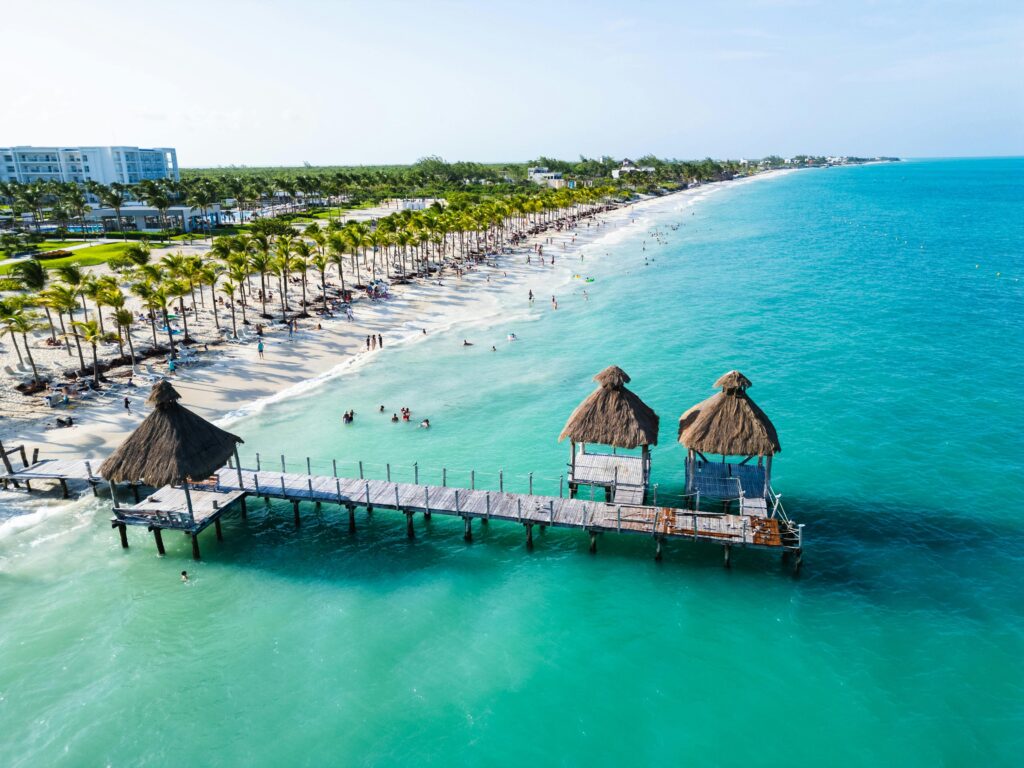
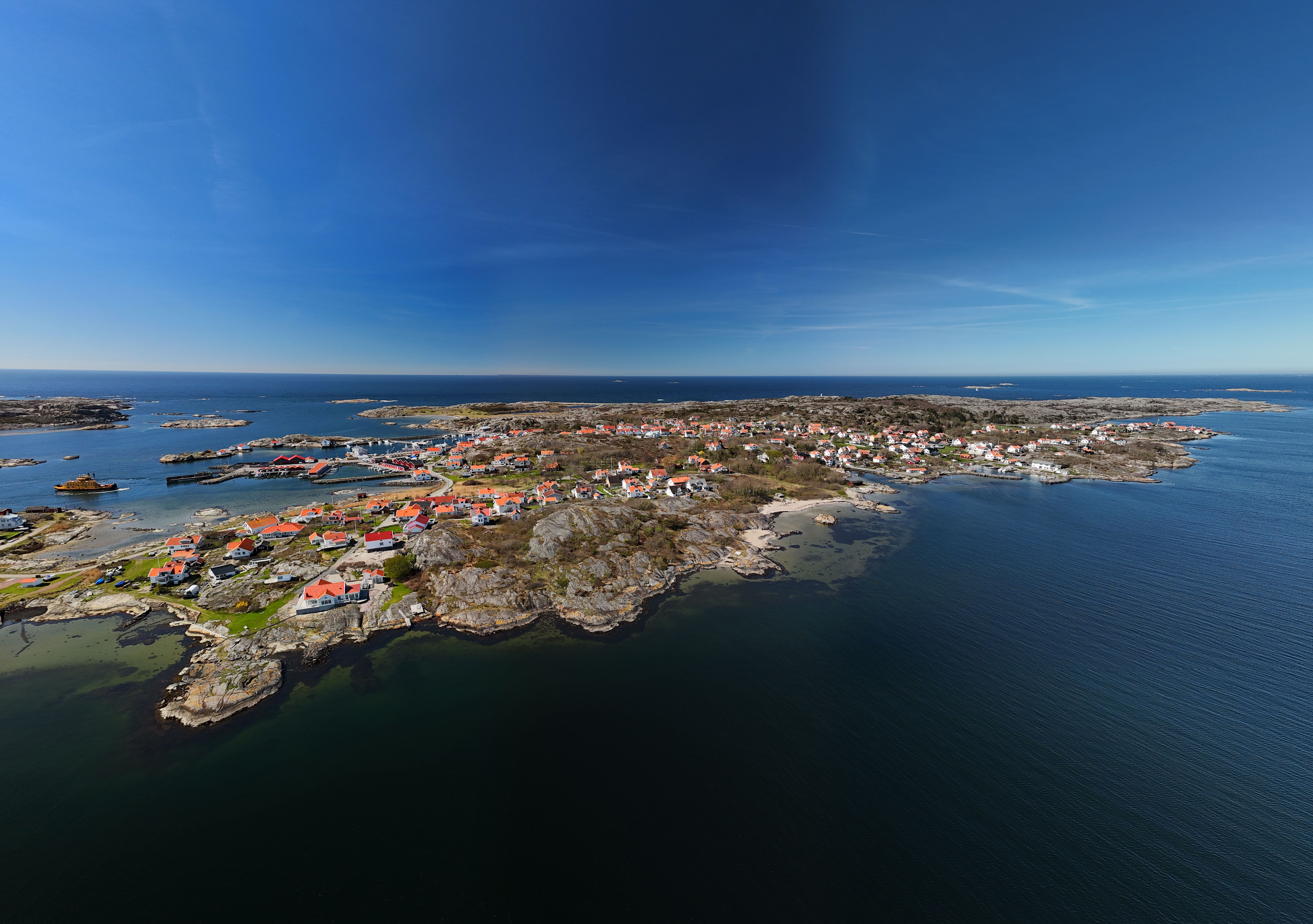
The Albanian Riviera is the stretch of Ionian coastline between the Greek border and Vlorë — approximately 120km of headlands, coves, and beaches backed by the Ceraunian Mountains. The specific character: Mediterranean coastal scenery of the kind that existed in Corfu in the 1970s, in Croatia before the 2000s development, in the Greek islands before mass tourism arrived. Cliffs above clear turquoise water. Villages on headlands. Beaches accessible by walking rather than by organised boat transfer.
This character is changing. The infrastructure is arriving. But the pace of development on the Albanian Riviera is still significantly slower than on equivalent coastlines to the north (Montenegro, Croatia) and south (Corfu, the Ionian Greek islands).
Himara:
The central town of the Riviera — a Greek-minority community on a headland above the coast. The old village above the new town has a castle, Byzantine churches, and the specific multicultural legacy of a town that has been Albanian, Greek, Ottoman, and everything between. The beach at Livadhi (below Himara) is the most organised on the Riviera — sunbeds, beach bars, families, the full Riviera infrastructure.
Palasë and Drymades:
North of Himara — two coves accessible from the main road, each with small beach guesthouses and the kind of minimal infrastructure that disappears as resorts arrive. The Drymades beach (a 10-minute walk down from the road) has a beach bar and a handful of bungalows; beyond it to the south, a 20-minute walk along the cliff path leads to a cove with no infrastructure at all.
Gjipe Beach:
South of Himara — accessible only by boat (15 minutes from Himara port, £5 return, boats run when full) or by a 45-minute hike through a canyon. The canyon approach: from the road, a path descends through a narrow limestone gorge to the beach below. The beach at the bottom is white pebble, the water turquoise, and the canyon walls rising above it on both sides. On a summer day: approximately 100 people. On an October day: perhaps 10.
Sazan Island:
The island off Vlorë at the mouth of the Bay of Vlorë — a former military installation under both the Italian and Albanian Communist regimes, now accessible by day trip from Vlorë. The abandoned Cold War military infrastructure, the remarkably clear water around the island, and the caves accessible from the sea make it one of the most unusual day trips available in Albania.
The Road:
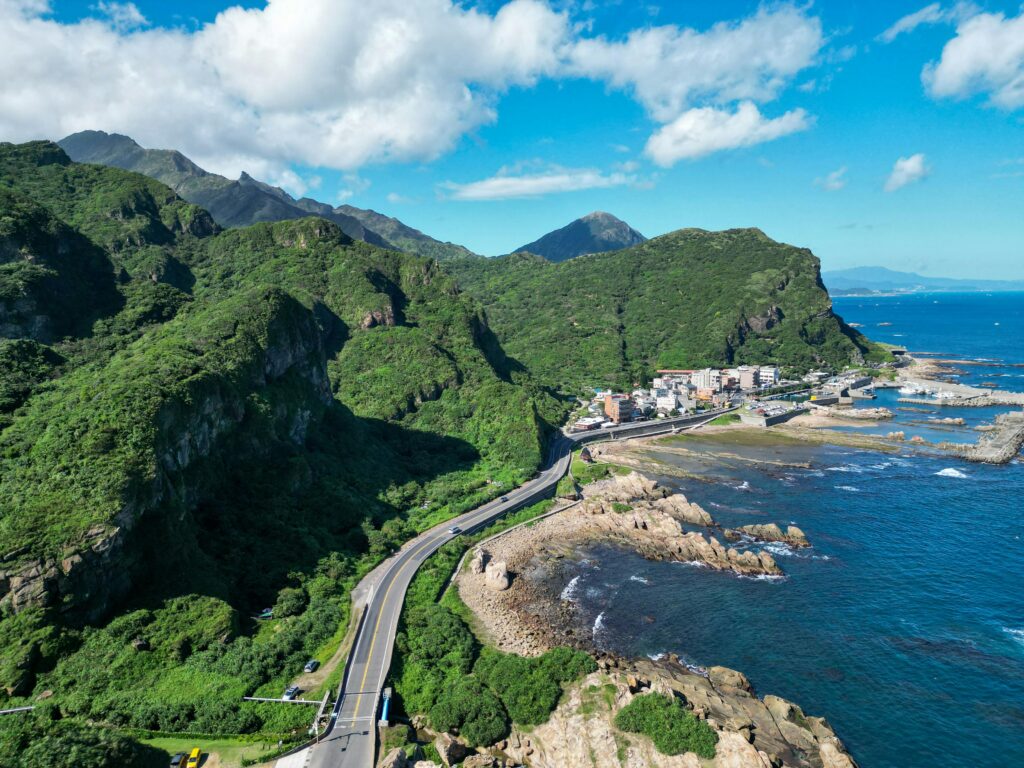
The coastal road from Vlorë to Saranda is one of the finest drives in the Balkans — the mountain behind, the Ionian in front, the road winding through each headland and descending to each cove. At points the road is directly above the sea, the drop visible from the passenger side. In a hire car at dawn, with no traffic: extraordinary.
The Accursed Mountains — Valbona and Theth
The Bjeshkët e Namuna (Accursed Mountains) are the southernmost range of the Dinaric Alps — peaks above 2,700m forming the border between Albania and Kosovo and Montenegro. The region is one of the last genuinely wild mountain landscapes accessible from Western Europe — high alpine terrain with traditional highland communities that maintained their own legal and social structures (the Kanun, a code of customary law governing everything from land rights to blood feuds) through both Ottoman and Communist periods.
The two main valleys for visitors:
Valbona Valley:
Accessible from Bajram Curri in northeastern Albania. The valley is a 20km glacial trough surrounded by peaks — the village of Valbona at the head of the valley, the guesthouses run by families who have returned to the valley specifically to develop community tourism, the hiking routes into the surrounding mountains.
The Valbona valley’s character: extremely remote (the access road is significant), extremely beautiful, and increasingly organised for visitors who want both. The Mrizi i Zanave guesthouse (run by Altin Prenga, the pioneer of Valbona tourism) and several smaller family guesthouses charge £20-35/night full board — this is the correct way to experience the valley.
Theth:
A smaller valley to the southwest of Valbona — accessible from Shkodër. The village of Theth has traditional stone-towered houses (kullë — the defensive towers used in blood feud disputes under the Kanun), a lock-in tower (used for men under blood feud to shelter without being killed — the tradition of hospitality required that a guest in sanctuary could not be harmed), a small waterfall (the Blue Eye of Theth — a spring of extraordinary clarity), and hiking routes into the mountains.
The Blue Eye (Syri i Kaltër i Thethit): a karst spring where water emerges from the mountainside in a deep blue pool of extraordinary clarity, the bottom visible 5 metres below through water that has been filtered through limestone. Free access, 2km walk from the village.
The Valbona-Theth Trek
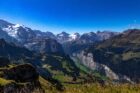
The most celebrated day hike in Albania — a 17km route crossing the mountain pass (Qafa e Valbonës, 1,790m) between the two valleys. The hike connects two of the finest mountain communities in the Balkans in a single day with views that rival anything in the Alps.
The route:
Valbona village → Rrogam (1 hour, ascending through beech forest) → the pass (3-4 hours from Valbona, the ascent steep and sustained) → descend to Theth (2-3 hours, longer than the map suggests).
Total: 7-9 hours depending on pace. Difficulty: strenuous. The pass involves 1,000m of ascent from Valbona and 1,200m of descent to Theth.
The logistics:
The standard approach: take the ferry from Shkodër to Fierza (see Lake Koman section), then local transport to Valbona. Sleep in Valbona for one night. Trek to Theth. Sleep in Theth for one night. Return to Shkodër by minibus (the daily furgon from Theth to Shkodër leaves at 7am).
The return from Theth to Shkodër: furgon at 7am, 3 hours, £3. Book a seat the evening before through your Theth guesthouse.
The season: June through October. The pass is snowbound and dangerous outside these months without specific winter mountaineering experience.
Guide: Not legally required but recommended for anyone unfamiliar with mountain navigation — the pass can be in cloud and the path is unmarked in sections. Guides available through the guesthouses in Valbona, £20-30/day.
Lake Koman — The Fjord Ferry
The approach to the Accursed Mountains from the west goes through one of the finest ferry journeys in Europe.
Lake Koman is an artificial reservoir created by the Koman hydroelectric dam on the Drin River in 1985. The river previously ran through a dramatic gorge; the reservoir flooded the gorge to create a lake of extraordinary beauty — the water backed up between sheer limestone cliffs for 30km, the narrow passages between the cliffs creating something that looks more Norwegian fjord than Albanian lake.
The Koman Ferry runs from Koman (accessible from Shkodër by furgon, 2 hours) to Fierza (the eastern end of the lake, gateway to the Valbona valley). The journey takes 2.5-3 hours on a small passenger ferry, through the gorge, past the limestone cliffs. Cost: £5 each way.
The ferry departs Koman at 9am daily (in season) and from Fierza at 1pm. Both directions are worth taking — the morning light from Koman, the afternoon light returning from Fierza.
The Koman to Valbona combination (ferry to Fierza, then minibus to Valbona): the correct approach to the mountains, giving the gorge experience as the introduction to the landscape.
The Bunkers — The Hoxha Legacy
The 173,000 concrete bunkers were built between 1967 and 1986 — each one identical, each one requiring 5-6 tonnes of concrete, each one designed to be impenetrable to direct tank fire. The total concrete used in the bunker programme is estimated at 170 million tonnes — an amount that could have built a motorway network across the country several times over.
They are now part of the Albanian landscape in the way that Roman walls are part of the English landscape — so pervasive that they become background, noticed only when you’re looking for them and then impossible to miss.
Bunk’Art (Tirana): The two installations described above — Bunk’Art 1 in the mountain and Bunk’Art 2 in the former Sigurimi building — are the finest museum treatments of the bunker legacy.
The Bunker Bar, Tirana: A café built inside a bunker in central Tirana, the structure preserved and converted. The dissonance of drinking coffee inside Cold War paranoia infrastructure is specific to Albania.
The beach bunkers of the Riviera: On almost every beach on the Albanian Riviera, at least one bunker is visible — subsiding into the hillside above the beach, occasionally converted into a storage space or painted, most often just sitting in the landscape as evidence of the programme. The juxtaposition of the turquoise Ionian water and the grey concrete mushroom above it is the most immediately legible symbol of Albanian 20th-century history.
Hidden Albania — The Places Most Itineraries Skip
Shkodër:
Albania’s northern city — the cultural capital of the Albanian highlands and the gateway to the Accursed Mountains. The Rozafa Castle (above the city on a promontory at the confluence of three rivers — a 4th-century BC fortress rebuilt through Byzantine, Venetian, and Ottoman periods, the finest single fortress view in Albania), the old bazaar, and the Marubi National Museum of Photography (the most significant photographic archive in the Balkans — the Marubi family documented Albanian life continuously from 1858 to the mid-20th century, the collection covering the Ottoman period, the independence struggle, and the early Communist era). Entry to the Marubi Museum: £3. One of the most undervisited significant museums in southern Europe.
The Osumi Canyon:
Near Berat — a 26km limestone gorge, the Osum River running at the bottom, accessible by kayak (organised from Berat, half-day trips £20-25/person) or by hike along the canyon rim. The canyon in spring (when the snowmelt is running): waterfalls visible from the rim, the river turquoise through the clear mountain water. Almost no tourist infrastructure. The finest natural landscape within day-trip distance of Berat.
Korçë:
In the southeastern highlands near the North Macedonia border — a city of French-influenced colonial architecture (a French military garrison was here during WWI) and the finest beer brewery in Albania (Birra Korçë, founded 1928, still the most widely drunk Albanian beer, the visitor centre open for tastings). The Korçë Old Bazaar (restored from the original 15th-century Ottoman marketplace) and the National Museum of Medieval Art (the finest collection of Albanian Orthodox religious art, covering the Byzantine and post-Byzantine traditions that survived through the Ottoman period) make it the most specifically cultural inland city in Albania.
The Blue Eye (Syri i Kaltër) near Saranda:
Different from the Theth Blue Eye — a natural spring near the village of Muzinë, 25km east of Saranda. Water emerges from the limestone aquifer in a pool of extraordinary blue-green opacity, the volume so high that the surface boils from the upwelling pressure. Entry: £3. On a quiet morning in October, one of the most beautiful natural features in the Balkans.
What It Costs — Real Numbers
Albania is the best-value country in the Western Balkans and one of the best-value destinations in Europe. The combination of low accommodation prices, inexpensive food, and cheap furgon transport creates one of the most economical comprehensive travel experiences accessible from the UK.
Daily Budgets
Budget (£20-30/day)
- Accommodation: guesthouse (£10-18/night, breakfast often included)
- Food: local restaurants, traditional Albanian cooking (£5-8/day)
- Transport: furgons between cities (£1-4 per route)
Mid-range (£40-60/day)
- Accommodation: boutique guesthouse or small hotel (£22-40/night)
- Food: restaurant dinners, occasional café lunches (£10-16/day)
- Transport: mix of furgons and occasional taxi
The mountain circuit extra costs:
- Lake Koman ferry: £5 each way
- Valbona guesthouse (full board): £25-35/night
- Theth guesthouse (full board): £20-30/night
What 10 Days in Albania Actually Costs from the UK
| Category | Budget | Mid-Range |
|---|---|---|
| Return flights (Tirana, Wizz Air) | £40–90 | £60–120 |
| 10 nights accommodation | £120–200 | £260–420 |
| Food (10 days) | £60–95 | £110–175 |
| Furgon transport (all routes) | £20–35 | £20–35 |
| Butrint + Berat + Gjirokastër entries | £18–25 | £18–25 |
| Lake Koman ferry (return) | £10 | £10 |
| Car hire (3 days for Riviera) | £60–90 | £75–100 |
| Total | £328–545 | £543–885 |
Albania is the only Western Balkan country where a comprehensive 10-day trip including flights from the UK can be achieved for under £400 at the budget level. This is not camping and sacrifice — guesthouses in Albania at £15-18/night include breakfast and are often in genuinely beautiful buildings in UNESCO-listed neighbourhoods.
Eating in Albania — The Balkan Kitchen Done Well
Albanian food is the least internationally known of the Balkan cuisines and among the most satisfying — built on grilled meats, fresh dairy, excellent olive oil (the Albanian Riviera produces significant olive oil), and the vegetable-forward cooking of a country where the peasant diet was historically determined by what could be grown in mountain valleys and coastal plains.
Tavë Kosi
The national dish — a baked casserole of lamb and rice in a sauce of yoghurt and eggs, the yoghurt curdled and set around the meat during baking, the egg providing a custard quality. The preparation is slow: the lamb is cooked first, combined with the yoghurt-egg mixture, and baked until the top is golden. The result is deeply savoury, slightly tangy from the yoghurt, and fundamentally different from any other Balkan dish. Available at traditional restaurants throughout the country. At a Tirana or Berat restaurant: £4-7.
Fergëse Tirane
A Tirana-specific dish — diced roasted red peppers, fresh white cheese (gjizë), eggs, and liver or offal, baked in a clay pot. The preparation originated as a way of using every part of the livestock and has been refined over generations into a dish of genuine complexity. Available at traditional Tirana restaurants and home kitchens. £3-5 at a local restaurant.
Byrek
The Albanian (and Balkan) filled pastry — filo dough stuffed with: spinach and egg (the most common version), minced lamb, or white cheese. Available from bakeries throughout Albania from 6am, £0.50-1 per large portion. The byrek is the correct Albanian breakfast — eaten standing at the bakery counter with a glass of ayran (salted yoghurt drink). At a Gjirokastër bakery: the finest byrek in Albania, by regional reputation and by the evidence of the queues.
Grilled Meats (Spit and Grill)
The Albanian grill culture — whole lamb cooked on a spit over wood fire (qingj i pjekur), liver wrapped in caul fat (rroba), lamb chops (brinjë qengji), and the fresh sausages of each region. The mountain regions (Valbona, Theth) produce the finest lamb in Albania — the highland grazing giving the meat a specific flavour that the coastal regions don’t replicate.
Fli
A layered crepe dish from the northern highlands — alternating thin layers of batter and cream, cooked slowly over a wood fire on a cast-iron tava (griddle), the result something between a pancake stack and a pastry. A northern Albanian ceremonial food, served at feasts and family celebrations, occasionally available at guesthouses in Shkodër and the mountain communities. Unlike any other Balkan preparation.
Albanian Wine
Albania has been producing wine since antiquity — the Illyrians were known to the Greeks as wine-producers. The post-Communist wine industry has been rebuilding since 1991 and has produced several internationally competitive producers.
The indigenous grape varieties: Kallmet (a red grape from the Shkodër region, producing deep, tannic wines similar to Primitivo), Shesh i zi (the most widely planted red, light and aromatic), Pulë (white, high acid, grown on the Riviera). The wineries in the Berat region (Çobo Winery, Ernest Winery) are the most developed for visitor access and produce the most consistent wines. A glass of house wine at any Albanian restaurant: £1.50-2.50.
Raki
The Albanian grape spirit — produced throughout the country in strengths from mild (40%) to genuinely formidable (50%+), served at the beginning of a meal, at the end of a negotiation, and at most points in between. The offering of raki is the Albanian equivalent of the Senegalese ataya ceremony — a social gesture that precedes any transaction. Accept the first glass.
Practical Notes
Visa: No visa required for UK passport holders. Stamp on arrival at Tirana airport or land borders. Up to 1 year for UK citizens (one of the most generous allowances in Europe). No fee.
Getting there: Wizz Air direct from London Luton to Tirana. easyJet from various UK airports. Return flights: £40-90. Flight time: 2.5 hours. The Corfu-Saranda ferry route for southern entry.
Currency: Albanian Lek (ALL). £1 ≈ 140 ALL at time of writing. ATMs in all cities and towns. Cash essential in mountain villages — guesthouses in Valbona and Theth are cash only. Withdraw from Tirana or Shkodër before heading north.
Getting around: Furgons (shared minibuses) for all intercity routes — ask at your accommodation for the current departure point and time, as these change. Car hire in Tirana: £20-30/day from Budget, Europcar, or local operators. Essential for the Riviera circuit and the mountain approach roads. Driving in Albania: the road quality varies significantly — the main Tirana-Gjirokastër highway is excellent; the mountain roads to Theth and some Riviera sections are poor to fair.
Language: Albanian (Shqip). English is spoken by the younger generation in Tirana and in tourist-facing businesses throughout the country. Italian is widely understood (Albanian television received Italian channels during the Communist period — millions of Albanians learned Italian by watching RAI). In mountain villages: limited English; Italian or gestures.
Safety: Albania is safer than its reputation suggests — the blood feud culture of the highlands is largely historical (modern Albanian law has replaced the Kanun for most purposes) and violent crime against tourists is extremely rare. Standard urban awareness in Tirana. The road safety record is the primary risk — Albanian driving standards are energetic. Seat belts.
The specific cultural note: Albanian culture has a concept called besa — an oath of honour, a commitment that, once given, is absolutely binding. Related to the Kanun hospitality tradition: a guest under a host’s besa is guaranteed protection regardless of any prior conflict. In practice, this manifests as a hospitality toward foreign visitors that frequently goes beyond what is economically rational — the guesthouse owner who drives you to the furgon stop at 5am, the café owner who refuses to charge for the second coffee. It’s real.
Two Itineraries — South Circuit and Full Country
7 Days — The South Circuit (Best First Trip)
Day 1: Arrive Tirana Land, check in Blloku area. Bunk’Art 2 afternoon. Blloku café evening.
Day 2: Tirana National History Museum morning. Skanderbeg Square. Bunk’Art 1 afternoon (allow 2 hours for the mountain bunker). Evening in the Blloku.
Day 3: Berat Furgon from Tirana (2 hours). The Mangalem quarter walk. The Kala and the Onufri Museum. Guesthouse dinner inside the castle walls.
Day 4: Berat → Gjirokastër Morning: Osumi Canyon overlook above Berat (20-minute drive, no infrastructure, just the view). Furgon to Gjirokastër (2.5 hours). The Skenduli House. The bazaar at dusk.
Day 5: Gjirokastër + Saranda The Citadel in the morning (7am for the light on the valley). Furgon to Saranda (1.5 hours). Check in. First Ionian swim.
Day 6: Butrint + Blue Eye Morning: Butrint National Park (arrive at 8am opening). Afternoon: Blue Eye spring near Muzinë (25 minutes by taxi). Saranda seafront evening.
Day 7: Return to Tirana or Corfu Ferry Option A: Furgon Saranda → Tirana (5 hours), evening flight home. Option B: Ferry Saranda → Corfu (30 minutes), fly home from Corfu.
12 Days — The Full Country Circuit
Days 1-7: As above.
Day 8: Saranda → Himara → Albanian Riviera Hire car from Saranda. Drive the coast road north (3 hours). Stop at Gjipe canyon. Himara for lunch. Continue to Drymades or Palasë for the quieter beach. Night in Himara.
Day 9: The Riviera → Vlorë → Shkodër Morning: a Riviera cove before the day heats. Drive north to Vlorë (2 hours). The Sazan Island day trip if timing allows. Continue north to Shkodër (3 hours). Night in Shkodër.
Day 10: Shkodër → Lake Koman → Valbona Furgon from Shkodër to Koman (2 hours). Ferry Koman → Fierza (2.5-3 hours). Minibus Fierza → Valbona (1 hour). Arrive Valbona late afternoon. Guesthouse dinner.
Day 11: Valbona-Theth Trek The full 17km crossing. Arrive Theth late afternoon. Guesthouse dinner and sleep.
Day 12: Theth → Shkodër → Tirana 7am furgon Theth → Shkodër (3 hours). Shkodër: Rozafa Castle and the Marubi Museum. Furgon Shkodër → Tirana (1.5 hours). Evening flight.
Final Thought
I was in the castle at Berat at 7am on a Thursday in September. The guesthouses inside the walls were still quiet. A woman was hanging washing from a line strung between two Byzantine walls. A cat followed me from the Onufri Museum to the church on the next lane.
The view from the castle rampart: the Osum River below, the Mangalem quarter cascading down the hillside, the mountains behind, the valley opening to the south. Nobody else.
This is what Albania offers right now — extraordinary historical landscapes with the space to actually experience them. Not curated. Not managed. Not sold back to you. Just present.
The bunkers are still in the fields. The frescoes are still on the walls. The woman is still hanging washing between the Byzantine stones.
It will not always be this quiet. Go now.
Question about Albania this guide doesn’t cover? Drop it in the comments.