
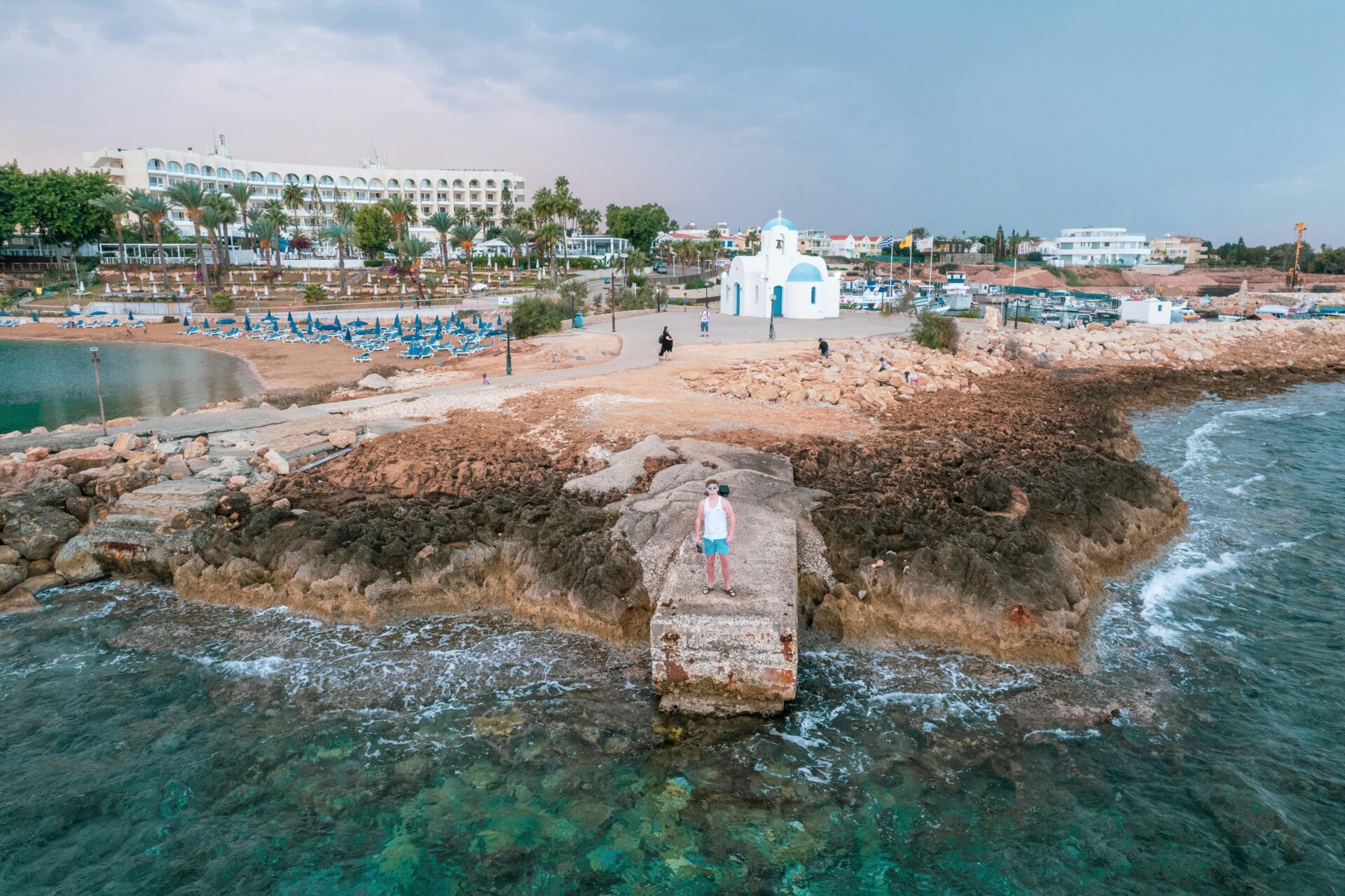
The complete guide for travellers: the Troodos Mountains and the painted churches that earned UNESCO inscription, the Akamas Peninsula wild coast most resort visitors never reach, Paphos’s Roman floor mosaics still lying where they were discovered, Nicosia’s divided capital and the last divided city in Europe, the villages above the coast where the wine culture has been operating for 6,000 years, and why Cyprus rewards the traveller who goes beyond the beach.
Reading time: 13 minutes | Last updated: 2026
Cyprus is the UK’s closest warm-water destination — 4.5 hours by direct flight, the Eastern Mediterranean in December reliably hitting 20°C, and an island that has been receiving British visitors for long enough to have built a specific infrastructure around them.
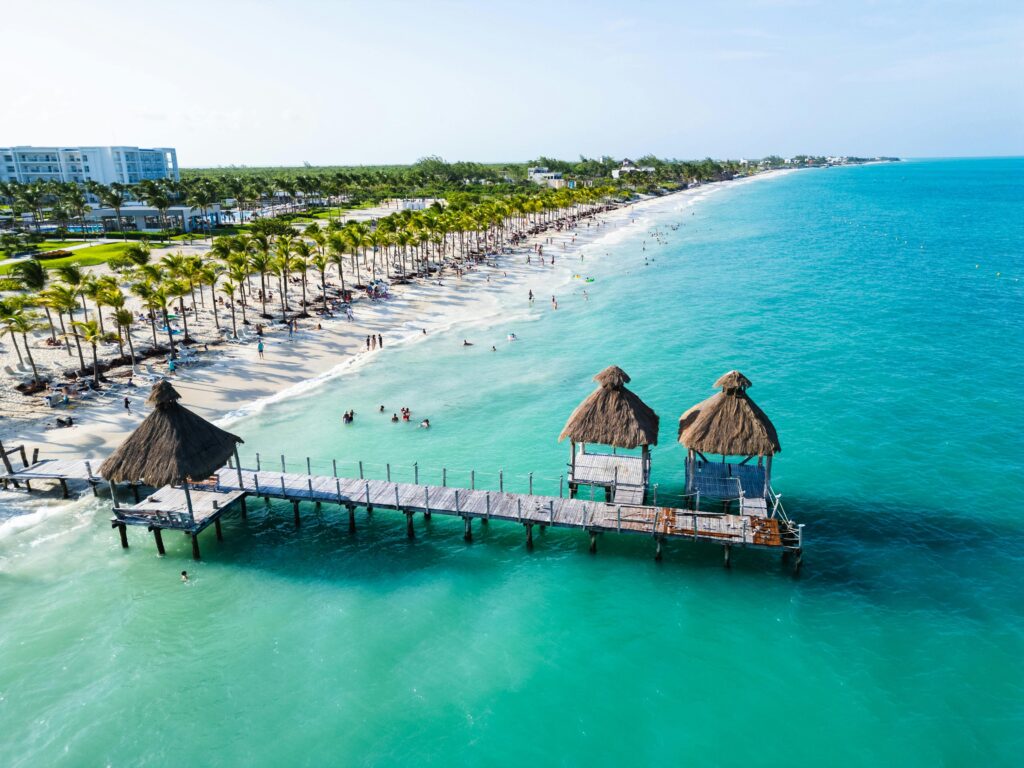
The resort infrastructure is real, comprehensive, and designed to function. Paphos, Limassol, Ayia Napa, and Protaras are genuinely good beach resorts. The accommodation is well-run, the food is accessible, the sea is warm from May through November. This version of Cyprus exists and delivers.
The other Cyprus exists simultaneously and is significantly less visited.
The Troodos Mountains rise to 1,952m in the centre of the island — the highest mountains in the Eastern Mediterranean, snow-capped in January, covered in pine and cedar forest, the slopes dotted with Byzantine painted churches that contain the most complete collection of Byzantine fresco painting in the world outside Istanbul. UNESCO inscribed ten of these churches as a World Heritage Site in 1985. The Akamas Peninsula at the western tip of the island — a national park of wild coastal landscape, sea turtle nesting beaches, and the Blue Lagoon (an extraordinarily turquoise bay accessible by boat or a 45-minute walk) — receives a fraction of the visitors of the Paphos resort zone 30km to its south.
Nicosia (Lefkosia) is the last divided capital city in Europe — a UN buffer zone running through the centre of the city, the northern part under Turkish Cypriot administration since 1974, the southern part the Republic of Cyprus capital. You can cross. You need your passport. It is the most politically specific and most historically layered 200 metres of walking available within a 5-hour flight from London.
This guide covers both Cyprusses — the one you know about and the one that makes the island genuinely worth understanding.
Quick Navigation
- The Case for Cyprus Beyond the Beach
- When to Go — The Shoulder Season Argument
- Getting There — The Easiest Mediterranean Flight
- Paphos — The Roman City Under the Ground
- The Akamas Peninsula — Wild Coast
- The Troodos Mountains — Byzantine Gold
- The Painted Churches of Troodos
- Limassol and the Wine Villages
- Nicosia — The Divided Capital
- The North — Kyrenia and Famagusta
- Hidden Cyprus — The Places Most Guides Don’t Reach
- What It Costs — Real Numbers
- Eating in Cyprus — Meze and the Long Table
- Practical Notes
- The 7-Day Itinerary
The Case for Cyprus Beyond the Beach
Cyprus has been inhabited continuously for 10,000 years. The island sits at the crossroads of three continents — Europe, Asia, and Africa — and has been successively inhabited and controlled by: Neolithic communities, the Mycenaean Greeks, the Phoenicians, the Assyrians, the Egyptians, the Persians, Alexander the Great, the Ptolemies of Egypt, the Romans, the Byzantines, the Crusaders (Richard I of England sold the island to the Knights Templar in 1191 and then bought it back three days later), the Lusignan Kingdom, the Venetians, the Ottomans, and the British Empire. Independence in 1960. Partition in 1974.
Ten thousand years of recorded inhabitation in an island the size of Norfolk.
The physical legacy: Roman floor mosaics at Paphos that are among the finest in the world. Byzantine churches whose frescoes have been dated to the 11th century. Venetian walls around Nicosia’s old city that are still intact. Crusader castles on the mountain ridges.
The cultural legacy: a wine culture that has been operating for 6,000 years (Commandaria — the oldest wine in continuous production in the world, still made in the Limassol wine villages from sun-dried grapes using essentially the same method as the ancient period). A food tradition that is Greek in character but specifically Cypriot in its ingredients — halloumi (made only in Cyprus, under EU Protected Designation of Origin since 2021), the Cyprus wild herb za’atar, the carob products that sustained the island through the 20th century.
None of this requires abandoning the beach. It requires a hire car and the willingness to drive 30 minutes in a direction that isn’t the hotel pool.
When to Go — The Shoulder Season Argument
April to June and September to November — The Ideal Windows
The strongest argument for Cyprus as a shoulder-season destination in Europe. The beach season runs reliably from May through October (the sea reaches 28°C in August). The resort experience at 30°C in late May with 60% fewer visitors than July is significantly more pleasant than the same beach at 38°C with a sunbed queue.
October on Cyprus: the sea is still warm (24-25°C), the oleanders are blooming again, the villages above Limassol are in the middle of the wine harvest, and the tourist population has dropped significantly.
December to February — Remarkable for a UK Winter
The mountain skiing and the beach simultaneously — you can ski on Troodos (limited but genuine skiing) in the morning and swim in the sea in the afternoon. The average December temperature in Paphos is 18°C. Direct flights from the UK operate year-round. Winter Cyprus is underrated.
July to August — Peak Season
Hot (38-42°C in the interior), crowded on the main beaches, fully operational everywhere. Ayia Napa at peak: European package holiday resort at maximum capacity. Protaras slightly less intense. Paphos more manageable. The Troodos Mountains in July-August are the correct Cyprus for anyone who finds the coast oppressive in heat — at 1,500m the summer temperature is 25°C.
The BGGD recommendation: May or October. Both give the sea, the mountains, the antiquities, and the wine without the midsummer density.
Getting There — The Easiest Mediterranean Flight
Multiple direct flights from most UK airports to:
- Paphos (PFO): the airport serving the west of the island — correct for the Troodos, the Akamas, and western Cyprus
- Larnaca (LCA): the main international airport — correct for Nicosia, Limassol, and eastern Cyprus
Airlines: British Airways, easyJet, Jet2, Ryanair, TUI, and others. The most competitive UK-Cyprus route in the Mediterranean — return flights available from £80-180 in shoulder season, £120-250 in peak.
Flight time: 4.5-5 hours from London.
Car hire:
Essential. Cyprus has no meaningful public transport for visiting anything outside the resort zones. The road network is good (EU standard, left-hand drive following the British system), the distances manageable (the island is 225km long), and the mountain roads to Troodos are well-maintained. Car hire from either airport: £20-35/day from major operators.
Paphos — The Roman City Under the Ground
Paphos Archaeological Park is a UNESCO World Heritage Site containing the finest Roman floor mosaics in the Eastern Mediterranean — a series of 4th-century CE Roman villas whose mosaic floors, depicting mythological scenes in extraordinary detail, were discovered in 1962 when a farmer’s plough broke through the soil and revealed a section of floor that had been buried for 1,600 years.
The House of Dionysos:
The largest and best-preserved of the villas — 14 mosaic floors covering the entrance, the reception rooms, and the private quarters. The central mosaic depicts the mythological scene of Dionysos presenting wine to humanity — the Narcissus, the Pyramus and Thisbe, and the Triumph of Dionysos panels are among the finest surviving examples of Roman narrative mosaic anywhere in the world. Entry (covering all four excavated villas): £5. Budget 2 hours.
The Tombs of the Kings:
2km north of the town — a series of underground burial chambers carved from rock during the Hellenistic and Roman periods (3rd century BC to 3rd century CE). The “kings” are a misnomer — the tombs were used by aristocrats and wealthy merchants. The carved stone pillars and chambers surrounding the burial shafts are impressive; the setting above the sea is the finest. Free with the Archaeological Park ticket.
The Paphos Lighthouse and the Byzantine Castle:
The Byzantine fort above the harbour — rebuilt by the Lusignans, captured by the Venetians, destroyed by the Venetians when the Ottomans arrived (to prevent it being used against them), restored in the Ottoman period. The structure that stands is 16th-century Ottoman; the Byzantine foundations are visible underneath. Entry: £2. The lighthouse adjacent: the view over the harbour at sunset.
The old town versus the resort:
Paphos divides into Kato Paphos (the lower town, the resort hotels, the beach, the tourist infrastructure) and Ktima (the upper town, the actual Cypriot city, the municipal market, the municipal gardens, the old houses). Most visitors stay in Kato Paphos and never go to Ktima. Drive up — the market on a Saturday morning, the coffee in the municipal garden, the specific character of a Cypriot city rather than a Cypriot resort.
The Akamas Peninsula — Wild Coast
The Akamas Peninsula is the westernmost point of Cyprus — a national park of juniper forest, limestone coastal cliffs, and the sea turtle nesting beaches that have been protected since the 1990s. The peninsula has no hotels and minimal infrastructure; the access is by 4WD track, boat from Latchi harbour, or foot.
The Blue Lagoon (Lagoudera ton Avgorou):
A bay on the western coast of the Akamas, accessible by boat from Latchi (20 minutes, boat trips from £10/person return) or by a 45-minute walk on the Aphrodite Trail from the Baths of Aphrodite. The bay: turquoise water, limestone cliffs, the sea floor visible at 8 metres through the clarity. No development, no infrastructure — the boat trips drop passengers for 2 hours and return.
The Baths of Aphrodite:
A natural grotto at the northeastern tip of the Akamas — a fig tree pool where Aphrodite is said to have bathed (the specific association is medieval rather than ancient, but the setting, with the pool visible through the overhanging branches, is atmospheric regardless of the mythology). Free access. The starting point for the Aphrodite Trail.
The Sea Turtle Beaches:
The Akamas beaches (Lara Bay in particular) are nesting beaches for green and loggerhead sea turtles from June through August. The Cyprus Wildlife Society manages the nesting sites; night visits with a warden are available during nesting and hatching season. Contact the society directly for current access arrangements.
The Troodos Mountains — Byzantine Gold
The Troodos massif rises to 1,952m at Mount Olympus — the highest point in Cyprus. The landscape changes from Mediterranean coastal vegetation to pine forest, then cedar forest at altitude. In January, the slopes around Olympus carry enough snow for basic skiing (Troodos ski centre, the southernmost ski resort in Europe by some definitions).
The villages of the Troodos:
Each valley of the Troodos has its specific character: Kakopetria (in the Solea valley, a village of old stone houses along the Kargotis stream), Omodos (in the wine region, the monastery of the Holy Cross at the centre of the village, the cobbled square where the traditional wine press is preserved), Lefkara (on the southern slopes, famous for the specific lacework — Lefkaritika — that was purchased by Leonardo da Vinci in 1481, reportedly to present to the Milan Cathedral).
The Troodos drives: the road from Platres to the summit, the road through the Marathasa valley, the road through the Pitsilia villages — all give the experience of the mountain interior in contrast to the coast below.
The Painted Churches of Troodos
Ten Byzantine painted churches in the Troodos were inscribed on the UNESCO World Heritage List in 1985 — and four have been added to the extended list since, making it the world’s most concentrated collection of Byzantine painted churches outside Istanbul’s Hagia Sophia.
The context: the Byzantine tradition of covering church interiors completely in painted frescoes — the entire theological programme of the Church expressed in images for a largely illiterate congregation — continued in Cyprus after the Byzantine Empire ended in Constantinople in 1453. The isolation of the mountain villages meant the painting tradition survived, and the church interiors remained largely intact through the Ottoman period (the churches are Eastern Orthodox and were therefore tolerated).
Asinou Church (Church of the Panagia Phorbiotissa):
The finest painted interior of the ten UNESCO churches — a small 12th-century church whose entire interior (apse, barrel vault, narthex, dome) is covered in frescoes from the 12th through 16th centuries. The painting from different periods is visually distinguishable — the flat, stylised Byzantine manner of the earliest work versus the increasingly naturalistic style of the later periods. The priest who keeps the key lives in Nikitari village, 4km from the church — ask any local for the contact. Entry: voluntary donation.
Kykkos Monastery:
The largest and wealthiest monastery on Cyprus — founded in the 11th century, rebuilt after multiple fires, and now housing the monastery’s most significant treasure: the icon of the Virgin Mary attributed to St. Luke (kept in a silver-and-gold case and only revealed three times a year). Kykkos also contains the tomb of Archbishop Makarios III, the first president of independent Cyprus, on a hill above the monastery. The monastery is the wealthiest institution in Cyprus and the buildings reflect this — less intimate than the smaller painted churches but historically significant. Entry: free.
Limassol and the Wine Villages
Limassol (Lemesos) is Cyprus’s second city — a working port and commercial city that has developed a genuine restaurant and nightlife scene without the full resort transformation of Paphos. The Limassol Castle (Venetian-medieval, the room where Richard I of England married Berengaria of Navarre in 1191, now a Byzantine museum, entry £3), the old carob warehouses of the former port converted to restaurants and bars.
The wine villages above Limassol — Omodos, Kyperounta, Pano Kividhes, Lofou — are the heart of the Commandaria wine region. The Commandaria wine (from the word “commanderie” — the Crusader Knights’ administrative territory) has been made on these slopes from sun-dried Mavro and Xynisteri grapes since antiquity. A bottle of aged Commandaria (the KEO, LOEL, or Sodap brands — the traditional producers): £8-15 at the village winery.
The village wineries of the modern Cyprus wine revival — Zambartas, Vlassides, Tsiakkas — produce wines of genuinely international quality from indigenous grape varieties. Wine tourism in the Troodos foothills is one of the most developed agritourism sectors in Cyprus; tastings at small family wineries: £5-10/person.
Nicosia — The Divided Capital
Nicosia (Lefkosia in Greek, Lefkoşa in Turkish) is the last divided capital city in Europe. The United Nations Buffer Zone — the “Green Line” — runs through the centre of the city. On the Greek Cypriot side: the Republic of Cyprus. On the Turkish Cypriot side: the Turkish Republic of Northern Cyprus (recognised internationally only by Turkey).
You can cross. The Ledra Street crossing is the most central — open to visitors with a passport or national ID from most countries (UK passport: full access in both directions).
The crossing:
Present your passport at the Greek Cypriot checkpoint. Walk 200 metres through the buffer zone (the vacant, slightly eerie buildings of no-man’s land visible on both sides). Present your passport at the Turkish Cypriot checkpoint. You are now in northern Nicosia.
The two sides of the city: the southern old city has the Venetian walls (intact, 11km of 16th-century walls forming a perfect circle around the old city), the Cyprus Museum (the finest collection of Cypriot antiquities, covering 7,000 years of continuous civilisation), and the Famagusta Gate (the finest of the three Venetian gates). The northern old city has the Selimiye Mosque (the former Cathedral of Saint Sophia, built 1208-1326 by the Lusignan dynasty, converted to a mosque after the Ottoman conquest of 1570, the Gothic vaulting and the minaret coexisting in the most visible architectural expression of Cyprus’s layered history).
The political context:
The division of Cyprus in 1974 followed a Greek-sponsored coup (backed by the military junta then governing Greece) seeking union with Greece, and a subsequent Turkish military intervention. The resulting division displaced approximately 200,000 people — Greek Cypriots from the north, Turkish Cypriots from the south. The political situation is the business of governments and international organisations; the visitor’s responsibility is to understand it before crossing rather than arriving uninformed.
The North — Kyrenia and Famagusta
The north of Cyprus (under Turkish Cypriot administration) contains some of the most significant archaeological sites on the island — Famagusta’s old city, the Kyrenia Castle and harbour, the Saint Hilarion Castle in the mountains above the Kyrenia coast.
Kyrenia (Girne):
A horseshoe harbour below a Byzantine-Lusignan-Venetian-Ottoman castle — the castle covers all four periods of its history in its structure. The Kyrenia Ship Museum inside the castle: a 4th-century BC Greek merchant vessel, the oldest intact seafaring ship ever recovered, preserved in the castle’s humidity-controlled space.
Famagusta (Gazimağusa):
The old city enclosed by Venetian walls (the finest surviving Venetian walls in the Eastern Mediterranean) — the ruins of the Cathedral of Saint Nicholas (Lala Mustafa Pasha Mosque since 1571), a dozen ruined Gothic churches, and the Othello’s Tower (the fortress of the Venetian governor that Shakespeare used as the setting for Othello — historically connected to a Venetian commander named Christoforo Moro).
Accessing the north requires the border crossing — the Ledra Street crossing in Nicosia, or the Agios Dometios crossing by car.
Hidden Cyprus — The Places Most Guides Don’t Reach
Choirokitia Neolithic Settlement:
A UNESCO World Heritage Site on the south slopes of the Troodos — a Neolithic settlement from 7000 BC, the round stone houses partially reconstructed to give a sense of the original settlement. One of the oldest human settlements in Cyprus and the evidence of 10,000 years of continuous habitation. Entry: £2. Almost no visitors despite the UNESCO designation.
Karpaz Peninsula (North Cyprus):
The “panhandle” of Cyprus — the long northeastern finger of the island, largely agricultural, with the finest wild beaches on Cyprus (Golden Beach/Nangomi, accessible by 4WD track) and a small population of wild donkeys descended from working animals abandoned after 1974. The Apostolos Andreas Monastery at the tip of the peninsula (recently restored) is the most sacred site for Greek Cypriots in the north.
The Cedar Valley:
In the western Troodos, the Cedar Valley contains the last significant grove of Cedrus brevifolia — the Cyprus cedar, an endemic species found nowhere else in the world. The valley floor is managed as a nature reserve; the Mouflon (Cyprus wild sheep, another endemic species) is occasionally visible. A place of extraordinary quietness.
Lefkara:
A village on the southern Troodos slopes famous for Lefkaritika lace — handmade silver and gold thread embroidery that Leonardo da Vinci purchased in 1481. The tradition continues, though the current practitioners are largely elderly women and the number of active makers is declining. A genuine traditional craft in a beautiful hilltop village: visit while it still exists.
What It Costs — Real Numbers
Cyprus is mid-range for the Mediterranean — more expensive than Turkey, Albania, or North Macedonia, broadly comparable to Portugal, cheaper than Greece’s most popular islands.
Daily Budgets
Budget (£40-55/day)
- Accommodation: self-catering apartment or budget guesthouse (£20-35/night)
- Food: local tavernas, market lunch, meze sharing (£12-18/day)
- Transport: car hire essential (amortise at £7-10/day per person for two people sharing)
Mid-range (£65-90/day)
- Accommodation: mid-range hotel or boutique guesthouse (£40-60/night)
- Food: restaurant dinners, wine with meals (£20-30/day)
- Full car hire flexibility
What 7 Days in Cyprus Actually Costs from the UK
| Category | Budget | Mid-Range |
|---|---|---|
| Return flights (direct, UK to Paphos/Larnaca) | £80–180 | £100–220 |
| Car hire 7 days | £140–210 | £175–250 |
| 7 nights accommodation | £175–280 | £350–490 |
| Food (7 days) | £90–135 | £150–225 |
| Archaeological sites, museums | £20–30 | £20–30 |
| Total | £505–835 | £795–1,215 |
Eating in Cyprus — Meze and the Long Table
Cypriot food is Greek in its broad parameters and specifically Cypriot in its ingredients and some of its preparations. The meze tradition — a series of small dishes shared across the table, the meal expanding over 2-3 hours — is the definitive Cypriot dining experience.
Halloumi:
The cheese that defined Cyprus internationally and whose Protected Designation of Origin status was confirmed by the EU in 2021. Made from a mixture of goat and sheep milk, heated until it holds its shape, then brined — the resulting cheese can be grilled or fried without melting. The fresh version (in villages, from the farms) has a different character from the exported version: softer, milkier, without the preserving salt. Grilled halloumi at a meze table in a Troodos village: the reference. £3-5 as a starter.
Souvla:
Large pieces of pork (or lamb) on a long spit, cooked slowly over charcoal — the Cypriot version of a rotisserie that is different from the Greek souvlaki (small skewers) in scale and preparation. Souvla is a Sunday and festival food — the entire process of preparing and cooking takes 4-6 hours. The outdoor restaurants of the Troodos villages are the reference on a Sunday afternoon.
Meze (the full sequence):
A traditional Cypriot meze at a village taverna: hummus, tahini, tzatziki, taramosalata, olives, village bread — then grilled halloumi, pickled vegetables, grilled vegetables — then keftedes (fried meatballs), sheftalia (pork and herb sausage wrapped in caul fat), loukaniko (fresh village sausage), grilled chicken — then the main souvla or grilled fish — then fruit and a shot of zivania (the Cypriot grape spirit).
This is a 3-hour meal for a large table. The cost at a traditional taverna in the Troodos: £15-20/person for the full sequence.
Commandaria:
The oldest wine in continuous production in the world (a claim supported by the International Organisation of Vine and Wine). Made from sun-dried Mavro (red) and Xynisteri (white) grapes in the villages of the Commandaria region above Limassol, the wine ferments slowly and then ages in barrel for years. The result: a sweet, amber wine of extraordinary complexity, with flavours of dried fig, caramel, and spice.
Commandaria by the glass at a wine village restaurant: £2-3. A bottle of aged KEO or LOEL Commandaria to take home: £8-15.
Practical Notes
Visa: No visa required for UK passport holders (Cyprus is an EU member state). UK passport valid for travel. Note: the Republic of Cyprus is the recognised government; visiting northern Cyprus through the north (via Turkey) may cause complications with the Republic of Cyprus. Crossing the Green Line at Nicosia from the south is the standard and unproblematic approach.
Getting there: Direct flights from most UK airports to Paphos (PFO) and Larnaca (LCA). easyJet, Ryanair, Jet2, British Airways, TUI. Return flights: £80-250 depending on season.
Currency: Euro (Republic of Cyprus). ATMs throughout the island. Turkish Lira in northern Cyprus; Euros also accepted there at exchange rates.
Driving: Left-hand drive (British inheritance — Cyprus was a British colony until 1960). The road network is good. The mountain roads to Troodos are well-maintained. Speed limits are enforced; seat belts required.
Language: Greek (Republic of Cyprus). Turkish (northern Cyprus). English is widely spoken — Cyprus was a British colony and English remains a functional second language for most Cypriots under 60.
The 7-Day Itinerary
Day 1: Arrive Paphos Land, car hire. Afternoon: Paphos Archaeological Park (mosaics — close at 7pm). Evening: Kato Paphos harbour.
Day 2: Akamas Peninsula Day trip by 4WD or boat from Latchi. Blue Lagoon by boat (depart Latchi 10am). Baths of Aphrodite walk. Return Paphos.
Day 3: Paphos → Troodos Mountain Villages Drive via Omodos village (wine tasting, monastery). Continue to accommodation in the Troodos (Platres or Kakopetria).
Day 4: Painted Churches Asinou Church (require key from Nikitari village). Kykkos Monastery. Afternoon: Troodos summit.
Day 5: Troodos → Limassol → Nicosia Drive through the wine villages. Limassol castle (1 hour). Continue to Nicosia.
Day 6: Nicosia Ledra Street crossing into the north. Selimiye Mosque. Return to south. Cyprus Museum (afternoon). Venetian walls walk at sunset.
Day 7: Nicosia → Larnaca or return Paphos Early morning: any remaining Nicosia sites. Drive to departure airport. Flight home.
Final Thought
I was in the Asinou Church in the Troodos Mountains at 9am on a May morning. The priest had driven from Nikitari to open it for me — 4km of mountain road for one visitor. He unlocked the wooden door, switched on the dim interior lights, and stood to one side.
The paintings covered every surface. The 12th-century Virgin in the apse, the barrel vault scenes from the life of Christ, the saints in the lower register — all painted before anyone now living was born, in a church in a mountain village in Cyprus where the population had never exceeded a few hundred people.
“How long can I stay?” I asked.
He looked surprised. “As long as you want,” he said. “I’m in no hurry.”
This is the Cyprus that most visitors never find — not because it’s inaccessible but because the drive from the resort to the mountain church requires a hire car and an hour of intent. The intent is worth it.
The priest waited outside. The saints on the walls were painted centuries ago by someone who never knew a single person who would eventually read about them in a travel guide downloaded from an Instagram link.
Some things are simply themselves. The Troodos churches are that. Go and see them.
Question about Cyprus this guide doesn’t cover? Drop it in the comments.