
The complete guide for UK travellers: the $1,500 gorilla permit explained and why it’s worth every pound, the Kigali Genocide Memorial and why you attend it, chimpanzees in the oldest rainforest in Africa, Lake Kivu at dusk, the tea plantations of the southern highlands, and why Rwanda is the most complete East African experience available in one country.
Reading time: 14 minutes | Last updated: 2026
There are 1,063 mountain gorillas left on Earth.
Rwanda has roughly 340 of them — a third of the entire remaining population — living in the Volcanoes National Park in the northwest of the country, in the bamboo forests of the Virunga volcano range. In 1981, the total population was 254. The growth from 254 to 1,063 is one of the most significant conservation successes in the history of wildlife management, and the primary driver of that success is the mountain gorilla permit system that Rwanda (and Uganda and the DRC) established and has maintained since the 1990s.
The permit currently costs $1,500. It gives you one hour with a habituated gorilla family. Sixty minutes.
The $1,500 goes directly to gorilla conservation funding, anti-poaching operations, and the communities surrounding the national park — the same communities that previously lost crops and livestock to gorilla encroachment, and that now have an economic stake in the gorillas’ survival. Without the permit system and its funding model, the most credible conservation estimate is that mountain gorillas would be extinct by now. With it, the population has grown by more than 400% in 40 years.
This is not a justification for the price. It is the explanation for why the price is what it is and why it functions. The permit is not a luxury upcharge. It is the mechanism of a conservation system that has worked when almost nothing else in African conservation has worked as clearly.
If you can afford to come to Rwanda, you should. The permit is the purpose.
Quick Navigation
- The Case for Rwanda — More Than a Gorilla Trip
- When to Go — The Dry Seasons and the Gorilla Windows
- Getting There — Kigali as a Hub
- Kigali — Africa’s Most Liveable Capital
- The Kigali Genocide Memorial — Why You Go
- The Gorilla Permit — Everything You Need to Know
- Volcanoes National Park — The Trek in Detail
- The Golden Monkey Trek
- Nyungwe Forest — Chimpanzees and the Canopy Walk
- Lake Kivu — The Rift Valley Lake
- Akagera National Park — The Savannah Circuit
- The Tea Plantations — Driving the Southern Highlands
- The Rwanda That Most Guides Don’t Cover
- What It Costs — The Honest Full Picture
- Eating in Rwanda — Rwandan Food and the Kigali Restaurant Scene
- Practical Notes
- The 8-Day Itinerary
The Case for Rwanda — More Than a Gorilla Trip
Most people who plan a Rwanda trip do it specifically for the gorillas. Most people who return do it for the rest of the country.
The rest of the country is considerable.
Rwanda is the size of Wales. In that space: the Virunga volcanoes in the northwest (gorillas, golden monkeys, the Dian Fossey legacy), the Nyungwe Forest in the southwest (the oldest montane rainforest in Africa, chimpanzee trekking, a canopy walkway 70 metres above the forest floor), Lake Kivu on the western border (the fourth-largest lake in Africa, methane bubbling up from the depths, colonial beach towns and fishing villages on the shore), Akagera National Park in the east (savannah, the Big Five recently restored — Rwanda reintroduced lions in 2015 and black rhino in 2017), and Kigali in the centre (consistently rated the cleanest and safest city in Africa, a restaurant scene that should not exist in a country of this size, and the Kigali Genocide Memorial).
Rwanda is also the country that faced one of the worst crimes of the 20th century — the 1994 genocide in which approximately 800,000 Tutsi and moderate Hutu people were killed in 100 days — and rebuilt itself with a focus, speed, and completeness that has no clear parallel in post-conflict development. The plastic bag ban came in 2008. The motorcycle helmet law in 2009. The reforestation programme that has increased forest cover from 20% to 30% since 2000. The gender parity in government (Rwanda has the highest percentage of women in any national parliament in the world — 61%). These are not separate from the gorilla trip. They are part of what Rwanda is.
When to Go — The Dry Seasons and the Gorilla Windows
Rwanda’s two dry seasons are the primary travel windows.
June to September — The Long Dry Season
The main tourist season. Minimal rain. The mountain gorilla habitat in Volcanoes National Park is accessible year-round but the long dry season makes the trek more comfortable — drier trails, clearer skies, less mud on the volcanic slopes. This is also the best season for Akagera (the savannah is drier and wildlife concentrates around water sources).
Peak season means the gorilla permits (always scarce) are booked furthest in advance. Plan 3-6 months ahead for peak season July-August permits.
December to February — The Short Dry Season
A shorter window, less crowded than June-September. The gorilla habitat is accessible. The tea plantations in the south are at their most vivid green from the preceding rains. Prices for accommodation are somewhat lower than peak season.
March to May and October to November — The Rainy Seasons
Heavy rain, particularly in the long rainy season (March-May). Gorilla trekking is muddier and harder in the rain but the gorillas are present year-round. Permits are easier to obtain on shorter notice. The Nyungwe Forest is most dramatically atmospheric in the rains — the forest canopy steaming, waterfalls at maximum volume.
The rainy season version of Rwanda is genuinely different and not necessarily worse — just muddier and more demanding.
The BGGD recommendation: July or August for peak experience and maximum gorilla sighting probability, accepting the higher permit competition. December for a quieter version with the same experiences. If combining with Uganda (Bwindi Impenetrable Forest gorillas), October-November works for both countries’ shoulder seasons.
Getting There — Kigali as a Hub
Kigali International Airport (KGL) is the primary international gateway for Rwanda. Direct or near-direct connections from Europe:
Brussels Airlines: Direct from Brussels (with brief stops, not layovers). Connection from London to Brussels: 1 hour. Total journey: approximately 9 hours.
KLM: Via Amsterdam. Total journey: approximately 11 hours.
Kenya Airways: Via Nairobi. Total journey: approximately 11-12 hours.
Ethiopian Airlines: Via Addis Ababa. Total journey: approximately 12 hours.
Qatar Airways: Via Doha. Total journey: approximately 11 hours.
Return flights from the UK: £550-800 booked 8-12 weeks ahead. July-August peak season may run £650-900. The Brussels Airlines routing is typically the most direct and most convenient from the UK.
Kigali as an East Africa hub:
Kigali’s central position makes it an excellent hub for a broader East Africa circuit. RwandAir (Rwanda’s national carrier, consistently rated among Africa’s best) connects to: Nairobi, Kampala (Uganda), Dar es Salaam, Zanzibar, Bujumbura, Johannesburg, and Kinshasa. The one-hour Kigali-Entebbe (Kampala) connection is the basis for the Rwanda-Uganda gorilla double circuit that many serious wildlife travellers plan.
Kigali — Africa’s Most Liveable Capital
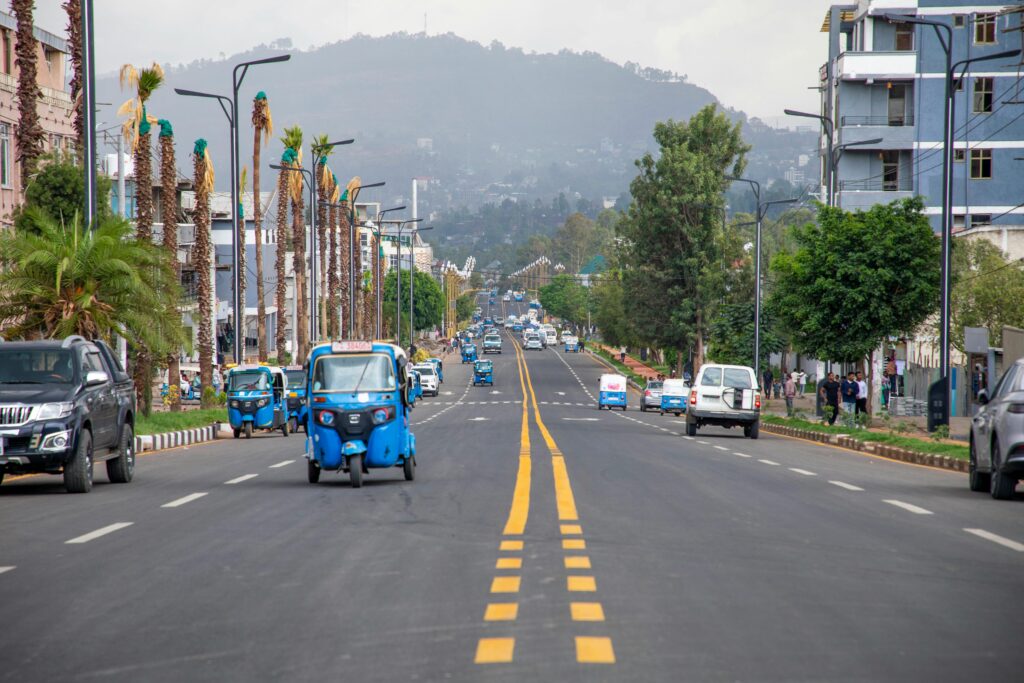
Kigali has been voted the cleanest and safest city in Africa for multiple consecutive years. The streets are clean to a degree that requires some recalibration on arrival — Kigali’s urban cleanliness is the result of a national umuganda (community service day) held on the last Saturday of every month, where all citizens participate in neighbourhood cleaning and infrastructure maintenance. The plastic bag ban has been in effect since 2008. The city functions, visually and practically, differently from every other African capital.
The city spreads across several hills (Rwanda is called the Land of a Thousand Hills — this is visible everywhere) and the best orientation is on foot or by moto-taxi (motorcycle taxi, ubiquitous, cheap, helmets now legally required for passengers — this is enforced).
Kimironko Market:
The largest market in Kigali — a working market for the city’s residents. Produce, fabrics, clothing, electronics, household goods. The food vendors in the rear section sell freshly made brochettes (skewered grilled meat), ugali (maize porridge), and fresh juice. No tourist pressure, reasonable prices, the most authentic market experience available in Kigali. Go in the morning.
The Inema Arts Centre:
A contemporary arts centre founded by brothers Emmanuel and Innocent Nkurunziza in 2012, showcasing work from Rwandan and East African artists. The gallery represents some of the most significant contemporary African art being produced. Entry: free. One of the finest contemporary galleries in East Africa, in a country whose arts scene receives less international attention than South Africa or Nigeria despite being genuinely exceptional.
The Kigali Convention Centre:
An architectural landmark — a dome of copper and glass designed to resemble the traditional Rwandan woven basket (agaseke), now the most recognisable building on the Kigali skyline. Worth seeing from the exterior; worth visiting if you’re there during an open-access event.
The Mémorial de Gisozi:
The Kigali Genocide Memorial — see dedicated section below.
The Kigali Restaurant Scene:
Kigali has a restaurant scene that is genuinely disproportionate to its size — the result of a combination of diaspora return, international development community, and a government actively developing the hospitality sector. The specific concentration of quality:
Shokola Trail: Rwandan tasting menu in a garden setting — some of the finest Rwandan cooking available in Kigali, presented with the care that makes it comprehensible rather than familiar. £15-25/person.
Repub Lounge: Rooftop bar with city views, excellent cocktails, and a menu of Rwandan and international food that draws the Kigali professional class for weekend evenings. Sunset from the terrace with the hills spread below.
Bourbon Coffee: Rwandan single-origin specialty coffee, well-presented, multiple locations. Rwanda produces some of the finest arabica in the world — the highland coffee from the Kivu region and the Nyamasheke area has won international competitions. Drinking it in Kigali, in the country where it’s grown, is one of the smaller pleasures that accumulates into what makes Rwanda specifically satisfying.
The Kigali Genocide Memorial — Why You Go
The Kigali Genocide Memorial (Gisozi Memorial) is the largest genocide memorial in Rwanda and the burial site of 250,000 victims. It is 10 minutes from central Kigali by moto-taxi.
The genocide began on April 7, 1994, when a plane carrying President Habyarimana was shot down over Kigali. In the 100 days that followed, approximately 800,000 people — primarily Tutsi and moderate Hutu — were killed. The Rwandan Patriotic Front (RPF) ended the genocide in July 1994 by taking control of the country.
The memorial has three sections:
The gardens and outdoor memorial: the memorial terraces covering the mass graves of 250,000 victims. The scale — the gardens extending across the hillside, each section marking a different burial — is the first register of what the numbers represent.
The permanent exhibition: a museum covering the history of Rwanda, the colonial period (Belgian colonisation and the introduction of the Hutu-Tutsi identity card system), the road to genocide, and the genocide itself. The exhibition is comprehensive, unflinching, and carefully designed to give context without diminishing impact. The survivor testimonies embedded throughout are the most affecting element.
The children’s memorial: photographs and brief biographies of children who were killed. The photographs — of children who existed and were murdered — are the hardest section of the memorial for most visitors.
Allow 2-3 hours minimum. Do not rush it. The experience cannot be prepared for fully in advance.
Why the memorial section exists in this guide:
The same reason the Killing Fields section existed in the Cambodia guide. Rwanda today — its cleanliness, its safety, its economic growth, its gorillas and its tea — is legible in full only in the context of what happened in 1994. The 30-year reconstruction of a country after such a crime is the background against which everything else here should be understood. The gorilla permit goes to conservation and community. The plastic bag ban is about environmental governance. The gender parity in parliament came from a post-genocide reconstruction that had to rebuild every institution from scratch and made a different choice about who should hold power.
Go to the memorial. Then go see the gorillas. Both are Rwanda, inseparably.
The Gorilla Permit — Everything You Need to Know
The current permit price: $1,500 per person (verify at rwandaexperience.com or through your tour operator before booking — the price has changed periodically).
What it covers: One tracking session with a habituated gorilla family, accompanied by a park ranger and tracker. The session includes the trek to find the family (1-8 hours depending on the gorillas’ location that day) and exactly one hour in the presence of the gorilla family once found.
Booking: Permits are booked through the Rwanda Development Board (RDB) online booking system (rwandaexperience.com) or through licensed Rwanda tour operators. The RDB system opens permits 90 days in advance. Peak season permits (July-August) book out within days of becoming available. Book as early as possible.
The tour operator question:
The permit is purchased separately from the tour operator fee, but most travellers book through an operator who handles both — this simplifies the logistics significantly. A full-service gorilla trek package (permit + transport from Kigali to Volcanoes National Park + guesthouse accommodation near the park + park guide + porter) typically runs £1,750-2,000/person including the permit itself.
Independent booking is possible: buy the permit direct from RDB, arrange your own transport (3 hours from Kigali), find accommodation near the park, and take the park guide and porter assigned at the briefing. This saves £100-200 but requires more planning.
The families:
Ten gorilla families are habituated for tourism in Volcanoes National Park, each visited by one group of 8 visitors per day. Each family has a different composition and different character — some are large (30-40 individuals with multiple silverbacks), some are smaller. The family you’re assigned to is determined at the morning briefing (6am at Park HQ); you cannot choose in advance. Each family’s location changes daily as they move through the forest.
The Susa group is the largest family and contains the most individuals; Amahoro (“peace”) is reputedly the calmest. In practice, the experience of any habituated family is extraordinary — the differences are minor.
The briefing:
Every gorilla trekking day begins with a briefing at Park Headquarters in Kinigi at 7am (registration from 6am). The rangers explain the rules: no flash photography, stay 7 metres from the gorillas (in practice this is managed by the ranger and frequently closer encounters happen when the gorillas approach you — you hold still rather than retreating), no eating or drinking near the gorillas, no trekking if you’re ill (the gorillas are susceptible to human respiratory diseases). A porter is available for hire at the briefing point (£10-15 for the full day — the terrain can be challenging and a porter who takes your bag is worth every penny).
The trek:
The tracking teams locate the gorilla family before the tourist group sets out. They radio back the location. The guide leads the group through the forest toward the gorillas. The terrain varies: bamboo thicket, Hagenia woodland, open moorland at higher altitude, stinging nettles that gloves help with. The duration from trailhead to gorilla family: 1-6 hours, typically 2-3 hours. The descent is usually faster.
The hour:
When you find the family, the official one-hour clock begins. This hour is the experience that makes everything before it — the logistics, the $1,500, the pre-dawn departure from Kigali, the altitude — feel entirely proportionate.
A silverback mountain gorilla weighs 180-220kg and can reach a height of 1.7 metres when standing. He will sit 3 metres from you. He will glance at you occasionally with the specific disinterest of a creature that has made its peace with your presence. The infants will play. The juveniles will swing. The females will groom each other. A silverback may beat his chest — the sound resonates across the forest and you feel it in your chest rather than just hear it.
The one-hour clock runs regardless of what the gorillas are doing — whether they’re active, sleeping, moving. The ranger manages the group, narrates quietly. When the hour ends, you move away from the family and the ranger signals to begin the return.
Every person who has done this describes it the same way: as the most significant wildlife encounter of their lives. I have not found a meaningful exception to this description.
The Golden Monkey Trek
Also in Volcanoes National Park, at lower altitude than the gorilla families: a population of golden monkeys (Cercopithecus kandti) — a vivid orange-and-black primate found only in the Virunga volcano range.
The golden monkey permit: $100/person. A fraction of the gorilla permit.
The trek: 1-2 hours return to find the habituated troop. The monkeys move constantly through the bamboo forest, leaping between stalks, their orange fur vivid against the green. The habituation is excellent — they approach closely and move around the group with complete ease.
The golden monkey trek is the correct addition to the gorilla trip day — done the morning before or after the gorilla trek if permits allow, or as a separate day. It gives a different primate encounter at a completely different energy level: where gorillas are slow, deliberate, and deeply peaceful, the golden monkeys are constant motion, colour, and acrobatic pleasure.
Nyungwe Forest — Chimpanzees and the Canopy Walk
Nyungwe Forest National Park is in the southwestern corner of Rwanda, 230km from Kigali (5 hours by road through tea plantation highlands that are extraordinary to drive through). The forest is one of the oldest montane rainforests in Africa — an unbroken canopy covering 1,020 square kilometres of the Congo-Nile ridge.
Chimpanzee Trekking:
Three habituated chimpanzee communities in Nyungwe are available for trekking. The permit: $60/person. The trek: 1-5 hours through the forest following the tracker team’s radio updates, culminating in an hour with the chimpanzee group.
Chimpanzees are louder, faster, and more chaotic than gorillas — the encounter is thrilling in a different register. The aerial howls that carry across the forest as the group moves through the canopy. The dominant male’s displays. The mother-infant grooming visible from 10 metres.
The Canopy Walkway:
A suspension bridge system 70 metres above the forest floor — one of only a handful of accessible canopy walkways in Africa. The walkway gives access to the midstory and canopy layer, where 300 bird species and dozens of primate species live above the ground-level trails. The structural engineering required to maintain a suspended walkway at 70 metres above ground in a high-rainfall rainforest is not trivial; it’s been maintained and it works.
Entry to the canopy walk: £12. Add to the chimpanzee permit for a full Nyungwe day.
The Bird Diversity:
Nyungwe has 322 bird species including 29 Albertine Rift endemics — birds found nowhere else in the world. The forest is a significant destination for serious birders. Ruwenzori turaco, grauer’s rush warbler, handsome francolin — the list of endemics reads like a taxonomy of the extraordinary.
Lake Kivu — The Rift Valley Lake
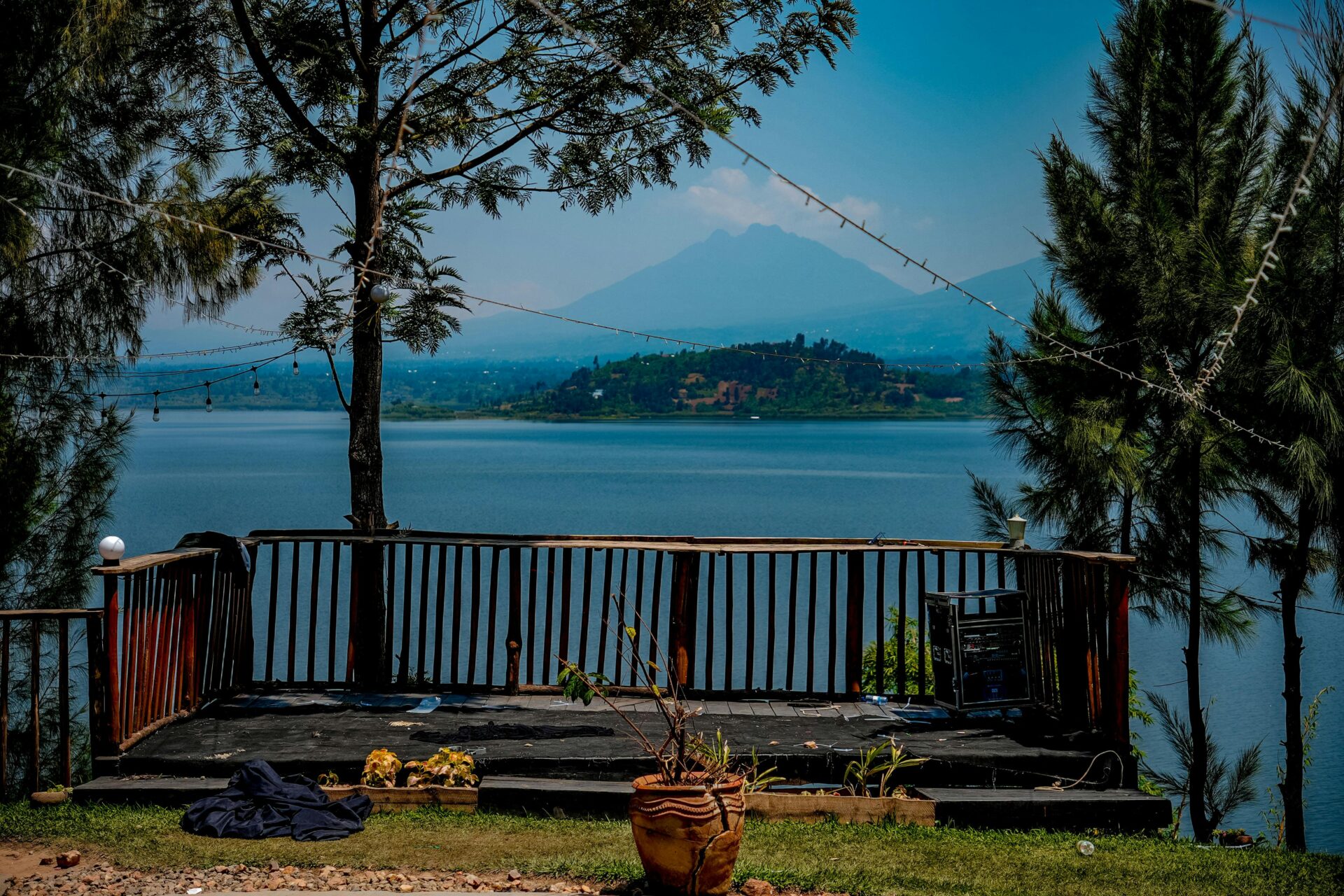
Lake Kivu sits on Rwanda’s western border with the Democratic Republic of Congo — a vast rift valley lake (2,700 square kilometres, one of the Great Lakes of Africa) at 1,460m above sea level, its depth reaching 480 metres. The lake contains enormous dissolved reserves of methane and CO2 in the deep water — a geological characteristic unique to Lake Kivu, resulting from its position above a volcanic region. The methane has been commercially extracted since 2015 to generate electricity.
The town of Gisenyi (now officially Rubavu) on the northern shore is the primary base: colonial-era hotels on the lake, fishing communities a 20-minute walk from the town centre, the Primus and Mutzig beer culture of the lakeside bars. The border with Goma (DRC) is just south of Gisenyi — visible from the lakefront.
The Lake Experience:
Kayaking: the lake surface is calm in the morning and rougher in the afternoon. Half-day kayak tours from Gisenyi: £15-20/person. The islands visible from the shore (Nkombo, Ijwi — the latter inhabited, accessible by public boat) are kayakable with favourable conditions.
Boat to Kibuye (Karongi): a 4-hour public boat service connecting the northern and southern shores of the lake — a day trip that covers the most dramatic lake scenery and costs approximately £3. The boat passes fishing villages, peninsulas of papyrus, and the Ile Bugarura (a large inhabited island midway along the lake).
The Congo Border:
The Petite Barrière crossing between Gisenyi and Goma (DRC) is open to day visitors with appropriate paperwork. Goma itself — the DRC city directly across the border — is a significant city with a complex security situation. Check current advice before crossing.
Akagera National Park — The Savannah Circuit
Akagera National Park in eastern Rwanda is a savannah ecosystem bordering Tanzania — grasslands, acacia woodland, papyrus swamps along the Akagera River, and a series of lakes. The park was devastated during and after the 1994 genocide (large sections were encroached upon by returning refugees and livestock), then comprehensively rehabilitated since 2010 in a joint Rwanda Development Board-African Parks management model.
The restoration:
Lions were reintroduced to Akagera in 2015 — the first lions in the park since the 1990s. Black rhino were reintroduced in 2017. Elephant, buffalo, hippo, zebra, and giraffe were present throughout or recovered naturally. Akagera now has the full savannah Big Five and is the only Big Five park in Rwanda.
The experience:
Self-drive is permitted in Akagera — one of the few parks in East Africa where you drive yourself rather than require a guide-driven vehicle. The game circuits in the northern and central sections are well-maintained. Morning drives (6-9am) and evening drives (3-6pm) give the best wildlife activity.
The southern lake circuit (Lakes Shakani, Rwanyakizinga, and Ihema) is the most productive for hippo and bird diversity. The northern sector (where the lions and rhino were reintroduced) requires a guide — arrange at the park gate.
Game drives with a park guide: £25-35/person/half day. The guide-only northern sector is essential for lion sightings — the animals are still relatively few and their specific location requires insider knowledge.
Akagera is a 2.5-hour drive east of Kigali, making it a logical 1-2 night addition to any Rwanda circuit that has already covered the gorillas and Kigali.
The Tea Plantations — Driving the Southern Highlands
Rwanda’s southern highlands between Kigali and Nyungwe Forest are covered in tea plantations — the deep green rows on hillsides that catch the early morning mist in a way that photographs consistently underrepresent. The drive is approximately 5 hours but the road winds through enough tea country to justify stops.
The Sorwathe Tea Plantation near Kinihira:
A working tea plantation accessible from the B2 road south of Gitarama. Factory tours are possible (£5-8, arrange in advance or at the entrance). The process: the withering, rolling, oxidation, and drying of the tea leaves, all visible in the processing facility. The tea produced here is exported primarily to the UK (much of what’s sold under generic “Kenya tea” or East African blend labels is partly Rwandan).
The specific experience worth the detour: the early morning plantation walk before the factory processes the day’s harvest. The mist burning off the rows, the pickers moving through the green, the specific quiet of a large-scale agricultural operation at dawn. Free to walk the edges of the plantation; arrange access through the plantation office.
The tea is not the only highland crop:
The B2 road south also passes pyrethrum flowers (used in insecticide production), coffee farms, and the small-scale market gardens of the highland villages. The Rwandan highlands have an agricultural density and intensity that makes the landscape feel cultivated at every level — there is no unclaimed land.
The Rwanda That Most Guides Don’t Cover
The King’s Palace Museum (Nyanza):
A reconstruction of the royal court of the Mwami (king) of Rwanda before colonisation — the traditional thatched palace, the sacred cattle enclosure, and the museum covering Rwandan royal history. 88km south of Kigali near Butare. One of the few sites that gives Rwandan pre-colonial history its full context rather than focusing exclusively on the 20th century.
Butare (Huye) and the National Museum:
The university city of southern Rwanda, containing the National Museum of Rwanda — the finest ethnographic museum in the country, covering material culture, traditional practices, and Rwandan history from prehistoric times. Entry: £4. The university campus has one of the finest libraries in East Africa. Butare was a centre of intellectual and cultural life before 1994 — the museum gives a sense of what that culture was.
The Imidugudu Villages:
After the genocide, Rwanda reorganised rural settlement into planned villages (imidugudu) as part of a reconstruction and reconciliation programme — clusters of houses rather than the scattered homesteads of the traditional pattern. Driving through rural Rwanda, the imidugudu are visible as organised village nodes in the landscape. The policy has been studied internationally as an example of post-conflict rural planning and remains controversial among development researchers. Understanding it is part of understanding Rwanda’s post-genocide approach to national rebuilding.
The Gishwati-Mukura National Park:
A newly designated national park (2015) in western Rwanda between Lake Kivu and the Virunga volcanoes — a small but ecologically significant fragment of montane forest connecting the Virunga and Nyungwe ecosystems. Chimpanzees were reintroduced in 2019. The park is not yet fully set up for tourism but is developing rapidly. Worth monitoring for a future visit.
What It Costs — The Honest Full Picture
Rwanda’s costs are unusual in one specific way: the gorilla permit is the single largest cost item on any Rwanda trip, and it is fixed at $1,500. Everything else — flights, accommodation, food, transport — is significantly cheaper than the permit.
The Permit in Context
| Activity | Permit Cost |
|---|---|
| Mountain gorilla trek (1 hour) | $1,500 (£1,185) |
| Golden monkey trek (1 hour) | $100 (£79) |
| Chimpanzee trek, Nyungwe (1 hour) | $60 (£47) |
| Canopy walk, Nyungwe | $40 (£32) |
| Akagera game drive with guide | $30 (£24) |
The gorilla permit dominates. All other permit costs are a rounding error by comparison.
Daily Budgets (Excluding Permits)
Budget (£35-50/day)
- Accommodation: guesthouse (£15-25/night)
- Food: local restaurants, moto-taxi transport (£8-14/day)
- Transport: moto-taxis in Kigali, shared minibus between cities
Mid-range (£60-80/day)
- Accommodation: mid-range hotel (£30-50/night)
- Food: quality restaurants in Kigali, lodge meals elsewhere (£15-22/day)
- Transport: private car hire or organised tours for park days
What 8 Days in Rwanda Actually Costs from the UK
| Category | Cost (Mid-Range) |
|---|---|
| Return flights (via Brussels or Amsterdam) | £600–800 |
| Rwanda e-visa | £22 |
| Mountain gorilla permit | £1,185 |
| Golden monkey permit (optional) | £79 |
| Chimpanzee trek, Nyungwe (optional) | £47 |
| 8 nights accommodation | £280–450 |
| Food (8 days) | £120–180 |
| Transport (Kigali city + national park days) | £80–130 |
| Porter (gorilla trek day, strongly recommended) | £12 |
| Total | £2,425–3,005 |
The honest framing:
Rwanda is not cheap. The gorilla permit alone makes it one of the more expensive wildlife destinations in the world per day. It is, however, among the most meaningful. The cost structure is transparent — you know where the money goes and why. The experience delivered at the end of it is genuinely without equivalent.
If the $1,500 permit puts the trip out of reach: Uganda’s Bwindi Impenetrable Forest has mountain gorilla permits at $700, giving the same experience at roughly half the Rwanda cost. The DRC’s Virunga National Park has permits at $400 (though the security situation requires more research before planning). Rwanda’s premium is partly conservation funding, partly infrastructure quality, and partly the Rwanda Development Board’s long-term positioning of the country as a premium tourism destination.
Eating in Rwanda — Rwandan Food and the Kigali Restaurant Scene
Rwandan food is built around starchy staples (ugali, sweet potato, cassava, plantain, beans) with proteins that were historically limited by the landlocked geography and have expanded significantly since the post-genocide economic recovery.
Ugali:
The East African staple — a dense porridge made from maize flour, shaped into a solid mound and served as the starch component of any meal. Eaten by tearing a piece and forming it into a small cup to scoop up sauce or stew. Available at every local restaurant. £0.50-1 as part of a full plate.
Brochettes:
Skewered grilled meat (goat, beef, or chicken) — the most universal Rwandan street food. Sold from charcoal grills at roadside stalls throughout the country. A portion of 4-5 brochettes with roasted plantain: £1.50-2.50. The goat brochette (agasafuriya) in particular is a specific pleasure at a market stall while waiting for a minibus.
Isombe:
Cassava leaves cooked with onion, tomato, and palm oil — one of the most specifically Rwandan preparations, with a depth of flavour that belies its simplicity. Available at local restaurants, often part of the buffet (self-serve tray lunch format) at roadside establishments.
Mizuzu:
Fried plantain — sliced thin or cut into chunks, fried until golden, slightly sweet and caramelised at the edges. Served as a side dish everywhere in Rwanda. One of the most satisfying cheap accompaniments to any protein dish.
Inyama y’ingurube (Grilled Pork):
Street food at evening markets and roadside stalls — pork grilled on charcoal, served with roasted sweet potato and a chilli condiment. The evening market around Kimironko in Kigali has the best concentration of pork stalls.
Rwandan Coffee:
Rwanda produces some of the finest arabica in the world — grown at altitude (1,500-2,500m) on the volcanic soils of the western and northern provinces. The Kivu coffee and the Nyamasheke single-origin are particularly prized by specialty buyers. Bourbon Coffee (chain, reliable quality) or the specialty cafes around Kiyovu and the Kimihurura neighbourhood in Kigali are the reference points. A single-origin pour-over at a Kigali specialty café: £2.50-4.
Practical Notes
Visa: E-visa on arrival available for UK passport holders. Apply online at migration.gov.rw before travel for a smoother process. Cost: $30 (approximately £24) for 30 days. The online application takes 2-3 working days; apply at least a week before travel.
Getting there: No direct flights from the UK. Best routings via Brussels (Brussels Airlines, 9 hours total), Amsterdam (KLM, 11 hours), Nairobi (Kenya Airways, 11 hours), or Addis Ababa (Ethiopian Airlines, 12 hours). Return flights: £550-800.
Currency: Rwandan Franc (RWF). £1 ≈ 1,450 RWF at time of writing. ATMs widely available in Kigali; available in larger towns elsewhere. USD is widely accepted in tourist-facing businesses and for all permit payments (gorilla, chimpanzee, canopy walk). Bring USD for permit payments and RWF for daily spending.
Getting around: Kigali: moto-taxis (motorcycle taxis, ubiquitous, required by law to provide a helmet) for short journeys (£0.60-1.50 for most city trips). Tap-tap apps (Bolt, SafeMotos) eliminate the negotiation. Between cities: shared minibuses from the various Kigali bus stages (Nyabugogo for most western and northern routes, near Kimironko for eastern routes). Comfortable, cheap (£3-7 for most inter-city routes), sometimes slow. Private driver: £40-60/day from Kigali-based tour operators — worth it for the national park days and the Nyungwe road.
Language: Kinyarwanda is the primary language; Rwandan French (a legacy of Belgian colonisation) is widely spoken, particularly in education and government. English has been an official language since 2009 and is now taught in schools — the professional generation speaks it well, the older generation varies. “Muraho” (hello), “murakoze” (thank you) — appreciated even as approximations.
Health: Yellow fever vaccination required for entry (carry the yellow card). Malaria prophylaxis recommended — Rwanda is malaria-endemic though at lower risk in Kigali (at altitude) than in Akagera (lower, near the Tanzanian border). Consult a travel clinic. Stomach bugs less common than in some SE Asian destinations given Kigali’s water infrastructure; bottled water is still the sensible choice.
Safety: Rwanda is consistently the safest country in East Africa. Violent crime against tourists is extremely rare. The moto-taxi helmets are now enforced. The only specific note: the DRC border areas in the far west (Goma-adjacent) require the usual check of current FCO advice.
The 8-Day Itinerary
This route covers the gorillas, Kigali (including the genocide memorial), Nyungwe Forest, and Lake Kivu — the essential Rwanda circuit.
Day 1: Arrive Kigali
Land at Kigali International. Hotel near the city centre (Kiyovu or Kimihurura neighbourhoods). Rest. Evening walk in the city. Dinner at Repub Lounge or Shokola.
Day 2: Kigali
Morning: Kigali Genocide Memorial (2-3 hours). Allow time to absorb it. Afternoon: Inema Arts Centre. Kimironko Market in the late afternoon. Bourbon Coffee for the Rwanda single origin. Evening: Kigali nightlife if inclined (the Kimihurura area has the most concentrated bar and restaurant scene).
Day 3: Drive to Volcanoes National Park
3 hours northwest from Kigali to Kinigi (the gateway to Volcanoes NP). Check into accommodation near the park. Afternoon: park briefing, gear preparation. Early dinner and early sleep — the briefing is at 6am.
Day 4: Gorilla Trek
5am: wake up. 6am: registration at Park Headquarters. 7am: group assignments and departure with guides. The trek: 2-4 hours to the family, 1 hour with the gorillas, 1-2 hours return. Afternoon: rest. Evening: the emotional processing that this day consistently requires.
Day 5: Golden Monkey Trek + Drive toward Nyungwe
Morning: golden monkey trek (permit booked in advance, departs same briefing system as gorillas at 7am, returns by 11am). Drive south from Kinigi toward Nyungwe (4 hours). Stop at Gisenyi/Lake Kivu for 1 hour — the first views of the lake. Continue to Nyungwe guesthouse area.
Day 6: Nyungwe Forest
Morning: chimpanzee trek (6am briefing, 1-6 hours depending on location). Afternoon: canopy walkway (if permit arranged the previous evening at the park gate). The forest at late afternoon.
Day 7: Lake Kivu
Drive from Nyungwe to Gisenyi (2 hours). Afternoon: kayak on the lake (arrange through accommodation). Sunset at the lakeside bars. Stay in Gisenyi.
Day 8: Lake Kivu → Kigali → Departure
Morning: boat on the lake or bicycle along the lakeshore. Drive back to Kigali (3 hours). Afternoon: any Kigali errands — final coffee, souvenirs from Caplaki craft market. Evening departure flight.
Final Thought
I was at 2 metres from a silverback in Volcanoes National Park. He was sitting in a nest of crushed vegetation, eating celery stalks, entirely unbothered. His hands were the size of dinner plates. He glanced at me once — the specific glance of a creature that has assessed the threat level and found it negligible — and returned to the celery.
The ranger had told me in the briefing: if a silverback charges, do not run. Stand still, look down, make yourself small. The charge is almost always a bluff. I understood this intellectually at the briefing. Standing two metres from the 200kg silverback made it considerably more concrete.
He didn’t charge. He ate celery for the better part of our hour. A juvenile played with his mother 5 metres to the left. Another silverback, younger, sat on the slope above us, watching the group with a mild interest that occasionally extended to us.
The hour ended. The ranger signalled. We walked back through the bamboo.
There is no wildlife encounter I have had that approaches this one. Not the lions at Etosha, not the whale at Mirissa, not the thresher shark at Malapascua. Those are animals in their element, witnessed.
The gorilla is something else. A creature at 98.3% genetic similarity to a human being, sitting in its own forest, making its own decisions about whether to pay attention to you.
It decided not to.
That is the whole point.
Question about Rwanda this guide doesn’t cover? Drop it in the comments.