
The complete guide for UK travellers: Lisbon done properly, Porto done better, the Douro Valley at harvest season, the Alentejo interior most people drive past, Comporta before the prices catch up, the Algarve sea caves by kayak, and why Portugal gets called underrated every year and somehow remains underrated.
Reading time: 17 minutes | Last updated: 2026
Portugal is the most visited country in Europe per square kilometre and one of the most consistently underestimated.
The underestimation runs like this: you’ve been to Lisbon. You’ve done the trams, the pastéis de nata, the Alfama, the viewpoints. You’ve been to the Algarve — the sea stacks at Ponta da Piedade, the beach at Praia da Marinha. You think you know Portugal.
You’ve seen perhaps 15% of it.
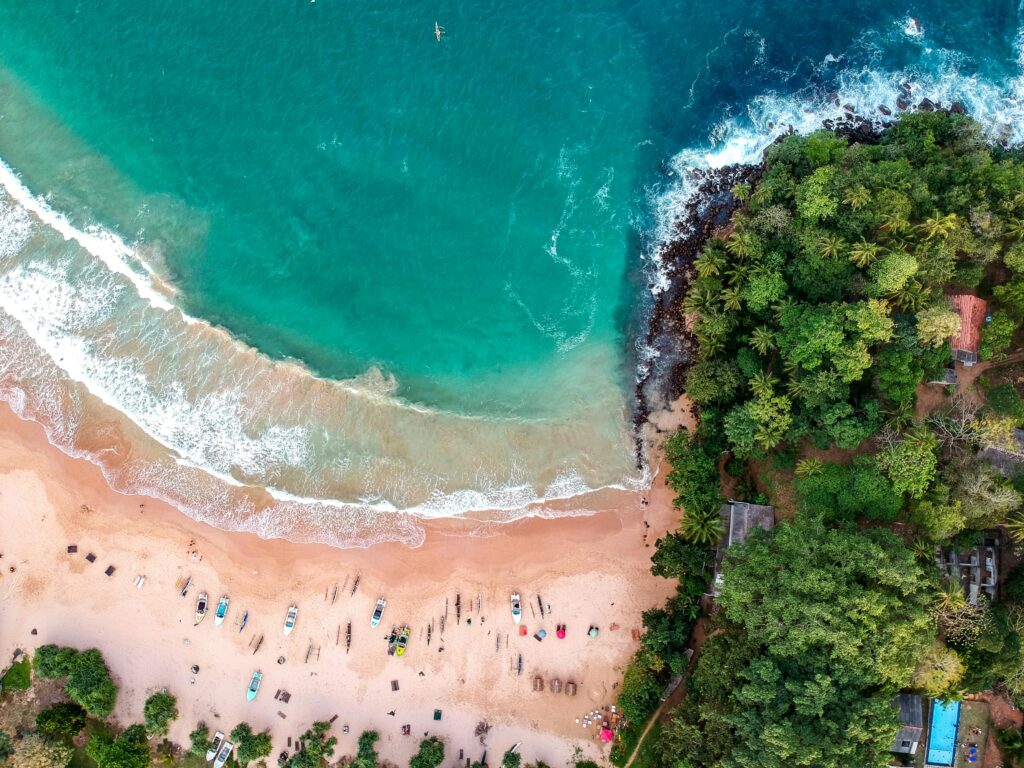
The Douro Valley in late September, when the whole river valley smells of fermenting grapes and the terraced vineyards are so steep the harvest is still done by hand because no machine can manage the gradient. The Alentejo plains in spring, golden with wildflowers, cork oaks stripped to their red inner bark, a Roman temple standing in the middle of a medieval town where almost nobody goes. Comporta — pine forests, rice paddies, near-empty Atlantic beaches an hour south of Lisbon, priced like somewhere nobody’s discovered yet. Sintra on a foggy Tuesday morning in October, when the Pena Palace is lit orange against the cloud forest and there’s no queue for anything.
This guide is for the Portugal that exists in the other 85%. It also covers the 15% properly — because Lisbon and Porto and the Algarve are on every list for reasons that hold up — but it treats all of them with enough honesty to be actually useful rather than a reassembly of things you’ve already read.
Quick Navigation
- The Case for Portugal — The Honest One
- When to Go — The Month That Changes the Price
- Lisbon — Two Days, Done Right
- Sintra — The Day Trip That Justifies the Alarm
- Porto — Why It’s Better Than Lisbon (Argue With Me)
- The Douro Valley — The Train and the Harvest
- The Alentejo — The Interior Most People Drive Past
- The Algarve — Which Bits and When
- Comporta — The Anti-Algarve
- Madeira — The Island That Isn’t What You Think
- The Azores — Europe’s Most Dramatic Archipelago
- What It Costs — Real Numbers
- Eating in Portugal — What’s Actually Worth Ordering
- Practical Notes
- The 10-Day Itinerary — Lisbon, Porto, Douro, Alentejo
The Case for Portugal — The Honest One
Portugal ticks boxes that other European destinations don’t simultaneously manage.
Two and a half hours from London. No visa. In the Eurozone. English spoken so widely you’ll feel vaguely guilty for not learning more Portuguese. Atlantic coastline with genuinely world-class surf and sea conditions. A food culture that relies on some of the finest raw ingredients in Europe — the salt cod, the Alentejo pork, the Douro wine, the Algarve seafood — and applies them with a confidence that comes from having been cooking them the same way for six centuries. A history that spans Moorish architecture, the Age of Exploration, the Salazar dictatorship, and the Carnation Revolution of 1974, all legible in the cities if you know where to look.
The honest caveat: Portugal has been discovered. Lisbon’s property prices have risen 200% since 2015. The Algarve in August is crowded in a way that people who arrived in August consistently underestimate. The tram 28 in Lisbon is genuinely a tourist attraction rather than a means of transport from about 9am to 6pm.
None of this invalidates the country. It’s an argument for timing, neighbourhood choices, and going slightly beyond the obvious — all of which this guide covers.
When to Go — The Month That Changes the Price
June to August — Peak Season
The whole coast and the islands are at full capacity. Accommodation prices are 40-60% higher than May or September. The Algarve beaches are crowded from 10am. Lisbon is hot (35°C+) and busy. The weather is, of course, excellent.
If this is your only window: book far ahead, choose the less-visited beaches over the famous ones, and accept the prices. August in Portugal is still better than August in most of Europe.
May and September to October — The Windows That Work
The sweet spots. May: wildflowers in the Alentejo, the Douro Valley vivid green after spring rains, Lisbon at 22-25°C with thin crowds and full café terraces. October: the rtveli-equivalent — harvest season in the Douro, the valley smelling of fermenting grapes, golden light, accommodation at shoulder prices.
September is perhaps the finest single month in Portugal. The Atlantic Ocean is at its warmest (21-22°C). The Algarve thins of its August crowds. The surf picks up on the west coast. Sintra’s cloud forest has the first autumn colour. The Algarve beaches are still excellent. Everything costs 25-35% less than August.
November to March — Off-Season
Lisbon and Porto are entirely functional and considerably charming in winter. Rain is possible but not constant — Portugal gets fewer annual rain days than London. The Alentejo is atmospheric in a grey, quiet way. The Douro is dormant but the valley is beautiful in a stripped-back register. Accommodation prices drop significantly.
The Algarve coast: many restaurants and guesthouses close in winter, but the dramatic clifftop walks are better with space and dramatic skies than with sun and crowds.
The BGGD recommendation: September for the whole country. May for the interior and north. Both for the same reason: Portugal at its finest without Portugal at its busiest.
Lisbon — Two Days, Done Right
Lisbon is one of the great European cities and one of the most written-about, which is a challenge. Everything true about it has been said. The seven hills. The yellow trams. The azulejos. The fado. The way the city falls into the Tagus at dusk.
Rather than repeat all of that, this section tells you where to stand, what time to arrive, and what to skip.
The Viewpoints — Which Ones Actually Work
Lisbon has six main miradouros (viewpoints). Most guides list all six. Two are genuinely worthwhile.
Miradouro da Graça — the best view in Lisbon, fifteen minutes on foot from the Alfama, and visited by a fraction of the people who queue for the Alfama viewpoints. The panorama from Graça takes in the river, the castle, the lower city, the 25 de Abril Bridge in the distance. Best at late afternoon when the light comes from the west. There are always a few people here. There are never crowds.
Miradouro das Portas do Sol — inside the Alfama, smaller, more intimate, overlooking the rooftops of the oldest neighbourhood in the city. Best at golden hour. The café adjacent sells mediocre coffee at tourist prices; buy it anyway and sit with the view.
The Alfama viewpoints (Santa Luzia, Santa Catarina) are fine but full of tour groups from mid-morning. Graça first. The others if you have time.
Belém — One Morning
The monastery district 6km west of the centre, accessible by tram 15E from Praça da Figueira (20 minutes). The Jerónimos Monastery — the finest example of Manueline (Portuguese Late Gothic) architecture in the world, built on the profits of Vasco da Gama’s trade route to India — deserves 90 minutes. Entry: £10. The cloisters are the thing: two storeys of carved stone, twisted rope motifs, armillary spheres, maritime references in every capital. The detail is extraordinary and entirely consistent with a country that was using the ocean’s income to build architecture.
The Monument to the Discoveries and the Tower of Belém are directly adjacent. Both are worth a photograph and worth skipping the entry fee — the exterior communicates everything the interior adds to.
Pastéis de Belém — the original pastel de nata, made to the original recipe since 1837. Queue at 9am: 10 minutes. Queue at 11am: 25 minutes. Queue at 2pm: 45 minutes. Go at 9am. Eat them warm at the marble counter with a bica (espresso) and powdered cinnamon. The pastry is flakier and the custard is slightly less sweet than the supermarket versions. Worth the early arrival entirely.
The LX Factory — Sunday Morning
A former 19th-century industrial complex in Alcântara, turned into an indoor market, restaurant cluster, and vintage shop on Sunday mornings. The best Sunday morning in Lisbon: browse the antique dealers and the record stalls, eat at the Comida Independente food stalls (pastéis de bacalhau, fresh bread, coffee), and avoid the shops that are trying to sell you expensive minimal-design homeware.
Mouraria and Intendente
The neighbourhood adjacent to the Alfama that Lisbon’s gentification process is arriving at more slowly than the areas already discovered. Mouraria is the old Moorish quarter — the origin of fado, still mixed between immigrant communities and original residents, with a character that feels less performed than Alfama. The Largo do Intendente square has one of the most ornate tiled facades in Lisbon (Viúva Lamego tile factory building, still operating) and the best concentration of local cafes within walking distance of the centre.
Eat lunch here rather than in Alfama. The per-cover price drops by 40%.
Fado — One Evening
Fado is the sound of Lisbon — a melancholic genre built on saudade (an untranslatable Portuguese concept of nostalgic longing), performed by a vocalist with Portuguese guitar and acoustic bass guitar. You should hear it once in Lisbon. The question is where.
The tourist fado restaurants in Alfama are technically proficient and expensive (£30-60 per person including dinner). The neighbourhood fado houses — Tasca do Chico, Sr. Fado, Clube de Fado — are smaller, more authentic, and need to be booked well ahead because they seat fewer people. The Municipal Fado Museum (entry £5) provides context that makes a live performance significantly more meaningful.
Go to one good fado house. Don’t feel obligated to make it three nights.
Sintra — The Day Trip That Justifies the Alarm
Sintra is 40 minutes from Lisbon’s Rossio station by train (£2.50 each way, every 15 minutes). It’s a UNESCO World Heritage hillside covered in 19th-century palaces, Moorish ruins, and cloud forest. It’s also, on a summer weekend, one of the busiest tourist sites in Europe.
The solution is the one that works for almost every tourist site that has a serious crowd problem: arrive before the crowds do.
Pena Palace opens at 9:30am. The train from Rossio leaves at 7:30am. You arrive in Sintra at 8:10am. You walk up to the palace (40 minutes through the park) or take the tuk-tuk (£4). You’re at the gates at 9:15am. You’re inside at 9:35am. You have the palace — the most extravagant, most colourful, most theatrically improbable building in Portugal, painted in yellow and red and built for a 19th-century king with genuinely extraordinary taste — to yourself for approximately 30 minutes before the first buses arrive.
Those 30 minutes are worth waking up for.
The Pena Palace — entry £16, covers palace and park. The interior: the king’s collection of curiosities, the queen’s apartments, the Arabic Room with its elaborate tilework, the Great Hall of Ambassadors, the kitchen with its copper pots still hanging. The exterior: walk the full circuit of the ramparts for the views over the Sintra hills.
The Moorish Castle — above the town, a 10th-century Moorish fortification with walls running along the hillside ridgeline. Entry: £10. The view from the keep covers the entire Sintra range, the Atlantic visible on clear days 20km west. Architecturally less spectacular than Pena but the spatial experience — walking along the battlements above the cloud forest — is extraordinary. Combine with Pena by walking the path between them (15 minutes through the park).
Quinta da Regaleira — a late 19th-century estate with a palace, chapel, grottos, and the Initiation Well: a 27-metre inverted tower descending into the ground, accessible via a spiral staircase lit by natural light from the top. One of the strangest and most atmospheric garden structures in Portugal. Entry: £12, book ahead in summer. Allow 2 hours.
A foggy morning in Sintra is better than a clear one. The cloud forest earns its name — mist rolls through the pine and fern in the early morning, the palaces appear and disappear between the trees, and the whole hillside feels appropriately fairy-tale. Don’t be disappointed by October fog. Be grateful for it.
Porto — Why It’s Better Than Lisbon (Argue With Me)
Porto is the better city. I say this knowing it’s contestable and believing it nonetheless.
Lisbon is more cosmopolitan, more international, more photogenic by some standards. Porto is more itself. The Ribeira waterfront, the azulejo-covered churches (São Bento station is a building entirely covered in blue tiles depicting the history of Portugal — free to enter, one of the finest decorative interiors in Europe), the port wine lodges across the river in Vila Nova de Gaia, the Foz do Douro district where the river meets the Atlantic, the food market at Mercado do Bolhão that smells of bacalhau and fresh bread — all of it feels specific to a city that developed its character under its own conditions rather than as a capital managing an empire’s image.
São Bento Station
Start here. The entrance hall of Porto’s main railway station is covered floor to ceiling in 20,000 blue and white azulejo tiles, depicting scenes from Portuguese history — the Battle of Valdevez, the arrival of João I in Porto. It was completed in 1930 and has no entry fee because it’s a functioning railway station. Stand in the middle of it for 15 minutes and look at it properly. It is one of the finest decorative interior spaces in Europe.
The Ribeira and the Dom Luís I Bridge
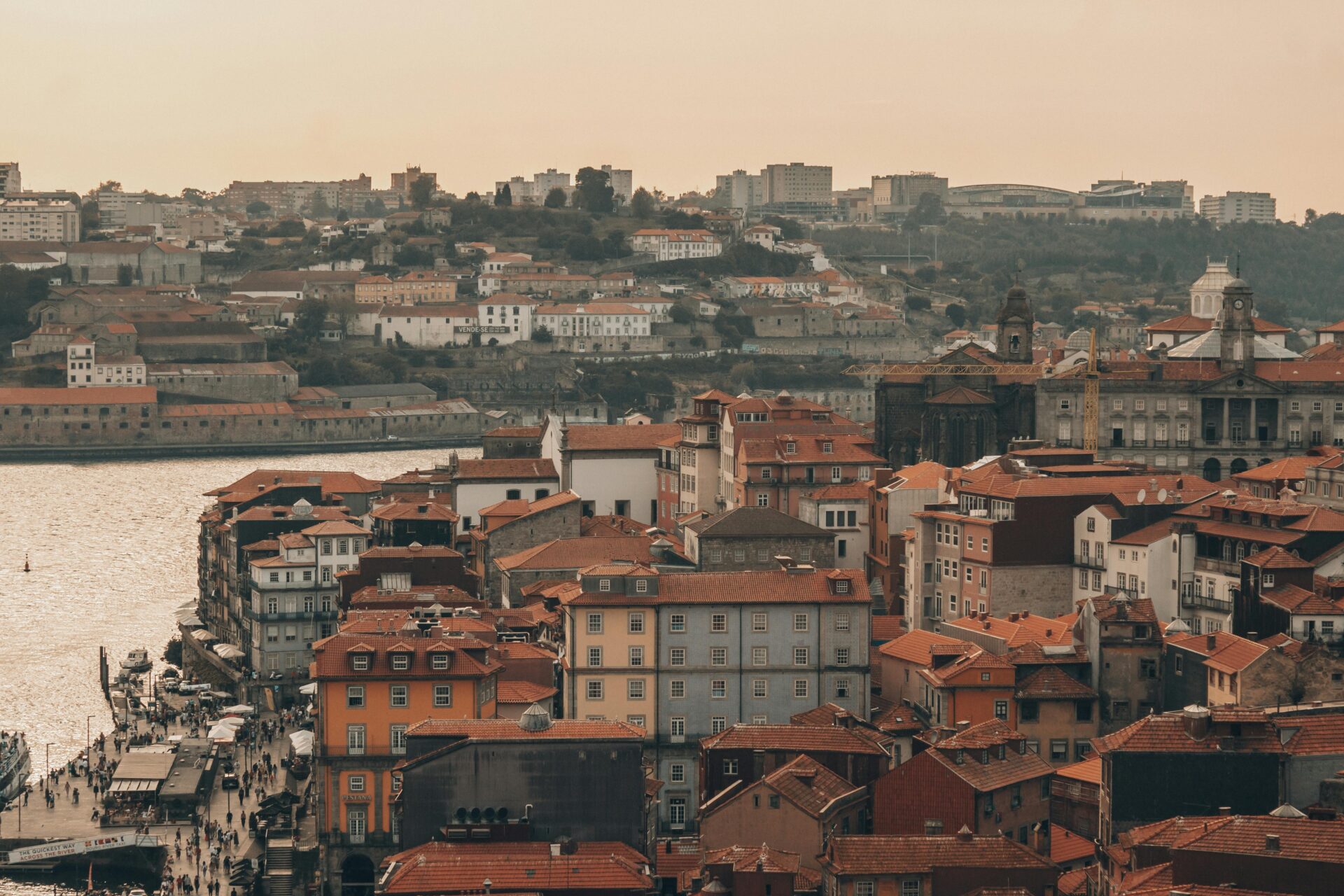
The Ribeira is the old riverside quarter — wine warehouses converted to restaurants, narrow lanes leading up from the waterfront, the barcos rabelos (flat-bottomed wooden boats, traditionally used to carry port wine barrels down the Douro) moored at the quay. The Dom Luís I Bridge, designed by Gustave Eiffel’s office in 1886, connects the Ribeira to Vila Nova de Gaia on the south bank via two levels: the lower level for trams and pedestrians, the upper level (a 45-metre footbridge above the river) for the metro and pedestrians.
Walk across the lower level. Take the metro back across the upper level (or walk — the view from the upper level across the Douro and the red-tiled rooftops of the Ribeira on the north bank is the canonical Porto image).
Port Wine — The Vila Nova de Gaia Lodges
The port wine lodges are across the river in Vila Nova de Gaia (the south bank) — the location is determined by the climate, which is slightly drier and better for maturation than the north bank. Most major port houses offer tours and tastings: Sandeman, Graham’s, Ramos Pinto, Taylor’s.
A lodge tour typically takes 45-60 minutes and includes a tasting of two wines (entry £12-18). The difference between the houses is primarily in the approach to the tasting: some are purely educational, some are more commercial. Graham’s and Taylor’s have the most consistently recommended tours.
The honest note: Taylor’s quinta (estate) is worth visiting over the Gaia lodges if you have a car and time — it’s in the Douro Valley and gives the wine in its landscape. The Gaia lodges are the convenient, time-efficient version.
Quinta do Crasto or Quinta da Vallado in the Douro: full estate experience, wine in the place it’s made, the river below. Reserve a visit through the quinta directly. This is the version of port wine that stays with you rather than the version you do on a city break.
The Mercado do Bolhão
Porto’s covered market, restored to its 1917 iron-and-glass structure and reopened in 2022. Two floors of vendors: fresh fish, cheese, cured meats, bread, fruit, flowers, bacalhau. The food stalls on the upper floor serve the best cheap lunch in Porto — a tosta mista (toasted ham and cheese), a caldo verde (potato and kale soup), a glass of house wine. Under £5 for lunch. The market at 9am on a weekday is the finest hour.
The Foz do Douro
The western end of the Ribeira, where the Douro river meets the Atlantic. A 30-minute walk along the riverside promenade from the old town, or tram (vintage tram 1, one of the surviving originals, runs the coastal route — £3, worth it as an experience as much as transport). The Jardim do Passeio Alegre at the river mouth. The rocky Atlantic beach at Praia dos Ingleses — small, cold, dramatic. The lighthouse. The sunset over the sea, with the city behind you.
This is the hour in Porto that surprises everyone: the river meeting the ocean, the old city visible upstream, the Atlantic horizon stretching to Brazil.
Lello Bookshop
A neo-gothic bookshop from 1906 that claims to have inspired J.K. Rowling’s descriptions of Hogwarts (disputed, but persistently claimed). The interior — the sweeping carved staircase, the stained glass ceiling, the shelves rising to the full height of the building — is genuinely extraordinary. Entry: £5, redeemable against book purchases. Worth it for the architecture. Don’t go at 11am — go when it opens, at 9am, before the queue extends to the street.
The Douro Valley — The Train and the Harvest
The Douro Valley is where port wine comes from. It’s also where some of the finest table wine in Portugal comes from, where the river carves its deepest gorge through the Trás-os-Montes mountains, and where one of the great short railway journeys in Europe runs along the northern bank from Porto to the wine village of Pinhão.
The Train
The Douro Line from Porto’s São Bento station to Pinhão: 2 hours, £8, one way. The train follows the river from Régua, the start of the port wine region, east into progressively steeper terrain as the valley narrows and the terracing becomes more extreme. The vineyards are terraced on slopes so steep that in some sections the terraces are barely wide enough for two rows of vines. Schist walls hold the soil. The river below is flat and dark olive.
At Pinhão: a small station covered in azulejo panels depicting the Douro’s wine culture and harvest scenes. The village itself is modest — the quintas and wine lodges are on the hillsides above. The station café does the best francesinha (Porto’s signature sandwich: bread, meat, melted cheese, covered in beer and tomato sauce) outside the city. Eat one.
The return train leaves in the late afternoon. Or continue east to Pocinho (end of the line) and return by bus through the Upper Douro — a different perspective on the valley at the end of the same day.
The Harvest — Rtveli Equivalent
Late September through October. The vindima (grape harvest) in the Douro is one of Portugal’s great annual events — the estates open, families come from Porto and Lisbon to help pick, and the ritual of treading grapes in stone tanks (lagares) continues at the quintas that maintain the traditional method. The Quinta do Crasto, Quinta da Vallado, and Quinta do Vale Meão are among the estates that allow harvest visits.
The valley in October is golden. The schist walls, the river, the terracing — all of it catches the low autumn light in a way that makes every other season look like a rough draft.
Where to Stay in the Douro
Pinhão village or a quinta (wine estate guesthouse) on the valley sides. The quinta experience — waking up above the vineyards, breakfast on a terrace overlooking the river, the estate’s wine at dinner — is one of the finest accommodation experiences in Portugal. Budget quinta: from £70/night including wine tasting. Boutique quinta with pool: £120-200/night. Worth saving for.
The Alentejo — The Interior Most People Drive Past
The Alentejo is the largest region in Portugal — a third of the country’s land area — and receives a tiny fraction of its international tourists. The main road from Lisbon to the Algarve runs through the middle of it. Most people drive it in two hours and don’t stop.
This is a significant mistake.
Évora
A small city at the centre of the Alentejo, containing: a Roman temple (2nd century, built for the imperial cult, sixteen Corinthian columns still standing in the middle of a medieval city like a time splice — free to walk around), a 12th-century cathedral, the Church of São Francisco with its Chapel of Bones (walls and columns lined with approximately 5,000 human skulls and bones, a Franciscan meditation on mortality — entry £4, one of the most striking interiors in Portugal), and one of the finest university buildings in the country.
The old city is walkable in two hours. The Roman temple at dusk, lit from below, is the image. Stay at least one night — the town after the day visitors leave has a quietness that the morning doesn’t.
The Alentejo Landscape
The plains east and south of Évora: cork oaks (their bark stripped every nine years in strips, leaving the red inner wood that makes the trees look wounded and extraordinary), olive groves in grey-green rows, vineyards that produce some of the finest wine in Portugal at a fraction of the Douro’s prices, and white villages that appear in the distance across the plains and then disappear as the road turns.
Rent a car (£25-30/day from Lisbon or Évora). Drive slowly. Stop at the vineyards (most welcome visitors — call ahead or simply turn in at the gates). Eat at the village restaurant where the set lunch is €8 and involves black pork, Alentejo bread (a slow-fermented, slightly sour, dense bread unlike anything else in Portugal), and local wine.
Marvão
A medieval walled village at 865m on a granite ridge near the Spanish border — the most dramatically sited village in Portugal. The castle walls follow the ridge; the views cover three countries on clear days (Portugal, Spain, and occasionally a glimpse of the Sierra de Gredos in the far distance). Population: 180 people. Tourist accommodation: a handful of guesthouses inside the walls.
Stay one night. The village at 6am, when the mist fills the valley below and the walls are yours — this is one of the finest mornings available in Portugal.
The Megalithic Monuments — Almendres Cromlech
15km west of Évora: a stone circle (cromlech) of 95 granite menhirs, arranged in an oval, dating to approximately 6,000 BC — making it older than Stonehenge by 2,000 years. Utterly unknown to most visitors to Portugal. Free, accessible by car on an unmaintained road. No facilities. Often entirely empty.
The Anta Grande do Zambujeiro — the largest dolmen in Europe, also near Évora — requires a key from the Évora regional tourist office to access. Worth arranging.
The Algarve — Which Bits and When
The Algarve is the part of Portugal that most UK visitors already know and the part most guides treat least honestly. Here’s the honest version.
What’s genuinely excellent: The rock formations. The sea stacks, arches, and sea caves of the western Algarve (Lagos, Ponta da Piedade, Carrapateira) are some of the most dramatic coastal geology in Europe. The water is clear and cold (the Atlantic upwelling keeps it 16-20°C even in summer). The food — grilled fish at any decent restaurant in a fishing village — is as good as anywhere in Portugal.
What’s less excellent: The resort infrastructure. The strip of Albufeira, Vilamoura, and their surrounds — package holiday resorts optimised for volume and sun exposure rather than character. Not wrong per se, just not what BGGD recommends.
The formula that works: Stay west of Albufeira. The further west you go, the more the landscape takes over from the resort economy.
Ponta da Piedade and Lagos
The sea stacks at Ponta da Piedade — orange limestone pillars and arches standing in turquoise water south of Lagos — are the most photographed image in the Algarve and one of the most spectacular coastal formations in Europe.
The kayak tour (£20-25, 2 hours, several operators run from Lagos beach) navigates through the sea caves from inside — low caves where you have to lie flat in the kayak to pass through, open chambers where the light comes through the water and turns green, the arches from below. This is significantly better than viewing the stacks from the clifftop. Book the day before.
The clifftop walk from Lagos to Ponta da Piedade (45 minutes each way, flat, the full arc of stacks visible from above) is the alternative if kayaking isn’t possible. Both are worth doing if you have the time.
Praia da Marinha
A beach south of Lagoa with the most intricate natural rock arch and cave system accessible from the beach level. The rock pools at low tide. The colour of the water. Free, accessible by coastal trail from Lagoa or by car. Less famous than Ponta da Piedade. More beautiful.
Carrapateira and the Southwest
The coast southwest of Lagos — Carrapateira, Sagres, the Costa Vicentina nature park — is wilder and emptier than the central Algarve. The beaches here face southwest and northwest, which means Atlantic swell rather than calm Mediterranean water, better surf (Carrapateira’s Bordeira beach is one of the best surf beaches in Portugal), more dramatic clifftop scenery.
Sagres: the southwestern tip of Portugal, where the country runs out — Cape São Vicente, the most southwesterly point of continental Europe, a lighthouse on a 70m cliff above the Atlantic. The sense of standing at the edge of something. Historically, the caravels set out from nearby ports to chart the West African coast. The wind is always significant here.
The Algarve in September
Book September rather than August. The sea is at its warmest. The crowds are at 60% of the August peak. The accommodation prices drop 25-30%. Everything is still open. The light is golden rather than harsh. The seafood is at its finest.
Comporta — The Anti-Algarve
Comporta is an hour south of Lisbon by car (the Setúbal ferry crossing shortens it) or by the Troia ferry from Setúbal. It’s a landscape of pine forests, rice paddies, and Atlantic dune beaches — quiet, undeveloped, and priced at a level that’s beginning to reflect its growing reputation but hasn’t yet reached the Algarve premium.
The beaches: long, flat, backed by pine forest, rarely crowded even in summer. The sand dunes at Brejos da Carregueira. The horses that appear at dusk on the beach at Carvalhal (not a managed attraction — they’re just there, from a local farm, and they walk the dune edge in the evening light).
The food: one or two seafood restaurants in the village, a farm shop, a rice field cooperative that sells the locally grown Carolino rice. Simplicity is the whole point.
Stay: Pine-shaded guesthouses from £55-80/night in shoulder season; significantly more in August, when Comporta has become fashionable among Lisbon’s creative class. Go in May or October for the version that still feels like somewhere that doesn’t know it’s been found.
Madeira — The Island That Isn’t What You Think
Madeira has a reputation as a destination for retired British couples seeking guaranteed sunshine. This reputation is both accurate and completely misleading.
The island is the most dramatic volcanic landscape in the Atlantic — cliffs dropping 600 metres into the sea, mountain peaks at 1,800m perpetually cloud-wrapped, a system of centuries-old irrigation channels (levadas) cut into the cliff faces that now serve as hiking trails across the entire island.
The levada walks — paths along the irrigation channels through the laurisilva forest (a UNESCO-listed ancient forest found in its fullest form only in Madeira, a remnant of the subtropical forests that covered Europe before the Ice Age) — are among the finest walking routes in Europe. The Levada do Caldeirão Verde (4 hours return, through tunnels and above river gorges) and the Levada das 25 Fontes (3 hours return, ending at a waterfall into a pool) are the reference walks.
Pico do Arieiro — a peak at 1,818m accessible by road, above the cloud layer. In the early morning, the cloud sea fills the valleys below and the other peaks emerge from it. One of the most extraordinary highland views in the Atlantic.
Funchal — the capital: the Mercado dos Lavradores (a covered market with the best tropical fruit selection in Portugal — passion fruit, custard apple, Madeira banana), the Monte Palace Tropical Garden above the city, the cable car from Funchal to Monte and the toboggan run back down (two men in straw hats push a wicker toboggan down the cobblestone road — yes this is a real thing, yes it’s worth doing, yes it’s terrifying in an entirely manageable way).
Direct flights from London: 3.5 hours, from £90-150 return.
The Azores — Europe’s Most Dramatic Archipelago
Nine volcanic islands in the mid-Atlantic, 1,500km west of Lisbon and belonging to Portugal. The Azores are what happens when you put a volcanic archipelago in the middle of the ocean and leave it largely to itself — crater lakes, hydrothermal fields, the best whale watching in Europe, and landscapes that look like someone assembled them from the finest parts of Iceland, Ireland, and Hawaii.
São Miguel is the main island: Sete Cidades (two crater lakes — one blue, one green — separated by a narrow bridge, the legend being that they were formed by the tears of a princess and a shepherd; the viewpoint at Vista do Rei looks over the full crater), Furnas (a valley of bubbling hot springs and geothermal calderas where the local stew — cozido das Furnas — is cooked underground in the volcanic heat), and Lagoa do Fogo (a crater lake at altitude, accessible only on foot, always in cloud and therefore always dramatic).
Direct flights from London: 4 hours, Ryanair and SATA from £80-150 return.
The whale watching: sperm whales are resident in Azorean waters year-round (the deep water offshore provides the right food supply). Blue whales pass through in spring. Bottlenose dolphins and common dolphins are abundant throughout. The operators on São Miguel and Faial have the best reputations: Futurismo and Terra Azul on São Miguel are the most consistently recommended.
A dedicated guide to the Azores — covering all nine islands and the inter-island ferry routes — is in the BGGD archive: The Azores — The Complete Island Guide.
What It Costs — Real Numbers
Portugal is mid-range by European standards. Cheaper than France, Spain, or Italy in most categories. More expensive than Eastern Europe or the Balkans. The gap between tourist-area pricing and local pricing is significant — navigating it correctly drops costs by 30-40%.
Daily Budgets
Budget (£45-60/day)
- Accommodation: hostel or budget guesthouse (£20-35/night)
- Food: bakeries for breakfast, local tascas for lunch, a sit-down dinner (£12-18/day)
- Transport: metro and trains, one intercity journey
- Activities: most free or under £12
Mid-range (£70-95/day)
- Accommodation: mid-range hotel or boutique guesthouse (£45-75/night)
- Food: restaurant lunches and dinners, one good fish dinner (£20-30/day)
- Transport: trains, occasional taxi, one car hire day
- Activities: wine lodge tour, Pena Palace entry, kayak tour
Comfortable (£120-170/day)
- Accommodation: boutique hotel or quinta (£70-120/night)
- Food: quality restaurants, one seafood dinner (£35-55/day)
- Transport: private transfers, car hire
- Activities: without budget constraint
What 10 Days in Portugal Actually Costs from the UK
| Category | Budget | Mid-Range |
|---|---|---|
| Return flights (Lisbon, booked 6 weeks ahead) | £60–120 | £80–160 |
| 10 nights accommodation | £230–380 | £480–750 |
| Food (10 days) | £130–190 | £220–320 |
| Internal transport (trains, buses, 2-day car hire) | £60–100 | £90–150 |
| Activities and entries | £40–70 | £70–130 |
| Total | £520–860 | £940–1,510 |
Portugal regularly tops European value comparisons because the flights are among the cheapest available from the UK and the food and accommodation quality-to-price ratio is among the highest in Western Europe. A mid-range trip here costs roughly what a budget trip costs in France.
Eating in Portugal — What’s Actually Worth Ordering
Portuguese food is one of the most honest cuisines in Europe — built on excellent raw materials treated with respect rather than embellished beyond recognition. The bacalhau (salt cod) comes in 365 preparations, one for every day of the year according to the proud claim. The Alentejo black pork is considered by many chefs to be among the finest pork in the world. The wine is underpriced relative to its quality in a way that becomes immediately apparent to anyone who has spent any time in French or Italian wine country.
The Dishes Worth Seeking
Pastéis de Nata (pastel de nata) The custard tart. The Belém original (Pastéis de Belém, Rua de Belém 84) is the reference: flakier pastry, slightly less sweet custard, eaten warm with cinnamon and powdered sugar. Everywhere in Portugal does a version. The Belém original is definitively better. Go once and establish the benchmark.
Bacalhau à Brás The finest of the 365 preparations: shredded salt cod stir-fried with matchstick potatoes and eggs, scrambled together with black olives and parsley. The texture — the cod, the potatoes, the barely-set egg — is unlike anything else. Available everywhere. The quality varies enormously — the local tasca version, at £6-8, is usually better than the restaurant in the tourist quarter, at £15-18.
Francesinha Porto’s contribution to the world of sandwiches and probably the most extreme sandwich in Europe. A layered construction of bread, ham, sausage, and steak, covered in melted cheese and then submerged in a hot sauce of beer, tomato, and spices. Served with chips. It is not a light lunch. It is one of the finest things to eat in Porto and the best version (Café Santiago on Rua Passos Manuel) involves a 15-minute queue that is worth joining.
Grilled Sardines In season (June-September), fresh sardines grilled over charcoal are served at the June festivals (Festas de Santo António, Lisbon; Festas de São João, Porto) and throughout summer at any decent tasca. Eaten with bread, salad, and a glass of wine. The sardine is not the restaurant sardine — it’s a large, oily, intensely flavoured fish that needs nothing except charcoal, coarse salt, and the right company.
Caldo Verde A simple soup of potato, kale (the dark Portuguese caldo verde variety), olive oil, and a slice of chouriço (smoked sausage). The national comfort food, available year-round, at its finest in the north and the Alentejo. £2-3 at any tasca. Better than most soups that cost ten times as much.
Percebes (Goose Barnacles) Found on the rocky Atlantic coastline (the Algarve and the west coast), harvested at low tide from the rocks by hand. Look like alien fingers. Taste intensely and specifically of the sea. Eaten by twisting off the skin and sucking the flesh. Served by the 100g at coastal restaurants in the Algarve and the Alentejo coast (€8-15/100g — more expensive than it sounds because they’re time-consuming to harvest). One of the finest and strangest seafood experiences in Europe.
Ginjinha A sour cherry liqueur (cherry brandy), served in a small shot glass at dedicated ginjinha bars throughout Lisbon — the most famous are on Largo de São Domingos and Rua das Portas de Santo Antão in the city centre. A shot costs £0.80-1.20. The tradition: drink one as you walk between neighbourhoods. The small bar on Largo de São Domingos has been serving it since 1840.
Where to Eat
In Lisbon:
- Time Out Market (Cais do Sodré): 40+ food stalls curated from Lisbon’s best restaurants under one roof. Tourist-facing in its model but the food quality is genuine. Good for quick exposure to breadth.
- Cervejaria Ramiro (Intendente): the finest seafood restaurant in Lisbon — tiger prawns, percebes, clam rice, whole lobster. Queue from 7pm. Worth the wait.
- Any tasca in Mouraria or Intendente for the daily specials at lunch.
In Porto:
- Café Santiago (Francesinha). No exceptions.
- Mercado do Bolhão upper floor (market stalls, lunch).
- Cantina 32 (Rua das Flores): contemporary Portuguese, one of the finest lunch menus in the city.
In the Alentejo:
- Any village restaurant serving the daily lunch menu. The carne de porco preto (black pork), the migas (bread dish), the local wine.
Practical Notes
Visa: No visa required for UK passport holders. Portugal is in the Schengen Area. Passport valid at time of travel.
Getting there: Direct flights from virtually every UK airport. easyJet, Ryanair, TAP, and British Airways serve Lisbon and Porto. Faro (Algarve) served directly in summer from most UK airports. Flight time: 2.5 hours to Lisbon, 3 hours to Porto. Return flights from £60-150 in shoulder season; £100-250 in summer peak.
Getting around: The train network (CP — Comboios de Portugal) connects Lisbon, Porto, and the Algarve efficiently. Lisbon to Porto: 3 hours by Alfa Pendular express (£25-35, bookable at cp.pt). Porto to Pinhão (Douro Valley): 2 hours (£8). Intercity buses (Rede Expressos) cover routes the train doesn’t. For the Alentejo: hire a car — the landscapes require flexibility, and car hire in Portugal is among the cheapest in Western Europe (£20-30/day from Lisbon).
In Lisbon: metro, bus, and on-demand transport. The tram 28 is genuinely useful as transport but crowded during the day — use it early morning or late evening. The Viva Viagem card (rechargeable, works on all Lisbon public transport) is worth buying on arrival.
Currency: Euro. Portugal is well-covered by ATMs. Cards accepted widely. Local tascas and markets often prefer cash.
Getting a SIM: NOS, MEO, and Vodafone Portugal all offer tourist SIMs from the airport. A 30-day SIM with 10-20GB data costs £8-15. Coverage is good throughout the country including rural Alentejo. Airalo eSIMs work on Portuguese networks.
The 10-Day Itinerary — Lisbon, Porto, Douro, Alentejo
This route runs north to south through Portugal’s most essential zones without backtracking, using trains between the cities and one car hire day for the Alentejo.
Days 1-3: Lisbon
Day 1: Land. Walk from the centre to Belém along the river (45 minutes). Pastéis de Belém at the original. Jerónimos Monastery. Return along the Tagus at dusk.
Day 2: LX Factory Sunday market (if Sunday) or Mouraria and Intendente (any day). Alfama at dawn. Graça viewpoint mid-morning. São Bento station to Sintra (Day 3 morning — adjust sequence to allow early Sintra).
Day 3: Train to Sintra at 7:30am. Pena Palace open at 9:30am — arrive first. Moorish Castle after. Return to Lisbon by 2pm. Fado at Tasca do Chico (book weeks ahead) in the evening.
Days 4-5: Porto
Day 4: Train from Lisbon to Porto (3 hours, £25-35). Check in. São Bento Station (arrive first, look at it properly). Ribeira waterfront. Dom Luís I Bridge walk. Port wine lodge on the Gaia side.
Day 5: Mercado do Bolhão in the morning. Café Santiago for lunch (queue at noon). Lello Bookshop (9am opening). Foz do Douro in the afternoon — walk to where the river meets the Atlantic.
Days 6-7: Douro Valley
Day 6: Train from Porto to Pinhão (2 hours, £8, window seat right side heading east). Arrive midday. Quinta visit in the afternoon. Stay in Pinhão or at a quinta on the valley side.
Day 7: Walk or drive the valley roads. Wine tasting at a second quinta. Return to Porto by late afternoon or stay a second night in the valley.
Days 8-9: Alentejo
Day 8: Hire car from Porto or take train south to Évora (via Lisbon connection, 3 hours). Évora: the Roman temple, São Francisco and the Chapel of Bones, the old university. Stay one night.
Day 9: Morning in Évora. Drive to Marvão (90 minutes) — the walled village on the ridge, morning mist. Return south toward Lisbon in the afternoon, stopping at an Alentejo winery on the route (Herdade do Esporão near Reguengos de Monsaraz is the most visitor-ready, book ahead).
Day 10: Lisbon and Departure
Return to Lisbon. Morning free — the things not yet done. Ginjinha on Largo de São Domingos at noon. Flight home.
Final Thought
I was on the train from Porto to Pinhão in October, sitting on the right side heading east, watching the Douro appear and disappear as the train curved around the hillsides.
The river was flat and olive-dark. The terraced vineyards came down to the water on both sides, the schist walls holding the soil in the steep gravity. A quinta on the opposite bank was lit by the late afternoon light that turns everything in the Douro briefly, unreasonably golden.
Someone ahead of me had their window open. The smell of fermenting grapes came in from the valley.
Portugal rewards the traveller who slows down. The train is the right pace. So is the car on a back road through the Alentejo. So is the levada path in Madeira, where the ancient forest appears and the outside world becomes briefly irrelevant.
Take the slow version. It’s better.
Have a question about Portugal this guide doesn’t cover? Drop it in the comments.