


The pizza that all other pizza is a diminished copy of, the National Archaeological Museum with the finest collection of Roman artefacts in the world, Pompeii and Herculaneum honestly compared (Herculaneum wins), the Camorra question handled directly, the most kinetic and the most intimidating street culture in Italy, and why Naples rewards the visitor who approaches it on its own terms rather than the terms of anywhere else.
Reading time: 12 minutes | Last updated: 2026
Naples is the city most likely to produce strong opinions from everyone who visits it.
People who love it: the energy, the chaos, the pizza, the Spaccanapoli, the bay, the Castel dell’Ovo at sunset, the National Archaeological Museum, the fact that you can eat extraordinarily well for £8, the specific Neapolitan character that is warmer and more direct and more theatrical than anywhere else in Italy.
People who don’t: the traffic that is genuinely dangerous for pedestrians operating on the assumption that red lights mean something, the aggressive vendor culture in the tourist areas, the specific Naples combination of beauty and decay that requires a tolerance for the unmanaged.
Both assessments are accurate. Naples is genuinely one of the finest cities in Europe and genuinely one of the most demanding. The visitor who approaches it on its own terms — rather than expecting the organised beauty of Florence or the compact accessibility of Venice — will have an extraordinary trip.
The visitor who expects those things will have a difficult one.
This guide is for the former.
Quick Navigation
- The Naples Approach — What to Expect
- When to Go
- Getting There
- The National Archaeological Museum
- The Historic Centre — Spaccanapoli and the Decumani
- The Underground City
- Castel Nuovo and the Waterfront
- Pompeii — The Famous One
- Herculaneum — The Better One
- The Camorra Question — The Direct Answer
- The Pizza Question — The Only Answer
- The Amalfi Coast from Naples
- Hidden Naples — The Places Most Tours Don’t Reach
- What It Costs
- Eating in Naples — Beyond the Pizza
- Practical Notes
- The 3-Day Itinerary
The Naples Approach — What to Expect
Naples (Napoli) is a city of 3 million people in the wider metropolitan area, built on and around the slopes of the Phlegraean Fields (a volcanic field that includes the caldera lake of Pozzuoli and the Solfatara — an active volcanic crater accessible as a visitor site) and overlooked by Vesuvius. It is the third-largest city in Italy and the largest city in southern Europe south of Rome.
The specific Naples character comes from its history: Greek colony (Neapolis — “New City”), Roman resort city (Virgil wrote the Aeneid here; Vesuvius erupted in 79 CE while the Romans were in the surrounding villas), Byzantine, Norman, Swabian, Angevin, and finally Bourbon capital of the Kingdom of Naples and Sicily (a state that existed from 1282 to 1861 and contained the largest city in the western Mediterranean at its peak). The city was always too large to be properly governed, too proud to be properly subdued, and too attached to its own traditions to be standardised by any of the eight dynasties that ruled it.
The result is a city that operates according to its own logic, which is not always the logic of anywhere else. Traffic rules are negotiable. The pavement is shared between pedestrians, mopeds, and the occasional delivery truck. The historical monuments are embedded in a living city rather than preserved apart from it. The food is produced with an intensity of local pride that treats any deviation from the correct method as an act of violence against the culture.
This is the city. Approach it accordingly.
When to Go
April to June and September to October — The Best Windows
Spring: the Bay of Naples at its most beautiful, the wildflowers on the Vesuvius slopes, the Pompeii site before summer heat makes the open excavation zones uncomfortable. September-October: the sea still warm, the summer heat broken, the city in the relaxed mode of early autumn.
July and August — Hot and Busy
35-38°C. Pompeii in August at 2pm is genuinely uncomfortable. The beaches of Procida and Ischia (accessible by ferry from the Naples port) are at maximum density. The city itself is partially emptied of Neapolitans (who migrate to the coast in August) — paradoxically making August one of the easier months for navigating the historic centre.
November to March — Cool and Undervisited
12-18°C. The archaeological sites without the tourist volume — Pompeii and Herculaneum in January receive a fraction of their summer visitors. The pizza quality doesn’t change with the season.
The BGGD recommendation: May. Pompeii and Herculaneum without summer heat, the archaeological museum without queues, and the city at a pace that allows it to be experienced rather than survived.
Getting There
Naples Capodichino Airport (NAP): easyJet, Ryanair, and British Airways fly direct from UK airports. Return flights: £50-150. Flight time: 2.5 hours.
Naples Centrale train station: 3 hours from Rome by high-speed Frecciarossa train (from £25 booked in advance at trenitalia.com). The train from Rome is often the most comfortable option if combining Naples with the capital.
Getting around Naples: The Metro (lines 1 and 6 cover the main visitor areas), the Circumvesuviana commuter train (connecting Naples to Pompeii and Herculaneum — essential), and the funiculars (connecting the lower city to the Vomero hill above). Walking in the historic centre — the Spaccanapoli and Decumani grid — is the standard approach.
The Circumvesuviana: from Naples Garibaldi station, trains to Ercolano (Herculaneum, 20 minutes, £2.50) and to Pompei Scavi (Pompeii, 35 minutes, £3). The station for Herculaneum is “Ercolano Scavi” — exit and walk 10 minutes to the site entrance.
The National Archaeological Museum
The finest collection of Roman artefacts in the world — and not by a small margin. The National Archaeological Museum of Naples (MANN) holds the contents of both Pompeii and Herculaneum (transferred during the Bourbon excavations of the 18th century), the Farnese collection of Greek and Roman sculpture, and the largest collection of ancient mosaics assembled in one building.
The Pompeii collections:
The Pompeii rooms cover: the room of the famous mosaics (the Battle of Alexander mosaic — a 1st-century BCE Roman copy of a 4th-century BCE Greek original, depicting Alexander the Great defeating Darius at the Battle of Issus, the most complex mosaic produced in antiquity), the bronze furniture from the Villa of the Papyri at Herculaneum, the surgical instruments (the Roman surgical toolkit that is more modern-looking than most visitors expect), the erotic art collection (the Gabinetto Segreto — the “Secret Cabinet” of explicit art from Pompeii, locked during the Bourbon period and opened to the public only in 2000 — requires no special permission to visit, though it requires a separate section ticket).
The Farnese collection:
The Farnese Hercules (a 3rd-century CE Roman copy of a 4th-century BCE Greek original, the largest surviving ancient bronze discovered in Rome) and the Farnese Bull (the largest ancient sculpture group in the world, excavated from the Baths of Caracalla in Rome in 1546) dominate the ground floor sculpture rooms.
Entry: £20. Open Wednesday-Monday. Budget 3-4 hours. Go first, before Pompeii — the objects removed from the site give the context that the empty rooms of Pompeii don’t always provide.
The Historic Centre — Spaccanapoli and the Decumani
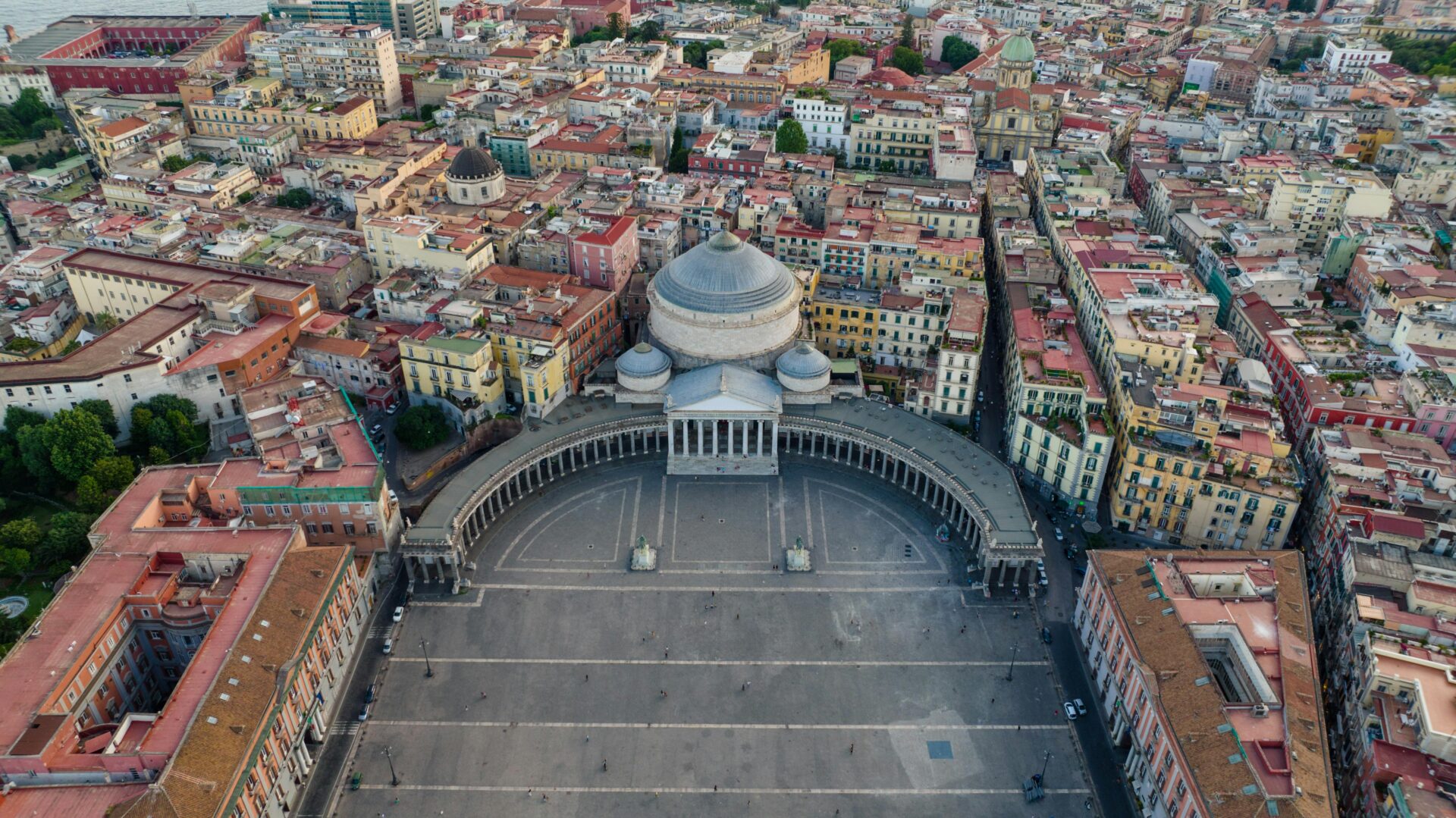
The historic centre of Naples is a UNESCO World Heritage Site — the most intact Greek and Roman urban grid in Europe, the original Neapolitan street plan of intersecting decumani (east-west streets) and cardines (north-south streets) still legible 2,500 years later.
The Spaccanapoli (Via San Biagio dei Librai, Via Benedetto Croce): The central spine of the historic centre — the “split Naples” that you can see from Castel Sant’Elmo above, the single straight line bisecting the city from the Piazza del Gesù to the Via Duomo. At street level: a continuous market of bookshops, presepe (nativity scene) figurine sellers, pizza and street food, the churches of the Gesù Nuovo (the 15th-century palace whose diamond-point rusticated facade was converted into a church facade and remains the finest Renaissance exterior in Naples) and Santa Chiara (the Gothic church with its famous cloister tiled in majolica, the finest 18th-century decorative art in Naples).
The San Gregorio Armeno: The street of the presepe makers — artisans producing the ceramic figures for the Neapolitan nativity scene tradition (which includes not just the sacred figures but also political figures, celebrities, and whatever cultural event has defined the year). The nativity figure tradition is a UNESCO Intangible Cultural Heritage. The street in November-December is at its most active; outside the Christmas season, the workshops are still open and the craft is visible.
The Duomo (Cathedral of Naples): The Gothic cathedral containing the Chapel of San Gennaro — the silver reliquary containing the blood of Naples’ patron saint, which liquefies three times a year (September, December, and the first Saturday in May) in a ceremony attended by thousands of Neapolitans. The failure of the blood to liquefy is considered an omen of disaster. The chapel itself (the 17th-century Baroque masterpiece by Cosimo Fanzago, the finest chapel interior in Naples) is accessible free. The blood liquefaction ceremony: attend in September or May for the full experience.
The Underground City
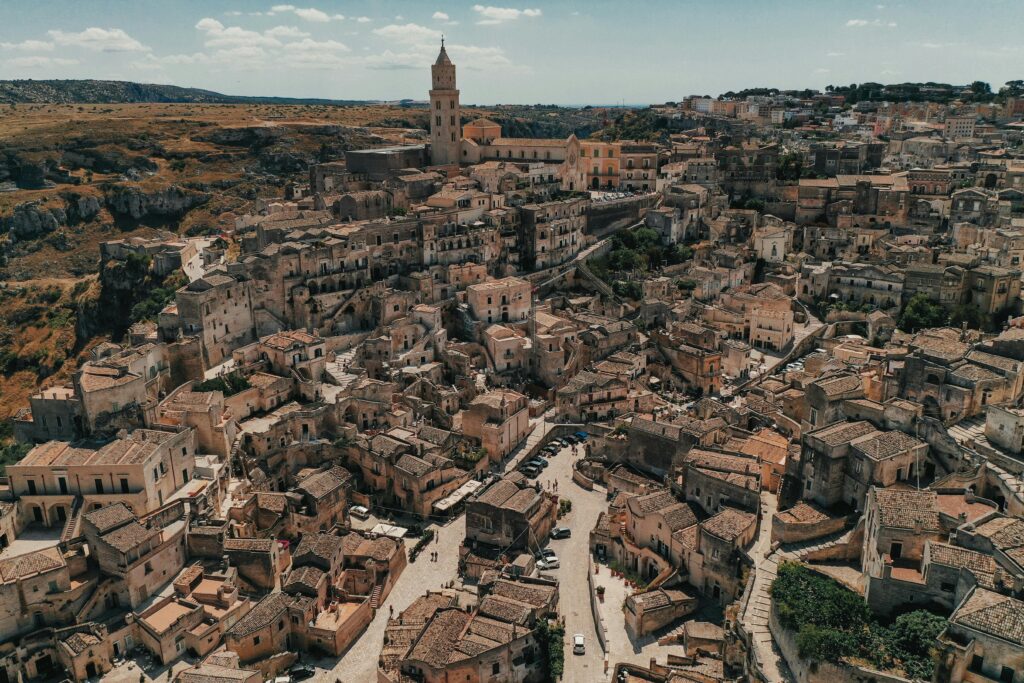
Naples is built on tuff — the same volcanic stone as Matera and Cappadocia, equally workable, equally hollowed. Beneath the streets of the historic centre: a network of tunnels, cisterns, quarries, and WWII air-raid shelters extending for approximately 80km.
Napoli Sotterranea: The most accessible guided tour (departing from Piazza San Gaetano, multiple times daily) — the Greek aqueduct tunnels, the Roman cisterns, the WWII shelter where 10,000 Neapolitans lived during the Allied bombing of 1943, the wartime graffiti and objects still in place. Entry: £10, 1.5 hours. The tour includes the single narrowest passage in any accessible urban underground system in Europe — approximately 40cm wide, navigated sideways with a candle.
Castel Nuovo and the Waterfront
Castel Nuovo (Maschio Angioino): The Angevin castle on the waterfront — built in 1279, the Triumphal Arch of Alfonso I (1443-1458, celebrating the Aragonese capture of Naples from the Angevins) inserted into the entrance tower, the combination of medieval military architecture and Renaissance decorative programme a specific expression of the court culture of the 15th century. Entry: £8.
The Lungomare: The waterfront promenade — the Castel dell’Ovo (the oldest castle in Naples, on a small island connected by a causeway, the egg legend — Virgil supposedly hid a magic egg in the castle foundations, the castle’s survival dependent on the egg’s intact preservation — among the most entertaining foundation myths in Italy) at the southern end. The view at sunset over the bay toward Vesuvius: the quintessential Naples image.
Pompeii — The Famous One
The Roman city buried by the Vesuvius eruption of 79 CE — 2,000-3,000 people killed, the city covered in 4-6 metres of volcanic ash and pumice, then forgotten, then excavated from the 18th century onward. The most significant archaeological site in Italy and one of the most significant in the world.
The honest assessment:
Pompeii is extraordinary and genuinely overwhelming. The scale (66 hectares, 11,000 rooms, 2km from the main entrance to the furthest accessible area) means that a cursory visit covers perhaps 10% of what’s there. The most visited areas (the Forum, the Via dell’Abbondanza, the Garden of the Fugitives) are the most crowded and, in peak season, can feel like moving with a human queue through history.
The specific things worth finding:
The Villa of the Mysteries (outside the main Pompeii area, accessible from the Porta Ercolano entrance): the most significant single room in Pompeii — a room whose walls are covered in a frieze depicting the initiation rites of the Dionysiac cult, painted in the 1st century BCE, the most complete Roman narrative fresco cycle surviving anywhere. The vivid Pompeian red of the background.
The Lupanar (the brothel): small, always crowded, the erotic frescoes above each room documenting the services available in the Latin text below. One of the most visited rooms in Pompeii and one of the most human — the traces of the everyday.
Entry: £16. Open 9am-7pm (summer), 9am-5pm (winter). Book online at ticketone.it to skip the entrance queue. Allow minimum 4 hours.
Herculaneum — The Better One
Herculaneum is smaller, better preserved, and receives approximately 20% of Pompeii’s visitors. This is the most consistently offered piece of advice from archaeologists and from travellers who have visited both.
Why Herculaneum is better:
Pompeii was buried by ash and pumice — the buildings were covered gradually, giving inhabitants time to flee (many did) but also exposing the wooden elements to carbonisation. Most of Pompeii’s second floors and roofs are gone.
Herculaneum was buried by pyroclastic surge (superheated gas and volcanic material) — the event was almost instantaneous, preserving the organic materials (wood, food, textiles, boats) that the Pompeii ash didn’t. The wooden shelving of the house of the carbonised furniture, the wooden doors on their original hinges, the painted walls at their original height (second floors still present), the boats on the beach where the residents fled and were killed by the pyroclastic surge.
The 300 skeletons found on the ancient beach (where the population ran to escape the eruption) — still in the boat shelters where they died, now displayed in the covered site — are the most affecting single sight available at either site.
The site is smaller (one hour to walk, versus four for Pompeii) and more intimate.
Entry: £13. Open 9am to 7pm. The Circumvesuviana to Ercolano Scavi, 10-minute walk to the entrance. No pre-booking required (the queue is rarely significant).
The combined ticket: A single ticket covers both Pompeii and Herculaneum (plus three other sites) for £22 — valid 3 days. If visiting both, always buy the combined ticket.
The Camorra Question — The Direct Answer
The Camorra is the Neapolitan organised crime structure — one of the three major Italian criminal organisations alongside the Sicilian Mafia and the Calabrian ‘Ndrangheta. It has operated in Naples since the 19th century, its current form significantly restructured from the centralised hierarchies of the 20th century into a more fragmented and violent clan structure.
The practical relevance for visitors:
The Camorra is not a threat to tourists. The organisation’s income derives primarily from drug trafficking, extortion of local businesses, illegal construction, and waste management — none of which involves the international tourist. The violence between clans (which produces the periodic homicides that make Naples crime statistics look alarming in aggregate) is specifically targeted rather than random.
The specific cautions: pickpocketing in crowded tourist areas (the historic centre, the Circumvesuviana stations) is common and is petty crime rather than Camorra-related — the standard anti-pickpocket practices (bag across the body, phone in pocket) are sufficient. Scooter bag snatching has been a reported issue — do not carry a bag with long straps that could be grabbed from a moving scooter.
Roberto Saviano’s Gomorrah (book, 2006; film, 2008; TV series, 2014-present) gives the most detailed account of the modern Camorra. Reading it before visiting Naples gives context to what you’re seeing; it does not give a reason not to come.
The Pizza Question — The Only Answer
The Neapolitan pizza is UNESCO-listed (the art of the Neapolitan pizzaiuolo received Intangible Cultural Heritage designation in 2017). The specific elements of the correct Neapolitan pizza:
The dough: type 00 flour, fresh yeast, water, and salt — no oil, no sugar. Leavened for a minimum of 24 hours (the best for 48-72 hours), the long fermentation developing the flavour and the specific chewy-exterior-soft-interior texture.
The cooking: a wood-fired oven at 450-485°C for 60-90 seconds. The heat charring the base while keeping the centre moist. The characteristic leopard-spotted char on the cornicione (the raised edge).
The margherita ingredients: San Marzano tomatoes (DOP, grown in the volcanic soil of the Vesuvius slopes — a specific variety with a particular sweetness and low acidity), fior di latte mozzarella (from cow’s milk, the buffalo version for the upmarket version), extra virgin olive oil, basil from the plant, nothing else.
Where:
L’Antica Pizzeria da Michele (Via Cesare Sersale 1): Operating since 1870, two pizzas only (margherita and marinara), the most famous pizza restaurant in the world, the queue typically 30-90 minutes. The queue is worth it — not because the pizza is uniquely superior to the other best pizzerias of Naples but because the specific simplicity of the setting, the speed of the production, and the age of the tradition give a context that no other venue provides.
Pizzeria Gino Sorbillo (Via dei Tribunali 32): The most respected among working Neapolitan pizzaiuoli — longer menu than Da Michele, slightly shorter queue, the quality as high. The third generation of the Sorbillo family, the production visible from the counter.
Starita (Via Materdei 27): In the Materdei neighbourhood, slightly off the tourist circuit — perhaps the finest margherita in Naples by the assessment of the people who have tried them all. No queue before 7pm.
Cost at all three: £5-8 for a pizza. Do not order anything other than a pizza. Do not ask for modifications to the recipe.
The Amalfi Coast from Naples
The Amalfi Coast — the 50km of cliffside road between Sorrento and Salerno — is accessible from Naples as a day trip or a multi-day extension.
The practical reality:
The Amalfi Drive (SS163) is one of the finest coastal roads in Europe and in peak season one of the most congested. The cliff road is 2 lanes wide at best and frequently reduces to single-lane negotiation between buses, cars, and tour coaches. In July and August: plan for significant delays.
The better approaches:
Sorrento by Circumvesuviana from Naples (50 minutes, £4) as a base, then boat to Positano and Amalfi (the ferry service from Sorrento runs April-October, significantly faster than the road). Positano by direct ferry from Naples port (75 minutes, Liberty Lines, £25-35 one way).
The Amalfi Coast honestly:
The views are exceptional. The towns of Positano (the most photogenic) and Ravello (the most elevated, the Villa Rufolo gardens, the Wagner Festival) are genuinely beautiful. The prices are high. The beaches are small and rocky at most points. The experience is primarily visual (the cliffs, the coloured buildings, the sea below) rather than the swimming and beach culture the photographs suggest.
Hidden Naples — The Places Most Tours Don’t Reach
Cappella Sansevero: A private Baroque chapel (not a church — privately funded, privately maintained since 1590) in the historic centre — containing the Veiled Christ (a 1753 marble sculpture by Giuseppe Sanmartino, the finest example of marble carving in the history of Western sculpture — the cloth over the face of the recumbent Christ is transparent marble, the facial features visible through it, the optical illusion produced entirely through carving with no mechanical assistance). Entry: £8. Book online — the chapel sells out daily.
The Fontanelle Cemetery: A rock-cut ossuary in the Rione Sanità neighbourhood — 40,000 skulls and bones from plague victims, paupers, and the anonymous dead of Naples, arranged in the tufa cave. The Neapolitan cult of the dead (the culto delle anime purganti) is visible here: the practice of adopting an anonymous skull as a spiritual protector, leaving candles and prayers, returning for guidance. An active practice within recent memory, officially discouraged by the Church but maintained in the Rione Sanità until the 1970s. Now a free public site, managed by local volunteers. One of the most atmospheric spaces in Naples.
Rione Sanità: The neighbourhood below the Capodimonte hill — the most genuinely non-touristic neighbourhood in the Naples historic centre, the Baroque palaces built over the catacombs, the street market of Via Sanità. The Catacombe di San Gennaro beneath the neighbourhood: the most extensive early Christian catacombs in southern Italy, containing 1st-5th century Christian frescoes. Entry: £9.
What It Costs
Naples is the cheapest major city in Italy for food and accommodation — the specific combination of cheap pizza, inexpensive trattoria culture, and the general cost structure of the Italian south makes it extraordinary value.
Daily Budgets
Budget (£45-60/day)
- Accommodation: hostel or budget hotel in the historic centre (£18-30/night)
- Food: pizza, street food, market (£10-15/day)
- Transport: Circumvesuviana + Metro
Mid-range (£70-95/day)
- Accommodation: mid-range hotel (£38-60/night)
- Food: trattoria lunches, pizza dinners (£18-28/day)
What 3 Days in Naples Costs from the UK
| Category | Budget | Mid-Range |
|---|---|---|
| Return flights (direct, UK airports) | £50–130 | £70–160 |
| 3 nights accommodation | £70–115 | £145–225 |
| Food (3 days) | £40–60 | £70–110 |
| MANN entry | £20 | £20 |
| Pompeii + Herculaneum combined | £22 | £22 |
| Circumvesuviana (both sites) | £8 | £8 |
| Underground Naples tour | £10 | £10 |
| Cappella Sansevero | £8 | £8 |
| Total | £228–373 | £353–563 |
Eating in Naples — Beyond the Pizza
Ragù Napoletano: The Sunday sauce of Naples — pork (ribs, sausage, braciole — stuffed rolled pork) slow-cooked in San Marzano tomato sauce for a minimum of 4 hours, sometimes 8, until the sauce is deep red-brown and the meat is collapsing. The pasta it sauces (rigatoni, ziti broken by hand) is the vehicle; the ragù is the point. Available at traditional trattorie on Sundays and at restaurants maintaining the tradition throughout the week.
Sfogliatella: The Naples pastry — a clamshell-shaped pastry of either sfogliatella riccia (the layered, flaky version, the dough rolled so thin the layers are visible) or sfogliatella frolla (the shortcrust version, simpler to make, less technically demanding, slightly less specific). Filled with ricotta, semolina, candied orange, and cinnamon. Available at every pasticceria in Naples from 7am. At Pintauro on Via Toledo (operating since 1785): the reference. £1.50-2.
Cuoppo: Street food served in a paper cone — the cuoppo di frittura mista (the mixed fried seafood: small calamari, shrimp, whitebait, battered cod, fried to a golden crisp). From the friggitorie of the Pignasecca market. £3-5.
Babbà: A rum-soaked brioche-like cake that appears in every Neapolitan pasticceria window — the Neapolitan babbà (imported from Poland via the French court in the 18th century, transformed by Neapolitan pastry chefs into the saturated version available here) is significantly more alcoholic than most similar preparations.
Practical Notes
Getting there: easyJet, Ryanair, British Airways from UK airports to Naples Capodichino (NAP). Return flights: £50-150. Also accessible by Frecciarossa high-speed train from Rome (3 hours, from £25).
Getting around: Walk the historic centre. Metro and funiculars for the wider city. Circumvesuviana (Line 3 Sorrento from Garibaldi station) for Pompeii and Herculaneum.
Safety: Standard urban awareness. Bag across the body. Phone in pocket. The Rione Sanità and some peripheral neighbourhoods are less comfortable for late-night navigation — ask at your hotel for current guidance.
The 3-Day Itinerary
Day 1: National Archaeological Museum + Spaccanapoli 9am: MANN (3-4 hours). Lunch at a Spaccanapoli trattoria. Afternoon: Gesù Nuovo, Santa Chiara cloister, San Gregorio Armeno. Evening: pizza at Da Michele or Sorbillo (queue joining at 7pm is shorter than 8pm). Castel dell’Ovo walk.
Day 2: Herculaneum + Pompeii 8am: Circumvesuviana to Ercolano. Herculaneum (2-3 hours). Circumvesuviana to Pompei Scavi. Pompeii (4 hours including Villa of the Mysteries). Return Naples by 6pm.
Day 3: Underground Naples + Rione Sanità 10am: Napoli Sotterranea tour. Cappella Sansevero (book ahead). Lunch in the Quartieri Spagnoli. Afternoon: Rione Sanità — Catacombs of San Gennaro + Fontanelle Cemetery. Evening departure or continuation south to Puglia or Sicily.
Final Thought
I was at the margherita at L’Antica Pizzeria da Michele at 7:30pm. The queue had been 45 minutes. The room was nine tables, two ovens, three pizzaiuoli working without apparent urgency at significant speed.
The pizza arrived in 3 minutes.
The dough was charred at the edge and soft at the centre in a ratio that required the specific temperature of that specific oven. The San Marzano tomato was sweet and acidic simultaneously. The fior di latte had melted without separating. The basil was fresh.
It cost £6.50.
This is the thing about Naples. The standards — for the pizza, for the ragù, for the sfogliatella — are maintained with a ferocity that produces a quality that is simply not available anywhere else at this price or, frequently, at any price. The city does not compromise on the things it considers important. The pizza is one of the things it considers important.
Everything about Naples is like this: more intense than anywhere else, less interested in making it easy for you, and more rewarding for the traveller who accepts this and leans in.