



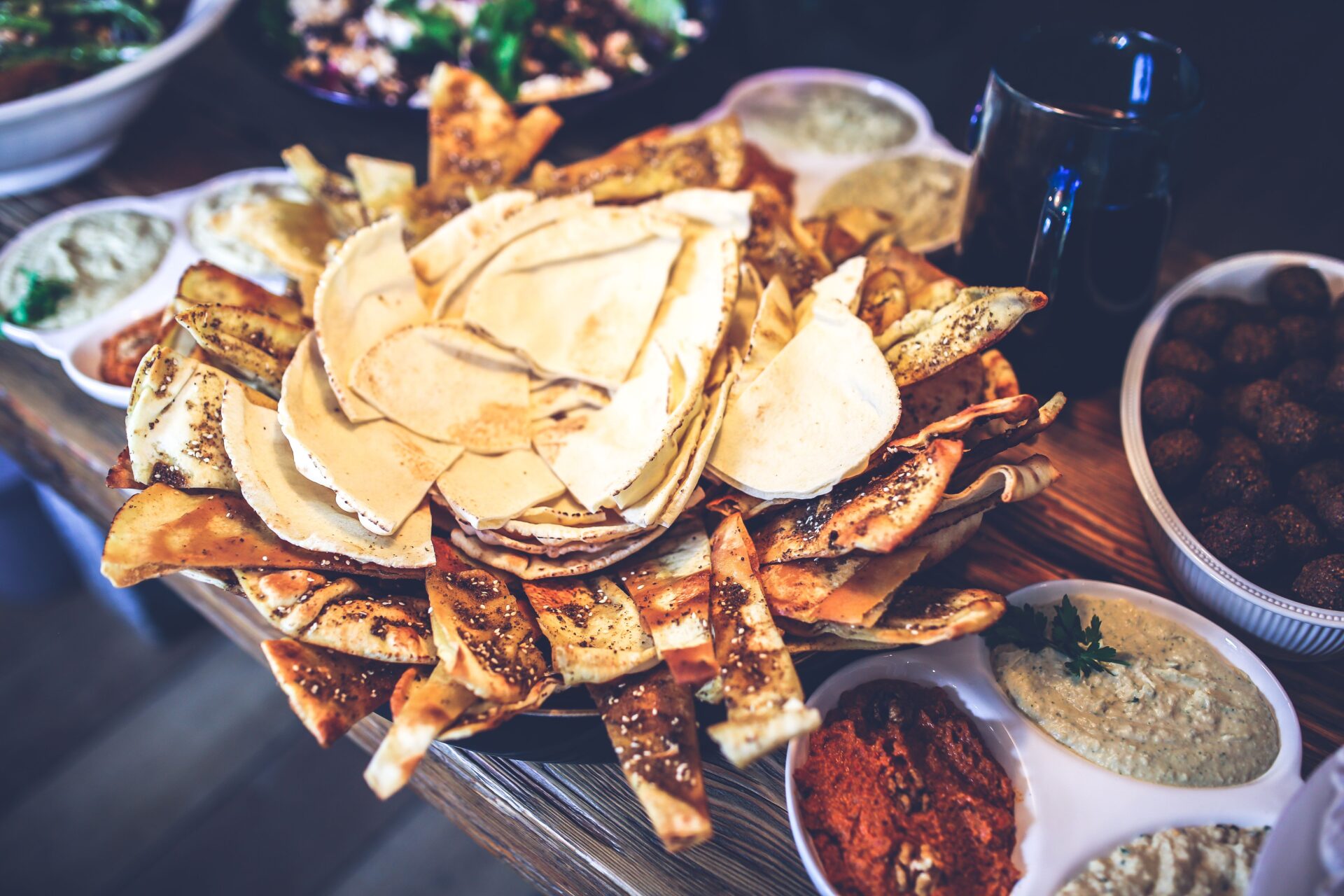
The mezze guide that treats the Middle Eastern shared appetiser spread as the cultural institution it is rather than the starter course it becomes when the Western restaurant reduces it to hummus and pitta: the Lebanese mezze (the 30-40 small dishes at the full Beirut table, the kibbeh nayeh (the raw lamb mince with the bulgur and the spice, the specific Lebanese dish that the hygiene standards of other cuisines prohibit and that the Lebanese serve with the pride of the tradition that produced it), the Iranian khoresh mezze (the dried fruit and nut stews that the Persian civilisation contributed to the shared Levantine table), and the Turkish meze (the manti (the handmade dumplings, smaller than the Georgian khinkali, the yoghurt and the butter sauce giving the specific Turkish variant)) — and why the mezze table, at its best, is the argument that the Middle East makes most compellingly for its food culture’s specific contribution to the world.
Reading time: 7 minutes | Last updated: 2025
The Mezze Philosophy
The mezze (the word from the Persian maze — taste, relish) is not the appetiser. At the Lebanese or the Turkish table, the mezze is the meal — the 30+ small dishes constituting the full lunch or the dinner, the sharing format that removes the individual portion logic of the European plate and replaces it with the communal abundance.
The ordering sequence: the cold mezze first (the hummus, the mutabal (the aubergine dip), the tabbouleh, the fattoush), then the hot mezze (the falafel, the sambusek, the kibbeh, the kofta), then the grilled meat if the table wants it, then the dessert. At the Beirut table: these courses arrive continuously for 3 hours.
The Essential Dishes
Hummus (حمص): The chickpea puree — the tahini (the sesame paste), the lemon, the garlic, the olive oil. The hummus that the UK supermarket sells and the hummus that the Damascus restaurant serves differ in: the freshness (made daily at the Damascus restaurant, made in a factory 6 weeks ago by the supermarket brand), the tahini ratio (the Levantine standard uses 2-3× the tahini of the UK brand), and the temperature (the hummus should be served warm).
Mutabal (also: baba ganoush) (متبل): The roasted aubergine puree — the aubergine charred directly over the flame (the specific smokiness that the oven-roasted aubergine does not give), the tahini, the lemon, the pomegranate seeds visible on the surface at the reference restaurant. The mutabal versus the baba ganoush distinction: the mutabal uses more tahini and yoghurt; the baba ganoush uses more olive oil and is often made without tahini in the Egyptian version.
Tabbouleh (تبولة): The Lebanese herb salad — the specific Lebanese tabbouleh (mostly parsley and mint, a small amount of bulgur — the Western restaurant version inverts this ratio) with the tomato, the lemon, the olive oil. The tabbouleh quality test: if the bulgur is the dominant visual element, the ratio is wrong.
Kibbeh (كبة): The Levantine meat dumpling — the outer shell of the bulgur and the lamb paste, the filling of the spiced minced lamb with the pine nut, the shape (the American football oval, the specific kibbeh form). Three versions: the raw kibbeh (kibbeh nayeh — the seasoned raw lamb mince, the Lebanese version of the steak tartare), the fried kibbeh (the deep-fried shell, the cooked filling), and the baked kibbeh (the flat tray, the layered preparation).
Fattoush (فتوش): The Levantine bread salad — the toasted or fried pieces of the khubz (the flatbread), the tomato, the cucumber, the radish, the purslane (the specific fattoush herb — the fleshy-leafed succulent visible in the authentic fattoush and absent in the European approximation), the pomegranate molasses dressing.
Manti (مانتی): The Turkish handmade dumpling — the tiny parcel (the authentic manti is the size of a fingernail — the restaurant challenge is to fit 40 manti on a spoon), the lamb filling, the two sauces: the garlic yoghurt and the Aleppo pepper butter.
Falafel (فلافل): The chickpea fritter — the specific falafel dispute (Egypt uses the fava bean, the Levant uses the chickpea, both are called falafel). The quality falafel is fried immediately before serving; the pre-fried falafel loses the crust-to-soft interior contrast within 20 minutes.
Where to Eat the Best Mezze
Beirut: The Tawlet restaurant (Naher Street, Mar Mikhayel — the communal table lunch, the mezze prepared by the Lebanese home cooks from different regions, the Sunday lunch the most specific):
Istanbul: The Çiçek Pasajı (the Flower Passage, Beyoğlu — the meyhane (the Turkish tavern, the rakı and the cold mezze table, the specific Istanbul evening)):
London: The Honey & Co (Warren Street — the Israeli-British mezze table, the lamb neck shawarma, the tahini pudding):
Hummus quality benchmark: The Ottolenghi (multiple London locations) gives the UK hummus closest to the Levantine standard — the same-day preparation, the correct tahini ratio, the warm serving temperature.