
The complete guide for travellers: Stone Town’s carved doors and living medina done properly, the beach honestly matched to the type of traveller, the spice farm tour that makes you feel ignorant about ingredients you cook with every week, Prison Island’s tortoises that are older than living memory, Mnemba Atoll’s coral that consistently ranks among the finest in the Indian Ocean, whale sharks off Pemba, and why Zanzibar is more than the sum of its beach photographs.
Reading time: 14 minutes | Last updated: 2026
Zanzibar earns its reputation — but the reputation is about the wrong thing.
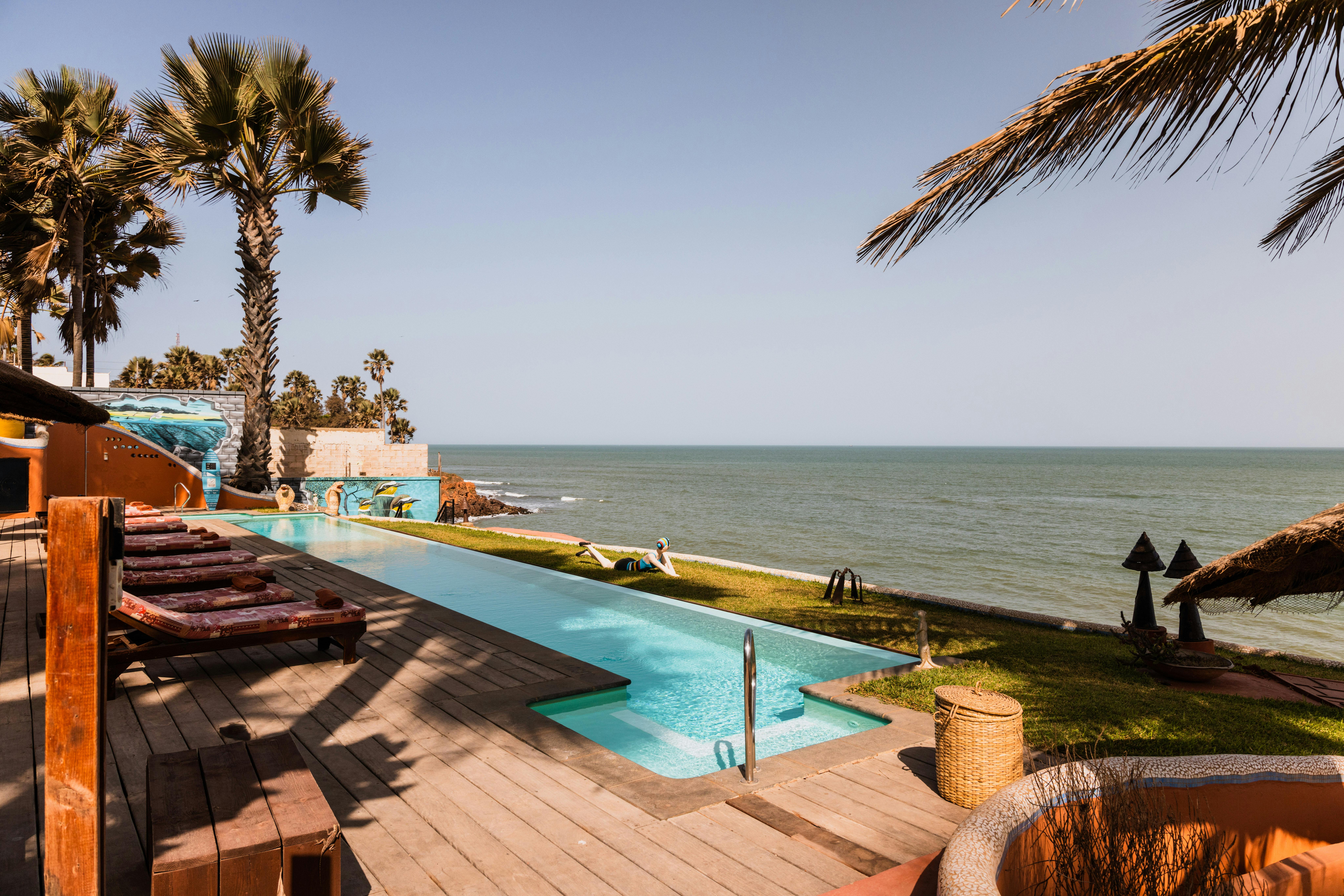
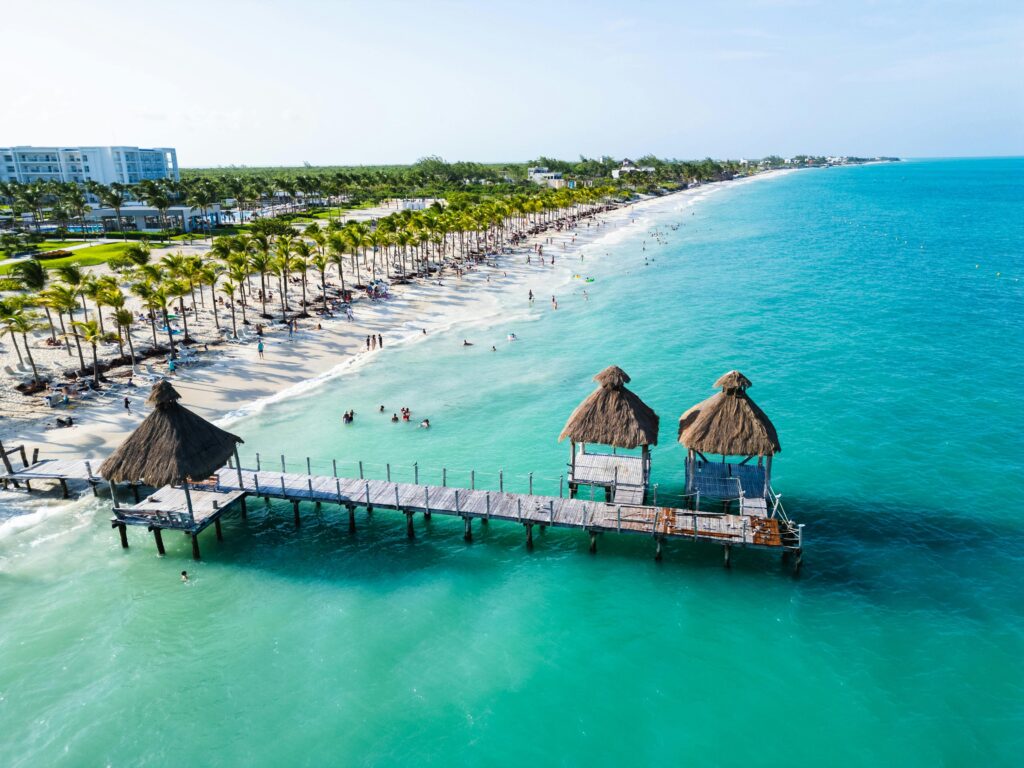
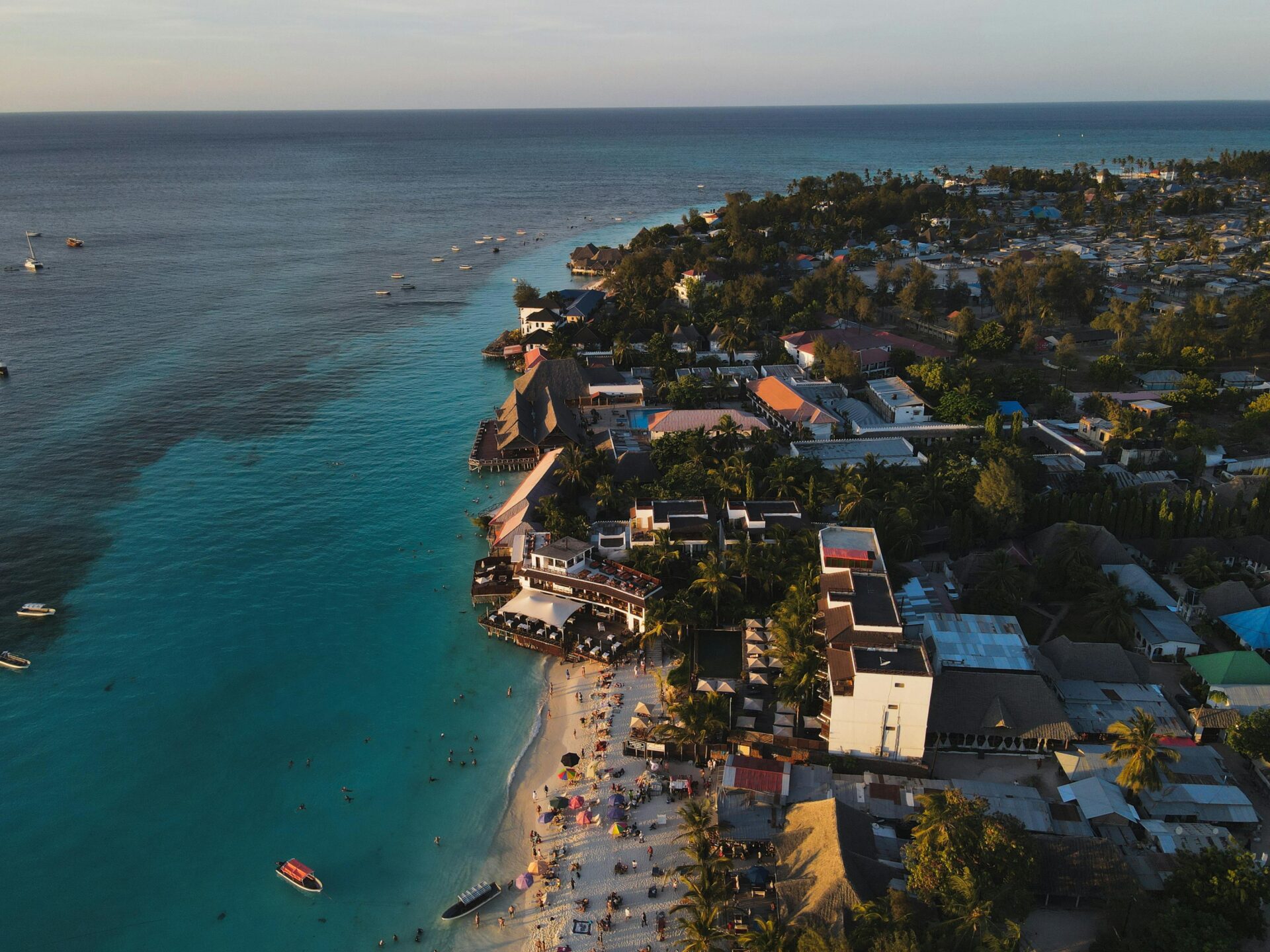
The photographs that circulate — the white sand, the turquoise water, the dhow at sunset — are accurate. The beaches of Nungwi and Kendwa are genuinely extraordinary. The Indian Ocean around the northern tip of the island is the specific turquoise that appears in the photographs and doesn’t require filtering.
But the beaches are the least interesting thing about Zanzibar.
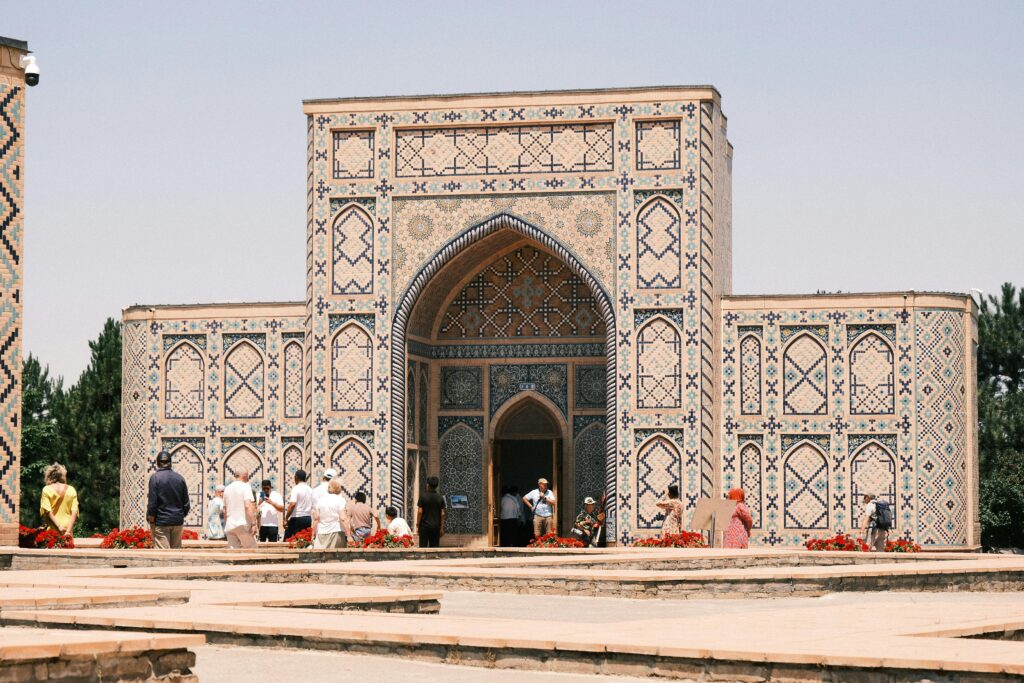
The island is a layered civilisational product of Arab, Persian, Indian, Portuguese, and Swahili cultures, accumulated over a thousand years of trade at the crossroads of the Indian Ocean. Stone Town — the old quarter of Zanzibar City — is a UNESCO World Heritage Site that is genuinely still inhabited rather than preserved for display. The carved wooden doors (over 500 of them, each one distinct, the most concentrated collection of carved doors in East Africa) were commissioned by the Arab and Indian merchants who built the houses behind them to signal their wealth and their status. The House of Wonders was the first building in East Africa to have electricity and an elevator.
The island was the world centre of the clove trade for most of the 20th century. The spice farms in the interior still produce cloves, vanilla, nutmeg, cinnamon, black pepper, and ylang-ylang. A spice farm tour with a competent guide is the most disorienting thing available in Zanzibar — the combination of smelling raw vanilla, tasting raw cinnamon, and being blindfolded and asked to identify nutmeg (which you will almost certainly fail to do correctly) recalibrates your relationship with your own kitchen.
This guide covers all of it — the beaches matched to the right type of traveller, Stone Town done with the time it deserves, the marine environment honestly assessed, and the cultural context that makes Zanzibar coherent rather than just beautiful.
Quick Navigation
- The Case for Zanzibar — The Island Beyond the Resort
- When to Go — The Indian Ocean Seasons
- Getting There — The Routing Options
- Stone Town — The Living UNESCO City
- The Forodhani Night Market
- Prison Island and the Tortoises
- The Spice Farm Tour — Done Properly
- The Beaches — Matched to Your Travel Style
- Nungwi and Kendwa — The North
- Matemwe and the Northeast — The Quiet Coast
- Paje and the East — The Kite Coast
- Mnemba Atoll — The Coral Ring
- Whale Sharks — The Pemba Channel
- Jozani Forest — The Red Colobus
- Hidden Zanzibar — Pemba Island and the Outer Atolls
- What It Costs — Real Numbers
- Eating in Zanzibar — The Swahili Coast Kitchen
- Practical Notes
- The 7-Day Itinerary — Stone Town, Spice Farm, Beach, and Reef
The Case for Zanzibar — The Island Beyond the Resort
Zanzibar (formally the Zanzibar Archipelago, an autonomous region of Tanzania) has been a centre of Indian Ocean trade for at least 2,000 years. Arab merchants from Oman established a permanent settlement in the 10th century and the island became the primary hub of the East African slave trade and the clove economy by the 19th century. The Omani Sultanate moved its capital from Muscat to Zanzibar in 1840 — the island was more commercially significant than the Arabian Peninsula base for much of the 19th century.
The slave trade operated at an extraordinary scale: an estimated 700,000 enslaved people passed through Zanzibar between 1830 and 1873 alone. The Zanzibar slave market was the largest in East Africa. The Anglican Christ Church Cathedral in Stone Town was built in 1879 on the site of the last slave market — the altar stands on the spot where the whipping post stood. This is not background information. It is the specific weight that Stone Town carries and that makes the beauty of its streets a complex rather than a simple pleasure.
The island was also the birthplace of Freddie Mercury (born Farrokh Bulsara, 5 September 1946, in Stone Town — there is now a museum in the house where he was born).
This is Zanzibar: the extraordinary beaches, the living medieval city, the weight of the slave trade, the clove economy, and the birthplace of one of the greatest rock performers of the 20th century. All within a 3.5-hour flight from Nairobi.
When to Go — The Indian Ocean Seasons
June to October — The Long Dry Season
The finest season for most activities. Clear skies, moderate temperatures (24-29°C), the Indian Ocean calm and clear. This is the peak whale shark season (June-September off Pemba Island and around Mafia Island to the south). The reef visibility at Mnemba Atoll is at its highest. The beaches are busy with European visitors; accommodation at the northern resorts books ahead.
December to February — The Short Dry Season
The second good window. The southeast monsoon has ended; the northwest monsoon (kaskazi) brings warm, calm weather to the northern and eastern coasts. Water temperatures are at their highest (28-30°C). Less crowded than June-October. Some December rain is possible but typically brief.
The Monsoons:
The long rains (masika) arrive in March-April — heavy, persistent, the beach resorts reduce their services, some close entirely. Not the time to go unless you have a specific reason.
The short rains (vuli) fall October-November — shorter, less reliable, the weather can be fine or wet with no strong predictability.
The BGGD recommendation: June-September for whale sharks, clear reefs, and the finest beach weather. December-January for a quieter version of the same with warmer water.
Getting There — The Routing Options
From the UK:
No direct flights from the UK to Zanzibar. The main connection points:
Via Nairobi: Kenya Airways, British Airways (to Nairobi, then Kenya Airways to Zanzibar). Total journey: 12-14 hours. The Nairobi connection is the most reliable for Zanzibar.
Via Dar es Salaam: Multiple airlines serve Dar es Salaam (Tanzania mainland); Precision Air, Coastal Aviation, and Flightlink connect Dar es Salaam to Zanzibar by flight (45 minutes) or there are ferries across the channel (2 hours by fast ferry, £8-12).
Via Doha: Qatar Airways to Dar es Salaam, then onward to Zanzibar. Total journey: 13-15 hours.
Via Dubai: Emirates to Dar es Salaam, then connection. Total journey: 13-15 hours.
Direct to Zanzibar:
Zanzibar’s Abeid Amani Karume International Airport (ZNZ) receives direct international flights from several European cities (including Rome, Milan, Zurich, Warsaw) in peak season. UK-based operators occasionally run charter direct services — check with Jet2 and TUI for current schedules, as these vary by year.
Return flights from the UK to Zanzibar (via Nairobi or Dar es Salaam): £550-800 booked 8-12 weeks ahead.
Getting from the airport:
Zanzibar airport is on the southwestern outskirts of Stone Town — 15 minutes from the Stone Town accommodation, 1-2 hours from the northern and eastern beach areas. Fixed-rate taxis: approximately £6 to Stone Town, £25-35 to Nungwi or Paje. Arrange through your accommodation for a reliable pickup.
Stone Town — The Living UNESCO City
Stone Town is the old quarter of Zanzibar City — a dense grid of narrow alleyways, carved wooden doors, Arab and Indian merchant houses, mosques, churches, and the former Sultan’s palace, all built from coral rag (a naturally occurring stone formed from compressed coral) and lime plaster. It has been inhabited continuously for over a thousand years and UNESCO-listed since 2000.
The key quality: Stone Town is a living city, not a preserved one. Approximately 17,000 people live in the old town. The streets are busy with daily life — schoolchildren heading to the Arabic schools, women in buibui (black covering robes) carrying shopping, electricians working on the wiring that has been draped across the coral rag buildings for the past 50 years, cats at every corner in the specific profusion that Arab-influenced port cities always seem to produce.
The carved doors:
The most distinctive visual element of Stone Town — over 500 carved wooden doors in the old town, each commissioned by the original merchant who built the house. The doors encoded status: the height of the door indicated wealth, the brass studs (originally used in Indian architecture to resist elephant charges — transplanted to Zanzibar as purely symbolic) indicated Indian influence, the carved frames indicated Arab aesthetics.
The doors are in varying states of preservation — some are magnificently maintained, some are falling apart, some have been replaced with modern doors while the carved frame survives. Walking Stone Town to find the finest doors is a navigational game with no fixed route and good outcomes in any direction.
The House of Wonders (Beit el-Ajaib):
Built in 1883 by Sultan Barghash bin Said — the largest building on the Zanzibar waterfront, the first building in East Africa to have electricity (installed 1883), and the first in East Africa with a mechanical elevator (installed for the Sultan’s personal use). The building subsequently served as the ceremonial palace, then a British colonial government building, then the headquarters of the ruling party after independence.
It is currently (as of 2025) closed for restoration following structural damage — check current access when planning. The exterior and the waterfront it faces are accessible and worth seeing.
The Old Fort (Ngome Kongwe):
Built by Omani Arabs in the early 18th century on the site of a Portuguese church — the oldest surviving building in Stone Town, its coral rag walls still intact. The interior courtyard now serves as an open-air cultural venue: art exhibitions, craft markets, and evening music performances. Entry to the courtyard: free. The music performances (particularly the taarab music evenings, where the specifically Zanzibari musical tradition combining Arabic, Indian, and African elements is performed) are the correct cultural evening in Stone Town.
The Slave Market Site and Christ Church Cathedral:
Built 1879 by the Anglican Church on the site of the last great slave market in East Africa — the location is not incidental. The altar of the cathedral stands exactly where the whipping post stood. There is a small museum beneath the cathedral documenting the Zanzibar slave trade and the efforts to end it (primarily by David Livingstone’s advocacy and the Royal Navy’s anti-slaving patrol). Entry: £3.
The five slave chambers beneath the cathedral (where enslaved people were kept before auction) are accessible as part of the museum tour. The chambers are small, low-ceilinged, and have the acoustic and spatial quality of a crypt. Visit them. This is the same imperative as Gorée Island, the Killing Fields, Tuol Sleng.
The Freddie Mercury House:
On Kenyatta Road in Stone Town — the house where Freddie Mercury was born in 1946, now a museum (Mercury’s House). Entry: £6. The exhibition covers his Zanzibar childhood (he left for India at age eight and subsequently moved to England), his family’s Parsi heritage, and the specific Zanzibar cultural context that preceded his more famous life. A pilgrimage for fans; an interesting cultural document for everyone else.
Navigation note:
Stone Town is genuinely labyrinthine. Getting lost is not a failure — it’s the experience. The alleys don’t follow a grid and the signage is inconsistent. Your phone’s GPS will work but the map will sometimes show you on an alley that isn’t quite where it says it is. Allow extra time, carry water, and assume any wrong turn will eventually produce something interesting.
The Forodhani Night Market
Every evening from sunset to approximately 10pm, the Forodhani Gardens on the Stone Town waterfront transforms into a seafood night market — the most atmospheric and most consistently excellent cheap meal available in Zanzibar.
The format: rows of gas-lit stalls, each specialising in a specific preparation. The vendors call from every stall simultaneously; walk the full length before committing. The prices are fixed and low (most items £0.80-3.50).
The specific things to eat:
Zanzibari pizza (mkate wa ufuta or urojo chapati stuffed with egg, meat, and vegetables, folded and cooked on the griddle — entirely unlike Italian pizza, named by the vendors and now beloved by every visitor): £0.80-1.50.
Grilled lobster (half a small lobster, butter and garlic, grilled to order): £2.50-4. The lobster is from the surrounding waters, caught that morning.
Mishkaki (skewered grilled meat — beef or chicken, marinated in coconut milk and spices): £0.50-0.80/skewer.
Urojo (Zanzibar mix) — a soup of potato, mango, bhajia (lentil fritters), coconut chutney, and lime, served in a cup: £0.70. One of the most specifically Zanzibari preparations, tasting of the specific Indian Ocean spice-trade mixture that defines the island’s cuisine.
Sugarcane juice pressed at the stall: £0.40.
The crowds:
The Forodhani market is one of the most visited spots in Zanzibar — it’s in every guidebook and on every tour itinerary. By 7pm on a Saturday in peak season, it’s crowded. The experience is still excellent — the market is large enough to absorb the visitors, and the food quality doesn’t vary much by stall. Go at 6pm (market just opening, the freshest preparations, the best light) or at 9pm (the crowd has thinned, the vendors are working through their remaining stock at slightly lower prices).
Prison Island and the Tortoises
Changuu Island (universally called Prison Island) is 30 minutes by wooden boat from Stone Town — the boat trips depart from the town pier throughout the morning, typically taking 8-12 passengers, returning after 2-3 hours.
The island was built as a prison by an Arab slave trader in the 1860s and subsequently taken over by the British for use as a quarantine station and then a prison. The prison was never significantly used for either purpose. What it does have:
The Aldabra giant tortoises:
A colony of approximately 120 Aldabra giant tortoises, some over 150 years old (Aldabra tortoises can live to 250 years — the oldest individuals on Prison Island were alive during the Omani Sultanate period). They were brought to Zanzibar as a gift to the British colonial administration in 1919 and have been here since.
The tortoises are completely unhurried by human proximity. They move at the pace specific to an animal that has nowhere to be urgently. You can hand-feed them (eucalyptus leaves available from the island wardens, or they simply graze in your immediate vicinity). The experience of a 150-year-old animal that weighs 250kg eating from your hand, slowly, without particular concern, is one of the more specific things available in East Africa.
Entry: £10 (includes boat trip and island entry). The surrounding reef is accessible for snorkelling directly off the beach — coral in reasonable condition, reef fish diverse and easily visible in the clear water.
The Spice Farm Tour — Done Properly
Zanzibar was the world’s largest clove producer for much of the 19th and 20th centuries — the clove economy, established by Arab merchants in the early 19th century using enslaved labour, shaped everything about the island’s development, land ownership, and political history. The spice farms of the interior (primarily in the Mkokotoni region of northwest Zanzibar) still produce: cloves, vanilla, black pepper, nutmeg, cinnamon, cardamom, ylang-ylang, turmeric, ginger, and several dozen other spices.
The experience:
A competent spice farm guide walks you through the farm, identifying each plant, demonstrating how each spice is processed (cloves are the flower buds of a tree — they’re harvested before the bud opens; vanilla is an orchid vine whose pods must be hand-pollinated because the natural pollinator doesn’t exist outside Mexico; nutmeg is both a spice and a separate product called mace, which is the red lacy covering around the nutmeg seed inside the fruit), and giving you each spice to smell and taste in its fresh, unprocessed form.
The blindfold section: the guide blindfolds willing visitors and holds up a series of spice samples to identify by scent. The cloves are usually identified correctly (very distinctive); the vanilla usually not (the fresh pod smells almost nothing like vanilla extract); the nutmeg rarely; the ylang-ylang almost never. The combination of smelling an ingredient you’ve cooked with for years in its raw, unprocessed form — and failing to identify it — is one of the more effectively humbling small experiences available in travel.
The good tour versus the bad:
The bad spice farm tour: a tourist bus version, 25 people, a guide who walks briskly through the plants and delivers a memorised script, a craft stall at the end with pressure to buy. Cost: £15-20, feeling: processed.
The good spice farm tour: arranged through your guesthouse or directly with a Mkokotoni farm, maximum 4-6 people, a guide who grew up among these plants and knows their medicinal uses as well as their culinary ones, fresh coconut served at the end. Cost: £8-12. Feeling: the best half-day in Zanzibar.
Farms worth booking through: Tangawizi Farm, Kizimkazi Spice Farm, or any farm recommended by your Stone Town guesthouse owner who has a direct relationship with the farm (not a commission arrangement with a tourist bus company). The specific request: “Can you book the spice farm directly, not through a tour operator?” will usually produce the right version.
The Beaches — Matched to Your Travel Style
Zanzibar’s beaches are not interchangeable. The tidal pattern, the wave exposure, the development level, and the crowd density vary significantly between the northern and eastern coasts. The correct beach depends on what you’re there for.
The tide reality:
Zanzibar has extreme tidal variation — the difference between high and low tide can be 3 metres. At low tide, the tidal flats on the eastern coast extend hundreds of metres from the beach, the water retreating so far that the sea disappears. On the northern coast (Nungwi and Kendwa), the depth of the water table means the sea remains swimmable at low tide. This is the primary practical distinction between the north and the east.
Nungwi and Kendwa — The North
Nungwi:
The most developed beach area in Zanzibar — a village at the northern tip of the island that has grown substantially around tourism while maintaining its fishing community character. The beach: white sand, turquoise water that remains swimmable at low tide (the natural lagoon at the northern tip means the water doesn’t retreat), calm in the morning and slightly windier in the afternoon.
The village itself: worth a walk through — the dhow building yard at the northern point (the craftsmen building traditional wooden sailing dhows using hand tools, the same boat design that has crossed the Indian Ocean for a thousand years), the fish market at the morning landing.
The resort strip: significant. A continuous line of hotels, guesthouses, restaurants, and beach bars from the point south along the beach. The development is the highest on the island. The ambience: lively, social, the evening focused on the beach bars and restaurants rather than the Stone Town cultural life.
Accommodation from £30/night (guesthouse) to £250+/night (resort). Book ahead in peak season (July-August).
Kendwa:
3km south of Nungwi along the coast — quieter, fewer hotels, no proper village (the fishing community is slightly further south). The beach character: the same swimmable-at-low-tide quality as Nungwi, slightly calmer atmosphere, the famous Kendwa Rocks Full Moon Party (held monthly, draws international visitors specifically for it — loud, late, fun if that’s what you’re there for, a reason to be elsewhere if not).
Matemwe and the Northeast — The Quiet Coast
Matemwe:
On the northeast coast — the quietest section of Zanzibar’s main beach areas. The beach at Matemwe is wider than the north, the sand finer, the accommodation primarily small boutique lodges and guesthouses rather than resorts. The fishing village character is more intact than at Nungwi.
The primary activity from Matemwe: the Mnemba Atoll snorkelling and diving (see next section). The atoll is accessible by 20-minute boat from Matemwe beach — this is the correct base for serious reef time.
The tidal flat situation: the eastern coast’s low tide does reduce swimming significantly. Build this into your day planning — the tides shift by approximately 50 minutes each day, so the ideal swimming window moves through the day across the week.
Accommodation: boutique eco-lodges from £55-90/night. A&K’s Mnemba Island Lodge on the atoll itself is the most exclusive accommodation in Zanzibar (£600-900/night full board, private island access to the finest reef in Zanzibar) and entirely different from the mainland Matemwe lodges in price and character.
Paje and the East — The Kite Coast
Paje:
The kite-surfing capital of East Africa. The tidal flat that extends at low tide creates a flat-water lagoon with consistent southeast trade winds — perfect kitesurfing conditions from June to September. The beach at Paje is genuinely extraordinary visually (the stretch of white sand, the shallow turquoise lagoon at low tide, the kite surfers visible from the beach road) and completely different in character from the north.
For non-kite surfers: the accommodation in Paje is some of the best value on the island, the beach is beautiful at high tide, and the pace is slower than the north. The restaurants and bars at Paje have developed a specific character — outdoor, fire-lit, the sunset over the lagoon a reliable event.
Kite school costs: beginners’ course £60-80 for 3 hours, equipment included. The IKO (International Kiteboarding Organisation) certified schools at Paje are reliable. Ask at your accommodation.
Mnemba Atoll — The Coral Ring
Mnemba Atoll is the finest reef in Zanzibar and one of the finest in the entire Indian Ocean — a ring of coral 2km in diameter surrounding Mnemba Island (a private island owned by &Beyond, accessible only to lodge guests). The reef is a marine conservation area; a portion of the entry fee goes directly to reef protection.
What’s in the water:
Green sea turtles (year-round — the atoll is a feeding and nesting ground), reef sharks (blacktip and whitetip, year-round, entirely harmless in the context of reef diving), dolphins (spinner and bottlenose, frequent), humphead parrotfish (the largest parrotfish species, reef-grazing in schools), and a coral garden of extraordinary density and health — table corals, brain corals, fan corals, soft corals in the depth.
Visibility: typically 20-30 metres in the dry season, 15-20 metres in the wet.
Getting there:
Day trip snorkelling from Matemwe (20-minute boat, £15-20/person including equipment) or from Stone Town (1-hour boat, £25-35 including equipment). The day trip from Stone Town typically combines Prison Island with Mnemba — the full day is the correct allocation.
Diving: multiple dive operators on the island (One Ocean, East Africa Diving) run two-tank dive trips to Mnemba from Matemwe and Stone Town. PADI Open Water certification: 3 days, £250-320. Day dives for certified divers: £35-50 with equipment.
The turtle snorkelling:
Green sea turtles at Mnemba approach within 2-3 metres of snorkellers without concern — they’re habituated to the presence of boats and swimmers. The experience of a 100kg sea turtle grazing on seagrass at eye level, surfacing to breathe, and returning to the reef below is one of the finest accessible marine wildlife encounters in East Africa.
Whale Sharks — The Pemba Channel
Between June and September, whale sharks (Rhincodon typus) aggregate in the Pemba Channel — the deep water between Zanzibar and Pemba Island to the north. The aggregation is driven by plankton and fish spawn activity in the cold upwelling water of the channel.
The snorkelling experience (not diving — whale sharks feed at the surface): a boat locates a whale shark by its dorsal fin at the surface. The guide enters the water first. Snorkellers slip in beside it and swim parallel. The whale shark moves at 3-4km/h — manageable with a snorkel. It may surface to breathe every 5-7 minutes, the encounter lasting 10-30 minutes before the animal dives or moves away.
Tour operators running whale shark trips from Nungwi or Stone Town: £40-65/person including equipment. The boats depart early (6am) to reach the Pemba Channel before the afternoon wind develops. Success rate in peak season (July-August): approximately 70-80% on most mornings.
The responsible encounter:
The IUCN guidelines for whale shark encounters specify: no touching, maintain 3 metres distance from the body and 4 metres from the tail, no flash photography, no riding or chasing. Reputable operators brief participants on these guidelines before the boat departs. The whale shark tour operators at Nungwi who display the Responsible Whale Shark Tourism certification are the correct ones to book with.
Jozani Forest — The Red Colobus
The Jozani Chwaka Bay National Park is in the centre of Zanzibar island — a forest that is the last significant fragment of the ancient coral rag forest that once covered much of the island. The primary wildlife: the Zanzibar red colobus monkey (Piliocolobus kirkii), found only on Zanzibar, critically endangered, population approximately 1,500 individuals.
The red colobus of Jozani are habituated to human presence — the troops move through the forest canopy at 3-5 metres above the path and occasionally descend to ground level. The red-crowned, black-faced appearance is entirely distinct from any mainland African primate. They are arboreal (tree-dwelling), leaf-eating specialists, and their social structure (large mixed troops) is visible in the forest — the adult males calling, the mothers carrying infants, the juveniles playing in the canopy.
Entry: £8, including a guided forest walk (1-1.5 hours). The guide navigates to the current troop location using knowledge of their territory. The colobus at Jozani are the most reliably sighted endemic wildlife species in Zanzibar.
The mangrove boardwalk (adjacent to the main forest trail): a raised wooden walkway through the tidal mangroves on the eastern side of the reserve — the mangrove ecosystem is one of the finest nursery environments for the reef fish of Mnemba Atoll. The ecological connection between the forest, the mangroves, and the reef is explained by the guides.
Hidden Zanzibar — Pemba Island and the Outer Atolls
Pemba Island:
The northern island of the Zanzibar Archipelago — 60km north of Zanzibar, accessible by daily catamaran (3 hours, £30 one way) or by domestic flight (25 minutes, £60-80 one way). Pemba receives approximately 5% of Zanzibar’s visitors despite being, by the assessment of most experienced divers who have been to both, the better diving destination.
The Pemba Channel off the western coast drops to 800 metres within a kilometre of the shore. The upwelling of cold, nutrient-rich water creates conditions for the large pelagic species (whale sharks, hammerhead sharks, manta rays, large schools of barracuda and jack) that are rarer off the main Zanzibar island. The coral on the west coast walls of Pemba is assessed by marine biologists as among the most pristine in the Western Indian Ocean.
Pemba has almost no tourist infrastructure — a handful of dive lodges, no beach resorts, no night market. This is either a reason to go or a reason not to, depending on the traveller.
The Mafia Island Archipelago:
South of Zanzibar and technically separate from the Zanzibar Archipelago (administered directly by Tanzania), Mafia Island has the finest whale shark aggregation in the Indian Ocean from October to March (a different season from the Pemba Channel aggregation, driven by the Rufiji River delta plankton bloom). The Mafia Island Marine Park is one of the first marine parks in East Africa. Accessible by 45-minute domestic flight from Dar es Salaam.
The Chumbe Island Coral Park:
A small uninhabited island 15km south of Stone Town — a private marine conservation area and the first privately managed marine protected area in Africa. The reef on the western side of Chumbe is one of the most pristine in the Indian Ocean — no tourist boats, no fish feeding, the snorkelling experience managed by a conservation organisation rather than a commercial tour operator. Day visits: £80-100/person (expensive, genuinely exclusive, and the conservation contribution is real). Overnight stays available at the eco-lodge: £250-350/night full board.
What It Costs — Real Numbers
Zanzibar’s costs span a wider range than almost any destination in this guide — from budget guesthouses in Stone Town at £15/night to Mnemba Island Lodge at £600+/night. The experience available at the budget end (Stone Town guesthouse, Forodhani night market dinner, Jozani day trip, Matemwe snorkelling) is fundamentally the same island as the luxury end but without the resort infrastructure.
Daily Budgets
Budget (£35-50/day)
- Accommodation: Stone Town guesthouse or simple beach lodge (£15-25/night)
- Food: Forodhani night market, local restaurants, fruit (£8-12/day)
- Activities: Prison Island, Jozani, beach
Mid-range (£65-90/day)
- Accommodation: boutique guesthouse or mid-range beach lodge (£35-55/night)
- Food: restaurant dinners, market lunches (£14-22/day)
- Activities: Mnemba snorkelling, spice farm, whale shark tour
Comfortable (£120-200/day)
- Accommodation: boutique resort (£80-150/night)
- Food: resort dining and quality restaurants (£25-40/day)
- Activities: diving, private boat hire
What 7 Days in Zanzibar Actually Costs from the UK
| Category | Budget | Mid-Range |
|---|---|---|
| Return flights (via Nairobi or Dar) | £550–750 | £650–850 |
| 7 nights accommodation | £120–200 | £280–450 |
| Food (7 days) | £70–100 | £120–185 |
| Prison Island boat trip | £15–20 | £15–20 |
| Spice farm tour | £8–12 | £10–15 |
| Mnemba snorkelling or diving | £20–35 | £35–55 |
| Jozani Forest entry | £8 | £8 |
| Whale shark tour (if in season) | £40–65 | £55–80 |
| Local transport | £20–35 | £30–55 |
| Total | £851–1,225 | £1,193–1,718 |
Eating in Zanzibar — The Swahili Coast Kitchen
Zanzibari cuisine is the most complex and most specifically Indian Ocean food culture in East Africa — the product of Arab, Indian, Persian, Portuguese, and African culinary traditions layered over a thousand years of spice trade. The Swahili Coast kitchen uses the spices grown on the island’s farms in ways that mainland East African cuisine doesn’t approach.
Pilau:
Rice cooked in a broth with whole spices (cardamom, cloves, cinnamon, black pepper, cumin) — the Zanzibari version of a spiced rice pilaf. The preparation: the rice is toasted dry before the broth is added, the whole spices present throughout cooking and removed at table by the eater. The specific combination of the clove and cardamom aromatic with the rice gives pilau a flavour that identifies it immediately as Zanzibari rather than Indian or Omanhi.
Biryani:
The Indian subcontinent’s layered rice dish arrived in Zanzibar via Oman and India, adapted over centuries of trade. The Zanzibari version: goat or chicken, the rice more aromatic and less spiced with dried fruit than the South Asian version, the meat more prominently spiced with the island’s own production of cloves and cardamom. Available at the Forodhani market and at the specialist biryani restaurants of Stone Town.
Urojo (Zanzibar Mix):
The most specifically Zanzibari dish — a thick soup combining: cassava chips, potato, mango, coconut chutney, bhajia (chickpea flour fritters), and lime, everything in the same bowl. The combination sounds impossible and the result is one of the most complex and enjoyable single food experiences on the island. Available at the Forodhani night market (the specialist urojo stalls, usually midway along the market) and at the Lukmaan Restaurant in Stone Town (the classic urojo venue). Cost: £0.70-1.50.
Samaki wa kupaka (Grilled fish in coconut sauce):
Whole fish — red snapper, grouper, kingfish — grilled over charcoal with a basting sauce of coconut milk, garlic, turmeric, and lime. The coconut milk caramelises on the grill surface, the fish skin charring through the sauce. The most common method of preparing the catch of the day throughout the island. At any good seafood restaurant or the Forodhani market: £3-8 depending on fish size.
Zanzibar pizza (mkate wa ufuta):
A street food preparation — flatbread stuffed with egg, minced meat, onion, and cheese or vegetables, folded and cooked on a griddle. Named “pizza” by the vendors for international recognition but structurally closer to a stuffed paratha. The correct way to eat it: standing at the stall, immediately, before it cools. Cost: £0.80-1.50.
The Lukmaan Restaurant, Stone Town:
The reference for traditional Zanzibar home cooking — a simple, informal restaurant on Gizenga Street in Stone Town where the menu changes daily based on what was available in the market that morning. The biryani, the pilau, the curries, and the urojo are all cooked by women from the community using the same recipes they cook at home. No ambience engineering; the food is the point. Lunch only. Expect to share a table. Cost: £2-4 for a full plate. One of the finest cheap lunches available in East Africa.
Coconut milk in everything:
The island’s coconut production means that coconut milk is the cooking liquid for a significant portion of Zanzibari cuisine — in the sauces, in the curries, in the rice, in the desserts. The Zanzibari kitchen without coconut milk is not the Zanzibari kitchen. The fresh coconut water sold from carts throughout Stone Town (the whole coconut opened with a machete, a straw inserted, the fresh cool liquid inside) is the correct afternoon drink in any season.
Practical Notes
Visa: UK passport holders entering Zanzibar (as part of Tanzania) require a Tanzanian visa. Available on arrival at Zanzibar airport and all Tanzanian international airports (cost: £40-50 for single entry). An e-visa is available at eservices.immigration.go.tz — apply before travel. Note: if entering Tanzania via mainland Tanzania and then travelling to Zanzibar, the visa covers both (Zanzibar is an autonomous region of Tanzania). If arriving directly to Zanzibar International Airport without first entering mainland Tanzania, the same visa applies.
Getting there: Via Nairobi (Kenya Airways, British Airways) or via Dar es Salaam (multiple carriers). Connection from Dar es Salaam to Zanzibar: domestic flight (45 minutes, £40-60 one way) or fast ferry (2 hours, Kilimanjaro Fast Ferry or Azam Marine, £8-12 one way, book in advance as they fill).
Currency: Tanzanian Shilling (TZS). £1 ≈ 3,100 TZS at time of writing. USD is widely accepted at hotels, resorts, and tourist-facing businesses. ATMs in Stone Town are reliable; ATMs at the beach areas (Nungwi, Paje) are present but occasionally out of service — withdraw cash in Stone Town before heading north or east.
Getting around the island: Dala-dala (shared minibuses, the standard local transport) connect Stone Town to all major beach areas. Stone Town to Nungwi: 1.5 hours, £1.50. Stone Town to Paje: 1 hour, £1.20. Private taxis available throughout — negotiate the fare before departure. Dala-dala from Stone Town are the correct choice for budget; private car hire (£30-50/day through your accommodation) for flexibility.
Cultural context: Zanzibar is a predominantly Muslim archipelago — approximately 97% of the resident population identify as Muslim. Dress code: in Stone Town and all non-beach areas, cover shoulders and knees (women and men). At beach areas designated for tourism, swimwear is acceptable on the beach; cover up when walking to and from the beach. During Ramadan, eat and drink discreetly during daylight hours in Stone Town.
Language: Swahili (Kiswahili) is the primary language — Zanzibari Swahili is the standard form from which the broader Swahili lingua franca derives. English is spoken widely in tourist-facing businesses. Arabic is understood by older generations. “Habari” (hello — literally “news?”), “Asante” (thank you), “Karibu” (welcome, you’re welcome) — the basics are warmly received.
The 7-Day Itinerary — Stone Town, Spice Farm, Beach, and Reef
Day 1: Arrive Stone Town
Land at Zanzibar airport. Transfer to Stone Town accommodation (15 minutes). Afternoon: first walk through the stone town alleys. The Forodhani night market for dinner at 6pm (first meal on the island is the correct meal at the night market).
Day 2: Stone Town
Morning: guided walk of Stone Town (arrange through your guesthouse or the official Zanzibar Tourism office — £15-20 for a 2-hour guided walk of the main monuments). The carved doors, the Beit el-Ajaib exterior, the Slave Market/Christ Church Cathedral. Afternoon: Jozani Forest (45 minutes by dala-dala, entry £8, red colobus guaranteed). Return Stone Town. Evening: taarab music performance at the Old Fort.
Day 3: Prison Island and Mnemba
Morning: boat to Prison Island (depart Stone Town pier 9am, £15-20 return including entry). Tortoise feeding. Snorkelling off the beach. Return midday. Afternoon: rest or the Freddie Mercury House. Evening at Forodhani.
Day 4: Spice Farm + Drive North
Morning: spice farm tour (half day, 8am-noon, arranged through accommodation). Lunch from the farm’s fresh coconut and the market at the farm exit. Afternoon: dala-dala or taxi north to Nungwi (1.5 hours). Check in. Sunset walk to the dhow-building yard at the northern point.
Day 5: Nungwi / Kendwa Beach
Full beach day. Snorkelling from the northern beach (the reef is accessible directly from the shore at the northern point). Whale shark tour in the morning if in season (June-September — book the day before through your hotel, depart 6am, return 11am, full beach afternoon remaining). Full moon party at Kendwa if timing aligns.
Day 6: Matemwe and Mnemba Atoll
Taxi from Nungwi to Matemwe (30 minutes). Day trip to Mnemba Atoll by boat (20 minutes from Matemwe beach, £20-30/person for snorkelling, arranged at the beach). Turtles. Reef fish. Reef. Return Matemwe afternoon. Overnight in Matemwe or return to Stone Town.
Day 7: Departure
Return to Stone Town for the flight (allow 2 hours before departure). Final market purchases. Departure.
Final Thought
I was at the Forodhani night market at 6:15pm on a Tuesday in November. The stalls were just opening — the vendors lighting the gas lamps, laying out the grills, the first smoke rising from the charcoal. The dhow sailed past in the harbour behind the stalls, the sail lit from the west, moving toward the anchorage.
A man was pressing sugarcane juice at the end of the row. He worked the press handle with the specific efficiency of someone who has done the same action 10,000 times and made no adjustments to the motion. The juice ran into a cup of ice. He handed it over without looking up.
£0.40.
I stood and watched the stalls finish setting up, the square filling from the waterfront promenade, the smell of grilling fish and cloves and the sea behind it all. Someone was playing a taarab melody on a portable speaker nearby — the specific combination of Arabic oud and Indian harmonium and African percussion that exists only on this island.
Zanzibar is genuinely more than the photographs. The photographs are accurate. They’re just the surface of something that has been accumulating here, in the meeting of oceans and cultures, for a thousand years.
Arrive before the stalls are busy. Stand with the sugarcane juice. Watch the square fill.
Question about Zanzibar this guide doesn’t cover? Drop it in the comments.