
The Jordaan neighbourhood at 7am when the houseboats on the Prinsengracht are lit from inside and the cheese shop on the corner is receiving the morning delivery and the canal water is still enough to reflect the gable facades without movement, the Rijksmuseum at 9am opening when the Night Watch room has forty people rather than four hundred and Rembrandt’s specific rendering of the falling light from the left is visible in the stillness the painting requires, the bicycle hire that forces the city’s logic on your body and makes the ring of canals comprehensible in a way that the walking map never does, and why Amsterdam — the most visited city in the Netherlands and the one most UK visitors leave having seen the tourist version rather than the city — reveals itself almost entirely in the hours before 10am.
Reading time: 9 minutes | Last updated: 2026
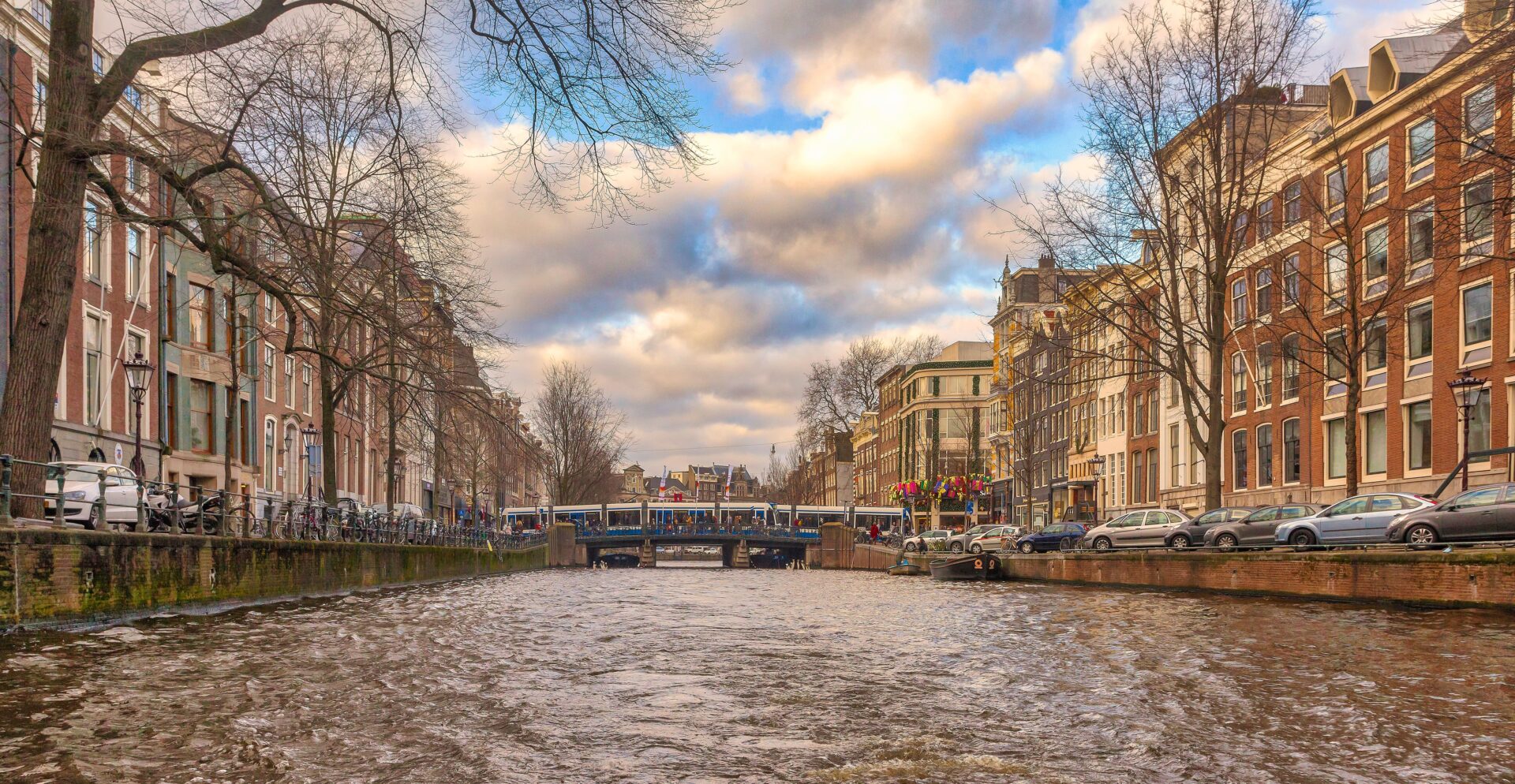
Amsterdam is built on 90 islands connected by 1,281 bridges over 100 canals. The engineering that produced this — the pile-driving into the boggy peat, the canal construction that the city’s Golden Age merchants funded and directed, the specific Amsterdam relationship between land and water that makes every view a reflection and every street a canal alternative — is the city’s defining physical fact. The canal ring (the Grachtengordel — the UNESCO-listed semicircle of the four main canals, the Herengracht, the Keizersgracht, the Prinsengracht, and the Singel) was built between 1585 and 1665 and is the largest coherent urban planning achievement of the 17th century.
The tourist economy — the coffee shops, the Red Light District walking tours, the Van Gogh Museum queue — exists on top of this city. The city itself is underneath.
The 48 Hours
DAY ONE
7:00am — The Jordaan and the Prinsengracht
The Jordaan neighbourhood (the working-class quarter west of the Prinsengracht — the neighbourhood that was built to house the artisans and the dyers and the tanners of the Golden Age city, now the most expensive residential neighbourhood in Amsterdam): at 7am, the Jordaan in its morning state.
The Prinsengracht at 7am: the houseboats (the 2,500 permanently moored houseboats of Amsterdam, the most in any city in the world — the homes on the water that are not holiday rentals but permanent residences, the occupants visible through the windows doing the morning things that people do in their homes before the day has an audience). The specific Prinsengracht light at this hour — the canal water still, the gable facades reflected, the specific Golden Age silhouette of the Amsterdam roofline visible in the water below.
The Westerkerk (the 17th-century church on the Prinsengracht — the tower with the blue, gold, and red Imperial Crown above, the church where Rembrandt was buried in an unmarked pauper’s grave in 1669): the tower at 7am, the carillon bells visible from the canal level.
The houseboat breakfast: the café on the Jordaan corner (the Albert Cuyp Markt coffee stall at 7:30am, or any of the Jordaan corner cafés that open at 7am): the koffie verkeerd (the Dutch equivalent of the flat white — the “wrong coffee,” the coffee with more milk than espresso, the standard Dutch morning coffee) and the kaasbroodje (the cheese roll, the Dutch breakfast in its most compact form).
9:00am — The Rijksmuseum
The Rijksmuseum (Museumstraat 1 — the national museum of the Netherlands, the collection of Dutch Golden Age painting and applied art, the Hendrik Petrus Berlage-inspired 1885 building extended and reopened in 2013): at 9am opening, the Great Hall visible from the entrance — the 80-metre vaulted hall, the collection of Delftware in the glass cases, the architecture that makes the museum itself a piece of the culture it collects.
The specific rooms:
The Night Watch (Room 2.12): The Rembrandt van Rijn painting (1642, the civic guard company of Captain Frans Banninck Cocq and his lieutenant Willem van Ruytenburch — the 363cm × 437cm oil on canvas, the largest painting in the museum): arrive at 9:05am, before the Spanish tour group that arrives at 9:30am.
The painting is lit from the left (Rembrandt’s fictional sun, the specific baroque chiaroscuro) and the figures emerge from the dark background in the specific Rembrandt staging of the illuminated against the obscured. The technical achievement: the individuated faces (each face a portrait of a specific person), the movement frozen at the specific moment of the company’s assembly, the girl in the yellow dress (the mascot figure, the dead chicken at her belt the symbol of the Kloveniers civic guard).
At 9:05am with forty people: the painting at the distance and the light that Rembrandt intended. At 11am: the crowd.
The Vermeer rooms (Rooms 2.20-2.21): The Woman in Blue Reading a Letter (1663, the woman alone in the room with the open letter — the specific Vermeer quietness, the light from the left-hand window diffusing across the blue jacket, the map on the wall behind), the Milkmaid (1657-58, the servant pouring the milk, the specific Vermeer attention to the humble daily action), and the other four Vermeers in the collection.
The Doll’s Houses: The 17th-century miniature canal houses built by the merchant wives as luxury display pieces rather than toys — the furniture, the paintings (miniature copies of real Golden Age paintings), and the household objects in perfect scale. The most undervisited objects in the Rijksmuseum.
Entry: €22.50 / £19.40. Book at rijksmuseum.nl — the timed entry tickets mandatory to avoid the walk-up queue.
1:00pm — Lunch: the Albert Cuyp Market
The Albert Cuyp Markt (the daily market on the Albert Cuypstraat in the De Pijp neighbourhood — the longest street market in the Netherlands, the most visited in Europe): at 1pm, the market in full operation.
The market lunch circuit: the stroopwafel (the caramel-filled waffle biscuit, placed on top of the hot coffee cup to soften the caramel — the specific Dutch café instruction that elevates the stroopwafel from a biscuit to a ritual): €1-2 / £0.86-1.72. The raw herring (Hollandse Nieuwe, the lightly salted young herring, held by the tail and eaten in one or two bites — the Dutch street food tradition that almost no non-Dutch visitor attempts and that is the correct Amsterdam street food experience): €2.50-4 / £2.16-3.45. The poffertjes (the mini-pancakes, the griddle-cooked buckwheat batter, the powdered sugar and the butter on top): €3-5 / £2.59-4.31.
3:00pm — The Van Gogh Museum
The Van Gogh Museum (Museumplein — the collection of 200 paintings and 500 drawings by Vincent van Gogh, the museum built around the collection inherited from the artist’s brother Theo): the chronological arrangement that traces the development from the dark Dutch period (the Potato Eaters, 1885, the specific moral weight of the peasant labour visible in the faces and the hands) through the Paris period (the palette brightening as van Gogh encountered the Impressionists) to the Arles breakthrough (the Bedroom in Arles, the Sunflowers, the The Yellow House) to the Saint-Rémy and Auvers-sur-Oise final period (the Wheat Field with Crows, the last paintings).
Entry: €22 / £18.97. Book at vangoghmuseum.nl — the morning slots for the earliest entry, the queue without a booking reaching 90 minutes in peak season.
6:00pm — The Bicycle Hour
The bicycle hire (the MacBike or the Star Bikes Rental, from €14-20 / £12.07-17.24 per 24 hours): the Amsterdam bicycle circuit that makes the city comprehensible.
The ring canal circuit by bicycle (the Herengracht to the Keizersgracht to the Prinsengracht and back to the Singel — the full canal ring, 6km, 20-30 minutes cycling): the city’s logic visible from the bicycle seat in a way that the walking tour or the canal boat does not give. The canal ring is a concentric planning achievement — the bicycle that moves between the canals at the bridge crossings is experiencing the city as it was designed to be experienced.
The Vondelpark (the 47-hectare park south of the Museumplein) at 6pm: the specific Amsterdam evening — the cyclists, the people on the grass, the specific Dutch outdoor culture visible in the park at the end of the working day.
8:00pm — Dinner: De Pijp and the Concertgebouw
Dinner in De Pijp (the neighbourhood south of the canal ring — the most restaurant-dense neighbourhood in Amsterdam for quality-to-price): the Bazar Amsterdam (Albert Cuypstraat 182 — the Dutch-Middle Eastern restaurant in the former converted church, the lamb tagine, the mezze, the Turkish pide): €25-40 / £21.55-34.48 per person.
The Concertgebouw (the 1888 concert hall — the finest orchestral acoustic in the world by the consensus of the conductors who have performed there, the Royal Concertgebouw Orchestra the ensemble that calls it home): the Wednesday lunchtime free concerts (12:30pm, free — the 30-minute concert available without a ticket) or the evening concert programme (€30-120 / £25.87-103.45): concertgebouw.nl.
DAY TWO
8:00am — The Anne Frank House
The Anne Frank House (Prinsengracht 263 — the canal house where Anne Frank and her family hid from the German occupation for 25 months, 1942-1944): arrive at the timed entry slot (the advance booking mandatory at annefrank.org — the tickets sell out weeks ahead, the museum opens at 9am, the first slot at 9am is the least crowded).
The hidden annex (the Secret Annex — the rooms behind the rotating bookcase in the rear building where eight people lived in concealment for 761 days): the specific scale of the rooms (the rooms where eight people lived are comprehensible only at the physical scale of the visit — the photographs cannot give the compression of the space), the yellow star visible in the display case (the star that Jewish citizens were required to wear in occupied Amsterdam), and the wall where Anne measured her own height during the two years of hiding (the pencil marks still visible on the original wallpaper).
Entry: €16 / £13.79.
11:00am — The Westerkerk Neighbourhood
The Westerkerk neighbourhood walk: the Negen Straatjes (the Nine Streets — the nine small shopping streets connecting the three main canals in the Jordaan, the most concentrated specialist retail in Amsterdam): the antique map shop, the vintage clothing, the Dutch cheese at the Henri Willig (Old Amsterdam and Gouda at source prices), the specific Jordaan quality of the independent retail that the Kalverstraat tourist shopping strip does not offer.
1:00pm — Lunch: the Foodhallen
The Foodhallen (Bellamyplein 51, Oud-West — the covered food market in the former tram depot, the 21 food vendors covering the full Amsterdam food spectrum): the Dutch bitterballen (the deep-fried ragout croquette — the Dutch pub snack, the interior molten beef ragout, the exterior crispy breadcrumb, the mustard dipping sauce), the Indonesian rijsttafel (the “rice table” — the Dutch-Indonesian colonial inheritance, the multiple small Indonesian dishes served with rice, the most specifically Amsterdam-Dutch food culture visible in a single meal), and the Dutch craft beer from the Brouwerij ‘t IJ stall. €15-25 / £12.93-21.55 for the full lunch.
3:00pm — The Stedelijk Museum
The Stedelijk Museum (Museumplein — the modern and contemporary art museum, the collection from 1870 to the present): the specific Amsterdam visual culture visible in the De Stijl room (the Mondrian, the Rietveld chair — the chair and the paintings expressing the same visual philosophy), the Karel Appel collection (the Dutch CoBrA movement, the visceral colour and the childlike imagery), and the temporary exhibitions that make the Stedelijk the most current major museum in Amsterdam. Entry: €22.50 / £19.40.
6:00pm — The Canal at Dusk
The Prinsengracht at dusk: the canal in the late afternoon light, the houseboats lit from inside, the gable facades in the amber light. The canal cruise (the glass-covered boat, the 1-hour circuit of the canal ring, the city from the water level — the specific proportion of the Golden Age facades comprehensible from the water below the bridge level): from €15 / £12.93. The evening canal in autumn (the fallen leaves on the water, the lit windows, the specific Amsterdam light that the Dutch Golden Age painters spent their careers trying to capture): the most atmospheric version of the city.
The Essentials
Getting to Amsterdam: easyJet, British Airways, KLM, Ryanair direct from all UK airports. 1.25 hours. Return: £50-150.
Airport to city: The Schiphol Airport Intercity train to Amsterdam Centraal (the direct train, 17 minutes, €5.80 / £5.00). The taxi or Uber: €35-50 / £30.17-43.10.
Getting around: The GVB transit card (the day card: €9.50 / £8.19 for unlimited tram, bus, and metro within Amsterdam), or the OV-chipkaart (the Netherlands public transport card). The bicycle for the canal ring circuit. The Amsterdam canal boat passes for the tourist waterways.
Where to stay: The Waldorf Astoria Amsterdam (Herengracht 542 — the six connected canal houses: £250-500/night), the Pulitzer Amsterdam (the 25 canal houses connected: £150-280/night), the Stayokay Amsterdam Vondelpark (the hostel in the park: private rooms from £55-90/night).
The Closing Moment
I was on the Prinsengracht at 7:09am. The houseboat at the Westerkerk bridge had its kitchen light on — the yellow light visible through the porthole window, someone making coffee inside.
The canal was still. The Westerkerk tower was above the bridge to the left. The specific Amsterdam morning — the water, the facades, the gable tops in the early light — was available to me and to nobody else at that particular spot.
Amsterdam’s specific quality is the persistence of the 17th century in a 21st-century city. The canals that the Golden Age merchants built are the canals that the houseboats use. The gable facades are the original structures. The bicycle infrastructure is the only modern addition.
The houseboat porthole went dark. The person inside had moved to another room.
The canal stayed still.