
The Modiano covered market at 7am when the fishmongers are receiving the overnight Aegean catch and the spice vendors are opening the sacks of Macedonian dried herbs and the specific northern Greek morning is available in its working version before it becomes the tourist one, the Rotunda of Galerius — the 4th-century Roman mausoleum converted to a church converted to a mosque now standing as a monument to the specific cultural layering that makes Thessaloniki the most historically compressed city in Greece — at 9am when the Byzantine mosaics are in the morning light, and why Thessaloniki — the city that Athens treats as a provincial capital and that every Greek from Athens visits to eat — is the finest 48-hour city in Greece for the visitor interested in history and food rather than mythology and beaches.
Reading time: 8 minutes | Last updated: 2026
Thessaloniki is Greece’s second city — 326,000 in the municipality, 1.1 million in the greater area, the city on the Thermaic Gulf that was the second city of the Byzantine Empire and the most important Ottoman city in Europe after Constantinople. The specific Thessaloniki layering: the Roman monuments (the Arch of Galerius, the Rotunda, the Palace of Galerius — the imperial complex of the 4th century), the Byzantine churches (50+ Byzantine churches, more than any other city outside Istanbul), and the Ottoman city (the bazaar, the hammams, the mosques converted to churches converted to warehouses converted back, the architecture of 500 years of Ottoman administration visible in the street level details).
The food: the Thessaloniki food press — the Greek food media — consistently rates the city’s food culture above Athens. The bougatsa (the phyllo pastry with the custard cream, the specific Thessaloniki breakfast pastry that is not the Athens bougatsa and is distinct in its preparation), the trigona Panoramatos (the triangular custard-filled pastry, specific to the Panorama suburb of Thessaloniki), and the entire northern Greek meze tradition (the mezedes of the Macedonian kitchen — the fava from Kastoria, the Florina peppers, the Macedonian white wine from the Naoussa region) give the city a specific culinary identity that Athens cannot replicate.
The 48 Hours
DAY ONE
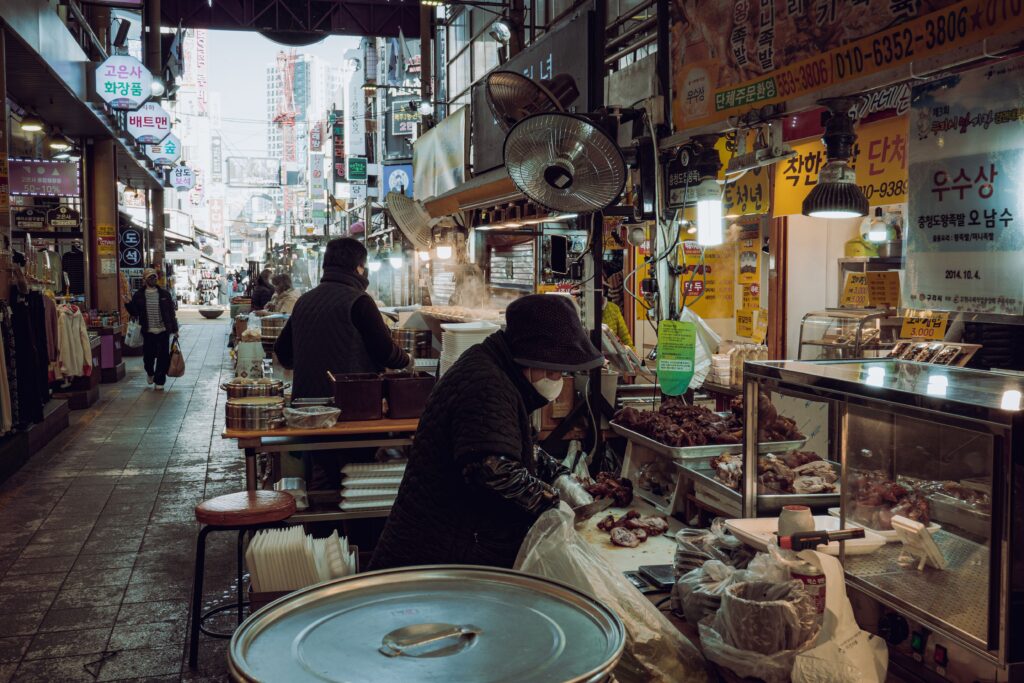
7:00am — The Modiano Market
The Modiano covered market (the 1922 market building in the city centre — the market built after the Asia Minor catastrophe when the Ottoman Greeks from Smyrna and the Pontic Greeks arrived in Thessaloniki as refugees and built the market economy that gave the city its specific merchant culture): at 7am, the fish hall (the Aegean catch — the red mullet, the sea bream, the Mediterranean octopus, the sea urchins in the polystyrene trays), the butchers (the Macedonian lamb from the highland flocks), and the spice vendors (the Macedonian dried herbs — the mountain oregano, the saffron from Kozani, the most important saffron-producing region in Europe, the threads at the weight price that explains why saffron is the world’s most expensive spice by weight).
The 7am Modiano breakfast: the loukoumades (the fried dough balls in the honey with the sesame and the cinnamon, the Greek equivalent of the doughnut at the kiosk beside the market entrance): €2-4 / £1.72-3.45 for a portion of 8. The kafes ellinikos (the Greek coffee — the unfiltered coffee boiled in the briki pot, the grounds settling in the cup, served with a glass of water): €1.50-2.50 / £1.29-2.16.
9:00am — The Rotunda and the Via Egnatia Byzantine Circuit
The Rotunda of Galerius (the 311 CE Roman mausoleum — the cylinder 24 metres in diameter and 30 metres high, built to house the tomb of the Emperor Galerius, converted to a church in the 5th century (the Byzantine mosaics added at this stage — the surviving mosaics of the martyred saints in gold and blue visible in the dome), converted to a mosque in 1591 (the minaret added — the only remaining Ottoman minaret in the city), decommissioned from religious use after 1912, now a UNESCO monument): entry €6 / £5.17.
The Arch of Galerius (the Kamara — the 4th-century triumphal arch adjacent to the Rotunda, the carved marble panels depicting the Persian Wars of Galerius still visible on the piers at street level): free access.
The Byzantine church circuit (the 5 most significant Byzantine churches within walking distance of the market):
The Hagios Demetrios: The basilica of the city’s patron saint (the 5th-century church, the largest in Greece, the crypt where Saint Demetrius was martyred under the Roman emperor Maximian, the silver reliquary): entry free.
The Hagios Georgios (the Rotunda, above): The interior mosaics at 9am in the morning light.
The Panagia Acheiropoietos: The 5th-century basilica — one of the oldest surviving Christian basilicas in the world in continuous use (the “Made Without Hands” icon, the Byzantine capitals on the columns still bearing the original 5th-century acanthus carvings): entry free.
12:00pm — The White Tower and the Waterfront
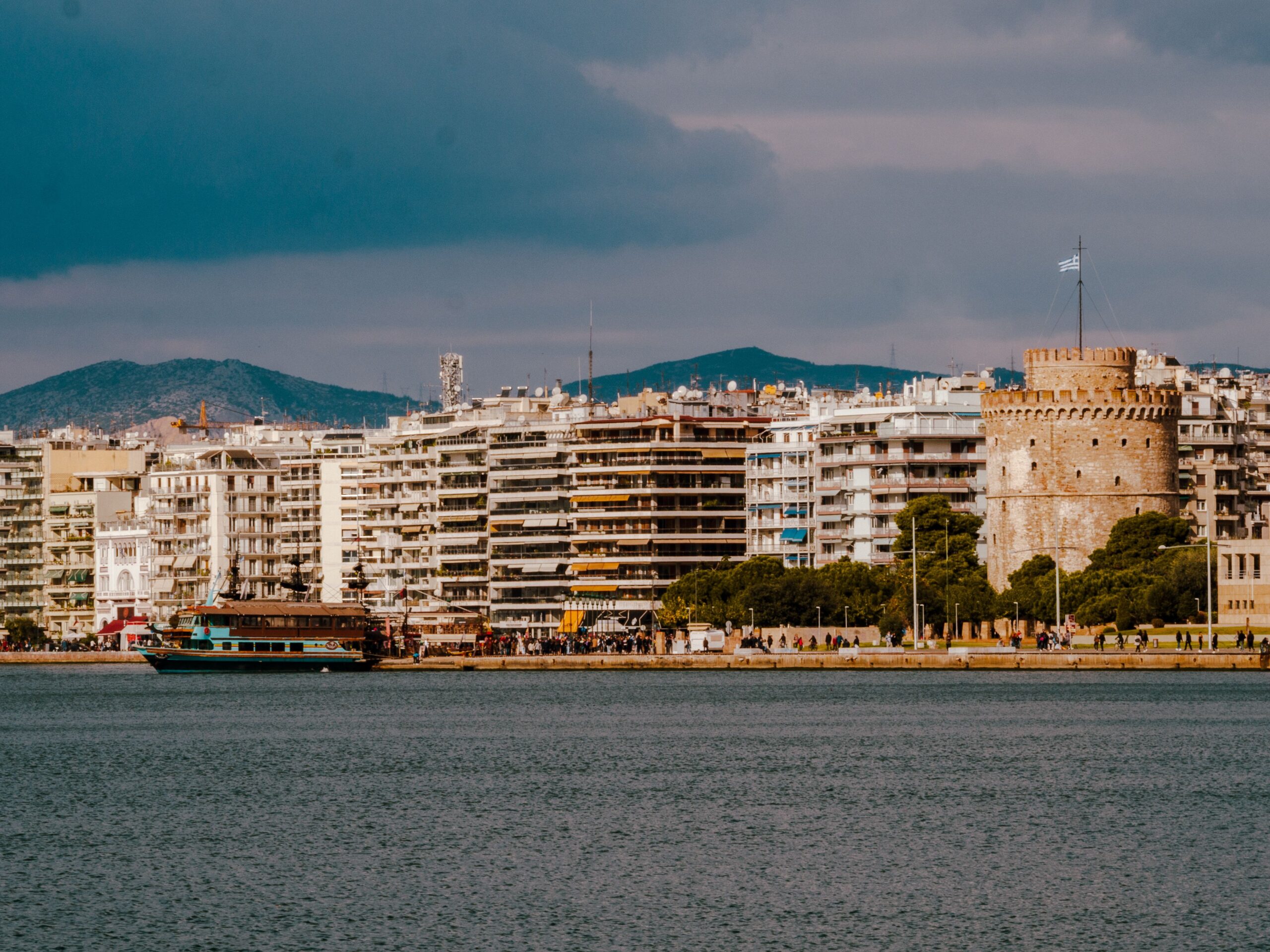
The Leukos Pyrgos (the White Tower — the 15th-century Ottoman defensive tower on the waterfront, the symbol of Thessaloniki): entry €4 / £3.45. The exhibition inside covering the city’s Ottoman period (the tower’s function as a prison under the Ottomans, the 1826 massacre of the Janissaries — the Ottoman military class — inside the tower, giving it the interim name “the Tower of Blood” before the current whitewashing). The rooftop view: the Thermaic Gulf, the Halkidiki peninsula visible on clear days, the city from above.
The Thessaloniki waterfront (the waterfront promenade — the Nea Paralia, the 3km pedestrian path along the gulf front from the White Tower to the Aristotelous Square): the specific Thessaloniki afternoon — the Gulf visible, the Mount Olympus (2,917 metres) visible across the water on clear days from the Aristotelous Square, the most specific view in Greece outside the Acropolis.
The ouzo hour (noon):
The Greek Orthodox for the ouzo at noon: the ouzeri (the ouzo restaurant — the mezedhopoleío serving the mezze accompaniments to the ouzo): at noon, the ntomátes yemistés (the stuffed tomatoes), the htapódi (the chargrilled octopus), the saganáki (the fried cheese), and the ouzo (the anise-flavoured spirit, diluted with water to the characteristic cloud-white — the ouzo served cold, the ice cube optional, the dilution with water the standard Greek preparation): ouzo from €2-4 / £1.72-3.45 per glass.
1:30pm — Lunch: the Ano Poli
The Ano Poli (the Upper Town — the neighbourhood above the Byzantine walls, the Ottoman-era wooden houses, the neighbourhood that escaped the 1917 fire that destroyed most of the lower city): the tsipouradiko (the tsipouro restaurant — the northern Greek equivalent of the ouzeri, the grape pomace spirit served with the mezze):
The lunch mezze: the keftedakia (the fried meat patties), the fava (the yellow split pea purée, the Macedonian version with the raw onion and the olive oil), the htapódi sti skara (the octopus on the grill), and the laganes (the unleavened bread, specific to the northern Greek tradition).
€20-35 / £17.24-30.17 per person with the tsipouro.
4:00pm — The Museum of Byzantine Culture
The Museum of Byzantine Culture (Leoforos Stratou 2 — the museum dedicated to Byzantine art and culture, the winner of the Council of Europe Museum Prize in 2005): the most important collection of Byzantine art outside Istanbul and Athens.
The specific rooms: the early Christian period (the transition from the Roman funerary tradition to the Christian one, the grave goods visible side by side with the Christian iconography that replaced them), the Middle Byzantine period (the icons of the 11th-14th century, the gold leaf and the specific tempera technique of the Byzantine icon painter), and the embroideries (the ecclesiastical vestments, the specific Macedonian embroidery tradition that was the most technically accomplished in the Byzantine world).
Entry: €8 / £6.90.
8:00pm — Dinner: the Ladadika
The Ladadika neighbourhood (the former oil merchants’ quarter west of the port — the warehouse buildings converted to bars and restaurants, the most concentrated evening dining in the city): the mezedopoleío (the meze restaurant), the rekoltado (the wine bar with the Greek wine list — the Drama region Sauvignon Blanc, the Naoussa Xinomavro red, the Greek wines that the international wine market has not yet discovered at the prices that reflect the discovery gap).
The Zythos restaurant (Katouni 5, Ladadika — the restaurant that has been the Thessaloniki reference for consistent quality mezze for 25 years): €25-40 / £21.55-34.48 per person.
DAY TWO
8:00am — The Bougatsa
The Bougatsa Bantis (Eleftherias 3 — the historic bougatsa shop, operating since 1960, the specific Thessaloniki bougatsa): the phyllo pastry (hand-stretched, paper-thin, baked in the long trays), the custard cream (the semolina-thickened custard, less sweet than the Athenian version), the dusting of the icing sugar and the cinnamon, the paper wrapping for the walk: €2.50-3.50 / £2.16-3.02 per slice.
10:00am — Vergina: The Royal Tombs of Macedonia (Day Trip)
The Aigai Archaeological Site (Vergina — 75km west of Thessaloniki by KTEL bus, 1.5 hours): the royal tombs of the Macedonian dynasty, the burial site of Philip II of Macedon (the father of Alexander the Great, assassinated in 336 BCE) and other Macedonian royalty.
The Museum of the Royal Tombs (the underground museum built over the tombs — the burial mounds visible from above, the tombs preserved in situ below): the gold larnax (the golden chest containing Philip II’s cremated bones, the star of Vergina — the 16-pointed Macedonian sun — on the lid), the gold wreath (the oak leaves and acorns in gold, placed on the remains of the king), and the ivory portrait heads (the miniature portraits of the royal family, the face of Philip II and the young Alexander visible in the carved ivory). The most important single archaeological find in 20th-century Europe.
Entry: €12 / £10.34.
Afternoon: Return to Thessaloniki, the Trigona
The Trigona Panoramatos (from the Terkenlis Pastry Shop or the original Trigona factory in the Panorama suburb): the triangular puff pastry filled with the cream (the crème caramel-style filling, the pastry crispy, the cream cold), the specific Thessaloniki dessert that has no equivalent elsewhere in Greece: €2.50-3.50 / £2.16-3.02 each.
The Essentials
Getting to Thessaloniki: Ryanair, easyJet, Aegean Airlines, Wizz Air direct from UK airports (Stansted, Luton, Edinburgh). 3 hours. Return: £50-150.
Getting around: Walking for the old city. The bus or taxi for the Ano Poli (the hill is steep). The KTEL bus for the Vergina day trip (from the KTEL Macedonia terminal on Monastiriou Street).
Where to stay: The Electra Palace (Aristotelous Square 9 — the seafront grand hotel: £80-160/night), the The Met Hotel (Megalou Alexandrou 48: £70-130/night), the Colors Urban Hotel (Filikis Eterias 3: £40-80/night).
The Closing Moment
I was at the Modiano Market at 7:22am. The saffron vendor was untying the sacks — the red-orange threads visible as the linen opened, the specific smell of the Kozani saffron (the metallic, the honey, the slightly medicinal compound) released as the bag was disturbed.
The Kozani saffron is the finest in Europe. The same saffron in a UK supermarket costs 40× the Modiano price. The vendor was weighing the grams for the restaurant buyer who had arrived before me.
Thessaloniki operates at the speed and the scale that makes this transaction possible — the producer, the market, the restaurant, the city, all within a specific radius that the Athens-centric Greek food media frequently forgets is a self-contained and superior food culture in its own right.
The saffron went into the paper bag. The vendor moved to the next customer.
I bought 2 grams for €3.50.