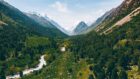
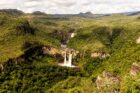

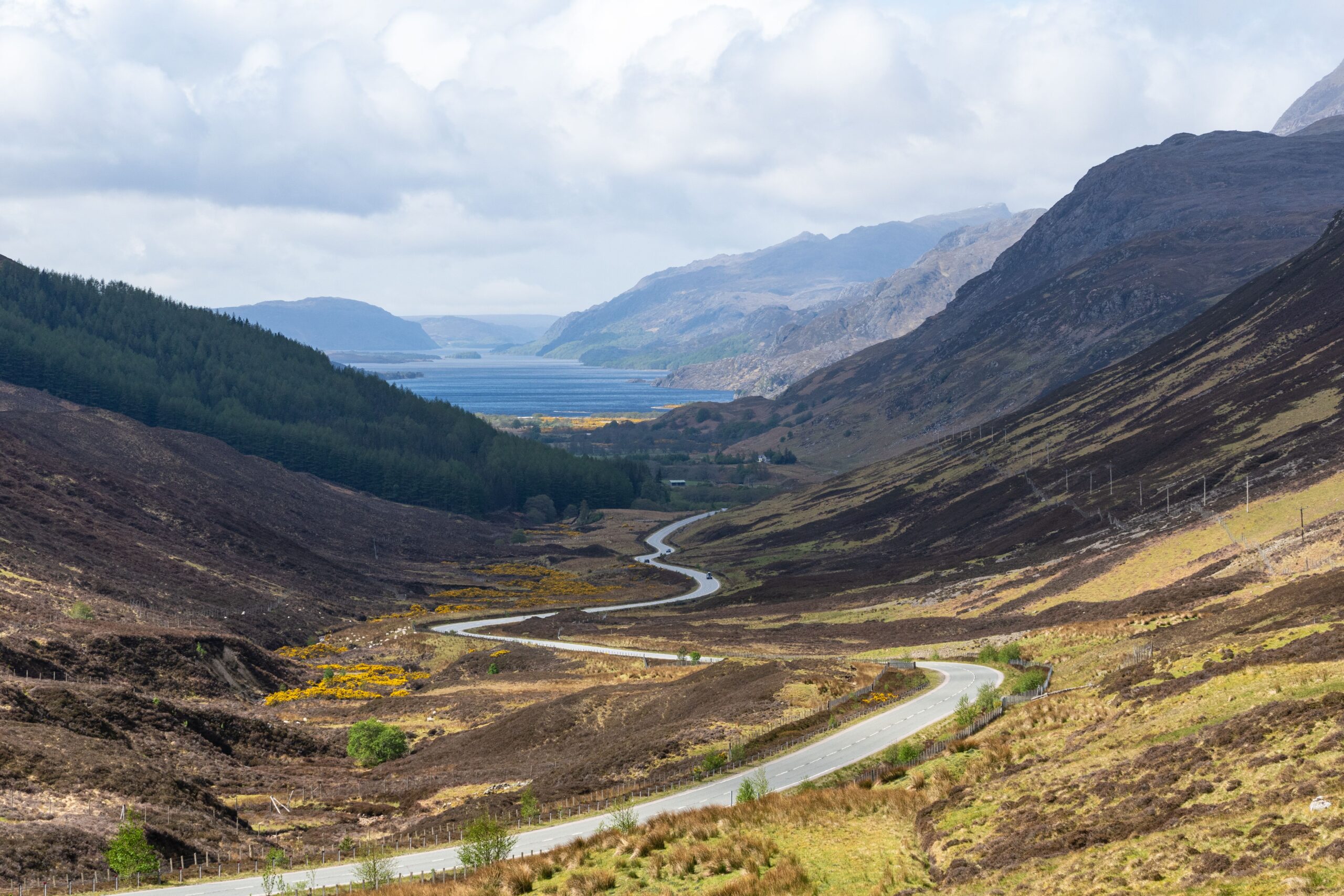
The North Coast 500 is the framework but not the point — the point is the moment on the Bealach na Bà pass when the road is one car wide above 600 metres and the Applecross Peninsula is below and the Inner Sound is beyond it and you understand for the first time why people describe this as one of the finest roads in the world, Glencoe at 7am when the valley floor is in mist and the Three Sisters are above it and the massacre of 1692 is visible in the landscape in a way that the information board at the car park does not give, and why the Scottish Highlands — accessible from any UK airport in 2 hours by air to Inverness — gives a wilderness experience that Southeast Asia charges £1,500 flights to provide.
Reading time: 11 minutes | Last updated: 2026
The Scottish Highlands cover 16,000 square kilometres of the most dramatic landscape in the UK — the Cairngorm plateau (the largest area of land above 1,000 metres in Britain), the northwest Geopark (the Torridonian sandstone that is the oldest surface geology in Europe, 800 million years old), and the sea lochs that penetrate the west coast giving the specific Highland landscape of mountain above water that photographs everywhere and surprises in person.
Seven days in the Highlands is the correct duration for a circuit that gives both the NC500 coastal road and the central Cairngorms. The driving is the experience — the Highlands require a car and the car requires a driver who is comfortable with single-track roads with passing places.
Before You Leave
The single-track road: The majority of Highland roads are single-track with passing places — the occasional wider sections where two cars can pass, with the convention that the car closest to the passing place reverses to allow the oncoming car to pass. The passing place is on the left. Never use a passing place as a parking spot. Pull fully into the passing place when reversing. The convention is well-understood by Highland drivers and non-standard for most UK urban drivers — allow 15 minutes of adjustment time on the first single-track road.
The midges: The Highland midge (the biting fly, Culicoides impunctatus — the 1.5mm insect that descends in clouds in still, humid conditions, particularly in the morning and evening on the west coast in June-August): the Smidge or Avon Skin So Soft repellent, a midge-proof tent with no-see-um mesh, and the understanding that the midge is worst when the wind drops. The midge forecast: scottishmidges.co.uk.
The season: May-June (before the midges peak) and September-October (the autumn colours, the stags visible at the rut, the midges gone) are the optimal windows. July-August is the most visited and the midge season at its worst. The winter (November-April) gives the snow on the Cairngorm plateau and the potential for the Northern Lights from the northwest coast — accessible but requiring more preparation.
The Route
Start: Inverness (fly from any UK airport, 1 hour from London)
Inverness → Glencoe (Day 1) → The NC500: Torridon (Day 2) → Ullapool (Day 3) → Durness/Cape Wrath (Day 4) → Thurso/Caithness (Day 5) → Cairngorms (Day 6) → Return Inverness (Day 7)
Or in reverse from Glencoe/Fort William for those arriving from the south by road.
The 7 Days
DAY 1 — Inverness to Glencoe via the Great Glen
Morning: Inverness
The Inverness Castle (the 1836 castle above the River Ness — the views of the Great Glen, the Moray Firth, and the Black Isle from the ramparts, free access to the grounds), the Victorian Market (the covered Victorian market in the city centre, the Highland food stalls — the Stornoway black pudding, the smoked salmon from the Highlands and Islands Smokehouse, the Scottish cheese), and the Culloden Battlefield (16km from Inverness — the National Trust site of the 1746 battle, the last pitched battle on British soil, the site where the Jacobite rising ended in 45 minutes of fighting and 1,500 Highland casualties): entry £14 / £14.
The Great Glen Drive:
The A82 south from Inverness through Fort Augustus and Fort William: the Great Glen (the linear fault running SW-NE across Scotland, the lochs — Loch Ness, Loch Oich, Loch Lochy — filling the valley bottom), the Caledonian Canal (the 1822 canal connecting the lochs through the 38km of artificial canal), and the approach to Glencoe through the narrow of the Pass of Glencoe.
Afternoon: Glencoe
The Glencoe valley (the glaciated valley, the Three Sisters — the three rock spurs descending from the Aonach Eagach ridge, the valley floor in the specific Highland light): the Glencoe Visitor Centre (the National Trust centre at the valley entrance, the Massacre of Glencoe exhibition — the February 1692 massacre of 38 MacDonald clan members by the Campbell soldiers who had been billeted with them for 12 days under the Highland hospitality code, the specific betrayal that made the massacre so culturally significant in Scotland): entry £8.50 / £8.50.
The River Coe walk (the valley floor path, the river in the gorge below, the Three Sisters above — 3km return from the car park): the Glencoe landscape at the human scale.
Where to stay: The Glencoe Hostel (the former estate lodge, private rooms from £35-55/night), the Kings House Hotel (the historic droving inn at the head of Glencoe, dating from the 17th century: £80-150/night).
DAY 2 — Glencoe to Torridon
Morning: the Road to the Isles
The Ballachulish Bridge (the bridge over the Loch Leven narrows, the views of the Mamore mountains), the Glenfinnan Viaduct (the 1901 concrete viaduct — the Jacobite steam train passes over it 3 times daily in summer, the most filmed railway viaduct in Scotland after the Harry Potter franchise: check the timetable at scotrail.co.uk, the train visible from the viewing area), and the Glen Shiel (the dramatic glaciated valley on the A87, the Five Sisters of Kintail visible from the road).
The Bealach na Bà:
The Bealach na Bà (the Pass of the Cattle, on the Applecross Peninsula — the road from Lochcarron over the mountain pass to Applecross, the road reaching 626 metres in 6.5km of ascent, the hairpin bends, the summit view over the Inner Sound and the Isle of Skye): the finest road in the UK by the consensus of the motoring press.
At the summit: the viewpoint gives the Rasay, Rona, the Outer Hebrides visible on clear days, and the specific Highland quality of the road as the purpose rather than the vehicle for getting somewhere.
The Applecross Inn (the inn on the Applecross shore, the seafood from the local boats — the langoustine, the haddock, the crab): lunch or dinner, £15-30 / £15-30 per main.
Torridon:
The Torridon mountains (the Beinn Alligin, the Liathach, the Beinn Eighe — the Torridonian sandstone mountains, 800 million years old, the oldest surface geology in Europe): the Torridon Countryside Centre (the National Trust centre, the red deer and the mountain goat visible from the centre): free. The specific Torridon quality: the mountains that look like no other mountains in Britain, the layered Torridonian sandstone capped with white quartzite giving the distinctive two-tone effect.
DAY 3 — Torridon to Ullapool via Inverewe
The Inverewe Garden:
The Inverewe Garden (on the shore of Loch Ewe, Poolewe — the National Trust for Scotland garden established in 1862 by Osgood Mackenzie on a bare, peat-covered headland warmed by the Gulf Stream): the garden at the same latitude as Labrador and Alaska, the collection of Southern Hemisphere plants (the New Zealand tree ferns, the Himalayan rhododendrons, the South African Proteas) growing outdoors on the west coast of Scotland because the Gulf Stream gives the microclimate. The most surprising single garden in Britain. Entry: £12 / £12.
Ullapool:
The Ullapool ferry terminal (the Caledonian MacBrayne ferry to Stornoway on the Isle of Lewis — if time allows the Lewis extension): Ullapool is the gateway to the Outer Hebrides and one of the finest small towns in the Highlands.
The Ullapool Museum (covering the Highland clearances — the forced evictions of the Highland tenants by landlords converting the land from agriculture to sheep in the 18th-19th centuries, the specific Highland history that explains the depopulation visible in the landscape): entry £4.
The Cèilidh Place (the hotel/venue/bookshop in Ullapool — the most characterful accommodation and entertainment venue in the northwest Highlands, the live music and the readings): £60-120/night.
DAY 4 — Ullapool to Cape Wrath / Durness
The Wee Mad Road:
The B869 coastal road from Lochinver to Kylesku (the “Wee Mad Road” — the single-track coastal road along the Assynt coast, the most scenic 25 miles of road in Scotland by a wide margin, the Quinag mountain behind, the Summer Isles visible in the Minch, the Suilven rising from the flat peat bog):
The Suilven (the 731-metre mountain that rises from the flat moorland like a fortress — the most dramatic single peak in the Highlands for the contrast between its profile and its surroundings, visible from the B869 road without any climbing required).
Cape Wrath:
The Cape Wrath ferry and minibus (the Cape Wrath Ferry from the Kyle of Durness — the small rowing boat ferry, the minibus on the other side, the 11-mile track to the cape): the most northwesterly point of mainland Britain, the Clo Mor cliffs (the highest sea cliffs on the British mainland, 281 metres, the gannet colony visible in season): the ferry and minibus from £15-20 / £15-20 per person return. Check capewrathferry.co.uk for seasonal operation.
Durness:
The Smoo Cave (the largest sea cave entrance in Britain — the 15-metre high cave mouth, the waterfall visible inside, the guided boat trips into the inner chambers in season): entry £5-10 / £5-10.
Where to stay: The Lazy Crofter Bunkhouse (Durness — private rooms from £30-50/night), the Mackay’s Rooms (Durness: £80-130/night).
DAY 5 — Caithness and the North Coast
The Flow Country:
The Flow Country (the Caithness and Sutherland blanket peat bog — the largest continuous blanket bog in the world, the carbon store equivalent to the UK’s entire annual carbon emission, UNESCO-listed in 2023): the RSPB Forsinard Flows reserve (the boardwalk through the bog, the black-throated diver visible on the lochans, the specific Highland landscape that is the most ecologically significant in Britain and the least visited): free.
The Castle of Mey and John o’ Groats:
The Castle of Mey (the former home of the Queen Mother, the northernmost inhabited castle on mainland Britain, the gardens maintained in the exposed coastal conditions by the Castle of Mey Trust): entry £16 / £16.
John o’ Groats (the northern terminus of the Land’s End to John o’ Groats route — the cliff edge above the Pentland Firth, the Orkney Islands visible 6 miles across the sound, the specific northern edge quality of the view): free.
DAY 6 — The Cairngorms
The Cairngorm Plateau:
The Cairngorm National Park (the largest national park in the UK, the Cairngorm plateau the largest area of land above 1,000 metres in Britain — the tundra ecosystem above the tree line, the ptarmigan, the mountain hare, the red squirrel in the native Caledonian pine forest below):
The Cairngorm Mountain funicular (the funicular railway from the Coire Cas car park to the Ptarmigan restaurant at 1,085 metres — the legal requirement to remain above the funicular station when using the uplift, the summit at 1,245 metres accessible by the hike from the car park): funicular £17.50 / £17.50 return.
The Rothiemurchus Estate:
The Rothiemurchus Estate (the ancient Caledonian pine forest south of Aviemore — the forest that is the remnant of the Great Wood of Caledon, the native Scots pine forest that once covered the Highlands, the capercaillie and the red squirrel and the crested tit in the native pine): the Loch Morlich beach (the freshwater beach at the base of the Cairngorms, the paddleboard hire available in summer), the Rothiemurchus forest walk (free).
Aviemore:
The Highland Folk Museum (in Kingussie and Newtonmore — the open-air museum of Highland life from the 1700s to the 1900s, the turf blackhouses, the farm buildings, the school, the village): free.
DAY 7 — Return to Inverness
Glen Etive (the Glen Nobody Drives):
The Glen Etive road (the single-track road from the King’s House Hotel at the top of Glencoe into the glen — the most beautiful uninhabited glen in Scotland by the assessment of the people who have driven it in the early morning): 15km of river and mountain with no passing traffic on weekdays, the River Etive visible throughout, the Buachaille Etive Mòr (the “Great Shepherd of Etive,” the pyramid mountain at the glen’s entrance) behind.
Return Inverness:
The A9 north from Dalwhinnie to Inverness through the Drumochter Pass (460 metres — the highest point on the UK’s A-road network): the specific Highland driving in the final section, the Cairngorms to the east, the Central Highlands to the west.
What It Costs
| Category | Budget | Mid-Range |
|---|---|---|
| Return flights (UK-Inverness) | £30-100 | £50-150 |
| Car hire (7 days) | £200-350 | £280-450 |
| 7 nights accommodation (hostels/bunkhouses/hotels) | £175-350 | £350-700 |
| Food and drink (7 days) | £100-200 | £200-400 |
| Activities and entries (Culloden, Inverewe, etc.) | £50-100 | £70-130 |
| Fuel (approximately 1,200km) | £120-160 | £120-160 |
| Total | £675-1,260 | £1,070-1,990 |