
The complete guide for UK travellers: Taipei’s night markets and the food culture that ranks in the global top five, the marble canyon that takes two days to do properly, a hillside lantern town that inspired an animated film, the east coast railway as one of Asia’s great train journeys, hot springs in the mountains above the city, and why Taiwan is the most consistently welcoming country in Asia for independent travellers.
Reading time: 15 minutes | Last updated: 2026
Taiwan is the country that keeps getting called a hidden gem and somehow remains one.
This is strange. Taiwan has been receiving international visitors since at least the 1970s. Its food is ranked among the world’s top street food cultures by chefs who study these things seriously. Its public transport is excellent. Its people are universally described by travellers as among the warmest and most helpful they’ve encountered anywhere in Asia. The night markets have been on travel lists for decades. Taroko Gorge is one of the most spectacular canyons in the world.
And yet, in 2024, Taiwan received approximately 11 million international visitors — compared to Japan’s 36 million, Thailand’s 28 million, South Korea’s 11 million. It sits at roughly the same visitor level as Portugal, a country a fraction of its size, with a fraction of its attractions.
Part of the reason is geopolitical — Taiwan’s ambiguous international status means it doesn’t appear on the standard Asia travel itinerary, sits outside the coverage most package holiday operators provide, and receives less diplomatic travel infrastructure than comparable countries. This is Taiwan’s situation, not its fault.
The practical consequence for independent travellers is significant: Taiwan is one of the most accessible, most rewarding, and most under-attended countries in Asia. You will not stand in queues at the night markets unless you specifically go on a weekend evening. You will not need to book Taroko Gorge accommodation months in advance. You will not feel like you’re experiencing a destination that has been optimised for tourism rather than lived in.
The food alone justifies the trip. Everything else is a bonus.
Quick Navigation
- The Case for Taiwan — The Specific Arguments
- When to Go — The Typhoon Season and the Alternatives
- Getting There — Via Tokyo, Bangkok, or Hong Kong
- Taipei — The Food Capital of Asia
- The Night Markets — Which Ones and Why
- Jiufen — The Lantern Town
- Beitou — Hot Springs Above the City
- Yehliu Geopark — The Other Planet North of Taipei
- The East Coast — Taroko Gorge and Hualien
- Taroko Gorge — The Canyon in Detail
- Sun Moon Lake — The Bicycle Circuit
- Tainan — The Ancient Capital
- Kaohsiung — The Southern City
- The East Coast Railway — Asia’s Most Scenic Train
- Hidden Taiwan — The Places Most Visitors Don’t Reach
- What It Costs — Real Numbers
- Eating in Taiwan — The Food That Changed Everything
- Practical Notes
- The 10-Day Itinerary — Taipei, East Coast, South
The Case for Taiwan — The Specific Arguments
The food:
Taiwan’s street food and night market culture is ranked among the top five in the world by professional food writers and chefs with specific knowledge of global street food traditions. This is not a vague superlative — it’s a claim that holds up to examination. The range of preparations (stinky tofu, oyster omelette, scallion pancake, beef noodle soup, bubble tea, pineapple cake, salt and pepper chicken, century egg), the quality of the ingredients (Taiwan’s pork is considered among the finest in Asia, the seafood from its surrounding waters is genuinely excellent), and the price (a full dinner at a night market costs £4-8) combine to produce one of the highest food quality-to-price ratios accessible from the UK.
The landscape:
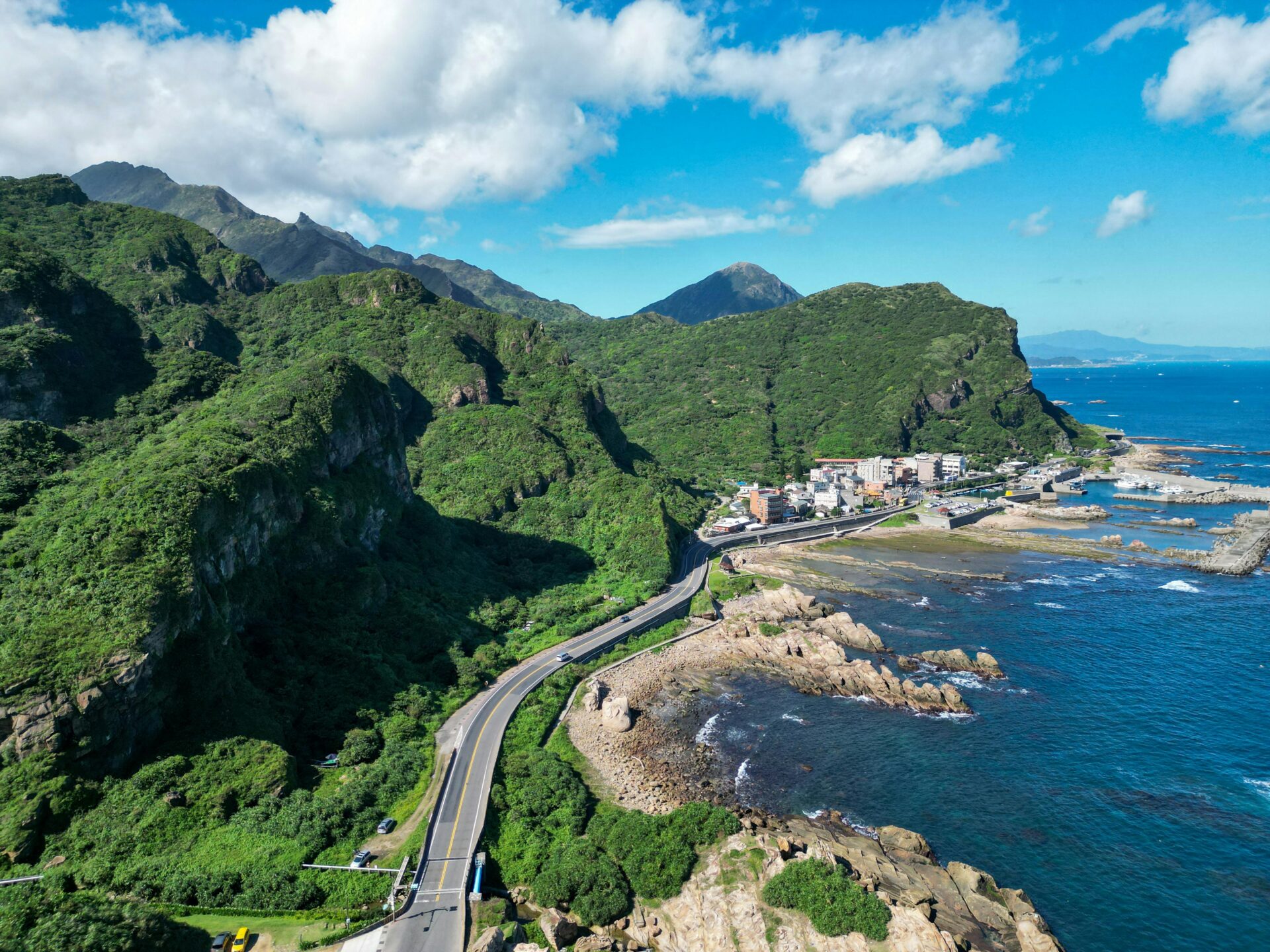
Taiwan is a mountain island — the Central Mountain Range runs the full length of the country, with peaks above 3,000m. The east coast is where the mountains meet the Pacific, creating the most dramatic coastal geography in Asia. Taroko Gorge, where a marble mountain range is being cut by the Liwu River into a canyon of white and grey marble walls, is one of the finest natural landscapes in Asia by any measure.
The people:
Taiwan consistently receives the highest ratings in Asia for local hospitality, helpfulness to foreign visitors, and safety for solo travellers of all backgrounds. This is subjective but remarkably consistent across independent traveller reports from the past 20 years.
The infrastructure:
The High Speed Rail (HSR) connects Taipei to Kaohsiung in 90 minutes — a journey that would take 4.5 hours by conventional rail. The metro systems in Taipei and Kaohsiung are clean, reliable, and cheap. The EasyCard (IC card) works on every form of public transport in the country. Convenience stores (7-Eleven, FamilyMart — Taiwan has the highest convenience store density per capita in the world) provide ATMs, SIM cards, hot food, and public services 24 hours.
The honest note on geopolitics:
Taiwan’s relationship with mainland China means the political situation warrants awareness but not the level of visitor anxiety that foreign coverage sometimes implies. Taiwan functions as an independent, democratic society with full civil liberties, extensive freedom of press, and LGBTQ+ legal protections (Taiwan was the first country in Asia to legalise same-sex marriage in 2019). The situation is monitored; the daily reality for visitors is a safe, well-run, welcoming country.
When to Go — The Typhoon Season and the Alternatives
March to May — Spring
The finest season for most of Taiwan. Temperatures in Taipei: 18-25°C. The cherry blossom season runs through March (Yangmingshan National Park above Taipei has one of the finest cherry blossom landscapes in Asia, less known than Japan’s Yoshino but genuinely beautiful). The east coast and Taroko Gorge are accessible without the summer heat.
September to November — Autumn
The second sweet spot. The typhoon season (July-September) is largely over by October. Temperatures comfortable across the country. The east coast railway circuit can be done without heat stress. October is the Taiwan Food Festival month — the night markets are at their most active.
July to August — Typhoon Season
Taiwan sits directly in the western Pacific typhoon corridor. Typhoon season runs June-October, with the highest frequency in July and August. Typhoons typically arrive with 3-5 days warning, disrupt transport significantly when they land, and pass within 48-72 hours. Most typhoon seasons produce 3-5 significant storms that make landfall or closely pass Taiwan.
Visiting in typhoon season is possible — most travellers who visit in July and August don’t encounter a typhoon — but the risk of a 2-3 day disruption to plans should be priced into the itinerary. Keep a flexible schedule with buffer days.
December to February — Winter
Cool and occasionally rainy in Taipei (10-18°C), but the east coast (Hualien, Taitung) is often drier and warmer than the north. Hot spring season — Beitou’s hot springs are most appealing when the air is cold. Some mountain trails in the Central Range have snow.
The BGGD recommendation: April or October. Both seasons avoid typhoon risk, give comfortable temperatures for the Taroko Gorge hike, and cover the night markets at their most active. October specifically for the autumn colours on the mountain trails above Alishan.
Getting There — Via Tokyo, Bangkok, or Hong Kong
No direct flights from the UK to Taiwan. The main connection points:
Via Tokyo (Narita or Haneda): Japan Airlines, ANA, or EVA Air. London → Tokyo → Taipei. Total journey: 14-16 hours. The Tokyo connection is the most seamless — both legs offer excellent service, the connection times at Narita are well-managed, and the Tokyo stop can be extended if combining Japan with Taiwan (a natural circuit).
Via Bangkok (Suvarnabhumi): EVA Air, China Airlines, or Thai Airways. London → Bangkok → Taipei. Total journey: 14-16 hours. The Bangkok routing has the cheapest connection fares and works well when combining Thailand with Taiwan.
Via Hong Kong: Cathay Pacific. London → Hong Kong → Taipei. Total journey: 14-15 hours. Cathay Pacific has the most consistent service quality. The 50-minute Hong Kong-Taipei leg is one of the most frequent routes in Asia.
Via Singapore: Singapore Airlines. London → Singapore → Taipei. Total journey: 15-17 hours.
Return flights to Taipei (Taoyuan International, TPE): £500-700 booked 6-10 weeks ahead. EVA Air specifically offers consistently competitive prices on the UK-Taiwan routing and an excellent in-flight product.
Getting from Taoyuan Airport to Taipei:
The Airport MRT (metro) from Taoyuan Airport to Taipei Main Station: 35 minutes, £3.20. Runs every 15 minutes. This is the correct option — fast, reliable, connects directly to the main metro network.
Taipei — The Food Capital of Asia
Taipei is the capital and by far the largest city in Taiwan, with a population of 2.7 million in the city proper and 7 million in the greater metropolitan area. It sits in the Taipei Basin, surrounded by hills (Yangmingshan National Park to the north, the Maokong hills to the south), at sea level in the middle.
The city is not immediately beautiful in the way that Tokyo or Kyoto is — it’s a modern Asian city of concrete and neon, with the specific energy of a place that has been growing rapidly for 70 years and hasn’t paused to ask itself what it looks like from the outside. What it has instead: the finest street food in Asia, the most helpful and curious population I’ve encountered in the region, a creative and cultural scene (art galleries, design hotels, independent music venues, independent bookshops) that quietly exceeds its international profile, and the EasyCard transport system that makes the whole city available to the first-time visitor within an hour of arrival.
Taipei 101:
For many years the tallest building in the world (2004-2010), now surpassed but still the most recognisable structure in Taiwan. The observation deck (89th floor, £16) gives the clearest possible orientation for the Taipei Basin — the hills in every direction, the city spread between them, the river systems, and on clear days the coast. Go on the first day to understand the city’s geography.
The building itself is designed to resemble a traditional Chinese pagoda at enormous scale, with bamboo segmentation along its height and a feng shui coin at the entrance. The 660-tonne steel damper sphere visible from the observation deck (a giant ball suspended inside the building to reduce typhoon sway — Taipei 101 was designed to survive a 7.0 magnitude earthquake and a Category 5 typhoon simultaneously) is a piece of engineering worth understanding.
The Chiang Kai-shek Memorial Hall:
A monument to the former Republic of China president, set in a large ceremonial plaza in the centre of the city. The changing of the guard ceremony (hourly on the hour, the guards at the entrance to the main hall) is the most precisely choreographed military ceremony in Asia — 72 steps in 72 seconds, every movement in exact unison. Worth watching once. The grounds are a public park and social space used by Taipei residents throughout the day.
The National Palace Museum:
One of the finest art museums in the world — a collection of approximately 700,000 objects representing Chinese imperial history from across 5,000 years, brought to Taiwan by the Republic of China government in 1949 when the civil war turned against them. The collection includes jade, bronze, calligraphy, painting, ceramics, and artefacts that are among the finest examples of Chinese cultural production in existence.
The two non-negotiable pieces: the Jadeite Cabbage (a piece of pale green jadeite carved into a cabbage with a grasshopper on one leaf — so precisely rendered that the piece has become the most visited single object in the museum and the most reproduced souvenir in Taiwan) and the Meat-Shaped Stone (a piece of jasper that looks exactly like a piece of braised pork belly, the stone stratification replicating the layers of fat and meat). Both are displayed in the Special Exhibitions hall. Budget 3 hours for the museum. Entry: £5.
Huashan 1914 Creative Park:
A former government-run winery and wine distribution facility from 1914, converted into a cultural creative hub in 1999. Galleries, small theatres, independent shops, outdoor event space, and coffee and food vendors. The architecture (brick industrial buildings in various states of renovation) gives it the specific appeal of creative spaces that develop in old industrial buildings everywhere, but specifically Taiwanese in its content — local designers, local artists, local food operators. Good for an afternoon.
Elephant Mountain (Xiangshan):
A 30-minute hike (steep concrete stairs) from Xiangshan MRT station to a viewpoint with the direct line-of-sight view of Taipei 101 and the city basin that appears in most Taipei photographs. Worth the climb in the early evening (sunset light on the city, the 101 beginning to light up). The hike is manageable in the heat; arrive at the base by 5pm in summer.
The Night Markets — Which Ones and Why
Taiwan’s night markets are the primary reason international chefs visit the country. The range of preparations, the quality of the ingredients, and the price combine to produce an experience that doesn’t exist at this level anywhere else in Asia.
The market hierarchy:
Shilin Night Market: The most famous and the most visited. Enormous — several buildings and outdoor lanes, operating every evening from approximately 5pm. Worth visiting for the scale of the experience and for the Shilin Night Market beef noodle soup (generally agreed to be the finest large-format beef noodle in Taipei). Crowded on weekends. Entry is free; budget £5-8 for a full evening of eating.
Raohe Street Night Market: Smaller than Shilin, on a single pedestrianised street, with a Fuzhou pepper bun stall at the entrance (century-old recipe, queued for daily, the bun baked inside a wood-fired barrel until the outside is crispy and the interior is filled with pork and scallion — the smell arrives before the stall is visible). More local in character than Shilin. On weekday evenings: manageable. On weekend evenings: busy but navigable.
Ningxia Night Market: The market where Taipei families eat rather than tourists photograph. Oyster vermicelli (a gloopy, comfort-food preparation of rice vermicelli in thick sweet potato starch sauce with oysters and pork intestine), pork rib soup, sesame flatbread (shaobing), Taiwanese sausage with sticky rice (sausage prepared by squeezing the meat into the rice through a cut in the casing, then slicing and serving together). Each stall has been specialising in the same preparation for decades. The market operates most evenings and feels specifically Taipei in a way the more tourist-facing markets don’t.
Timing for all markets: Weekday evenings (Tuesday to Thursday) are significantly less crowded than weekend evenings. Arrive by 6pm to eat before the peak crowd arrives by 7-8pm.
Jiufen — The Lantern Town
Jiufen (九份) is a hillside former gold-mining town in the northeast of Taiwan, 1 hour from Taipei by bus (Bus 1062 from Zhongxiao Fuxing MRT station, £1.80 each way). The town developed during the Japanese colonial period as a mining centre; its characteristic architecture — tea houses on narrow stepped lanes, red lanterns hanging at every level, views over the northeast Pacific — became famous internationally after Hou Hsiao-hsien’s film “A City of Sadness” (1989) and then more broadly after its visual similarity to the bathhouse in Miyazaki Hayao’s “Spirited Away” was noted (a comparison Miyazaki has neither confirmed nor denied, which is the correct response to the question).
The Jiufen experience:
The image: red lanterns on a narrow stepped lane descending toward the sea, fog rolling in from the Pacific, the late afternoon light turning the wood and stone buildings amber. This image is accurate and best achieved at 4-5pm on a weekday when the tour groups from Taipei have not yet arrived in full force.
The practical guide: the town has exactly one main pedestrianised lane (Jishan Street, the old street) plus a network of smaller lanes and stairways descending toward the sea. Walk everything — the side lanes away from the main street have tea houses and small restaurants with better prices and fewer people. The tea house at the bottom of the steps, overlooking the ocean — Amei Tea House is the famous one, now extremely tourist-facing; the unnamed tea houses one lane above or below it give the same view with less queuing.
When not to go: Weekends in July and August. The town becomes extremely crowded and the lane-to-people ratio stops working. The beauty is preserved in the early morning (before 9am the tour buses haven’t arrived) and in the rain, when most visitors retreat and the lanterns reflected in the wet cobblestones produce the version of Jiufen that Miyazaki almost certainly had in mind.
Combine with Shifen:
30 minutes by train from Jiufen’s nearest station (Ruifang), Shifen is a village on a single railway track around which a town has grown — the tracks run through the main street, the shops are literally on the railway, and a tradition has developed of releasing sky lanterns from the tracks (the lanterns drift upward into the valley above). The lanterns are commercially produced and sold to tourists; they’re also genuinely beautiful in the late afternoon light and the tradition is real rather than manufactured.
Beitou — Hot Springs Above the City
Beitou (北投) is a district of Taipei, accessible by MRT (Beitou station on the Danshui-Xinyi Line, then a short local branch line to Xinbeitou, 40 minutes from central Taipei, £0.80). The district developed during the Japanese colonial period as a hot spring resort — the geothermal water erupts from the mountains at several temperatures and chemical compositions, and the resort infrastructure (public baths, hotel onsen, open-air pools) has been in continuous operation since 1896.
The public baths:
The Millennium Hot Springs (千禧湯) adjacent to Xinbeitou Park: an outdoor hot spring pool open to the public, with multiple temperature pools (40°C, 42°C, 50°C — the hotter pools require acclimatisation), a cold plunge pool, and facilities for changing and showering. Entry: £1.50. Open 5am-10pm. Swimwear required. The outdoor pool at dawn, with steam rising and the mountain above, is one of the more specific pleasures available within Taipei’s public transport network.
The private baths:
Multiple hotels and bathhouses in Beitou offer private rooms with individual hot spring tubs for 40-minute or 90-minute sessions. Costs range from £10-30 for a private session. The private bath option gives more flexibility on clothing and a more meditative experience than the public pool. Ask at your hotel for a recommendation; the Beitou Wellspring Spa and the Crown Hot Spring Hotel are the most consistently recommended at mid-range.
The Beitou Hot Spring Museum:
A 1913 Japanese-era public bathhouse that has been preserved as a museum — the finest example of Japanese colonial bathhouse architecture in Taiwan, with a stained glass skylight above the swimming pool level and original tile work throughout. Entry: free. One of the most beautiful colonial buildings in Taiwan and the correct context for understanding why Beitou’s hot spring culture has the specific character it does.
Yehliu Geopark — The Other Planet North of Taipei
Yehliu (野柳) is a coastal promontory 40 minutes north of Taipei by bus (Bus 1815 or 1723 from Zhongxiao Xinsheng station, £1.80 each way) — a narrow tongue of sandstone jutting into the Pacific, covered in wind and wave-eroded formations that have been given names (the Queen’s Head — a large rock balanced on a thin neck that looks disturbingly like a human profile; the Sea Candles; the Mushroom Rocks; the Ice Cream Rock) and fenced into walking paths.
The landscape is genuinely extraordinary. The geological process (differential erosion of harder and softer rock layers by sea salt and wave action over millions of years) produces formations that look improbable without being artificial. The Queen’s Head is the most photographed — its neck erodes approximately 1cm per year and the head is expected to fall within 10-20 years, which gives the current version a specific value.
Entry: £5. Open from 8am. Go before 10am or after 3pm — the middle of the day brings tour buses from Taipei.
Combine with: The town of Jinshan to the north (20 minutes further by bus) — a coastal town with local salt facilities, the Zhuzihu flower fields (in season), and the Juming Museum (an outdoor sculpture park, the largest in Asia, dedicated to the work of sculptor Ju Ming — extraordinary setting above the Pacific, genuinely significant collection). The Juming Museum alone is worth the trip north from Taipei.
The East Coast — Taroko Gorge and Hualien
The east coast of Taiwan is where the Central Mountain Range meets the Pacific Ocean — the mountains rise directly from the sea, compressed into the most dramatic coastal geography in Asia. The east coast is accessible from Taipei by the Puyuma or Taroko Express train (2.5-3 hours to Hualien on the east coast, £7-12 depending on train type, book ahead — the trains fill quickly).
Hualien City:
The main city on the east coast, the base for Taroko Gorge. Hualien has a specific character — slightly slower than Taipei, with a larger indigenous Amis population (one of the 16 officially recognised indigenous peoples of Taiwan), and an economy based primarily on tourism and agricultural processing rather than manufacturing. The Dongdamen Night Market is the best in Hualien — smaller than the Taipei markets, with specific east coast ingredients (wild boar sausage, freshwater fish, the indigenous preparation of sticky rice in bamboo).
Taroko Gorge — The Canyon in Detail
Taroko National Park covers 920 square kilometres of the Central Mountain Range above Hualien, with the Liwu River having cut a marble canyon through the range over millions of years. The gorge is 19km long, the canyon walls rising 800 metres in the narrowest sections, the river visible as a thin turquoise thread far below.
The marble: the Central Mountain Range contains some of the finest marble deposits in Asia. The Liwu River cuts through pure white and grey marble; the canyon walls are variously veined, banded, and polished by the water. The specific colour of the river — a turquoise-green from the suspended marble particles — is the colour associated with all Taiwanese gorge photography.
The access:
The Taroko Gorge is accessible by taxi from Hualien city (£10-15 to the gorge entrance) or by renting a scooter in Hualien (£15/day, international driving licence required, the road is manageable for confident riders). The main road through the gorge (the Zhongxian Road) runs along the cliff face above the river — the road is genuinely carved into the marble, with tunnels that cut through the cliff and emerge above the river.
The must-do sections:
Shakadang Trail (Zhuilu Road): A path cut into the canyon wall, 4.1km one way, the river 30-50 metres below throughout. The trail follows the river through the marble canyon — sections of narrow path over the water, the canyon walls above, the turquoise river visible at every angle. Flat throughout. Allow 3-4 hours return. No reservation required; free entry.
Swallow Grotto (Yanzikou): A 1.4km section of the main road where the cliff is riddled with solution holes (carved by the river at a higher level before it cut deeper) — thousands of small cave openings in the marble wall, swallows nesting inside in spring. The marble walls here are vertical and close, the road carved from the cliff face. The combination of the holes, the birds, and the marble walls is specific to this section of the gorge.
Tunnel of Nine Turns (Jiuqudong): An 800-metre trail through a series of tunnels and open walkways that were the original road through the gorge. The trail gives the clearest views of the vertical marble walls and the river below; the tunnels are short and atmospheric. No reservation required; free entry.
Baiyang Trail (Water Curtain Tunnel): A 2km trail (one way, must return the same way) to a waterfall that falls through the ceiling of a tunnel — water descending through rock from above, the trail passing behind the fall. Requires a reservation (free, made online in advance through the park website) due to limited access. One of the finest waterfall experiences in Taiwan.
The Inner Gorge (Zhuilu Old Road): A 2-day trek on the former road above the gorge, accessible only with a permit (apply online weeks in advance, limited numbers). The highest trail in the park, the most demanding, and the finest views — the gorge from above rather than within it. For experienced hikers only; the permit system is managed strictly.
Important: The gorge is subject to rockfall, particularly after heavy rain. Check the park’s current closure status at taroko.gov.tw before visiting. Some sections close temporarily after typhoons or earthquakes.
Sun Moon Lake — The Bicycle Circuit
Sun Moon Lake is in the mountains of central Taiwan, 2.5 hours from Taipei by high-speed rail (to Taichung) then bus (1 hour). Taiwan’s largest lake, at 748m above sea level, surrounded by mountains and the settlements of the indigenous Thao people.
The circumnavigation by bicycle: 33km, the entire route on a dedicated cycling path, mostly flat with one moderate hill. Bicycles hired from shops at the Shuishe pier: £5-8/day. Allow 4 hours for the circuit at a comfortable pace with stops.
The stops on the circuit:
Ita Thao village (the main Thao indigenous settlement): the shore market with freshwater fish, bamboo rice, and red bean pastries — the Thao people’s traditional food preparations are significantly different from Chinese Taiwanese cooking. The Formosan Aboriginal Culture Village adjacent (a cultural park covering all 16 indigenous groups, more educational than experiential but genuinely informative).
Wenwu Temple: on the northeast shore — a large multi-deity temple with a famous pair of lion guardians at the entrance and a viewpoint over the widest part of the lake. The temple stairs at dawn, when the lake mist is present, give the canonical Sun Moon Lake image.
Xiangshan Visitor Center: the newest infrastructure on the lake circuit, with a viewing platform above the lake giving the aerial perspective that makes the “sun and moon” shape (the sun in the eastern round section, the moon in the western curved section) comprehensible.
The lake at dawn: Stay one night in Shuishe or Ita Thao village (guesthouses from £25/night) and set the alarm for 5:30am. The lake in the early morning — mist filling the bowl of the mountains, the surface perfectly still, the pagoda of Lalu Island visible through the fog — is the version of Sun Moon Lake that makes the stay worthwhile. By 9am, the tour boats are running.
Tainan — The Ancient Capital
Tainan is the oldest city in Taiwan — the first settlement by Chinese immigrants from Fujian Province in the 17th century, the colonial capital under both Dutch (Fort Zeelandia, 1624) and Chinese (Qing Dynasty, 1662) rule. The city has a historical density that Taipei lacks, a pace slower than the capital, and a food culture that many Taiwanese consider the finest in the country.
The specific Tainan argument:
Tainan people eat differently from Taipei. The dishes are older in origin, the portions smaller, the specific preparations less influenced by Japanese and American culinary traditions than in the north. Milkfish (a fish central to Tainan’s fishing culture) prepared in multiple ways — milkfish congee for breakfast, milkfish ball soup for lunch, deep-fried milkfish head at dinner. Gua bao (braised pork belly in a lotus bread bun) in its original Tainan form, the bun slightly different from the Taipei version. Danzai noodles (an thin egg noodle preparation in a clear pork broth with a single large shrimp) that originated in Tainan in 1895.
The Anping District:
The oldest neighbourhood in Taiwan, built around the Dutch Fort Zeelandia (now Fort Anping, the ruins preserved as a small museum) on what was once the sea shore and is now several kilometres inland due to land reclamation. The streets around the fort contain the densest concentration of traditional Tainan architecture — tree-root houses (where the roots of a 300-year-old banyan tree have grown over and through an old house, creating an extraordinary organic structure), the Anping Tree House, the old merchant houses.
Chihkan Tower:
Built by the Dutch as Fort Provintia in 1653, seized by Koxinga (Zheng Chenggong, the Ming loyalist who expelled the Dutch) in 1661, rebuilt as a Confucian temple complex in the Qing period. Nine stone tortoises carry the stone tablets of Qing emperors in the main courtyard. Entry: £1.50. Free after 6pm. The tower at night, lit by the surrounding alleyways and the sound of the nearby temple, is more atmospheric than the midday version.
Kaohsiung — The Southern City
Kaohsiung is Taiwan’s second city — a former industrial port city on the southwest coast that has been comprehensively reinventing itself since the 1990s. The harbour and river (the Love River) that were heavily polluted by industry have been cleaned; the former heavy industrial areas have been converted to cultural parks and public space. The result is a city with a specific energy — not as polished as Taipei, still in the process of becoming, interesting for the gap between its industrial past and its creative present.
The Lotus Pond:
A lake in the Zuoying District containing two large Chinese temple towers (the Dragon Tower and the Tiger Tower, built 1953) — visitors enter through the dragon’s mouth and exit through the tiger’s to receive good luck. The tower interiors are painted with scenes from Taiwanese folk religion, the exterior tiles faded to a specific muted palette. The lake at dusk, with the towers lit and the pagodas reflected in the water, is the Kaohsiung image.
The Former Hamasen Train Station:
The old Hamasen (now Sizihwan) area — formerly the harbour district — has been converted to the most coherent creative precinct in Kaohsiung, with the Pier-2 Art Center (warehouses turned galleries and studios), the former train station converted to a transit museum, and the Creative Harbour development along the waterfront. The specific quality: genuinely local artists and designers, not an international gallery circuit, with prices that reflect the local economy.
The Cijin Island Ferry:
A 15-minute ferry from the Gushan ferry terminal to Cijin Island — a narrow sand spit in Kaohsiung Harbour with a lighthouse, a painted rainbow village (a former fishing community whose houses have been painted in vivid colours by a local artist), and excellent seafood restaurants along the harbour front. The freshest oysters in Taiwan (eaten raw from the halfshell, the oyster knife left on the table, the price by the plate) are on Cijin.
The East Coast Railway — Asia’s Most Scenic Train
The railway between Hualien and Taitung on the east coast runs 167km along the Pacific coast, between the Central Mountain Range and the sea. The track hugs the cliffside, the Pacific visible from the right-hand window heading south (book a window seat on the right). The scenery changes from the marble canyon country around Hualien to the coastal plains and terrace rice fields of the Fuyuan area to the indigenous townships of the south.
This is one of the finest short train journeys in Asia. The 2.5-hour trip costs approximately £5-8 depending on train class. The Puyuma Express is the fastest; the slower local trains stop at smaller stations and give more time with the landscape.
Dulan Village:
A small surf village midway down the east coast, accessible by local train or scooter from Taitung. The surfing community (the east coast is the best surf location in Taiwan, with consistent Pacific swell and almost no development along the coast) has attracted a creative community over the past 20 years — the former sugar factory converted to artist studios, the independent music venue that has launched a surprising number of Taiwanese musicians, the beachside restaurants serving indigenous Amis food.
Sanxiantai:
A coastal formation south of Chengong on the east coast — three islands connected to the shore by an eight-arch pedestrian bridge, with indigenous Ami sculptures on the islands and the Pacific visible in every direction. Accessible from Taitung by bus (1.5 hours). Almost no international visitors; primarily domestic tourism.
Hidden Taiwan — The Places Most Visitors Don’t Reach
Alishan National Scenic Area:
The famous sunrise at Alishan (2,216m) — viewed from the observation platform as the sun emerges above the cloud sea and illuminates the peaks of the Central Mountain Range — is one of the most famous natural spectacles in Taiwan. The Alishan Forest Railway (a narrow-gauge mountain railway from Chiayi to the summit, built 1912 by the Japanese) gives the correct approach.
The forest itself: giant hinoki cypress trees up to 2,700 years old, some of the oldest trees in Asia, their girth requiring multiple people to span them. The forest walk above the main Alishan facilities gives access to these trees away from the sunrise crowd.
Penghu Islands:
An archipelago in the Taiwan Strait, 30 minutes by domestic flight from Taipei or Kaohsiung. Clear water, coral reefs, traditional stone fish traps (a fishery technique that has operated continuously for centuries), and the wind turbines that make Penghu one of the most wind-intensive environments in Taiwan. The islands receive almost no international visitors despite being accessible, beautiful, and genuinely different from mainland Taiwan in character.
Wulai Atayal Village:
45 minutes from Taipei by bus — a mountain gorge with a waterfall, hot springs in the river canyon, and a traditional Atayal indigenous community with the most accessible indigenous cultural experience near the capital. The rope bridge over the gorge and the gondola to the waterfall viewpoint are tourist infrastructure built around a genuine community. The Atayal women’s traditional face tattoo practice (since abandoned but documented in the community museum) gives historical context for the contemporary Atayal identity.
What It Costs — Real Numbers
Taiwan is mid-range for Asia — cheaper than Japan, Korea, or Singapore; more expensive than Southeast Asia. The food is exceptional value; accommodation in Taipei is the main cost variable.
Daily Budgets
Budget (£30-45/day)
- Accommodation: hostel dorm or budget guesthouse (£12-20/night)
- Food: night market meals, convenience store breakfast, local restaurants (£7-12/day)
- Transport: MRT, buses, EasyCard (£2-4/day)
Mid-range (£55-80/day)
- Accommodation: mid-range hotel or boutique guesthouse (£35-55/night)
- Food: restaurant lunches, night market dinners, occasional sit-down dinner (£12-18/day)
- Transport: MRT, High Speed Rail for intercity, occasional taxi
Comfortable (£100-140/day)
- Accommodation: design hotel in Taipei or boutique east coast lodge (£65-100/night)
- Food: quality restaurants, curated food experiences (£25-40/day)
- Transport: HSR throughout, private hire for Taroko
What 10 Days in Taiwan Actually Costs from the UK
| Category | Budget | Mid-Range |
|---|---|---|
| Return flights (via Tokyo or Bangkok) | £500–700 | £600–800 |
| 10 nights accommodation | £145–250 | £380–560 |
| Food (10 days) | £75–125 | £130–195 |
| Internal transport (MRT, HSR Taipei-Kaohsiung, trains) | £40–70 | £60–100 |
| Activities (museums, parks, Taroko entry) | £25–40 | £35–55 |
| Total | £785–1,185 | £1,205–1,710 |
Taiwan delivers extraordinary value in the food category — budget £7-12/day for food that in Japan or Singapore would cost £20-30. The accommodation is the primary expense.
Eating in Taiwan — The Food That Changed Everything
Taiwan’s food culture is built on three foundations: Chinese regional cooking brought by Fujian and Guangdong immigrants from the 17th century onward, Japanese colonial culinary influence (1895-1945 — soy sauces, noodle preparations, izakaya culture), and indigenous Austronesian traditions. The combination has produced a cuisine that is simultaneously one of the most accessible (familiar to anyone who has eaten Chinese or Japanese food) and one of the most specifically Taiwanese.
Beef Noodle Soup (牛肉麵)
The national dish — slow-braised beef brisket in a rich, mildly spiced broth with hand-pulled wheat noodles, scallion, and pickled mustard greens. The broth is the point: some restaurants braise for 8 hours, some for 24. The best bowls have a depth and complexity that takes multiple visits to fully understand. Budget version: £3-5 at any noodle house. Competition version: several Taipei restaurants compete in the annual Taipei Beef Noodle Festival (October) for the finest bowl. The Festival winner version: £8-12.
Oyster Omelette (蚵仔煎)
A preparation specific to Taiwan and the Fujian coast — fresh oysters embedded in a sticky rice starch batter, fried on a griddle with egg and sweet potato starch until the exterior is slightly crispy and the interior still soft and gooey, drizzled with a sweet-spicy sauce and topped with vegetables. The texture — the outer crisp giving way to the sticky interior containing the briny oysters — is entirely unlike any omelette in the European tradition. At any night market: £2-3.
Stinky Tofu (臭豆腐)
Fermented tofu with a pungent odour identifiable from several stalls away, deep-fried and served with pickled vegetables and chilli sauce. The smell is significantly more aggressive than the taste. The fermentation produces a flavour profile similar to blue cheese — funky, complex, with the crispy exterior providing a contrasting texture. First-timers are encouraged to try it once; many become repeat consumers immediately. At any night market: £1.50-2.
Scallion Pancake (蔥油餅)
A layered flatbread — wheat dough with scallion layered through it, folded and pressed repeatedly to create the layers, cooked on a griddle until crispy outside and slightly chewy inside. Eaten as a street snack or with an egg cooked into it. Available from street stalls from 7am: £0.60-1.20. The best version at any morning market, fresh from the griddle.
Bubble Tea (珍珠奶茶)
Invented in Tainan or Taichung in the 1980s (both cities claim the origin), bubble tea spread globally from Taiwan and is now available worldwide. The Taiwanese version — specifically the brown sugar milk tea with fresh tapioca pearls from a reputable shop — remains significantly better than any international franchise version. Tiger Sugar (Taipei, multiple locations) is the reference for brown sugar milk tea. The original: £2-3.
Gua Bao (刈包)
Braised pork belly (fatty, slow-cooked until tender) with pickled mustard greens, peanut powder, and fresh coriander, served in a steamed lotus bread bun. One of the finest bite-sized preparations in Taiwanese food, the balance of rich/sour/textural/herbal in a single bun. Available from dedicated gua bao shops and at most night markets. £1.50-2.50.
The Night Market Strategy:
Go hungry. Eat small amounts at many stalls rather than one full portion at any single stall. Walk the full market before committing — the best stalls are often at the less prominent corners. The queue is the guide: the stall with the longest queue at 7pm on a Tuesday has earned it.
Practical Notes
Visa: No visa required for UK passport holders. Up to 90 days free entry. Stamp on arrival at Taoyuan International Airport.
Getting there: No direct flights from the UK. Connect via Tokyo (Japan Airlines, ANA, EVA Air), Bangkok (EVA Air, China Airlines), Hong Kong (Cathay Pacific), or Singapore (Singapore Airlines, EVA Air). Total journey: 14-17 hours. Return flights: £500-700.
EasyCard: Buy at any Taipei MRT station on arrival (£2.50 for the card itself, load value at the same machine). The card covers: all Taipei MRT, buses, Kaohsiung MRT, Taiwan High Speed Rail (THSR), YouBike bicycle hire, convenience store purchases, and many tourist attractions. The single most important purchase on arrival — it reduces every subsequent transit decision to a tap.
High Speed Rail (THSR): Connects Taipei, Taoyuan, Taichung, Tainan, and Kaohsiung. Taipei to Kaohsiung: 90 minutes, £15-25. Book at any HSR station, online at thsrc.com.tw, or through a convenience store kiosk. The HSR runs at 300km/h on elevated track — the transition from Taipei’s urban sprawl to the central plains to the mountains to the southern coast is compressed into 90 minutes and worth watching.
Currency: New Taiwan Dollar (TWD). £1 ≈ 40 TWD at time of writing. ATMs at every 7-Eleven and FamilyMart (which are on virtually every urban street). Taiwan is increasingly card-accepting but cash is still useful for night market purchases, small restaurants, and transport in rural areas.
Getting a SIM: Buy at the airport on arrival — Chunghwa Telecom, Taiwan Mobile, and FarEasTone all have booths at Taoyuan Airport Arrivals. A 30-day SIM with 10GB data: £8-12. Coverage is excellent across the island including the east coast and Taroko Gorge. Airalo eSIMs work on Taiwanese networks for those who prefer to activate before landing.
Language: Mandarin Chinese is the primary language; Taiwanese Hokkien is widely spoken among older generations and in southern Taiwan. English is spoken at tourist sites, in most hotels, and among the under-40 population in cities. “Xièxiè” (thank you), “duōshǎo qián?” (how much?) — appreciated in any form.
The 10-Day Itinerary — Taipei, East Coast, South
This route covers the core Taiwan experience — Taipei, the east coast (Taroko and Hualien), Sun Moon Lake, Tainan, and Kaohsiung — using the High Speed Rail between the south and centre, and the Puyuma Express on the east coast.
Days 1-3: Taipei
Day 1: Land at Taoyuan Airport. Airport MRT to Taipei Main Station. Buy EasyCard. Hotel check-in. Taipei 101 observation deck (6pm — the city lights coming on). Raohe Night Market for dinner.
Day 2: National Palace Museum (morning — arrive at opening, Jadeite Cabbage and Meat-Shaped Stone first). Afternoon: Jiufen by bus (4pm departure for the golden hour light). Return to Taipei by 9pm. Ningxia Night Market for late dinner.
Day 3: Beitou hot springs (morning — Millennium Baths at 8am). Return to Taipei midday. Afternoon: Huashan 1914 Creative Park and the surrounding Zhongshan Design District. Shilin Night Market for dinner (one evening there for scale).
Day 4: North Day Trip + East Coast Train
Morning: Yehliu Geopark (Bus 1815, 7am departure, arrive at opening). Juming Museum (adjacent). Bus back to Taipei by noon. Afternoon: Puyuma Express to Hualien (2.5 hours, book ahead). Check in Hualien. Dongdamen Night Market evening.
Days 5-6: Taroko Gorge
Day 5: Taroko Gorge full day. Taxi from Hualien (negotiated full day, £35-50). Shakadang Trail, Swallow Grotto, Tunnel of Nine Turns. Lunch at the Taroko Gorge Hotel restaurant (correct location for the canyon views at midday). Return to Hualien.
Day 6: Baiyang Trail (if permit obtained). Alternatively: scooter hire from Hualien (£15/day) for the coastal south — the road south along the Pacific coast to Ruisui and the Xiuguluan River rafting circuit (book the rafting, £15-20 per person, genuinely excellent). Return Hualien.
Day 7: Hualien to Sun Moon Lake
Train Hualien to Taichung (2.5 hours, £8). Bus Taichung to Sun Moon Lake (1.5 hours, £5). Afternoon arrival at the lake. Bicycle hire for the Wenwu Temple section (90 minutes). Ita Thao market for dinner.
Day 8: Sun Moon Lake → Tainan
Dawn: lake before the tour boats. Bicycle circumnavigation (4 hours). Bus to Taichung station. HSR to Tainan (45 minutes, £8). Afternoon in Tainan: Anping District. Chihkan Tower at dusk. Dinner: Danzai noodles and milkfish preparations in the Tainan old city.
Day 9: Tainan → Kaohsiung
Morning: more Tainan food (gua bao breakfast at the Tainan morning market). HSR to Kaohsiung (20 minutes, £4). Lotus Pond. Pier-2 Art Center. Cijin Island ferry at sunset (oysters on the harbour front).
Day 10: Kaohsiung → Taipei → Home
Morning free in Kaohsiung. HSR back to Taipei (90 minutes). Airport MRT to Taoyuan. Evening flight home.
Final Thought
I was at a stall in the Ningxia Night Market at 7pm on a Wednesday. The stall had been in the same spot since 1965, selling oyster vermicelli. The owner was the third generation of his family to stand at this specific spot in this specific market and make this specific dish.
He watched me eat. When I looked up from the bowl, he said: “Good?”
I said it was very good. This was inadequate.
He nodded like I’d confirmed something he already knew and turned back to the next bowl.
That’s Taiwan. A country where the food is three generations of practice per stall, the mountains are marble, and the welcome is entirely without performance. It keeps getting called a hidden gem and somehow remaining one.
I think it’s because the people who go come home and find the words inadequate and give up trying to describe it.
Come back from Taiwan and tell someone what it was like. See what happens when you try to explain the oyster vermicelli.
Have a question about Taiwan this guide doesn’t answer? Drop it in the comments.