


The 1,969 limestone karst islands rising from the Gulf of Tonkin that make every photograph look composited from two different landscapes, the difference between the overnight cruise that gives you the bay at 5am when the mist is on the water and nobody else is awake, and the day trip version where you share the water with 500 other tourist boats simultaneously, the caves that are worth entering and the ones that aren’t, Lan Ha Bay as the identical experience with 80% fewer boats, and the specific decision that changes a mediocre Ha Long experience into an extraordinary one.
Reading time: 9 minutes | Last updated: 2026
Ha Long Bay is UNESCO-listed, one of the New Seven Wonders of Nature, and the most visited destination in Vietnam. Approximately 3 million tourists visit per year. On a peak summer day, 500+ vessels operate on the bay simultaneously.
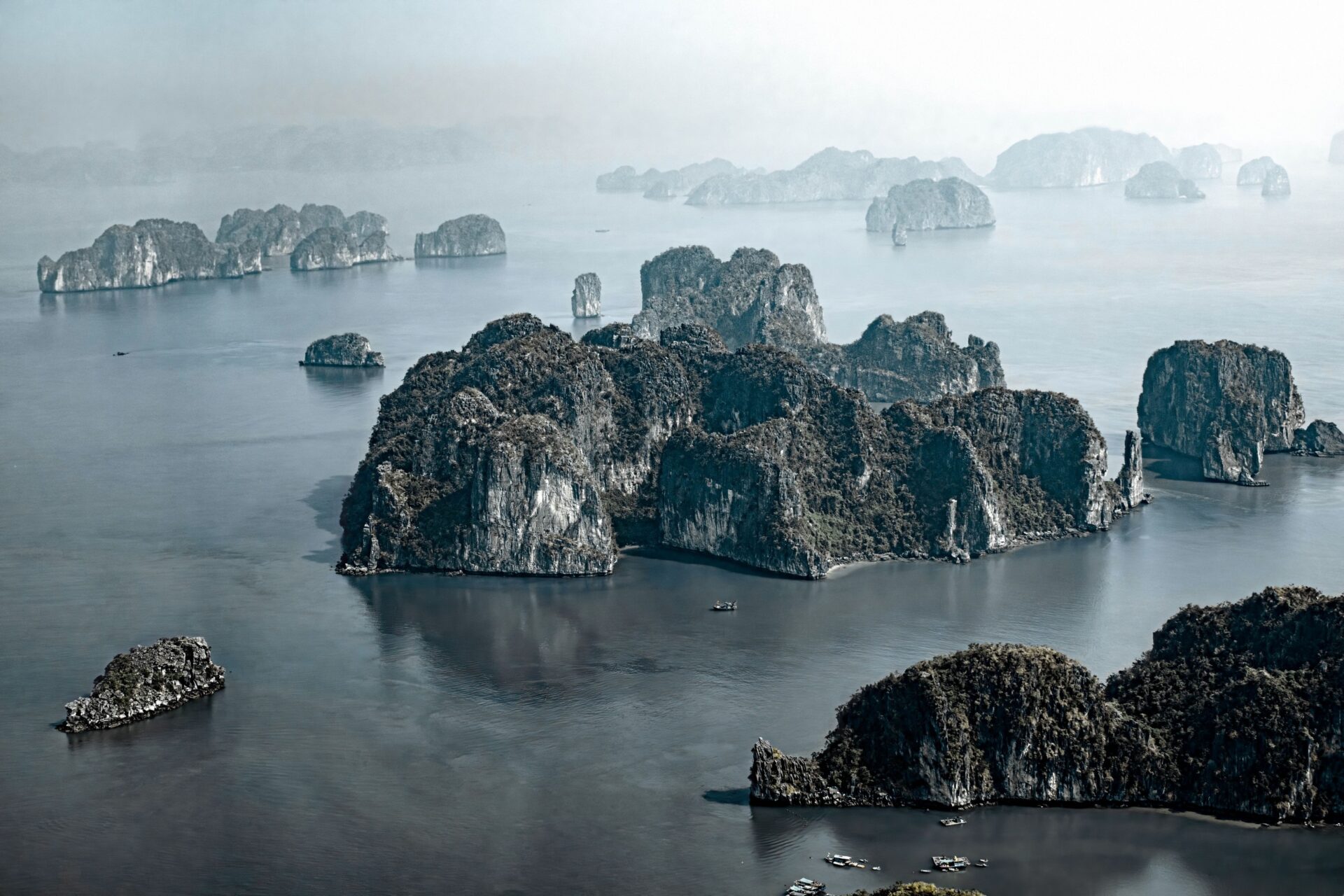
The photographs are accurate. The limestone karst formations — 1,969 islands of varying sizes, the largest reaching 200 metres above the water — are genuinely extraordinary. The mist that settles in the valleys between the karsts in the early morning genuinely produces the landscape that looks photoshopped. The water is genuinely green-emerald in the right light.
The 500 vessels are also real. The Ha Long Bay experience without a strategy is the tourist version of one of the world’s finest natural landscapes.
The strategy is simple: overnight cruise, not day trip. And Lan Ha Bay, not Ha Long Bay.
The Cruise Decision
The day trip (departing Hanoi at 6am, returning at 10pm): 7 hours on the bus. 4 hours on the bay. 1 cave. 1 beach. Return. The bay is seen in the hours when the tourist traffic is highest (10am-4pm), the mist is gone, the limestone islands are in flat midday light. The experience is Ha Long Bay technically. It is not Ha Long Bay in the sense that earns the photographs.
The 2-night cruise: Departs Hanoi by bus (3 hours). Boards the boat by noon. The first afternoon on the bay — the kayaking through the floating fishing villages, the cave visit in the afternoon light, the sundeck as the other day-trip boats leave and the bay empties. Dinner on board. The bay at sunset with 20% of the daytime boat traffic.
Dawn: 5am on the sundeck. The mist on the water. The karsts emerging from it. No engine noise from the boat. This is the Ha Long Bay of the photographs.
The second morning: kayaking through the karst channels before the day-trip boats arrive.
The difference between these two experiences is not small. It is the entire experience.
The 2-night cruise cost: £80-180/person depending on operator and cabin quality. The budget is almost irrelevant — the decision is the cruise, not the cost.
Lan Ha Bay — The Better Version
Lan Ha Bay is directly south of Ha Long Bay, administered by Cat Ba Island rather than Quảng Ninh Province. It has the same karst formation, the same water quality, and 80% fewer boats.
The reason: Ha Long Bay receives the bulk of the marketing and the tour packages. Lan Ha Bay is served by operators based on Cat Ba Island (accessible by speedboat from Haiphong, 45 minutes, bypassing Hanoi entirely) and by the handful of Ha Long Bay cruise operators with Lan Ha Bay permits.
The Cat Ba Island base gives a second advantage: the Cat Ba National Park (the largest national park in northern Vietnam, covering 260 square kilometres of forested karst, home to the Cat Ba langur — one of the rarest primates in the world, with only 60-70 individuals surviving in the wild). A morning hike in the national park before the afternoon boat: the complete version of Cat Ba.
The routing: Hanoi → Haiphong (2.5 hours by bus or train) → Cat Ba Island (speedboat, 45 minutes) → Lan Ha Bay cruise (overnight or 2-night) → return Cat Ba → Haiphong → Hanoi.
The Caves
The Ha Long Bay caves are the primary on-shore attraction — most cruise operators include one or two cave visits.
The worth-it caves: Thien Cung Cave (Heavenly Palace Cave): The finest cave in Ha Long Bay — a series of chambers with stalactites and stalagmites on a scale that justifies the visit. The illumination is theatrical (coloured lights installed in the 2000s) but the formations are genuine and impressive.
Dark and Bright Cave (Hang Toi and Hang Sang): In Lan Ha Bay — accessible by kayak from a boat anchorage, paddling through a short dark tunnel (torchlight required) to emerge into an enclosed lagoon. The specific experience of kayaking through darkness and arriving in a sunlit lagoon surrounded by karst walls: the finest cave experience available in the Ha Long-Lan Ha region.
The skip-it caves: Any cave described as “the most beautiful in Ha Long Bay” on a day-trip itinerary. The day-trip cave experience (arriving with 3 other tour boats simultaneously, the cave full of 200 people with selfie sticks) gives you the cave formations without the quality of the experience.
Essentials
Booking: The reputable overnight cruise operators: Indochina Junk (the original boutique operator, the reference for quality), Paradise Cruises, Bhaya Cruises, Perla Dawn Sails. All bookable directly or through Vietnam booking platforms. Book 2-4 weeks ahead in peak season (July-August, November-March).
What to look for: A maximum of 12-16 passenger cabins on the boat (the large junks with 30+ cabins lose the intimacy that makes the overnight experience special). Kayaking included. Meals on board (the seafood on a quality overnight cruise is the finest available in northern Vietnam waters). Air conditioning in cabins (non-negotiable in July-August).
Getting to Ha Long from Hanoi: The cruise operators run shuttle buses from Hanoi’s Old Quarter hotels — included in the cruise price.
The Closing Moment
I was on the sundeck of the junk at 5:15am. The crew was awake below, the smell of coffee reaching the deck. Everyone else was asleep.
The bay was in mist — the karst towers emerging from it at different distances, the nearest fully visible, the farthest a grey shape, the ones in between at every stage of visibility. The water was flat. A fishing boat was moving in the distance, the engine sound reaching us 30 seconds after we saw the boat move.
This is the photograph. This is why the overnight cruise costs more than the day trip. This is worth every pound of the difference.